Flight control technology upgrade maximizes processing power for added mission capabilities and safety enhancements
ENDICOTT, N.Y. — Sept. 6, 2023 — BAE Systems’ next-generation vehicle management computer was successfully flight tested on the F-35 Lighting II aircraft. The test demonstrated a technology upgrade for all three F-35 variants that will increase computer performance and addresses obsolescence issues. Testing occurred at Naval Air Station Patuxent and Edwards Air Force Base.
BAE Systems’ Vehicle Management Computer (VMC) enables advanced control modes and improves mission efficiency and safety. Its distributed architecture allows the aircraft to operate reliably with enhanced mission effectiveness in demanding environments. The upgraded VMC will not only help to mitigate obsolescence but will also improve safety, maintainability, and availability of the aircraft for the U.S. military and its allies.
“The VMC provides the high integrity processing required to implement the advanced control algorithms that enable this platform’s critical missions,” said Corin Beck, director of Military Aircraft Systems for Controls and Avionics Solutions at BAE Systems. “This upgrade leveraged BAE Systems’ technology roadmap to ensure the F-35 will advance its mission management and flight control capabilities today and into the future.”
This technology upgrade incorporates a quad-core advanced processor for both a high-performance and efficient solution. The new level of computing power allows for additional aircraft capabilities while reducing pilot workload. It also adds advanced mission capabilities to the VMC such as the Joint Precision Approach and Landing System (JPALS) and Auto Ground Collision Avoidance System (AGCAS).
BAE Systems has more than 40 years of experience developing and integrating flight control technology for military and commercial platforms. Work on the VMC occurs at the company’s state-of-the-art engineering and manufacturing facility in Endicott, New York.
BAE Systems is a major global partner to Lockheed Martin on the F-35 program. The company provides the VMC, electronic warfare system, active inceptor control system, and aft fuselage for each F-35 at manufacturing facilities in the U.S., U.K., and Australia. The company also delivers sustainability, technical support, and training services to keep the F-35s mission-ready.
US Air Force, RTX complete first flight test of AIM-120C-8
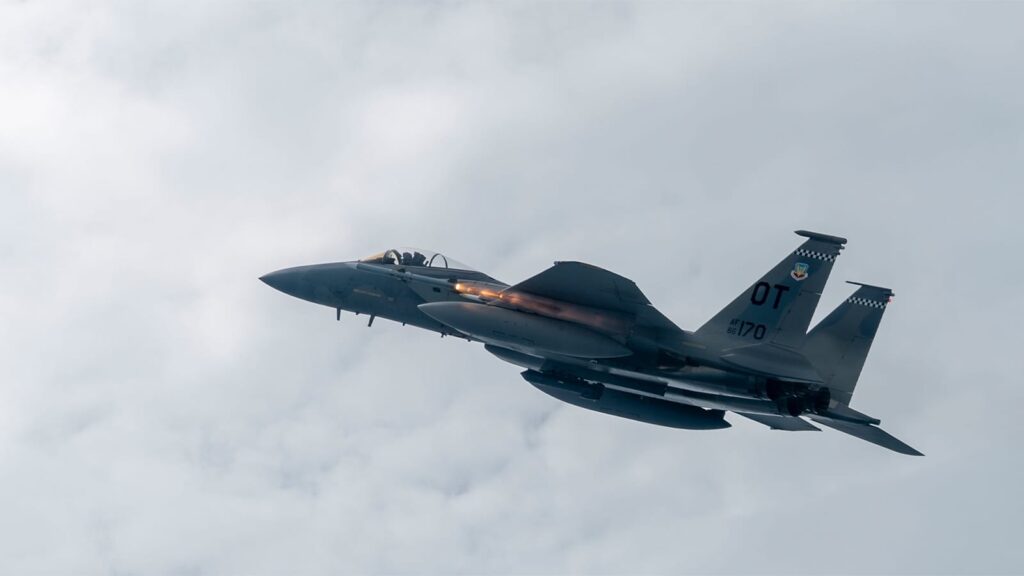
TUCSON, Ariz., Sept. 1, 2023 /PRNewswire/ — The U.S. Air Force and Raytheon, an RTX (NYSE: RTX) business, successfully completed the first flight test of the AIM-120C-8 – the latest international variant of AMRAAM® developed under the Form, Fit, Function (F3R) refresh. The AIM-120C-8 was fired from an F-15C Eagle and downed the aerial target, meeting all primary objectives for the flight test.
“AMRAAM is a combat-proven missile trusted by more than 40 international partners for both air-to-air and surface-to-air missions,” said Paul Ferraro, president of Air Power at Raytheon, an RTX business. “With the advancements from F3R, which updates both the missile’s hardware and allows for future Agile software upgrades, we are maximizing the capabilities of this munition for allies around the world.”
Under the F3R program, engineers used model-based systems engineering initiatives and other digital technologies to upgrade multiple circuit cards and advanced processors in the guidance section of the missile and to re-host legacy software in the AIM-120D-3 and AIM-120C-8 AMRAAMs.
This AIM-120C-8 flight test follows the completion of flight testing of the AIM-120D-3. Flight testing on the AIM-120D-3 was completed in just 11 months after the initial flight test and concluded with showcasing the success of the missile in a highly contested environment.
Recently, the U.S. Air Force awarded Raytheon a $1.15 billion AMRAAM contract to produce AIM-120D-3 and C-8 missiles for 19 countries.
Machinist Pipeline Program Creates Good-Paying Career Pathways
Release from SENEDIA
*****
Five Graduate from Pilot Partnership Between SENEDIA and Nashua Community College
MIDDLETOWN, RI – The New England Submarine Shipbuilding Partnership, powered by SENEDIA, announced today the completion of a pilot Machinist Pipeline Program run in partnership with Nashua Community College. Five New Hampshire residents graduated from the program and were offered jobs with area companies.
Granite State Manufacturing in Nashua and Manchester, Mercury Systems in Hudson, Spraying Systems in Merrimack, and Sweeney Metals in Nashua each made offers to the newly trained graduates.
“Congratulations to the five New Hampshire graduates of the pilot Machinist Pipeline Program. This program will strengthen our state’s role in the defense shipbuilding sector, and I’m excited to see the future opportunities it will create for our communities,” said Senator Jeanne Shaheen (D-NH), a senior member of the U.S. Senate Armed Services Committee. “I want to thank SENEDIA and the hardworking team at Nashua Community College for developing this talent pipeline and creating world-class opportunities for New Hampshire families. I look forward to seeing the expansion of these critical training programs and will continue to fight for the defense workforce funding needed to grow talent right here in New Hampshire.”
“The Defense Cluster represents $12.5 billion in annual economic output in New Hampshire, and more than $119 billion across the New England region. To sustain the strength of the industry and further grow businesses locally and regionally, we need a robust talent pipeline to meet the needs of tomorrow,” said Molly Donohue Magee, SENEDIA executive director. “Programs like this are a win-win, for the participants pursuing new career pathways and for the businesses in need of a skilled workforce.”
The Machinist Pipeline Program is a 10-week, hands-on training program to prepare participants for entry-level CNC and machinist positions. They received stipends and other financial support during the training thanks to MY TURN, an organization funded through New Hampshire Workforce Innovation and Opportunity Act (WIOA) funding that serves economically, socially, and educationally disadvantaged communities and connects them with workforce recruitment, education, preparation, and placement services.
A typical training day would begin with lectures and coursework at Nashua Community College, followed by shop floor training using CNC machines and related software.
“The men and women who serve within the defense industrial base are the future of our nation and will define where we go in the next decade, generation, and century,” said Rear Admiral Scott Pappano, program executive officer, Strategic Submarines on the importance of building America’s submarine fleet in an environment of increasing global threat. “The most important thing we need right now is to re-establish and continue to grow manufacturing; I’m glad we are making that a priority through talent pipeline programs.”
The five graduates from this initial pilot cohort developed meaningful skills and technical competencies to begin rewarding and good-paying careers, as well as soft skills and professional connections to serve them throughout their careers.
Jose Arana was one of the five program graduates. He has accepted a position as machinist trainee at Spraying Systems Co. in Merrimack, NH.
“I was looking for a stable and good-paying career with a company doing meaningful work, and I’ve found that thanks to the Machinist Pipeline Program,” said Arana. “I’m grateful for the opportunity and I encourage anyone joining the workforce or considering a change to learn more about training and support available to start your career in defense.”
Ronny Soria, another graduate of the program indicated, “I was bouncing from job to job. No path or career in sight. I heard about a ten-week program in manufacturing and signed up. This is the best decision I have made. I learned a valued skill in machining. I also learned soft skills such as time management, how to interview and what makes a good employee. I feel I am very well prepared to start my manufacturing career.”
Soria has accepted an offer with Sweeney Metals in Nashua, NH.
The next cohort of the Machinist Pipeline Program is slated to begin in October.
“We care deeply about the success of our students at NCC, so we jump at every available opportunity to partner with industry leaders and companies looking to hire. After 10 weeks of rigorous training and education, aligned to the needs of employers, we now have five lifelong learners who are starting exciting new careers,” said Mark Dodge, the Precision Manufacturing professor at Nashua Community College. “With the support of our dedicated faculty, this pilot shows what is possible when we collaborate and innovate across academia and industry, and we’re eager to welcome the next cohort of students to our campus.”
“This program is excellent for not only the students but industry partners as well. We are taking people off the street and giving them a start to a career in manufacturing. They are walking away with the basic knowledge they need and numerous job opportunities. It is amazing to watch a student when the light goes on and he grasps the concept of the work. The staff and especially the Manufacturing staff got behind this program 110 percent and it shows in the five graduates,” said Jon Mason, the director of workforce development at Nashua Community College.
To learn more about SENEDIA and its submarine shipbuilding workforce development programming, visit Submarine.SENEDIA.org
GA-ASI Mojave STOL UAS Completes First Dirt Operation
Mojave Demonstrates Takeoff and Landing Versatility on Unimproved Surface
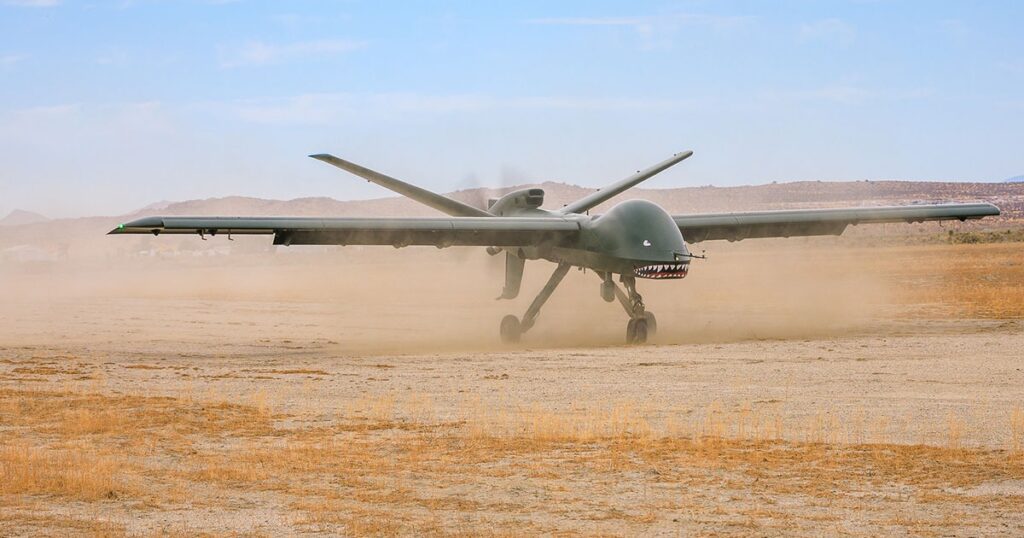
SAN DIEGO – 03 August 2023 – On August 1, 2023, General Atomics Aeronautical Systems, Inc. (GA-ASI) completed multiple successful takeoffs and landings with its Mojave Unmanned Aircraft System (UAS) on a dirt strip near El Mirage, Calif.
The ability to take off and land on unimproved surfaces demonstrates Mojave’s departure from traditional fixed-wing aircraft’s dependance on prepared runways. This new capability provides greater versatility and allows the aircraft to operate in areas previously deemed unsuitable for UAS operations.
“Being able to execute missions in austere locations with runway independence opens the operational envelope for commanders across all services and geographic locations,” said GA-ASI President David R. Alexander. “Mojave can do this while retaining significant advantages in endurance and persistence over Vertical Takeoff and Landing (VTOL) and manned aircraft.”
The flight tests were the first-ever Short Takeoff and Landing (STOL) on a dirt surface for Mojave. Takeoffs were performed in as little as 586 feet; and short landings were completed in as little as 335 feet. The tests were primarily focused on gathering terrain feedback using Mojave, not achieving the shortest distances possible.
Tracing its lineage from the MQ-1C Gray Eagle and MQ-9 Reaper, Mojave is a technical demonstrator with STOL capability, making it a versatile expeditionary UAS. Adhering to Modular Open System Approach (MOSA) principles, Mojave leverages the modernized avionics, data links, sensor integration, and laptop ground control station of GA-ASI’s Gray Eagle 25M program. These features – along with Mojave’s enlarged wings with high-lift devices, combat-proven 450-HP turbine engine, and ruggedized landing gear – make it ideal for semi-improved surfaces with a small ground support footprint.
Mojave provides options for forward-basing operations without the need for typical airport runways or infrastructure, so it can be rapidly deployed from and recovered to non-traditional discrete locations. To extend operational reach, Mojave can fit into a C-130 and be rapidly assembled and employed. These innovations make Mojave the perfect UAS to perform Reconnaissance, Surveillance, and Target Acquisition (RSTA), attack, and contested logistics support missions.
Designed to be rapidly deployable and expeditionary, Mojave’s tailored features include a ruggedized airframe that enables operations in austere conditions and weatherization that enables flight in wider environmental windows. Robust wing storage means it can carry up to 16 Hellfire or equivalent missiles, assorted munitions, Launched Effects (LEs), or logistical resupply pods. Mojave can provide greater operational flexibility while still being equipped with a multi-sensor suite that includes Electro-Optical/Infrared (EO/IR), Synthetic Aperture Radar/Ground Moving Target Indicator (SAR/GMTI), Electronic Intelligence (ELINT), and Signals Intelligence (SIGINT) to support land or maritime missions throughout Joint All-Domain Operations (JADO).
To see a video of the Mojave dirt operation, click here.
HII and Babcock International Group Create Strategic Partnership to Explore Global Opportunities
NEWPORT NEWS, Va., July 17, 2023 (GLOBE NEWSWIRE) — HII (NYSE: HII) and Babcock International Group have entered into a strategic agreement to collaborate on naval and civil nuclear decommissioning and construction opportunities in the U.K. and U.S.
HII and Babcock will apply their complementary capabilities to existing nuclear decommissioning contracts for U.S. ships and U.K. submarines, to share best practices and provide the opportunity to upskill and enhance both organizations’ capability for the benefit of the U.S. and U.K. programs.
The Memorandum of Understanding also identifies opportunities for cooperation in civil nuclear, including power plant and component design, fabrication and construction in North America and the U.K. For Babcock, this will include leveraging the capability of its wholly-owned subsidiary, Cavendish Nuclear, a leader in the U.K. nuclear civil industry across the nuclear lifecycle.
“As we expand our presence globally this is an important agreement to leverage more than 60 years of HII expertise in complex nuclear processes on behalf of civil and defense customers,” said Chris Kastner, president and CEO of HII. “We are excited to explore with Babcock potentially promising opportunities for both companies.”
“This collaboration supports our expanding global reach and capability,” said David Lockwood, CEO of Babcock. “We look forward to working with HII to realize the benefits that our collaboration can bring to the nuclear programs in the U.K., U.S. and beyond.”
HII and Babcock will also explore how their combined capability as global leaders in defense can be applied in support of the Australia – United Kingdom – United States (AUKUS) programs.
Clean Technology Lasers: The Maritime Industry’s New Tool to Remove Corrosion and Scale
Shipbuilding professionals understand the value of pretreating metal surfaces of parts to remove corrosion.
Release from Laser Photonics
*****
Laser systems quickly remove corrosion and scale from metal surfaces with less preparation and mess than traditional techniques
In the maritime industry, corrosion, and scale (where rust penetrates a metal surface) can quickly become an issue in an outdoor, salt sea spray laden environment. When sea spray evaporates, it leaves salt behind, leading to saltwater staining and accelerated corrosion.
So, most shipbuilders as well as those responsible for maintenance and repair understand the value of treating metal surfaces to remove corrosion, scale, and saltwater staining, which is vital to maintain essential interior and exterior components such as engines, generators, fuel pumps, winches, anchoring chains, latches, door hinges and locks. This is necessary to preserve not only function but also prevent further corrosion and deterioration including possible premature failure.
Unfortunately, traditional techniques used for this purpose such as sandblasting and chemical stripping are messy and require expensive consumables as well as substantial time for preparation and cleanup. Additionally, sandblasting and chemical stripping may not be feasible to clean, maintain, or recondition many of the ship’s interior and exterior spaces. These methods are also drawing scrutiny from regulators like the EPA and OSHA since they can pose risks to applicators and the environment.
Although manual methods of cleaning and removal are available, such as chipping and using wire brushes and grinders, these are very labor intensive and time consuming.
Today, a more effective alternative is utilizing industrial-grade, precision laser-based systems that can remove corrosion and scale with a high-energy laser beam that leaves the substrate unaffected. The technology can also be used for selective cleaning and even de-painting on access points and service latches when required. Preparation and cleanup time are minimal, and the low-maintenance equipment can last decades.
According to Vincent Galiardi, owner of Galiardi Laser Clean, a surface cleaning operator based in St. Charles County, Missouri, many people are surprised to learn that clean technology lasers are the most cost-effective, efficient, and safest method of metal surface preparation.
“Many people are unfamiliar with the use of lasers to pretreat metal surfaces,” says Galiardi. “When I do a demonstration, at first the people in attendance are skeptical. But after I use the laser to treat a small area, everyone starts talking and getting excited. By the end, when I let them try the equipment, everyone is having a good time and saying how great the laser works.”
Given its effectiveness treating metal surfaces, industrial laser systems are increasingly being used at shipyards, shipbuilding berths, and even aboard ships. Technicians can use mobile handheld units, or if needed the systems can be integrated into automated inline processing lines. With significant advantages in safety and efficiency, laser cleaning is poised to disrupt the surface treatment market across more sectors.
Resolving Conventional Cleaning Limitations
To treat metal surfaces, sandblasting or chemical stripping are traditionally used as industrial cleaning processes.
Sand Blasting
Abrasive sandblasting involves forcefully projecting a stream of abrasive particles onto a surface, usually with compressed air or steam. The silica sand used in abrasive blasting typically fractures into fine particles and becomes airborne, which can cause serious or fatal respiratory disease.
When workers inhale crystalline silica, the lung tissue reacts by developing fibrotic nodules and scarring around the trapped silica particles, causing a fibrotic lung condition called silicosis. Estimates indicate that more than 1 million U.S. workers are at risk of developing silicosis and that more than 100,000 of these workers are employed as sandblasters.
In addition, particles are generated during abrasive blasting that further contribute to respiratory problems and other harmful health effects.
“When sand or any other media is used to knock off particles from a substrate, there is always a byproduct that has the potential to become airborne and inhaled,” says Galiardi.
“Industry has needed a cleaner, safer surface pre-treatment solution for a very long time,” adds Galiardi. “Sandblasting is inherently unsafe for operators. The silica glass used in sandblasting is toxic. An operator must wear a full HEPA suit when sandblasting to avoid breathing in particulates.”
Sandblasting also is time-consuming to clean up since the sand essentially scatters everywhere, even though it is usually considered a “fast” cleaning method.
Chemical Stripping
With chemical stripping, harsh, even toxic chemicals are used to strip metal-based objects of rust, paint, and contaminants to bare metal. However, for operators, exposure to corrosive acids and noxious chemical fumes is inherently dangerous. The process can also be time-consuming to prepare the proper chemical bath, achieve the required level of cleaning, and dispose of the waste. In addition, disposing of toxic chemicals is costly and closely regulated by agencies like OSHA and the EPA.
Safe, Effective Laser Cleaning
Laser-based systems have significant advantages over these traditional methods, including ease of use in which an operator simply points and clicks a high-energy laser beam at the surface. The substrate is not affected by the laser, and the systems do not create any mess or byproducts. The approach is eco-friendly, energy-efficient, and completes the job in half the time of traditional methods when preparation and cleanup are considered.
“In our experience, laser cleaning is as fast at removing rust or old coatings as other methods, but without the same amount of cleanup,” said Galiardi. “When we treat a surface with lasers, any fumes or dislodged particulate is extracted into a HEPA filter and the job is done. There is no media [sand, chemicals] to replenish or clean up.”
Galiardi Laser Clean uses laser systems made by Orlando, Florida-based Laser Photonics, a leading provider of patented industrial grade CleanTech® laser systems for cleaning and surface conditioning. The American-made systems function either as mobile standalone units or can be integrated into production lines.
The laser systems are available in portable and stationary models ranging from 50 to 3,000-watts (a 4,000-watt version is in development) with chamber sizes from 3’ x 3’ in size to 6’ x 12’. The systems can also be installed in manufacturing lines in cabinets or operated by a robotic arm.
In the shipbuilding industry, operators are utilizing the industrial grade laser systems to maintain a wide range of vital interior and exterior equipment. Operators are using CleanTech systems to smooth surfaces and remove rust and scale from engines, generators, fuel pumps, water separators, winches, anchoring chains, gear shifting and throttle components without disassembly. This improves safety, function, lifespan, and reduces the risk of premature failure, which could be very dangerous during an emergency such as a storm on the high seas.
The laser systems similarly maintain door hinges and locks as well as remove saltwater stains from metal surfaces. In addition, the technology is used for selective de-painting and cleaning of access points, service latches, and other maritime applications.
With clean laser technology, there is now an environmentally friendly alternative to abrasive blasting and chemical stripping for surface pretreatment. The approach is safer for operators and highly adaptable to a wide range of maritime applications.
“As people become more aware of laser-based systems and compare them to traditional methods, they need to factor in prep and cleanup time, which can significantly impact project cost. When the improved operator safety, equipment longevity, and lower maintenance of laser systems are also considered, the clean laser technology has a much higher ROI,” says Galiardi.
The longevity of low-maintenance laser systems further adds to their value, increasing ROI, and making replacement unnecessary for decades.
“CleanTech laser systems can last for 50,000 to 100,000 hours. That’s many decades working eight-hour days. After purchase, there’s virtually no maintenance necessary,” concludes Galiardi.
Draper Equips Small UAVs for Tomorrow’s Battlefield
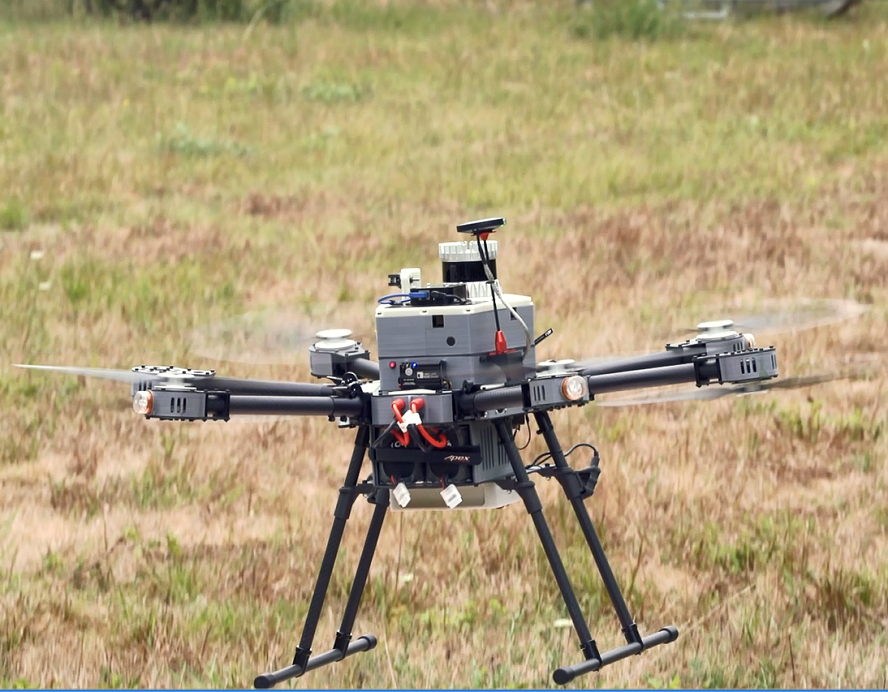
Draper developed new capabilities for small uncrewed aerial vehicles to improve situational awareness and threat detection for soldiers. Credit: Draper
In field tests, Draper demonstrates advances to its mobile military platform that include an autonomy framework, a sensor-driven mapping algorithm and sensors to detect the presence of chemical, biological, radiation and nuclear (CBRN) elements.
Battlefields entered a new era with the introduction of small unmanned aerial vehicles, or sUAVs. Commonly called drones, sUAVs enable soldiers to gain an aerial view of the battlefield and improve their situational awareness of the battlespace.
Designed for low-altitude intelligence, surveillance and reconnaissance missions that depend on rapid deployment and agile maneuverability, sUAVs are being pushed to add more technology while also being asked to fly farther, smarter and better.
It’s a situation that’s challenging the developer community, according to Won Kim, a program manager at Draper. His team is unveiling a new set of capabilities for sUAVs that represents an advance in the platform from remotely operated vehicles to those capable of fully autonomous operations.
One new capability is to equip sUAVs so that they can fly ahead of a military unit to scout a location and sense the presence of chemical, biological, radiological and nuclear (CBRN) elements. Hazard detection using an sUAV can reduce the kinds of risks soldiers might encounter by scouting a location using handheld or vehicle-mounted sensors.
“Customers are asking, can an sUAV sniff out these CBRN hazards in place of humans? How smart does an sUAV need to be to search, map and locate these CBRN hazard without a remote operator? When an sUAV encounters a building or obstacle, can it fly in and around it safely? These are just some of the questions our team is exploring,” Kim said.
Kim’s team set to work on these challenges in a program funded by the Joint Program Executive Office for Chemical, Biological, Radiological and Nuclear Defense (JPEO-CBRND) called CSIRP, which stands for CBRN Sensor Integration on Robotics Platform. The team investigated the customer needs through field observations, noting requirements such as sensor efficiency and resolution, flight speed, height, duration, autonomous operation, sensor-driven mapping, networked command and enhanced situational awareness through shared interactive digital maps.
Soldiers operating in urban environments, for instance, need an sUAV that can navigate in and around buildings and obstacles, such as trees or vehicles even when GPS signals are degraded or completely unavailable. Soldiers also need sUAVs to remotely search, detect, map and locate dangerous CBRN hazards. Soldiers dispersed across an area also want a way to share information that is secure, networked and mapped to the environment.
The new capabilities Draper developed for CSIRP take advantage of multiple environmental inputs, along with a sensor fusion algorithm that can synthesize data from instruments including GPS, LiDAR, inertial measurement units, magnetometers and cameras. All that fused information is designed to achieve robust and autonomous operation through the use of new algorithms developed for CSIRP that make the sUAV capable of obstacle detection and avoidance.
Under CSIRP, Draper integrated the sUAV with a mobile computing app, running on a handheld device, called the Tactical Assault Kit (TAK), which gives soldiers a map-based common operating picture on a shared network and provides enhanced situational awareness for command and control. Draper has developed software for every version TAK and the CBRN sensor plugin since it was first developed by the Department of Defense.
In a series of field tests, Draper engineers set the sUAV on a path of several miles, over and around obstacles, navigating autonomously until it detected a simulated CBRN hazard and conducted a sweep of a field one square kilometer in size to map elements of interest. The information was gathered onboard the UAV and shared with the TAK operator and users in the network, including headquarters.
“Mobile military technologies, like sUAVs, can be force multipliers and force protectors at the same time,” Kim said. “Anytime you can deploy technology like an sUAV to detect suspected CBRN hazards remotely and operate independently without exposing a soldier unnecessarily to harm is an advance in warfighter systems, and that’s important to us at Draper.”
“Draper designed the autonomy framework and sensor-driven mapping algorithm to be an extensible, modular and resilient mobility platform that is vehicle and processing system agnostic,” said Julius Rose, associate director for Sensors and Delivery at Draper. “As new capabilities and vehicles are developed, autonomous systems should be readily adaptable to support numerous mission types across domains, be that air, ground or sea. Development needs to be efficient, reusable and agile to keep up with the pace of the needs of soldiers and personnel in the field.”
Draper’s work on the CSIRP program builds on its legacy in autonomous systems, algorithms and positioning, navigation and timing. Advances made through the program will be applied to other air systems, as well as ground, marine and underwater systems. In addition to working with autonomous systems, Draper has assisted U.S. government agencies with projects including cybersecurity, technology protection and miniature cryptography for high stress environments.
Leidos Announces New Manufacturing Facility in North Charleston, South Carolina
Facility will insource production of key security products and bring new jobs to the region
(RESTON, Va.) July 6, 2023 – Leidos (NYSE:LDOS), a FORTUNE® 500 science and technology leader, today announced plans to establish a new security systems manufacturing facility in North Charleston, South Carolina. This will be the company’s third security systems manufacturing location in the U.S., expanding its presence and support to customers. Leidos will invest $31.7 million in the new facility, creating up to 170 new jobs in the region over time.
“This facility brings more manufacturing back into the U.S. and expands Leidos’ global security capabilities for the aviation and critical infrastructure markets,” said Jim Moos, Leidos Civil Group president. “We’re thrilled to expand into the North Charleston area and look forward to making a positive impact in the community.”
The new facility will produce security systems for Leidos’ Security Enterprise Solutions (SES) operation. SES offers a comprehensive suite of fully automated and integrated products for aviation, shipping ports, border crossings and critical infrastructure customers. These systems provide threat detection by screening baggage, cargo and people at checkpoints around the world.
“Leidos’ $31.7 million investment in their new facility here in the Lowcountry will lead to significant job growth and economic development,” said Congresswoman Nancy Mace (R-SC-1). “We congratulate them on their expanding operation and thank them for putting their faith in South Carolina.”
Located in Ladson Industrial Park, the new 150,000-square-foot facility will enable Leidos to onshore more manufacturing increasing the company’s critical capacity to support their growing customer base. The new plant will optimize manufacturing efficiency, quality and safety through application of best-in-class manufacturing processes. The facility is currently under construction and is expected to be fully operational by the first half of 2024.
MN Navy League helps bolster recruiting numbers at Naval Talent Acquisition Group Northern Plains
It’s no secret that the Department of Defense has faced many challenges in the recruiting environment over the past couple of years. When it comes down to it, these challenges cannot be taken on by the recruiters of their respective branches alone. Recruiting commands rely on word-of-mouth and engagements from outside organizations to help facilitate information between the military branches and prospective recruits. One of the primary organizations that helps assist the sea-services with meeting their recruiting mission is the Navy League.
The Navy League Council of Minn. has been a staunch supporter of the local area Naval and Coast Guard commands that include: NTAG Northern Plains, Naval Reserve Center, Minneapolis, University of Minnesota ROTC, Maritime Safety Unit Duluth, Coast Guard Cutter Spar, three Sea Cadet Units, and three Junior ROTC units. The Council has engaged in many events including command picnics, an annual Navy Ball, air shows, Navy Weeks, award ceremonies at adopted units, community parades, networking events, with the primary focus to provide education and awareness to the surrounding communities about the importance of the Navy on a world-wide and national security scale.
“The Minnesota Navy League Council is a tremendous asset for us at NTAG Northern Plains,” said Cmdr. Jonny “DOZER” Kane, executive officer of NTAG Northern Plains. “They are able to amplify our reach into the community, and not just from a recruiting standpoint, but as an advocate of the U.S. Navy and their impact on a global scale.”
On the average day, recruiters in the NTAG Northern Plains area of responsibility are actively seeking to spread Navy awareness and seek new accessions across seven states that include Minnesota, Iowa, North Dakota, South Dakota, Nebraska, and parts of Wisconsin and Illinois. From the beginning of this fiscal year, they have enlisted 360 Future Sailors, processed 90 officer candidate submissions with 41 selected, and had 52 NROTC applications submitted with 32 selected, which is 12% higher than the national average. (Statistics provided by NTAG Northern Plains.)
“The Minnesota Navy League engages with state and local representatives and centers of influence to promote Navy programs and opportunities,” said Joe Fraser, President of the Minnesota Navy League Council. “One of the programs that we are particularly fond of promoting is the scholarship opportunities available through the Navy Reserve Officer Training Corps.”
One of the major scholarships available through the NROTC program is the Immediate Scholarship Reservation (ISR) scholarship, which is valued at approximately $200,000.
NTAG Northern Plains was approved to award four scholarships this year. Raina Elisabeth Roemhildt, graduate of St. Peter High School, will attend University of Washington this fall. She will pursue a major in mechanical engineering and wants to be a surface warfare officer like her retired father. Emmanuel Tallaferno Edwards, graduate of Eden Prairie High School, will attend Harvard University in the fall. He plans to major in economics and wants to enter the surface warfare officer community. Two additional students were awarded ISR scholarships, one from Valley High School (West Des Moines, Iowa) to attended University of Michigan and one from Saint Thomas Academy to attend University of Minnesota, but declined the scholarship offers to attend the U.S. Naval Academy and West Point respectively.
“The NROTC Scholarship Program provides an avenue for students to attend college full time, gain invaluable leadership experience and ultimately pave the way for the future of the U.S. Navy,” said Chief Navy Counselor Lenora Sprague, NROTC scholarship program coordinator assigned to NTAG Northern Plains. “Our student applicants are both exceptional and humble, a testament to the quality education and strong work ethic of which the Midwest is known for.”
It is through teamwork between recruiters and organizations like the Navy League that the Navy is able to achieve recruitment goals.
“For any student that is remotely interested in applying, I highly recommend taking the leap and logging onto our website today, as fiscal year 2024 applications are open to apply for,” added Sprague.
Canada Requests Up to 16 P-8A Maritime Patrol Aircraft
*****
ARLINGTON, Va. — The government of Canada has requested the sale of up to 16 Boeing P-8A Poseidon maritime patrol aircraft and support equipment under the Foreign Military Sales program at an estimated cost of $5.9 billion, the Defense Security Cooperation Agency (DSCA) said in a June 27 release.
“The State Department has made a determination approving a possible Foreign Military Sale,” the DSCA said, noting that the agency had delivered the certification to Congress.
Once finalized, the sale would make Canada the seventh nation to procure the P-8A, the others being the United States, Australia, United Kingdom, Norway, New Zealand, South Korea, and Germany. India procured a modified version, the P-8I.
In addition to the aircraft, the proposed procurement includes mission systems and “aircraft spares; spare engines; support equipment; operational support systems; training; training devices; maintenance trainer/classrooms; engineering technical assistance (ETA); logistics technical assistance (LTA); Country Liaison Officer (CLO) support; Contractor Engineering Technical Services (CETS); Contractor Logistics Support (CLS); repair and return; transportation; aircraft ferry; other associated training and support; and other related elements of logistics and program support,” the DSCA said.
The major sensor and defensive systems included in the proposal are:
APY-10 Radar
AAQ-2 Acoustic System
ALQ-240 Electronic Support Measures
MX-20HD Electro-Optical/Infrared system
ALE-47 Countermeasures Dispenser Systems
NexGen Missile Warning Sensors
AAQ-24(V)N Large Aircraft Infrared Countermeasures System
The Canadian Air Force currently flies the Lockheed CP-140 Aurora — a version of the P-3 Orion — first delivered in the 1980s.