HII, Shield AI Successfully Combine Proven Autonomy in USV Operations

Release From HII

SYDNEY, Nov. 03, 2025 (GLOBE NEWSWIRE) — HII (NYSE: HII) and Shield AI announced today at the Indo Pacific International Maritime Exposition that they have successfully completed the first major test of their integrated autonomy solution aboard HII’s ROMULUS unmanned surface vessel (USV), marking a key step toward operational deployment of the AI-enabled ROMULUS fleet. 

The three-day test, conducted in late October in Virginia Beach, Virginia, integrated Shield AI’s combat-proven Hivemind autonomy software, using the Hivemind Enterprise software development kit (SDK), with HII’s Odyssey autonomy suite onboard a ROMULUS 20 USV. The test also marked the first maritime deployment of Hivemind, which enables AI-powered mission autonomy across domains. 

This milestone was achieved less than six weeks after the companies announced their partnership, demonstrating rapid adaptability, advanced capabilities, and strong collaboration between the two defense technology leaders. 

“This collaboration between HII and Shield AI showcases how adaptable autonomy frameworks can accelerate development,” said Andy Green, president of HII’s Mission Technologies division. “Using the Hivemind Enterprise SDK, our teams integrated capabilities quickly and effectively. The successful deployment on ROMULUS 20 validates the power of this partnership and paves the way for even greater autonomy across the ROMULUS fleet.” 

ROMULUS is a modular, high-performance USV line built on commercial-standard hulls for fast production and operational flexibility. The lead vessel, ROMULUS 190, is currently under construction. Designed to exceed 25 knots and operate up to 2,500 nautical miles, ROMULUS 190 will carry four 40-foot ISO containers and feature both Odyssey and Hivemind for next-gen autonomous performance. 

Hivemind enables unmanned systems to perform complex missions even in GPS- and communications-denied environments. Proven in aerial operations, Hivemind is now expanding into the maritime domain through this partnership with HII, supporting rapid development and deployment of autonomous capabilities across domains. Under this partnership, Hivemind and Odyssey will integrate into the ROMULUS fleet to operate seamlessly alongside crewed strike groups and surface action groups, while also enabling multi-agent autonomy and intelligent operations. 

“Delivering autonomy across domains is key to maintaining a credible deterrent posture in today’s complex geopolitical environment. Each integration strengthens Hivemind’s role as the leading autonomy solution for defense systems,” said Nathan Michael, Shield AI’s chief technology officer and head of the Hivemind business unit. “Through close collaboration with HII and the shared use of Shield AI’s modular, open architecture SDK, we integrated advanced maritime capabilities in less than six weeks — work that typically takes months or years. We look forward to continuing to expand multi-domain autonomy together.” 

Shield AI’s Hivemind mission autonomy software and HII’s Odyssey suite will deliver next-generation autonomous solutions. By combining Shield AI’s advanced autonomy with HII’s decades of maritime expertise as America’s largest shipbuilder and leading global maritime unmanned vehicle provider, the two companies aim to accelerate autonomy across domains and platforms. 

About ROMULUS and ODYSSEY 

ROMULUS, developed with support from HII’s Dark Sea Labs Advanced Technology Group and powered by HII’s Odyssey autonomy software, is capable of manned-unmanned teaming and collaborative operations with unmanned vehicles across all domains. HII’s Odyssey autonomy software is deployed on over 35 USV platforms and over 750 REMUS unmanned underwater vehicles (UUVs), across 30 countries, including 14 NATO members, and enables rapid integration of sensors and payloads for flexible mission design, enhancing the capability and effectiveness of today’s naval fleets. 
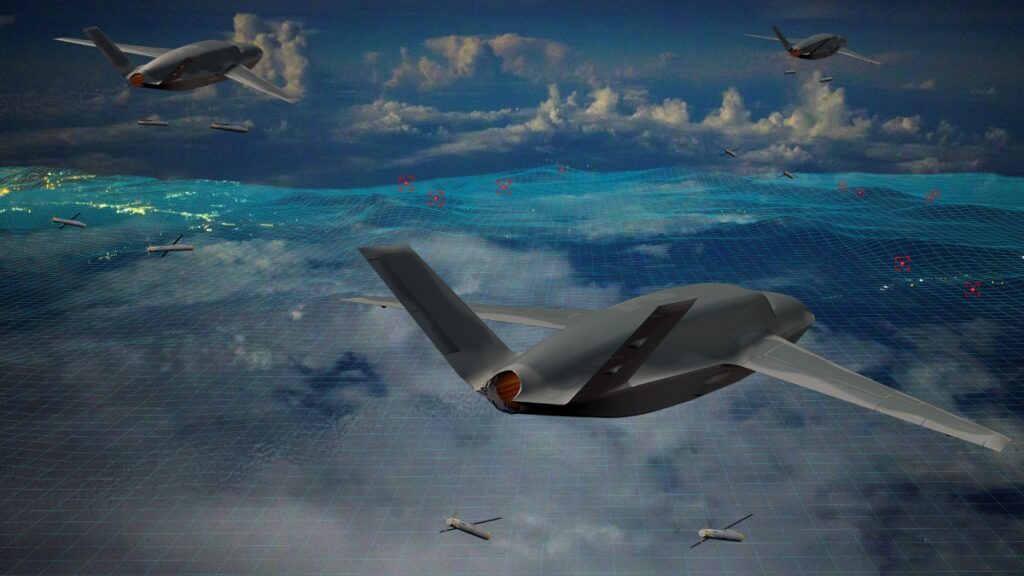


New GA-ASI Gambit 6 UCAV Adds Air-to-Ground Operations for International CCA 

Release From General Atomics Aeronautical Systems Inc. 

SAN DIEGO – Nov. 4, 2025 – The latest iteration of the innovative Gambit Series of unmanned combat air vehicles (UCAV) from General Atomics Aeronautical Systems, Inc. (GA-ASI) is Gambit 6, a collaborative combat aircraft (CCA) that adds air-to-ground operations to its already proven air-to-air capability. The multi-role platform is optimized for roles such as electronic warfare, suppression of enemy air defenses (SEAD), and deep precision strike, making it a versatile option for evolving defense needs. 

Air forces throughout the world are looking to air-to-ground-capable CCAs to enhance operational capabilities and address emerging threats in a denied environment. Gambit 6 is being developed to meet the corresponding need for adaptability, scalability, and mission-specific performance. 

“These are real threats, and they require real solutions,” said GA-ASI President David R. Alexander. “The modular architecture and signature-reducing internal weapons bay of Gambit 6 allow for easy integration of advanced autonomy, sensors, and weapons systems, ensuring the aircraft can adapt to a wide range of operational scenarios.” 

Airframes will be available for international procurement starting in 2027, with European missionized versions deliverable in 2029. GA-ASI is building industry partnerships throughout Europe with the aim of providing sovereign capabilities for all its platforms. 

GA-ASI’s Gambit Series envisions multiple CCA variants rapidly reconfigured from a common core, enabling substantial commonality for rapid and affordable production at scale.  

The Gambit Series is a modular family of unmanned aircraft designed to meet diverse mission requirements, including intelligence, surveillance, and reconnaissance; multi-domain combat; advanced training; and stealth reconnaissance. It’s built around a common core platform that accounts for a significant proportion of the aircraft’s hardware, including the landing gear, baseline avionics, and chassis. This shared foundation reduces costs, increases interoperability, and accelerates the development of mission-specific variants like Gambit 6. 

By leveraging specialized configurations and advanced autonomy, Gambit aircraft offer tailored capabilities that enhance operational efficiency, reduce costs, and improve survivability in contested environments. One Gambit derivative is the U.S. Air Force’s YFQ-42A, developed as part of that service’s effort to field an AI-enabled uncrewed wingman. Based off the original Gambit 2 concept, the YFQ-42A is designed to complement human-crewed fighters like the F-35 and Next-Generation Air Dominance (NGAD) systems, expanding sensing, weapons capacity, and survivability in contested airspace. 

The original concept for Gambit was announced three years ago and was based on four models. Gambit 1 is a nimble sensing platform optimized for long endurance; Gambit 2 adds the provision for air-to-air weapons; Gambit 3 looks much like Gambit 2 but is optimized for a complex adversary air role; Gambit 4 is a combat reconnaissance-focused model with no tail and swept wings. Then in 2024, GA-ASI announced Gambit 5 for ship-based CCA operations.  


Insitu Introduces PLEO SATCOM for ScanEagle UAS, Adds Laser Targeting Capability

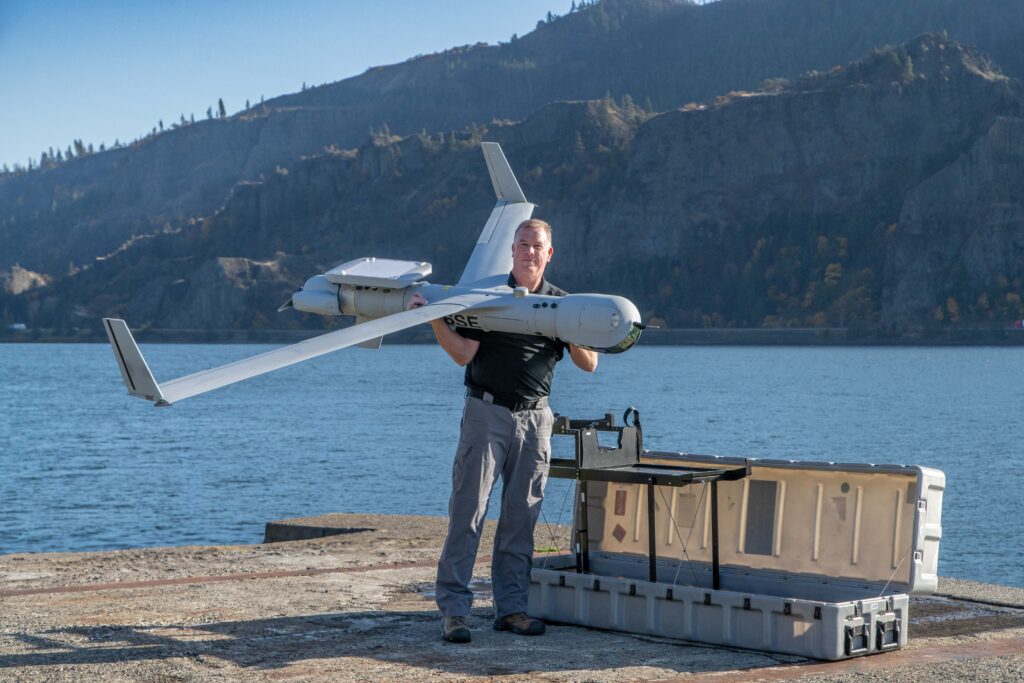
A UAS Operator holds ScanEagle with PLEO SATCOM capability at Insitu HQ in Bingen, Washington.

Release From Insitu

BINGEN, Wash., November 3, 2025 – Insitu, a Boeing Company, is proud to announce the addition of Proliferated Low Earth Orbit (PLEO) Satellite Communication (SATCOM) datalinks and laser-targeting capabilities to its long-endurance, battle-tested ScanEagle Uncrewed Aircraft System (UAS). These enhancements position ScanEagle as the premier choice for reliable over-the-horizon Beyond Line of Sight (BLOS) Intelligence, Surveillance, Reconnaissance and Targeting (ISR-T) missions, further solidifying its reputation as the most proven small UAS in operation today.  

ScanEagle, recognized for its reliability with over 1.3 million flight hours logged across contested and combat conditions globally, now offers SATCOM datalinks leveraging PLEO satellite constellations. This capability will enable operators to achieve extended mission reach, even under the most challenging conditions, while controlling ScanEagle UAS from anywhere in the world. Resilience features include visual-based navigation and autonomous RF-switching, ensuring confidence in dynamic and challenging operational scenarios. 

“As the leading small UAS on the market, ScanEagle has continuously earned accolades for readiness, reliability, and innovation,” said Diane Rose, Insitu CEO. “The integration of PLEO SATCOM provides operators unparalleled BLOS capability, enabling real-time decision-making capability and operational success for land and maritime missions. The addition of laser targeting capability greatly expands ScanEagle’s reach and mission capability for the most demanding ISR-T missions.”  

With Vertical Takeoff and Landing (VTOL) launch and recovery, ScanEagle is ready to fly both maritime and land-based sorties from small ship decks and other expeditionary locations, meeting mission requirements with unequaled flexibility. Its robust capability set includes EO and multi-spectral optics, AI-assisted wide-area and maritime search, communications relay, Signals Intelligence, Electronic Warfare, and laser-designator targeting.  

These upgrades are the latest evolution in ScanEagle’s storied track record of innovation, ensuring mission-critical autonomy and resilience in the most demanding environments. Insitu announced PLEO SATCOM capability for Integrator in 2024, and Integrator ER has offered GEO SATCOM capability for years.  

As Insitu continues to push the boundaries of UAS capability, ScanEagle and Integrator remain the trusted choice for global operators seeking unmatched reliability and operational excellence. 


SASC Leaders Request DoD Orders and Information on Counternarcotics Operations

Release From the Senate Armed Services Committee

WASHINGTON, DC — Today, Senate Armed Services Committee Chairman Roger Wicker (R-Miss.) and Ranking Member Jack Reed (D-R.I.) released two letters to Secretary of Defense Pete Hegseth requesting execute orders (EXORDs), legal rationale, and designated terrorist organization lists related to Department of Defense operations against drug trafficking cartels. 

The September 23, 2025 letter addresses existing legal requirements under the National Defense Authorization Acts for Fiscal Years 2020 and 2025 that mandate congressional oversight of military execute orders. The senators are seeking all EXORDs approved by the Secretary of Defense or combatant commanders that underpin DOD activities to combat drug trafficking cartels. 

The October 6, 2025 letter requests any written opinion from the Department of Justice’s Office of Legal Counsel regarding the domestic or international legal basis for these operations and strikes, and a complete list of all designated terrorist organizations and drug trafficking organizations with whom the President has determined the United States is in a non-international armed conflict and against whom lethal military force may be used. 

To date, these documents have not been submitted. These oversight requests were made pursuant to Section 1067 of the FY2025 NDAA, Section 1744 of the FY2020 NDAA, and Section 1230 of the FY2024 NDAA. 

A copy of the September 23rd letter may be viewed here

A copy of the October 6th letter may be viewed here


X-Bow First to Deploy Lockheed Martin’s Secure AI for Rocket Production 

Launching SRMs at the speed of software. X-Bow is the first to deploy the Astris AI Factory (a Lockheed Martin Co. platform) to establish a Defense-Grade Digital Backbone. This accelerates manufacturing and delivers affordable capability.

Establishes Defense-Grade Digital Backbone to Accelerate Warfighter Capability 

Release From X-Bow Systems  

WASHINGTON, October 29, 2025 – X-Bow Systems Inc (X-Bow), the leading non-traditional producer of advanced manufactured solid rocket motors (SRMs) and defense technologies, announced today an agreement that establishes the company as the first customer to adopt defense-grade artificial intelligence (AI) capabilities within the Astris AI Factory, a secure, end-to-end AI platform from Astris AI, a Lockheed Martin company. 

This move is designed to accelerate X-Bow’s ability to meet urgent national security production demands by establishing a trusted digital backbone for its factory operations. 

Why It Matters: Faster, Affordable Rockets 

This is about applying defense-grade AI to X-Bow’s most sensitive, mission-critical functions—from secure data governance to factory control. This shift directly enables affordable and faster delivery of tactical rocket motors to the warfighter. 

·      Defense Focus: X-Bow is establishing an accredited digital environment with its first application being a secure AI agent. This initial governance step is critical to rapidly scaling affordable production for U.S. missile and hypersonics programs by proving the platform’s security for all proprietary Advanced Manufactured Solid Propellant (AMSP) processes. 

·      Security & IP: Using the Astris AI Factory, which is proven in classified environments, allows X-Bow to handle its core manufacturing IP with defense-grade security, ensuring data integrity from design to deployment. 

·      Manufacturing Control: The platform’s strategic operational focus is on advanced manufacturing control, leveraging Astris AI Factory’s generative AI and MLOps framework to free up engineering time and improve process control, enabling rapid, reliable iterations essential for defense production. 

·      Scale & Affordability: The agreement paves the way for X-Bow to rapidly extend this accredited platform across its manufacturing enterprise, enabling real-time production execution and higher throughput for tactical and large-scale rocket motors. 

The Tech Stack 

The platform integrates the latest AI enterprise software to operationalize sophisticated models. 

·      This framework allows X-Bow’s custom AI tools to securely retrieve and analyze proprietary technical data in real-time while drawing on multiple large language models for process optimization and digital twin fidelity. 

·      This architecture is designed to simplify and accelerate the accreditation process, a huge factor for defense suppliers operating on government programs. 

The Takeaway 

“This customer agreement dramatically improves our ability to secure the necessary accreditation to scale up manufacturing,” said Jason Hundley, Founder and CEO of X-Bow Systems. “This secure, accredited digital backbone is a game-changer for data governance and production integrity, allowing us to focus our engineering resources on delivering rapid, affordable solid rocket motors for our customers.” 

“This collaboration marks a defining moment in bringing trusted and reliable AI directly to mission-critical environments,” said James Droskoski, CRO, Astris AI. “By integrating the Astris AI Factory platform into X-Bow’s advanced manufacturing operations, we’re helping deliver a secure, data-driven foundation that accelerates production, strengthens supply chain resilience, and upholds the highest standards of national security. Together, we’re proving that AI can transform both speed and affordability for critical systems that protect our nation.” 


Kratos Forms Strategic Partnership with Korean Industry Leader to Advance Manned-Unmanned Teaming

Release From Kratos Defense & Security Solutions

SAN DIEGO, Oct. 27, 2025 (GLOBE NEWSWIRE) – Kratos Defense & Security Solutions, Inc. (Nasdaq: KTOS), a leading technology company in the defense, national security, and global markets, today announced the formation of a strategic partnership with Korea Aerospace Industries (KAI), a major Korean defense organization to advance Manned-Unmanned Teaming (MUM-T) technologies and capabilities. 

The collaboration builds on Kratos’ deep experience in affordable, high-performance tactical unmanned aerial systems—including the XQ-58A Valkyrie, Mako, and Tactical Firejet—and KAI’s aerospace technologies. Together, the organizations will work to integrate complementary systems and expertise to accelerate the development of interoperable, next-generation MUM-T solutions that enhance joint force readiness and operational flexibility. 

“This partnership represents the next step in evolving how crewed and uncrewed aircraft operate together in contested environments,” said Steve Fendley, President of Kratos’ Unmanned Systems Division. “By combining Kratos’ proven autonomous jet systems with KAI’s advanced technologies, we are expanding the boundaries of affordable mass and collaborative combat capability for U.S. and allied forces.” 

“Kratos has long believed that strategic international partnerships are key to ensuring readiness and deterrence through innovation,” said Eric DeMarco, President and CEO of Kratos. “Our collaboration with KAI, a world-class Korean organization, underscores our shared commitment to developing advanced, interoperable defense technologies that strengthen allied capability, resilience, and industrial cooperation.” 

The strategic partnership will focus on joint research, system integration, and evolution of scalable MUM-T applications, including autonomous loyal wingmen, distributed sensing, and collaborative strike missions, all focused on affordable mass. Kratos and KAI will also evaluate opportunities for technology co-development, production, and export in alignment with U.S. and allied defense requirements. 


Axon Vision Receives 1st Major Order for EdgeUAV System

From Axon Vision, Oct. 27, 2025 

Axon Vision, a leading provider of artificial intelligence (AI) solutions for defense applications, has secured a contract valued at approximately 2 million NIS from a leading loitering munitions manufacturer. Under the agreement, the company will supply its EdgeUAV system: an AI-powered solution for target acquisition, selective tracking, and precision guidance of unmanned aerial platforms such as drones, UAVs, and loitering munitions. The system supports full mission execution, from initial detection to accurate target engagement. 

The order follows a successful system integration process and will be delivered as software licenses for each platform. Deliveries are scheduled in phases and are due to be completed by January 2026. This is the first significant order of its kind for the EdgeUAV system in a license-based configuration, marking a key milestone for Axon Vision. It reflects the growing demand for AI-enhanced capabilities in the precision weapons domain and signals Axon Vision’s continued growth in the unmanned systems market. 

The EdgeUAV system features a real-time AI video processing engine that provides automatic target recognition (ATR), static & dynamic object tracking, multi-object tracking, and environment semantic segmentation. The system allows full multi-spectral support enabling day & night operation. Its modular and flexible architecture allows seamless integration with existing sensors and platforms, bringing next-generation performance to current systems. Moreover, the system’s ease of use is a key factor in enabling large-scale operational deployment of such munitions. 

Axon Vision’s AI technologies are becoming a core component of advanced weapon systems, enabling autonomous operation in complex environments and supporting a wide range of battlefield missions and border protection scenarios. Integrating the AI-based EdgeUAV into precision-guided munitions represents a significant advancement. This breakthrough will shorten the sensor-to-shooter cycles, reduce system costs through optimized sensor utilization and unlock new operational concepts such as swarms and coordinated or collaborative multi-platform missions. 

“Loitering munitions are playing an increasingly central role on the modern battlefield,” said Brig. Gen. (res.) Roy Riftin, CEO of Axon Vision. “Integrating AI into these systems is a game-changer – enabling faster, more precise and more autonomous operations across diverse scenarios. This order underscores the maturity of our technology and the trust our partners place in its operational value.” 


Sparton Marks 125 Years Delivering Critical Maritime Defense Technologies

Company celebrates its prestigious heritage of innovation and trusted role in advancing America’s national security 

From Sparton 

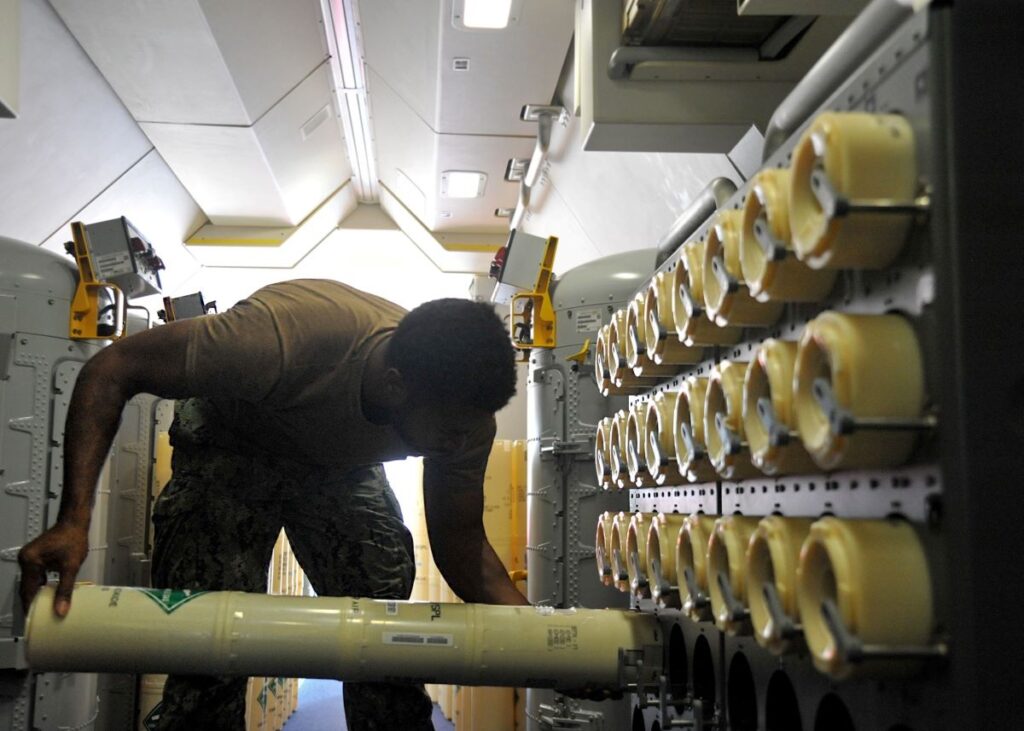
DELEON SPRINGS, FLORIDA – Oct. 20, 2025 – Sparton DeLeon Springs, LLC (Sparton), an innovative leader in and manufacturer of maritime defense solutions is honoring its 125th anniversary this year. Founded in 1900 as The Withington Company, Sparton has grown from a small Michigan manufacturer into a trusted defense contractor specializing in high-performance sonobuoys, advanced undersea warfare technologies, and beyond.  Sparton was acquired by Elbit Systems of America, LLC (Elbit America) in 2021. 

Today, Sparton specializes in the production of high-quality sonobuoys critical to the nation’s undersea and anti-submarine warfare. Producing more than 250,000 units annually, the company excels in precision manufacturing that is highly efficient and extremely effective.  

Sparton has delivered critical solutions that have successfully shaped many industries and strengthened America’s national security for over a century. From pioneering the country’s first all-electric radio in the 1920s to becoming a cornerstone of the United States anti-submarine warfare technology in the 1950s, Sparton continues to integrate precision engineering, cutting-edge sensor systems, and advanced maritime solutions to meet today’s challenges and anticipate future threats. 

“Sparton is the world leader in designing, developing, testing and producing complex maritime sensors, especially sonobuoys. The Sparton team plays a central role in the expansion of Elbit America’s maritime capabilities to its customers in the U.S. and abroad. We’re proud Sparton’s been part of the Elbit America family since 2021,” said Elbit America President and CEO Luke Savoie. 

As Sparton celebrates this milestone year, it continues to evolve with the same principles that have defined its past: creativity, precision craftsmanship, reliability and an unwavering dedication to safeguarding America and its allies. 

“For 125 years, Sparton has focused on meeting the ever-evolving needs of our nation,” said Chair of the Sparton DeLeon Springs, LLC Proxy Board Ken Krieg. “From its early manufacturing roots to its leadership in undersea warfare technology today, Sparton continues to innovate with purpose—supporting the United States and its allies. This anniversary honors our impressive history, but equally important, it underscores our readiness for what lies ahead.” 

“Sparton’s 125-year legacy is built on a foundation of innovation, trust, and an unwavering commitment to deliver exceptional technology and solutions that give our customers the competitive edge they need,” said Sparton DeLeon Springs, LLC Chief Executive Officer Donnelly Bohan. “We’re honored to serve our country and as we celebrate this impressive milestone, we also celebrate being a proud member of our community—where generations of families have built their careers helping America stay strong. We are all so proud of our employees who have dedicated their skills and expertise to strengthening our nation’s national security with their commitment to manufacturing precision and creative problem-solving.”   

The company kicked off its anniversary celebrations on Saturday, Oct. 18, with a Family Fun Day at its DeLeon Springs facility with more than 200 employees and family members in attendance. The celebration served as a thank-you to Sparton’s dedicated workforce and as an opportunity to honor the impressive history and contributions Sparton has made over 125 years.   


RTX’s Raytheon Begins Initial Production of SharpSight Surveillance Radar

Radar will deliver unmatched search and track capabilities for both land and maritime surveillance missions 

Release From RTX

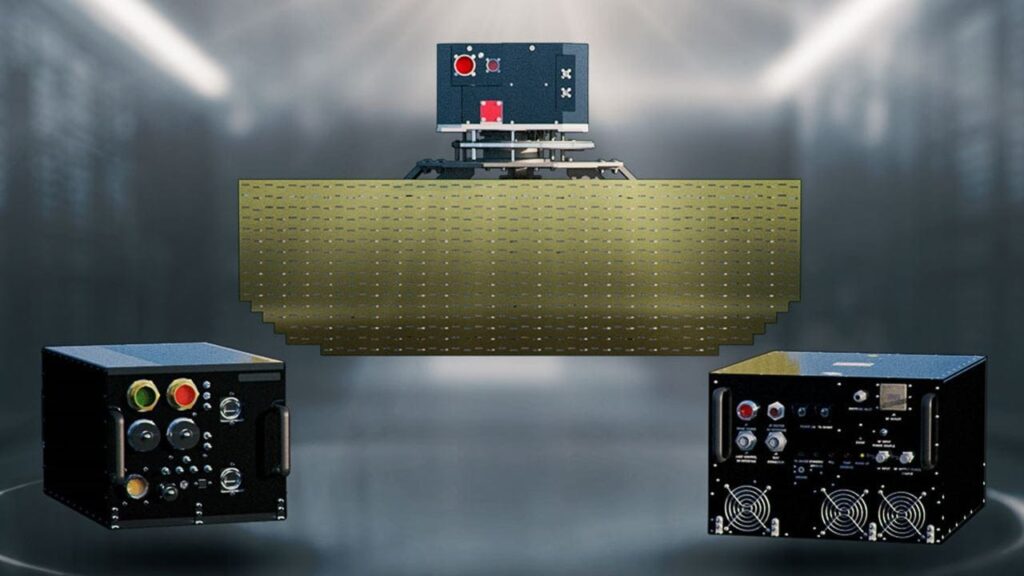
MCKINNEY, Texas (October 13, 2025) — Raytheon, an RTX (NYSE: RTX) business, has launched the initial production of its new SharpSight multi-domain surveillance radar. This next-generation system will provide high-altitude, real-time, high-resolution imaging with wide-area search and tracking for land and maritime surveillance, operating day or night in any weather condition. 

SharpSight fuses the capabilities of two of Raytheon’s proven radar families – the Highly Integrated Synthetic Aperture Radar (HISAR) and the SeaVue Multi-Role Radar (SVMR) – and can be rapidly integrated on a variety of manned and unmanned systems. Its open architecture enables inexpensive, rapid upgrades, ensuring operators remain ahead of emerging threats. 

“This radar represents the next step in Raytheon’s long legacy of intelligence, surveillance and reconnaissance innovation,” said Daniel Theisen, president of Advanced Products and Solutions at Raytheon. “By merging the proven capabilities of HISAR and SeaVue, we’re delivering a flexible, exportable and affordable radar system designed to outperform on the most demanding multi-domain surveillance missions.” 

SharpSight is designed for high-altitude precision and persistence, enabling critical missions such as anti-surface warfare, border protection, coastal monitoring, search and rescue, long-range surveillance, and more. It conforms with the latest U.S. Government export policy guidance enabling these advanced intelligence, surveillance and reconnaissance capabilities to be offered to global partners and allies. 


Successful First-Time JAGM Quad Launcher Demo Showcases Mission Integration Capabilities 

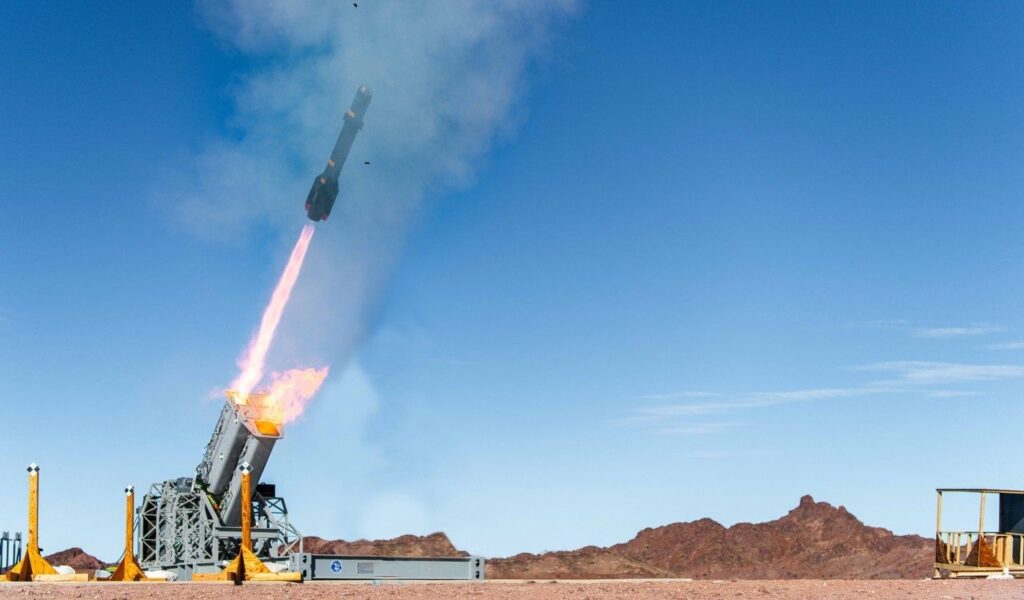
JAGM Quad Launcher (JQL) successful firing during demonstration  

Release From Lockheed Martin

In a world where threats are increasingly complex and interconnected, Lockheed Martin is redefining the art of mission integration, accelerating the delivery of innovative solutions that strengthen deterrence and enable modern forces to stay ahead of ready. 

Lockheed Martin successfully conducted a JAGM Quad Launcher (JQL) ground-based demonstration, marking a significant development milestone for the vertical launching system (VLS). Held on August 28 at Yuma Proving Grounds in Arizona, the demonstration showcased the successful integration of the Joint Air-to-Ground Missile (JAGM) with the JQL, culminating in a first-time launch event. 

The successful shot resulted in a direct hit on a stationary ground target and collection of real-time data of JAGM’s ignition, launch and flight from the launcher to target impact. The demonstration took place with the JQL positioned at a 45-degree angle, underscoring the system’s flexibility and potential for various operational applications. 

Mission-focused Innovation 

This demonstration is a testament to the collaborative efforts and agile forward-thinking of Lockheed Martin’s Missile & Fire Control and Rotary & Mission Systems teams. By leveraging cutting-edge technology and expertise from both teams, this demonstration paves the way for further advancements in JAGM’s VLS and Counter-Unmanned Aircraft Systems (C-UAS) capabilities. 

“This pivotal milestone achievement showcases the versatility and adaptability of JAGM to provide a robust defense capability for multiple mission scenarios,” said Casey Walsh, program management director of Multi-Domain Missile Systems at Lockheed Martin Missiles and Fire Control. “By driving progress in areas like vertical launch and counter-UAS capabilities with JAGM, we’re helping to ensure that our users have the tools they need to stay innovative and ahead of emerging threats.” 

With this demonstration being the first time a JAGM was flown from a cannister-based launcher, the integration of JAGM with the JQL system showcases its versatility to be adapted for multiple mission scenarios, providing a robust defense capability for both American forces and our allied partners.  

The JQL system features four independent, modular composite cells, known as canisters, and one of the biggest benefits and features of the system is that it allows for rapid reload of individual canister cells based on existing JAGM procedures, enhancing its operational efficiency. The JQL system is equipped with a pivot fixture, which enables the ease of loading and launching of JAGM at angled or vertical orientations. The JQL’s vertical launch capability supports rapid 360-degree engagement against targets (maritime, air and ground) around the launching platform. The self-contained vertical missile gas management system provides enhanced safety to crew members and launching platforms 

In addition, JQL’s modular design facilitates ease of installation onto any number of launching platforms: ships, patrol craft, vehicles and other various fixed-based applications. This design versatility also enables the JQL system to be adapted and scaled for multiple mission scenarios, providing a robust defense capability for armed forces. For example, the JQL system could be scaled down to one or two launch tubes, or multiple JQL systems could be mounted together on a platform to support a larger arsenal.  

“By continuing to build upon our five decades of vertical launching systems expertise, we are excited to see our scalable, flexible launching solutions continue to successfully meet expeditionary capability needs,” said Edward Dobeck, director of Launching Systems at Rotary and Mission Systems.  “The JQL launcher provides a combat-ready capability that meets multi-domain deployment objectives in a lightweight, easily transportable footprint that provides the same reliability expected of all our launching systems.” 

As the JQL development and integration timeline moves forward, Lockheed Martin continues to push the boundaries of what is possible in vertical launch system development, driving innovation and advancement in the field. 

The Future of Vertical Launch Capability 

The success of the recent JQL ground-based demonstration paves the way for future advancements for both JAGM and the JQL system, including an upcoming vertical launch demonstration in November 2025. This demonstration will showcase the vertical launch capability of the JAGM at a 90-degree angle, as well as its application in Counter-Unmanned Aerial Systems (C-UAS) operations. 

As the integration of JAGM with the JQL system evolves, it is expected to provide enhanced capabilities for users that require expedient multi-domain capabilities, enabling more effective and efficient operations in a variety of environments. With our focus on mission integration and innovation, Lockheed Martin is poised to play a leading role in shaping the future of global defense and security, delivering game-changing capabilities that enable modern forces to stay ahead of ever-evolving threats.