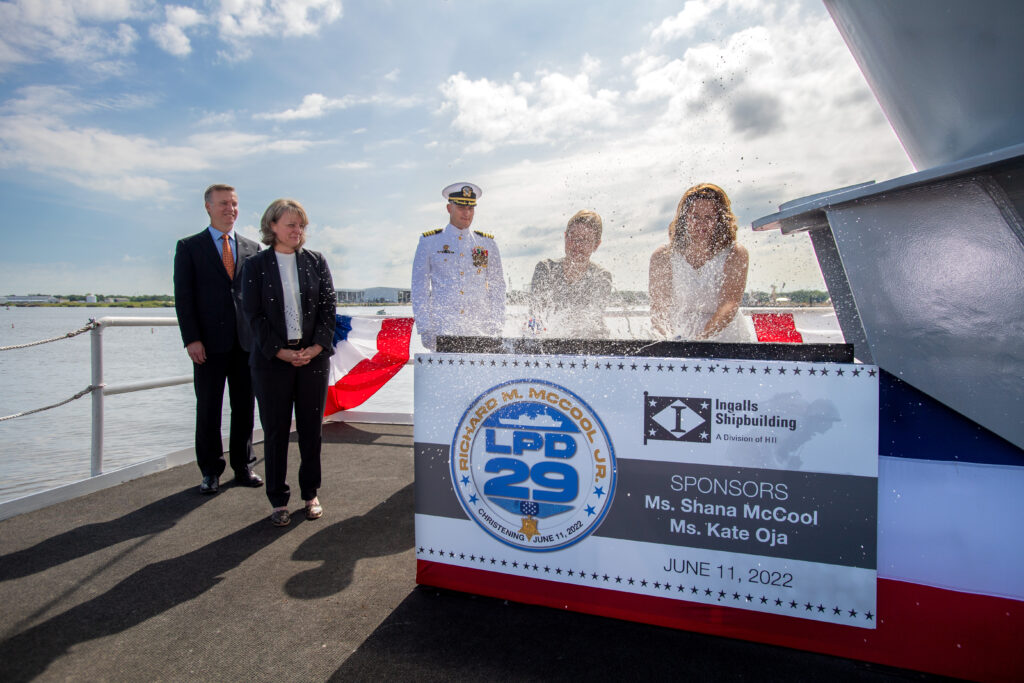
Ship sponsors Kate Oja and Shana McCool christen the ship named after their grandfather, Richard M. McCool Jr., on June 11. Looking on are Eric Raven, undersecretary of the Navy, Kari Wilkinson, president of Ingalls Shipbuilding, and Capt. Jeffrey Baker, prospective commanding officer of the ship. HII
PASCAGOULA, Miss. — HII announced June 11 that its Ingalls Shipbuilding division christened the company’s 13th amphibious transport dock, Richard M. McCool Jr. (LPD 29), constructed for the U.S. Navy.
“For nearly two decades, we have had the opportunity to build these amphibious ships, and we look forward to continuing this journey with such a valued partner,” Ingalls Shipbuilding President Kari Wilkinson said. “Today we reflect on Richard M. McCool Jr.’s bravery and heroism in front of a ship that will carry another generation of brave Sailors and Marines into missions defending our freedom.”
LPD 29 is named to honor U.S. Navy Capt. Richard M. McCool Jr., who was awarded the Medal of Honor for his heroic actions in rescuing survivors from a sinking destroyer and for saving his own landing support ship during a World War II kamikaze attack. His rescue efforts took place exactly 77 years prior to the day Richard M. McCool Jr. (LPD 29) was christened.
Undersecretary of the Navy Erik Raven was the keynote speaker.
“Richard M. McCool Jr. truly embodied the spirit of service above self,” Raven said. “The Sailors and Marines who will sail on this future ship carry on that legacy following the example of spirit, patriotism and selflessness set by Richard M. McCool Jr.”
When speaking of America’s defense capabilities, Raven said, “We are able to deploy exquisite capabilities across the globe in great part due to our dedicated shipbuilders and our talented team. These talented Americans are essential to making sure that our naval forces have the ships that they need.”
Richard M. McCool Jr. is co-sponsored by Shana McCool and Kate Oja, granddaughters of the ship’s namesake. Together, the two sponsors officially christened Richard M. McCool Jr. by smashing a bottle of sparkling wine across the bow of the ship. McCool spoke on behalf of both sponsors at today’s ceremony.
When speaking about her grandfather’s heroic acts some 77 years ago, McCool said, “To the commanding officer and future crew of this ship, may she (the ship) keep you safe. And in the words of our grandfather, may you always remember to fight as a unit and not as individuals.”
London Tech Bridge Breaks Down Barriers with New Collaboration Space
WESTMINSTER, London — The United Kingdom-based Tech Bridge hosted a ribbon-cutting ceremony June 13 to celebrate the grand opening of its innovation hub, said Liz Mildenstein of NavalX.
The London Tech Bridge will leverage partnerships with the U.S. Office of Naval Research Global and the Royal Navy Office of the Chief Technology Officer to foster connectivity, agility and innovation. The location will sponsor dialogue, joint investment and cooperative development between the two navies.
“The opening of the London Tech Bridge’s innovation hub represents a new way for great minds to come together in a unique atmosphere, share ideas and technologies, and foster more effective research collaboration,” said Chief of Naval Research Rear Adm. Lorin Selby. “This joint U.S.-U.K. partnership is critical to advance new ideas and keep our naval forces dominant.
“We’re looking for partners with strong curiosity, a passion for action and a commitment to scientific and technological excellence.”
Initially launched at the end of 2020 during a virtual ceremony, the London Tech Bridge has already made strides in moving the innovation needle.
For example, it played a critical role in the recent APEX underwater Challenge. The London Tech Bridge coordinated and arranged sponsorship for three research grants to teams from the University of Rhode Island in the United States, Robert Gordon University in Scotland and TNO (Netherlands Organisation for Applied Scientific Research) to execute the challenge. These teams helped unmanned underwater vessels sense objects with sonar or optical cameras and communicate what they “saw” to operators.
“The London Tech Bridge does exactly what it says on the tin,” said Rear Adm. James Parkin CBE, cutting the ribbon on behalf of the Royal Navy. “Being in London, right next to the strategic headquarters of our armed forces, and at the heart of this great global city, allows exposure not only to the latest thinking in defense innovation, but provides physical access to those varied organizations and individuals conducting some of the most exciting technological research and development anywhere in the world.
“As such, it’s all about tech — sharing our understanding of exciting developments in autonomy, materials, platforms, sensors, processing and concepts, and unlocking the Royal Navy’s connections to those world leading academic, industrial and public sector organizations in the U.K., towards achieving our common goals.
“And perhaps most importantly, it’s a figurative Bridge, one that permits the Royal Navy to reach across the Atlantic into the U.S. Navy, and vice versa, enabling our great nations to join forces in collaborating ever closer, in order to identify the opportunities, and solve the problems, that either or both of us have identified.”
The London Tech Bridge’s new location will also conduct its initial “Tea and Tech” in June, kicking off a monthly session with industry in specified technology areas. Tea and Tech will allow companies to pitch their ideas and technology to the U.S. and U.K. navies.
The Tech Bridge Network
The Tech Bridge network, powered by NavalX, spans 18 national and international locations. The network is designed to bridge the gap between the Navy and emerging entities like startups, small businesses, academia, nonprofits and private capital that aren’t traditionally part of the Navy’s development and acquisition process.
Although there is some commonality among them, the Tech Bridges offer unique services and focus areas within their ecosystems, based on the needs of the customers in their respective areas of responsibility. The London Tech Bridge uniquely builds upon the historic relationship between the U.S. and U.K., and seeks innovation and technology in several key focus areas, including artificial intelligence, autonomous systems, directed energy, green energy, advanced manufacturing and maintenance and sustainment.
While the Tech Bridge has defined these focus areas to guide its work, it remains open to innovative ideas and game-changing technologies; it remains agile and anticipates its focus areas evolving over time. Its U.K. co-director, Royal Navy Commander Laurence Mallinson, emphasized the need for flexibility in the Tech Bridge.
“Having started virtually a year ago, it is great to finally have a place to hold those vital face-to-face meetings and collaboration events. We are right in the heart of one of the world’s most advanced tech centers and so able to bring cutting-edge tech solutions to our navies’ problems,” he said. “We will focus on challenging industry with solving some of the most pressing problems that our navies are trying to resolve, and bring to the attention of our sailors and marines some of the greatest new technologies in the U.K.”
The addition of a physical innovation hub to the London Tech Bridge framework removes the typical meeting barriers of attending events on a military base and allows for the free flow of thoughts and innovation with limited bureaucracy.
HII Successfully Demonstrates Coordinated Manned and Unmanned Operations
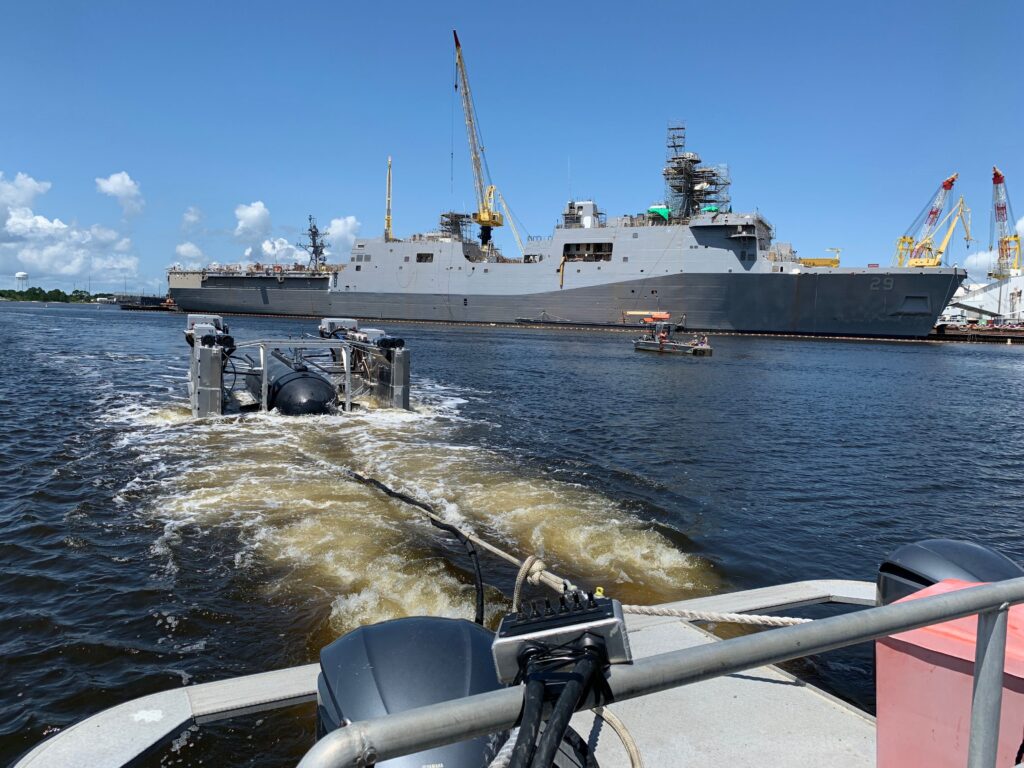
HII’s prototype Pharos platform being towed behind a vehicle in the Pascagoula River while recovering HII’s LDUUV during a June 8 demonstration. HII
PASCAGOULA, Miss. — HII demonstrated capabilities enabling amphibious warships to launch, operate with and recover large-diameter unmanned underwater vehicles, the company said June 13.
“HII is committed to advancing the future of distributed maritime operations and demonstrating our capability to support unmanned vehicles on amphibious ships,” said Kari Wilkinson, president of Ingalls Shipbuilding, which hosted and partnered in the demonstration between HII’s Ingalls Shipbuilding and Mission Technologies, with all of the participating vehicles being built by HII. “I am very proud of our team’s initiative to strengthen the flexibility of the ships we build by anticipating the challenges and opportunities that exist for our customers.”
HII-built San Antonio-class amphibious warships have unique well decks that can be flooded to launch and recover various maritime platforms. The U.S. Navy has previously demonstrated the ability to recover spacecraft from the amphibious warship well deck.
HII’s Advanced Technology Group, comprised of employees from across the company, performed the launch and recovery demonstration with a prototype platform called Pharos and HII’s LDUUV Proteus. The demonstration took place in the Pascagoula River.
The demonstration involved having the LDUUV approach and be captured by the Pharos cradle, while Pharos was being towed behind a small craft that simulated an amphibious ship at low speed. Pharos was put in a tow position, then using a remote control, it was ballasted down in the trailing position allowing the LDUUV to navigate into Pharos. Once the unmanned vehicle was captured, Pharos was de-ballasted back up into a recovery and transport position. The demonstration also included ballasting down to launch the LDUUV after the capture.
Pharos is outfitted with heavy duty wheels to allow its transport maneuverability within the well deck of an amphibious ship for stowage on the vehicle decks. Pharos can be rolled off the back of an amphibious ship while using the ship’s existing winch capabilities to extend and retract the platform from the well deck. The Pharos design is scalable and reconfigurable to fit various unmanned underwater or unmanned surface vehicles.
The Pharos design was conducted by HII, and three main partners supported the development. The University of New Orleans, in conjunction with the Navy, performed the initial model testing, and the prototype device was fabricated by Metal Shark in Louisiana.
HII is currently exploring modifications for other UUVs and participating in live demonstrations with the fleet within the next year. HII will use results from the Pharos demonstration to further mature concepts and continue to develop innovative national security solutions.
Navy, Marine Corps Dismissals for Refusing COVID-19 Vaccinations Now Total More Than 3,000
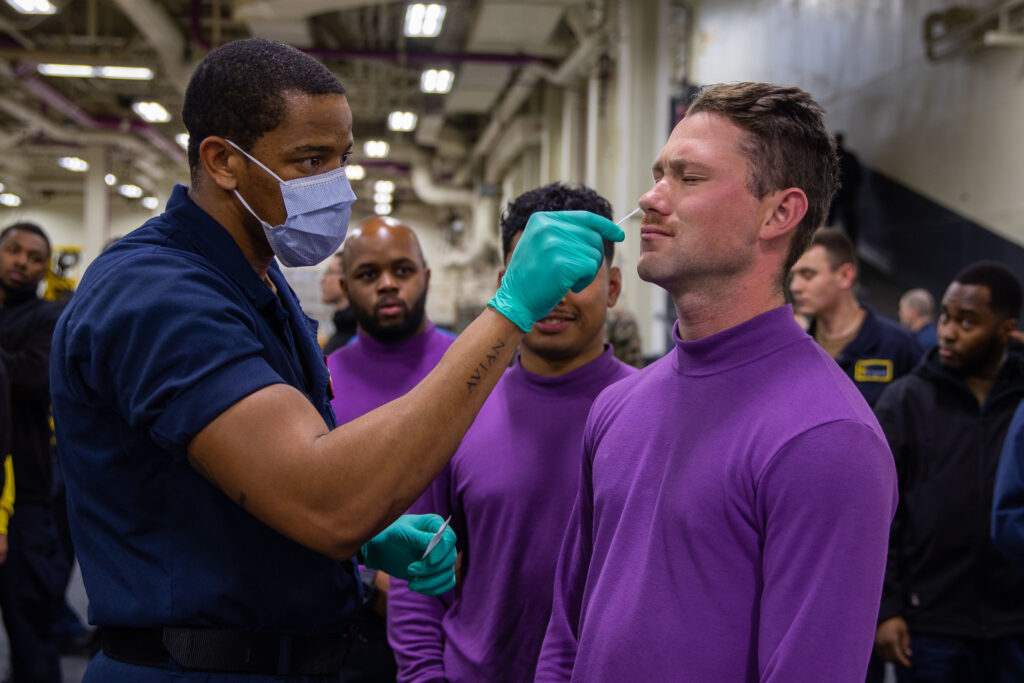
Hospital Corpsman 3rd Class Darion Wilson, left, administers a COVID-19 test in the vehicle stowage area aboard amphibious assault carrier USS Tripoli (LHA 7), May 19. Tripoli is underway conducting routine operations in U.S. 7th Fleet. U.S. NAVY / Mass Communication Specialist 3rd Class Maci Sternod
ARLINGTON, Va. — More than 2,000 U.S. Marines and 1,000 Sailors have been separated from the sea services for refusing vaccination against the COVID-19 coronavirus since the Defense Department ordered mandatory vaccinations late last year.
In its weekly COVID-19 Update on June 8, the U.S. Navy reported 1,099 separations for COVID-19 vaccine refusal. They included 980 active component Sailors, 98 Reservists, and 22 entry-level separations of new recruits during their initial training periods.
The Marine Corps, which shifted from a weekly to a monthly COVID update in mid-April, announced June 2 that 2,715 Marines have been separated from the Corps for vaccine refusal. There was no breakdown showing how many of those dismissed were active duty, reservists or recruits.
The fiscal 2022 National Defense Authorization Act enacted in December 2021 requires discharges of military personnel for vaccine refusal must be either honorable or general under honorable conditions.
According to the weekly Defense Department COVID update, 6,417 Marines and 6,806 Sailors are at least partially vaccinated and 194,639 Marines and 383,564 Sailors are fully vaccinated as of June 8. Both the Navy and Marine Corps, as well as the Pentagon, consider COVID-19 a readiness issue requiring full vaccination for all military personnel.
The Navy said 3,906 active duty Sailors and 3,279 personnel in the Ready Reserve remain unvaccinated as of June 1. The Marine Corps report doesn’t give specific figures, only stating fully and partially vaccinated percentages that indicate just 2% of the active force and 7% of reservists remain unvaccinated.
The Navy has granted 227 medical exemptions for COVID vaccination to active duty Sailors, all but 14 of them temporary. Only one of the 79 medical exemptions granted reservists was permanent. The Marine Corps said 742 requests for medical or administrative exemption from vaccination have been approved. As of June 1, the Marine Corps has received 3,719 requests for vaccination exemption on religious grounds. Only seven have been approved.
The Navy has gotten religious accommodation requests from 3,351 active duty Sailors and 864 in the Ready Reserve. Only 13 of the reservists’ requests have been conditionally approved and just one active duty Sailor’s was approved.
The Navy has been unable to discharge vaccine refusers since a federal judge in Texas granted a preliminary injunction in March barring the Navy from acting against the thousands of Sailors seeking exemption from vaccination on religious grounds. The U.S. Supreme Court later ruled the Navy could consider a Sailor’s vaccination status in making deployment and other operational decisions while a lawsuit on the Pentagon’s mandatory vaccination policy moves through the courts.
Raytheon Technologies Establishes Global Headquarters Office in Northern Virginia
Raytheon Technologies’ building in Arlington, Virginia. RAYTHEON TECHNOLOGIES
ARLINGTON, Va. — Raytheon Technologies announced today June 7 it will establish its global headquarters in Arlington, Virginia, just outside of Washington, D.C., a move similar to the one recently announced by Boeing.
The location increases agility in supporting U.S. government and commercial aerospace customers and serves to reinforce partnerships that will progress innovative technologies to advance the industry, Raytheon said in a press release, adding that Washington, D.C., serves as a convenient travel hub for the company’s global customers and employees.
The new global headquarters office will be in Arlington’s Rosslyn neighborhood alongside the Raytheon Intelligence & Space business. Each of the company’s four business units currently have operations in Virginia, the company said, and it will maintain its U.S. presence, which includes 600 facilities across 44 states and territories.
Raytheon Technologies said it has not accepted or sought any financial incentives from any state or municipality to support the establishment of the global headquarters office in Virginia.
Mayflower Autonomous Ship Reaches Canada After Suffering Mechanical Issues
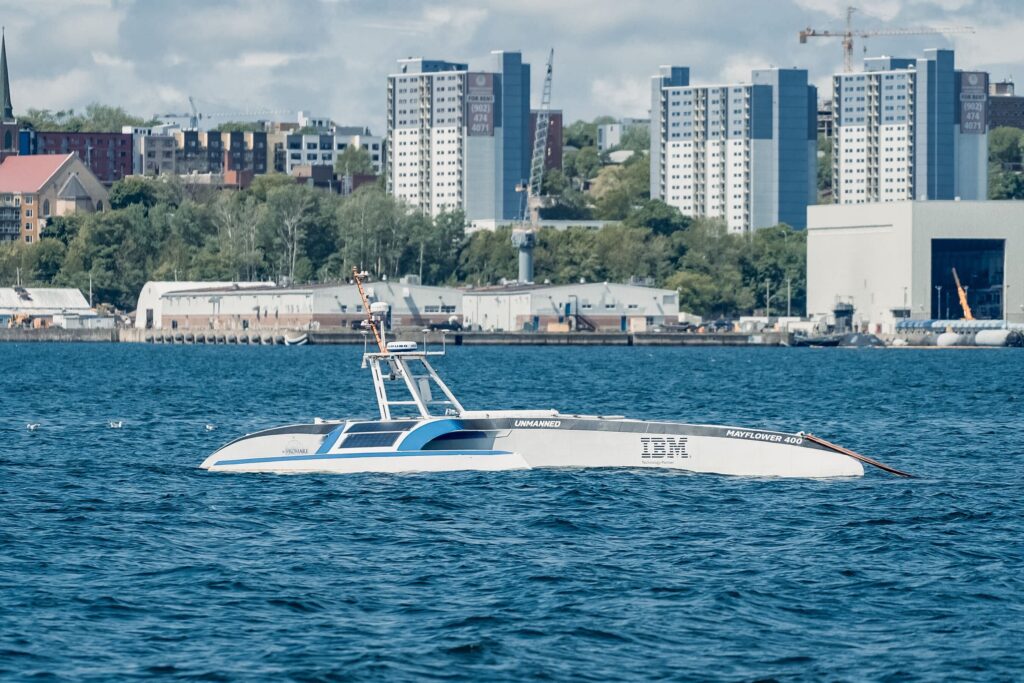
The Mayflower Autonomous Ship arrives in Halifax, Nova Scotia, for equipment troubleshooting before continuing its journey. IBM
HALIFAX, NOVA SCOTIA — After a 40-day voyage, and after more than year of delay due to a mechanical problem, the Mayflower autonomous ship arrived in North America, at Halifax, Nova Scotia on June 5, announced program partners IBM and ProMare.
The ship has been dogged by mechanical problems even as its artificial intelligence guidance system was able to guide it across the ocean.
The catamaran traveled from Plymouth, United Kingdom, to Halifax, and later is expected to make appearances in the Washington, D.C. area. According to IBM, it’s the first nautical vessel to complete an unmanned, crewless voyage across the Atlantic.
Mayflower was intended to reach Plymouth, Massachusetts. Over the May 28-29 weekend, the Mayflower developed an issue with the charging circuit for the generator starter batteries, according to IBM.
On May 30, the team had to switch to the back-up navigation PC. ProMare decided to divert to Halifax, Nova Scotia, as the closest viable port, to investigate and fix these issues.
The ship was designed and built by marine research nonprofit ProMare, with IBM acting as lead technology and science partner.
Artificial intelligence and edge computing technologies underpin the ship’s AI Captain, which uses six cameras, more than 30 sensors and 15 edge computing devices to help make decisions.
“This makes it possible for the AI Captain to adhere to maritime law while making crucial split-second decisions, like rerouting itself around hazards or marine animals, all without human interaction or intervention,” IBM said in a blog post.
NATO Concludes Vigilance Activity Neptune Shield 22
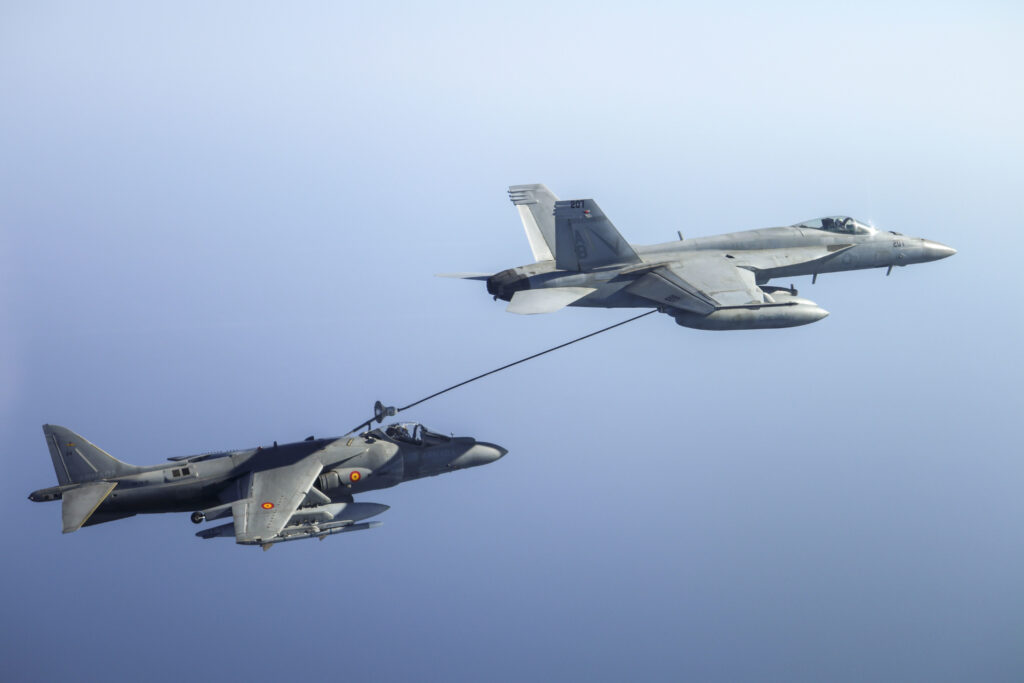
An F/A-18E Super Hornet, attached to the “Fighting Checkmates” of Strike Fighter Squadron (VFA) 211, refuels a Spanish air force AV-8B II+ Harrier in support of Neptune Shield 22, May 21. U.S. NAVY / Strike Fighter Squadron 11
OEIRAS, Portugal — Naval Striking and Support Forces NATO (STRIKFORNATO) and U.S. 6th Fleet concluded the NATO-led Vigilance Activity Neptune Shield 2022 from STRIKFORNATO’s Joint Operations Centre in Oeiras, Portugal, May 31, STRIKFORNATO said June 3.
The two-week vigilance activity demonstrated NATO’s ability to integrate the command and control of multiple carrier strike groups, an amphibious ready group and a Marine expeditionary unit, involving the participation of 25 NATO allied and partner nations.
Neptune Shield kicked off May 17 from the Baltic, Adriatic, Ionian and Mediterranean Seas, and involved missions at sea, in the air and on the ground across Europe, supporting both Allied Joint Force Command Naples and Joint Force Command Brunssum.
“Credible force projection to defend the alliance has to be integrated across multiple domains; sea, air, land as well as space and cyberspace. NESH22 further integrated those domains, and was an essential step in the progression of the Neptune series to demonstrate NATO’s ability to defend against any threat from any direction,” said Adm. Robert P. Burke, commander, JFC Naples.
While STRIKFORNATO executed command and control of the USS Harry S. Truman CSG, the ITS CAVOUR CSG and the Combined Task Force 61/2, which included the USS Kearsarge ARG and the 22nd MEU, Supreme Headquarters Allied Powers Europe coordinated the activity, integrating NATO Allied Maritime Command and NATO Allied Air Command.
“Demonstrating and enhancing NATO’s high-end maritime warfare capabilities shows the world the true strength and teamwork of our alliance,” said Vice Adm. Gene Black, commander, STRIKFORNATO and 6th Fleet. “NATO’s capacity to conduct integrated operations in the maritime domain ensures stability and peace throughout Europe, and validates more than seven decades of alliance interoperability.”
STRIKFORNATO led and coordinated maritime and expeditionary forces composed of four carrier strike groups from three different nations, more than 30 ships and 160 aircraft, including forces from the Harry S. Truman CSG, the Kearsarge ARG-MEU, the Italian Navy CAVOUR CSG, the Spanish Navy Juan Carlos I CSG and the Standing NATO Maritime Group 1 and 2. More than 200 aircraft sorties and 80 vigilance activities were executed by more than 11,000 personnel from 25 NATO and partner countries.
Nations participating in Neptune Shield 2022 included Albania, Belgium, Bulgaria, Canada, Czech Republic, Croatia, Denmark, Estonia, Finland, France, Germany, Greece, Hungary, Italy, Latvia, Lithuania, the Netherlands, Poland, Portugal, Romania, Slovenia, Spain, Turkey, the U.K. and the U.S.
Boeing Teams with Canadian Industry to Offer P-8A Poseidon
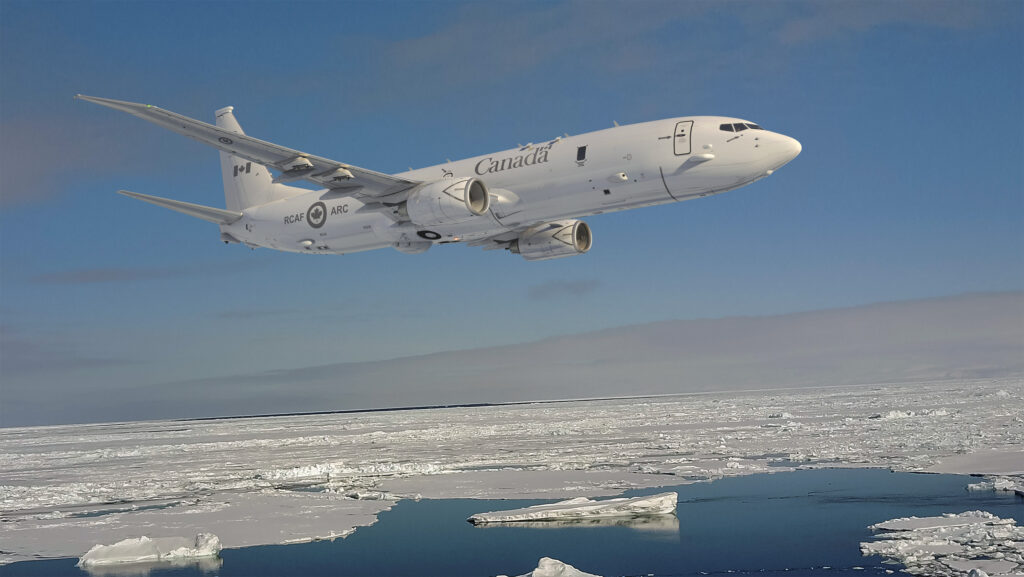
Boeing and Canadian industry partners plan to collaborate to provide the P-8A Poseidon for the Canadian Multi-Mission Aircraft requirement. BOEING
OTTAWA, Ontario — Boeing and several Canadian industry partners announced June 1 their intent to collaborate to provide the capability and sustainability of the proven P-8A Poseidon for the Canadian Multi-Mission Aircraft requirement.
Team Poseidon, consisting of CAE, GE Aviation Canada, IMP Aerospace & Defence, KF Aerospace, Honeywell Aerospace Canada and Raytheon Canada, forms the cornerstone of a Canadian P-8 industrial footprint. The team builds on 81 Canadian suppliers to the platform and to more than 550 Canadian suppliers across all provinces contributing to Boeing’s annual CAD $5.3 billion in economic benefit to Canada, supporting more than 20,000 Canadian jobs.
The Boeing P-8A is a proven military off-the-shelf solution with nearly 150 aircraft delivered to five nations to date. The P-8 will improve Canada’s capability to defend its northern and maritime borders while ensuring interoperability with NORAD and NATO allies. As a leading platform for reducing the environmental impact of military aircraft, the P-8 can operate on a 50% blend of sustainable aviation fuel today with aspirations to move toward 100% with investment in new technology.
“As a dedicated partner of Canadian industry for more than a century, Boeing is proud to bring together a world-class team of companies in support of our P-8 offering to Canada,” said Heidi Grant, president, Business Development, Boeing Defense, Space & Security and Government Services. “Together, we will bolster Canada’s aerospace and defense industry through a 100% Industrial and Technical Benefits commitment if awarded the CMMA contract.”
The P-8A Poseidon offers advanced anti-submarine warfare, anti-surface warfare, intelligence, surveillance and reconnaissance, and search and rescue capability, and is the only in-service, in-production multi-mission aircraft that meets all CMMA requirements. The P-8 also has the added distinction of strengthening the connection between national security and environmental stewardship.
Built on the proven 737 Next-Generation airframe, P-8’s 86% commonality with more than 4,000 in-service 737NGs delivers lower life-cycle sustainment costs due to large economies of scale.
U.K. Royal Navy Submarines Set for £265 Million Tomahawk Missile Upgrade
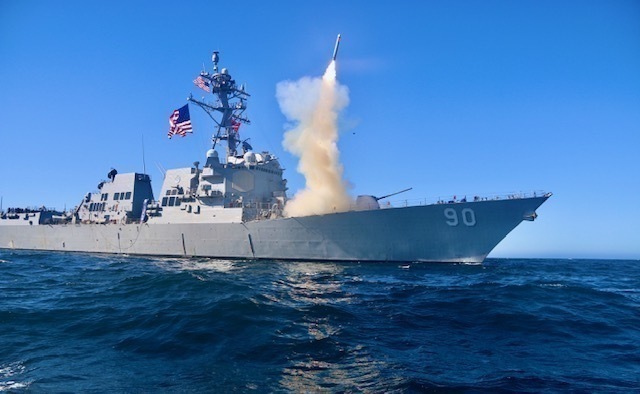
The guided-missile destroyer USS Chafee (DDG 90) launches a Block V Tomahawk, the weapon’s newest variant, during a three day missile exercise in 2020. U.S. NAVY / Ens. Sean Ianno
LONDON — The United Kingdom’s stock of Tomahawk Land-Attack Missiles will be upgraded on Royal Navy submarines to ensure the weapon is even more effective against future threats, the U.K. Ministry of Defence said June 1.
In a £265 million ($334 million USD) contract with the U.S. government, with maintenance and technical support at the U.K. sites of BAE Systems, Babcock International and Lockheed Martin, the Royal Navy’s Astute-class submarines will be armed with an enhanced Block V standard missile, capable of striking severe threats at a range of up to 1,000 miles.
At approximately 5.6 meters long and weighing 2,200 kilograms — a similar weight to a 4×4 car — the high subsonic Tomahawk was first introduced into U.K. service in 1998 and can hit inland targets from the sea within minutes. A weapon of choice since then, it has been successfully deployed during operations in Afghanistan, Libya and Iraq.
“This upgrade will equip our Astute-class attack submarines with the one of the most lethal and precise long-range strike weapons,” said Minister for Defence Procurement Jeremy Quin. “Enhancing this cutting-edge missile system will ensure the U.K. can strike severe threats up to 1,000 miles away.”
The Tomahawk missiles will be upgraded as part of a foreign military sale with the U.S. government, which was negotiated by the MoD’s procurement arm, Defence Equipment and Support, and will be active from July.
Making use of existing U.S. research and expertise on the upgraded missile, the contract will mean the United Kingdom continues to receive full access to the U.S. Tomahawk program, support package and upgrades.
“Not only will this FMS sustain and improve a proven, crucial operational capability for any future conflicts, it will continue to ensure interoperability with our U.S. allies and the follow-on support arrangements will sustain jobs for UK industry,” said Ed Cutts, DE&S’ director of weapons.
Due to be operational in the mid-2020s, the upgraded Tomahawk will align with the delivery of the latest Astute-class submarines.
HII Uses Movie Release to Celebrate Its Workforce
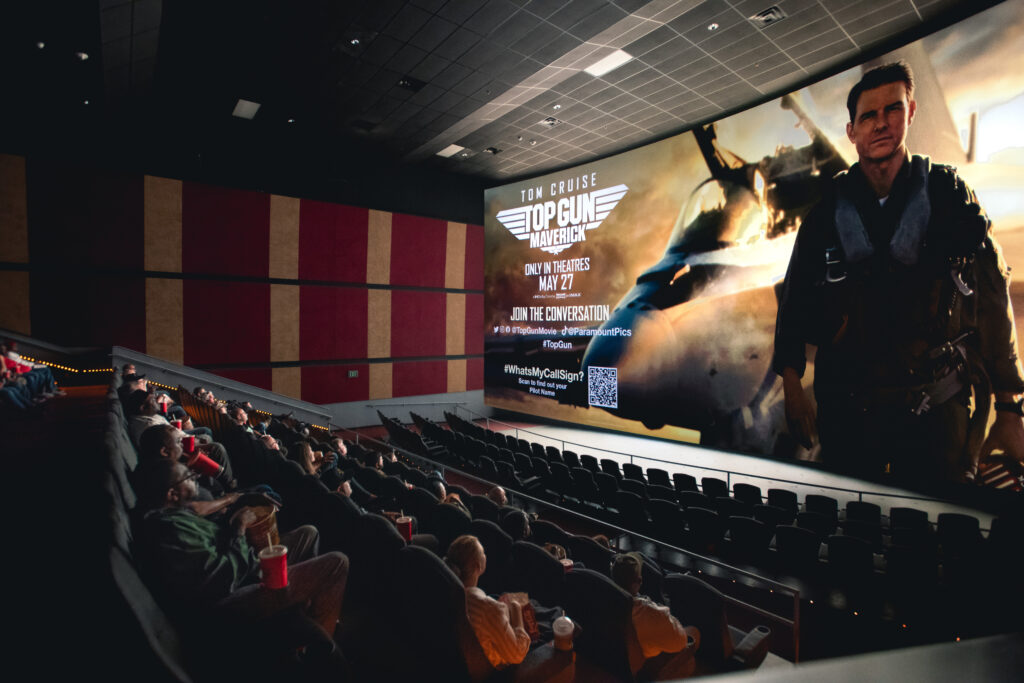
NEWPORT NEWS, Va. — With HII-built aircraft carriers featured prominently in the movie release of “Top Gun: Maverick,” the nation’s largest shipbuilder recognized the release as an opportunity to celebrate its workforce, their contribution to national security and the company’s growing technologies business. In Virginia, where HII is the state’s largest industrial employer, the company’s Newport News Shipbuilding division invited shipbuilders to get an early screening of the movie, the company said May 27.
“This team builds the most powerful and survivable ships in the world in support of national security,” said Danyelle Saunders, who leads the Newport News Shipbuilding Engagement, Diversity and Inclusion Office. “We’re excited that the movie shines a light on their hard work, and showcases how these incredibly capable platforms function on behalf of the country.”
HII is America’s only builder of nuclear-powered aircraft carriers.
A total of 800 Newport News Shipbuilding shipbuilders across shifts were invited to get an early screening of the movie after or before work on Wednesday, May 25, and Thursday, May 26, before “Top Gun: Maverick” officially hit theaters. Additionally, 1,200 vouchers have been provided for additional shipbuilders to see the movie.
“It’s great the company would do this, especially a pre-showing,” said Newport News Shipbuilding Engineering Technician Will Wiley, who attended the Thursday screening. “We play a huge role in building carriers, so it’s great to see something we were part of on the big screen.”
DeWolfe “Chip” Miller, corporate vice president of customer affairs for HII, contributed to the production of “Top Gun: Maverick” during his career in the Navy as the commander of Naval Air Forces.
“The aircraft carriers we build are the most technologically advanced in the world,” Miller said. “We deliver them to the U.S. Navy who man, train and equip Sailors who breathe life into these magnificent machines and take them to sea. Together, we are an unstoppable team: shipbuilders and Sailors. Our country needs that team now more than ever.”
As America recognizes the 100-year legacy of aircraft carriers this year, all U.S. nuclear-powered aircraft carriers operating in the Navy fleet today were built at Newport News Shipbuilding, including USS Theodore Roosevelt (CVN 71) and USS Abraham Lincoln (CVN 72) seen in “Top Gun: Maverick.”
HII’s Ingalls Shipbuilding and Mission Technologies divisions also initiated similar efforts to connect employees with the company’s mission through opportunities to receive tickets to see the movie while it is in theaters.