Teledyne FLIR Introduces Hadron 640R Dual Thermal-Visible Camera for Unmanned Systems
Teledyne FLIR’s Hadron 640R radiometric thermal and visible dual camera module. TELEDYNE FLIR
GOLETA, Calif. and ORLANDO, Fla.― Teledyne FLIR announced the release of its high-performance Hadron 640R combined radiometric thermal and visible dual camera module on April 25.
The Hadron 640R design is optimized for integration into unmanned aircraft systems, unmanned ground vehicles, robotic platforms and emerging AI-ready applications where battery life and run time are mission critical.
The 640 x 512 resolution Boson longwave infrared thermal camera inside the Hadron 640R can see through total darkness, smoke, most fog, glare, and provide temperature measurements for every pixel in the scene. The addition of the high definition 64 MP visible camera enables the Hadron 640R to provide both thermal and visible imagery compatible with today’s on-device processors for AI and machine-learning applications at the edge, the company said.
“The Hadron 640R provides integrators the opportunity to deploy a high-performance dual-camera module into a variety of unmanned form factors from UAS to UGV thanks to its incredibly small size, weight, and power requirement,” said Michael Walters, vice president product management, Teledyne FLIR. “It is designed to maximize efficiency and its IP-54 rating protects the module from intrusion of dust and water from the outside environment.”
The Hadron 640R reduces development costs and time-to-market for integrators and original equipment manufacturer product developers by offering a complete system through a single supplier, Teledyne FLIR. This includes offering drivers for market-leading processors from NVIDIA, Qualcomm, and more, plus industry-leading integration support and service from a support team of experts. It also offers flexible 60 Hz video output via USB or MIPI compatibility. Hadron 640R is a dual use product and is classified under U.S. Department of Commerce jurisdiction.
NGC to Develop Next-Gen Relay Ground Station for NIWC Pacific
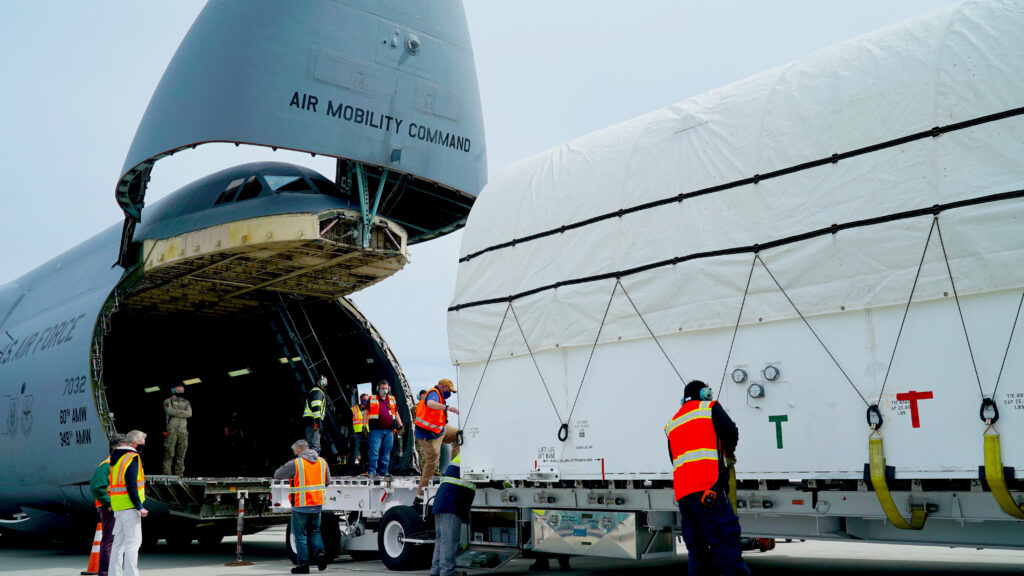
A ground crew loads the U.S. Space Force’s SBIRS GEO-5 satellite onto a C-5M Super Galaxy aircraft for transport operations at Moffett Federal Airfield, California, on March 17, 2021. U.S. SPACE FORCE / Walter Talens
BOULDER, Colo. — Northrop Grumman has been awarded a $99.6 million contract by U.S. Naval Information Warfare Center Pacific to provide mission-critical capabilities for Relay Ground Station-Asia (RGS-A), the company said April 19.
Northrop Grumman will design, develop, integrate, test and deliver the first of the next-generation relay ground stations to support legacy and future missile-launch and missile-warning detection satellites.
“The advanced technologies we bring to this mission build on our proven capabilities to provide existing and future missile warning systems that help keep our nation and its allies safe,” said Aaron Dann, vice president of strategic force programs at Northrop Grumman. “The model-based open-systems architecture provides the ability to rapidly deploy follow-on RGS systems in future locations around the world.”
The RGS-A award will help address the U.S. Space Force’s mission to revolutionize existing missile warning and missile defense systems with the Future Operationally Resilient Ground Evolution system. A key element of the FORGE architecture includes relay ground stations that support existing and new satellite constellations and the capability to handle changes in bandwidth and resiliency.
NIWC Pacific will develop six antennas for RGS-A to enable the Space Systems Command Next-Generation Space Based Infrared System (SBIRS) Ground System to operate the legacy satellites in geosynchronous orbit. The antennas will be deployed to the island of Guam and remotely monitored and operated from the United States.
Most of the work for the five-year contract will take place at Northrop Grumman’s campus in Boulder, where it just opened a 23,680-square-foot office building. Northrop Grumman has more than 2,200 employees across Colorado supporting key customers including the U.S. Space Force, Air Force, Missile Defense Agency and the intelligence community.
U.S., Iceland Wrap Up Exercise Northern Viking 2022
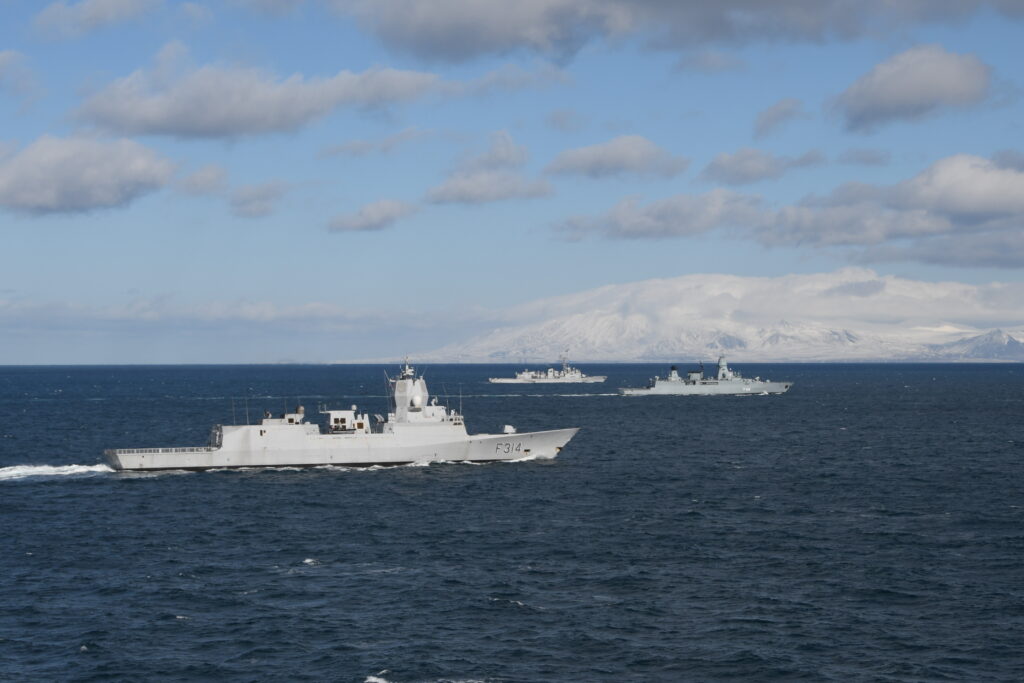
From left to right, the Norwegian Fritdjof Nansen-class frigate HNoMS Thor Heyerdahl (F314), French F70 type frigate FS Latouche-Tréville (D646) and German Sachsen-class air-defense frigate FGS Sachsen (F219) sail in formation in the North Atlantic Ocean in support of exercise Northern Viking 22. FRENCH NAVY
ICELAND — At sea, French, German and Norwegian surface combatants were joined by American and German maritime patrol aircraft in a hunt for adversary submarines while small boats conducted visit, board, search and seizure missions on suspect vessels.
On land, near Keflavík Air Base, an Icelandic coast guard rescue helicopter transported trapped and injured citizens to a temporary medical facility staffed by members of 22nd Marine Expeditionary Unit’s Shock Trauma Platoon and host nation medical personnel for triage and treatment.
For the last two weeks, allied nations have exercised these capabilities and more, coming together to hone their skills and enhance cooperation during the Iceland-hosted, U.S. 6th Fleet-executed exercise Northern Viking 22, U.S. 6th Fleet Public Affairs said April 16.
“Northern Viking 22 has been incredibly successful for us and for the participating Allies,” said Cmdr. Marvin Ingólfsson, Deputy Commander of Keflavík Air Base. “We have learned from each other these last two weeks and we have shared tactics and procedures, improving our ability to operate together in the defense of Iceland and of the lines of communication that run through this area.”
The exercise, which began April 2 and concluded April 14, initially focused on protecting the critical infrastructure of Keflavík Air Base. Exercise participants established temporary secondary refueling positions for Allied aircraft while working to neutralize security threats to the base and its personnel.
“Northern Viking is really important for our cooperation in the high north seas and to our country in defense of law enforcement scenarios,” said Lt. Ásgeir R. Gudjonsson, the Icelandic coast guard improvised explosive device disposal specialist. “It’s good to have a go at actual events and the training is vital for us. We learned that [different EOD teams] differ a bit, but they’re close — so we can work really well together.”
The first week of the exercise also included air defense scenarios, coordinated shiphandling evolutions and hydrographic and airfield surveys. Throughout the exercise, allied maritime forces practiced a variety of evolutions to enhance their cooperation and coordination in defending Iceland and the sea lines of communication in the Greenland, Iceland, United Kingdom (GIUK) gap.
Participants shifted their focus during the latter half of the exercise to the Marines of the 22nd Marine Expeditionary Unit and Royal Marine Commandos as they conducted multiple ship-to-shore operations, a natural progression in complexity of the overall exercise. Marines and Sailors from the USS Kearsarge Amphibious Ready Group and 22nd MEU participated in a tactical recovery of aircraft and personnel, simulated raids on illicit compounds and visit, board, search and seizure operations.
Northern Viking 22, led by the U.S. 6th Fleet as a maritime-focused event for the first time in decades, established a framework for future iterations of the Northern Viking exercise. As units and personnel depart Iceland for their own national taskings and future missions, the planning cycle for Northern Viking 24 is right around the corner. With lessons learned and invaluable training experiences and opportunities to look back on, exercise planners look forward to building on the successes of Northern Viking 22.
State Dept. Approves Possible Sale of AH-1Z Helicopters to Nigeria
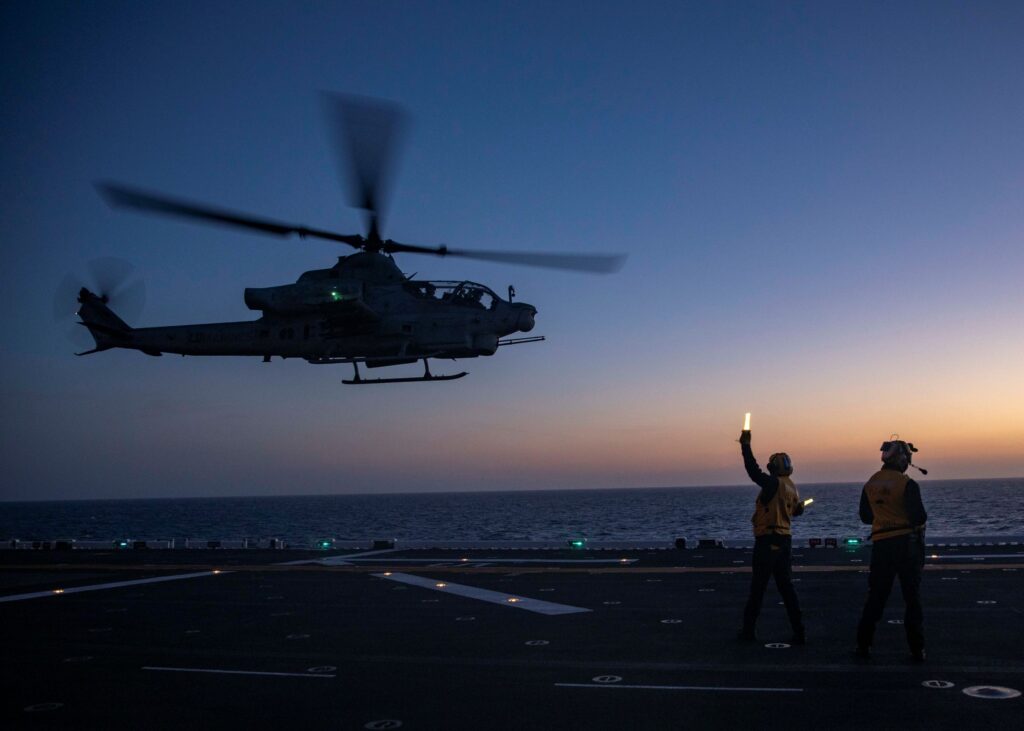
Airman Kory Vogel signals an AH-1Z Viper on the flight deck of amphibious assault ship USS Makin Island (LHD 8), April 13. U.S. NAVY / Mass Communication Specialist 3rd Class Nadia Lund
WASHINGTON — The U.S. State Department has approved a possible Foreign Military Sale to Nigeria of 12 Bell AH-1Z attack helicopters and related equipment for an estimated cost of $997 million, the Defense Security Cooperation Agency said in an April 14 release.
The sale would make Nigeria the third foreign nation to order the AH-1Z, the others being Bahrain and the Czech Republic. The main operator of the AH-1Z is the U.S. Marine Corps.
Nigeria has requested to buy 12 AH-1Z Viper attack helicopters as well as associated avionics, sensor systems, and spare engines and parts. The deal also includes 2,000 Advanced Precision Kill Weapon System (APKWS) guidance sections for 2.75-inch rockets.
The announcement said the possible sale also would include “tools and test equipment; technical data and publications; personnel training and training equipment; mission planning system; U.S. government and contractor engineering; technical, and logistics support services; U.S. government and contractor assistance and oversight of facilities construction to include the provisioning of plans, drawings and specifications.”
“The proposed sale will better equip Nigeria to contribute to shared security objectives, promote regional stability and build interoperability with the U.S. and other Western partners,” the announcement said. “This sale will be a major contribution to U.S. and Nigerian security goals. Nigeria will have no difficulty absorbing the equipment and services into its armed forces.”
The principal contractors will be Bell Helicopter, Textron, of Fort Worth, Texas, and General Electric Co., of Lynn, Massachusetts.
Destroyer Frank E. Petersen Jr. Sailed Away From Ingalls Shipbuilding
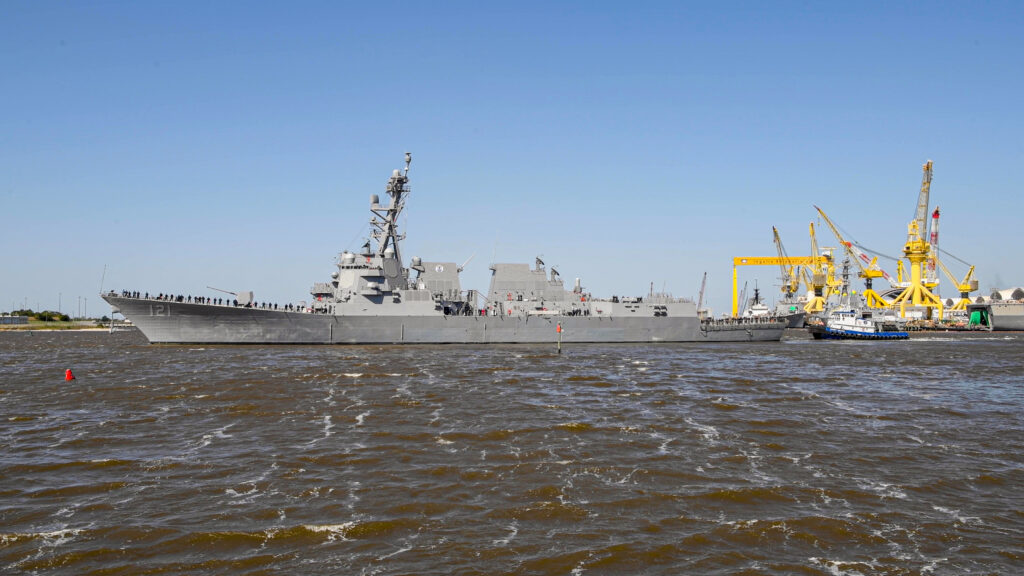
Arleigh Burke-class guided-missile destroyer Frank E. Petersen Jr. (DDG 121) departed HII’s Ingalls Shipbuilding division on Friday, April 8. HII
PASCAGOULA, Miss. — Arleigh Burke-class guided-missile destroyer Frank E. Petersen Jr. (DDG 121) departed from HII’s Ingalls Shipbuilding division on April 8, the company said April 13. Frank E. Petersen Jr. will be commissioned next month in Charleston, South Carolina, before sailing to its homeport at Hawaii’s Joint Base Pearl Harbor-Hickam.
“I’m very grateful for the resilient and dedicated shipbuilders on our team, each is world class,” said Kari Wilkinson, president of the Ingalls Shipbuilding.
“Watching Frank E. Petersen Jr. sail away demonstrates what this shipyard is capable of, even in the face of a pandemic,” said Donny Dorsey, Ingalls vice president of operations and previously DDG 121 ship program manager. “The Ingalls Shipbuilding team, and all those that contribute to the mission, are the best. Despite challenges, the hard work of the entire shipbuilding team enable this very proud day — watching the Navy sail this ship and join the fleet to support the defense of our nation.”
Frank E. Petersen Jr. is the 33rd destroyer Ingalls has built for the U.S. Navy, with five more currently under construction at Ingalls, including Lenah Sutcliffe Higbee (DDG 123), Jack H. Lucas (DDG 125), Ted Stevens (DDG 128), Jeremiah Denton (DDG 129) and George M. Neal (DDG 131). Ingalls is working with the Navy to keep the destroyer line strong as the Navy transitions to the next generation of guided missile destroyers.
Frank E. Petersen Jr. is named to honor the U.S. Marine Corps’ first African American aviator and general officer. After entering the Naval Aviation Cadet Program in 1950, Petersen went on to fly more than 350 combat missions during the Korean and Vietnam wars.
Arleigh Burke-class destroyers are highly capable, multi-mission ships and can conduct a variety of operations, from peacetime presence and crisis management to sea control and power projection, all in support of the United States military strategy. Guided missile destroyers are capable of simultaneously fighting air, surface and subsurface battles. The ship contains myriad offensive and defensive weapons designed to support maritime defense needs well into the 21st century.
Czech Republic Chief of Defense Signs Beams of AH-1Z and UH-1Y
Czech Republic Chief of Defense Gen. Aleš Opata signs an H-1 aircraft beam. BELL TEXTRON
AMARILLO, Texas — Bell Textron Inc. completed another step in the production of AH-1Z and UH-1Y helicopters for international customers, the company announced April 14.
Czech Republic Chief of Defense Gen. Aleš Opata and delegates visited Bell’s Amarillo Assembly Center in a landmark meeting to observe the Czech Republic H-1 aircraft production line.
“Hosting Gen. Opata at our Amarillo Assembly Center allows us to showcase the significant progress Bell has made in aircraft production to support this vital international program and customer,” said Mike Deslatte, H-1 vice president and program director. “We are honored to continue our great relationship with the Czech Republic as we prepare to provide them with leading defense aircraft and continue the success of the H-1 program.”
During the visit, Gen. Opata signed the beams of the first AH-1Z and UH-1Y aircraft that will be delivered to the Czech Republic. Production continues on schedule with all 12 aircraft expected to be complete in 2023.
“In military operations today, one of the key requirements is to be able to win in both aircraft capabilities and logistics support,” said Nate Green, H-1 program manager. “There is no better example of two complementary aircraft regularly operating from expeditionary locations and completing as many missions together as the AH-1Z and UH-1Y.”
The Bell AH-1Z and UH-1Y offer advanced capabilities for defense missions and decrease the maintenance and operational footprint due to their 85% commonality. Bell is actively producing AH-1Zs for the U.S. Marine Corps and expects to complete deliveries this year, followed by production for international operators. Bell recently completed the first delivery of four AH-1Z helicopters to the Bahrain Defence Force and expects to complete the first international delivery of the AH-1Z this year.
Navy, Marine Corps Aircrew’s New Training Devices Improving Capability, Readiness
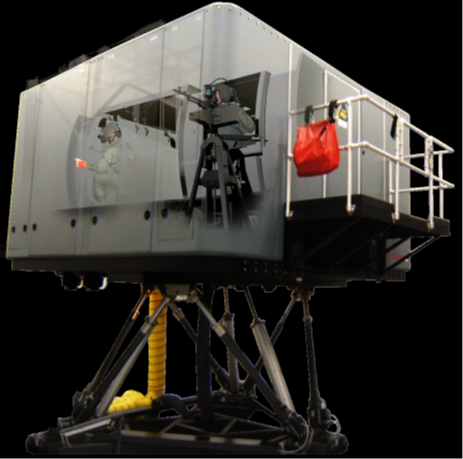
The Naval Aviation Training Systems and Ranges program office recently delivered the first fully capable Naval Aircrewman Training Systems and Marine Common Aircrew Trainers to the fleet. The graphic displays U.S. Navy aircrew conducting training in an aircrew virtual environment trainer. U.S. NAVY
PATUXENT RIVER, Md. — The Naval Aviation Training Systems and Ranges program office (PMA-205) recently delivered the first fully capable Naval Aircrewman Training Systems (NATS) and Marine Common Aircrew Trainers (MCAT) to the fleet, the Naval Air Systems Command said April 12.
The NATS was delivered to Naval Air Station Mayport, Florida, and two MCATs were delivered to Marine Corps Air Station New River, North Carolina. Both the NATS and the MCAT devices are being used to conduct initial, integrated crew training and proficiency flights, ultimately reducing flight hours in operational aircraft, reducing and and in some cases eliminating ordnance expenditures, and reducing high-risk evolutions that could lead to mishaps.
“This is long overdue” said Capt. Lisa Sullivan, PMA-205 program manager, who oversees the two programs. “In the past, H-60, H-53, H-1, and V-22 aircrew did not have an opportunity to start their training in a controlled simulator environment before entering into a dynamic aircraft environment. For our Marine Corps aircrew, it provides the ability to gain initial weapon engagement proficiency in a simulator before live fire training on operational flights.”
The NATS device is the first of nine deliveries under the Aircrewman Training Optimization program, an effort enhancing their hardware and software capability baseline. It provides a blend of virtual and physical environments for training MH-60R aircrew in crew coordination; aerial gunnery; hoist operations; search and rescue; and vertical replenishment. The Navy is incorporating these enhanced environments into Navy helicopter Wing Training Manuals.
The fleet will officially begin training in the MCAT this spring and during recent MCAT mission scenario testing, Marine Corps enlisted aircrew subject matter experts said the MCAT will be a training and readiness game-changer. Prior to the delivery of the new device, Marine Corps CH-53E, MV-22B, and UH-1Y enlisted aircrew trained on operational aircraft.
Austal USA Celebrates Opening of Steel Facility
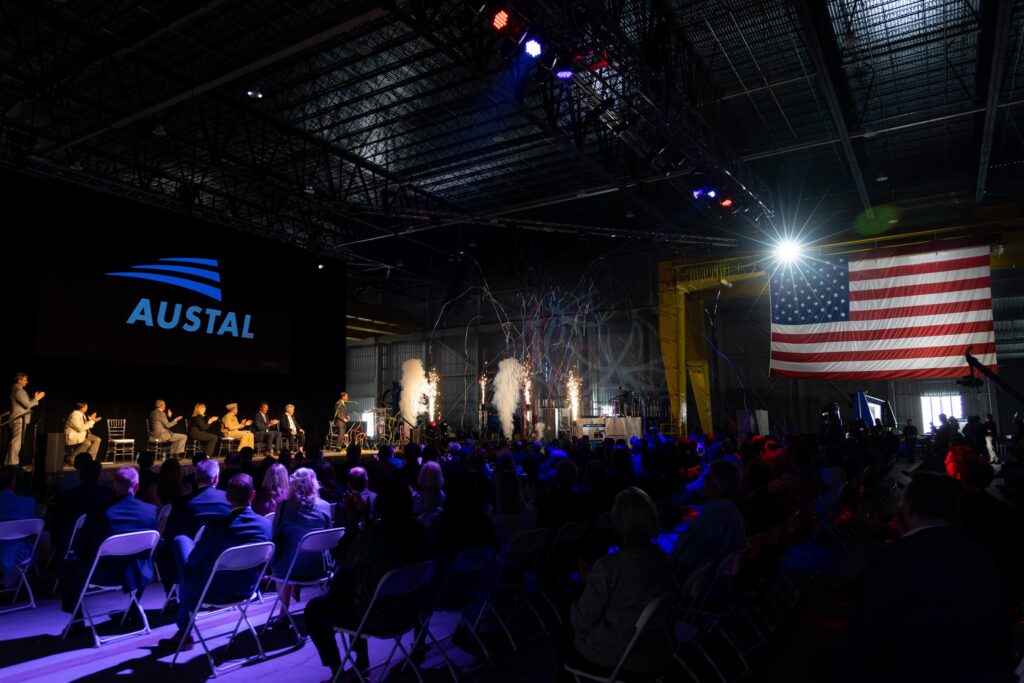
Austal USA hosted a curtain drop ceremony to celebrate the opening of its steel facility. AUSTAL USA
MOBILE, Ala. — Austal USA hosted a curtain drop ceremony April 12 to celebrate the opening of the company’s state-of-the-art steel facility in front of more than 200 guests, including representatives from the U.S. Navy, Coast Guard, federal, state and local government and the Embassy of Australia, the company said in a release.
The addition of steel shipbuilding capability complements the company’s aluminum shipbuilding expertise.
“The opening of the new steel manufacturing line at Austal USA means south Alabama will be able to continue providing high-quality ships for the Navy,” said Rep. Jerry Carl (R-Alabama). “This massive $100 million investment will also create jobs and spur economic growth throughout the region, while continuing to develop and grow our local workforce with the hiring of countless folks in the trades to meet the demands of the new line.”
“We are so excited to see our plans to add steel to our capabilities come to fruition,” said Austal USA President Rusty Murdaugh. “The addition of steel capability is a game changer as it opens up our capability to support the U.S. Navy, U.S. Coast Guard and other customers with high-quality ships. We appreciate the confidence the Department of Defense and the Department of the Navy have shown in us with the award of the DPA grant to get this project started and look forward to repaying that confidence with our future performance delivering high-quality steel ships.”
The 117,000 square foot manufacturing addition will house computerized and robotic steel processing equipment to handle all of the current and future demands of the U.S. Navy and the U.S. Coast Guard. A 60,000 square foot stock yard will be utilized for handling the raw steel and a 19,500 square foot paint facility will provide the ability to paint and blast simultaneously in two separate cells, or both cells can be combined providing the ability to paint super-modules.
Financing for the new steel production line was provided in part by a Defense Production Act Title III Agreement between the U.S. Department of Defense, in support of the U.S. Navy shipbuilding industrial base, and Austal USA. The agreement, valued at $50 million, was announced in June 2020 and was part of the national response to COVID-19 to maintain, protect and expand critical domestic shipbuilding and maintenance capacity. Austal USA matched these funds and invested an additional $50 million into the completion of the steel facility.
SENEDIA Marks National Submarine Day with Call for Next-Generation Workforce
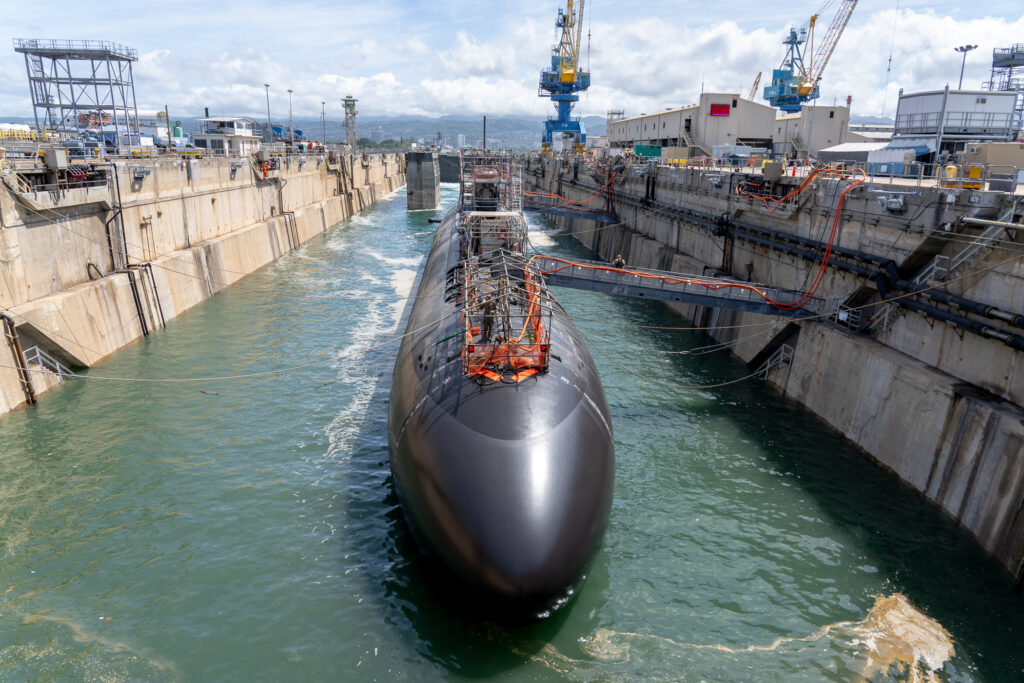
Pearl Harbor Naval Shipyard & Intermediate Maintenance Facility successfully undocked the Los Angeles-class fast-attack submarine USS Topeka (SSN 754) on time commencing a two-day evolution on July 27, 2021. U.S. NAVY / Amanda Urena
MIDDLETOWN, R.I. — SENEDIA, a membership alliance for defense tech, talent, and innovation, celebrated National Submarine Day on Monday, April 11, with a call to action for the future submarine shipbuilding workforce. The industry is facing a critical worker shortage, and SENEDIA is ramping up training and career exploration efforts to engage the next generation workforce.
“Careers in submarine shipbuilding are high-wage, high-growth, high-demand, and those who choose this pathway gain a deep sense of fulfillment and patriotism knowing they are supporting our submarine sailors and protecting our country,” said Molly Donohue Magee, SENEDIA executive director. “Our current submarine shipbuilding workforce ranks are not sufficient to meet the extraordinary — and growing — demand, and SENEDIA is committed to engaging, training, and expanding the workforce to move our industry forward on a path to stability and growth.”
The Navy’s need for new submarines to add to their fleet is significant, with two Virginia-class submarines and one Columbia-class submarine being built every year for the foreseeable future. To help meet that demand, SENEDIA has a two-pronged approach that includes incumbent worker training for individuals already in the workforce and career exploration and on-the-job learning for future workers.
“The opportunities available in submarine shipbuilding are exciting and rewarding and can put people on a path to security and success,” said Rear Admiral Scott Pappano, Program Executive Officer – Strategic Submarines. “As individuals, those who work in the submarine shipbuilding industry find hands-on work that is constantly changing and have the ability to explore and advance innovative new technologies. We take great pride knowing that our work makes an important difference to our national security.”
Since launching their incumbent worker training program in August 2020, funded through the Department of Defense Industrial Base Analysis and Sustainment Office, SENEDIA has trained more than 1,200 people, 800 of whom completed the program in the last year alone. These individuals are employed throughout the supply chain, with a critical mass at General Dynamics Electric Boat, the epicenter of the submarine shipbuilding industry. Electric Boat alone plans to hire over 2,200 employees over the next year.
Being part of the submarine shipbuilding workforce requires only a high school diploma or equivalent and provides a career with strong wages and outstanding benefits.
Carla Hall, a Marine Corps veteran who received training at the Westerly Education Center, Rhode Island, and is now a pipefitter at Electric Boat, calls the training “a lifechanging experience.”
“You’re going to be able to find meaningful work; you’re going to be able to find a nice wage for you and your family; and you’re going to make lifelong friends,” she said.
To grow the pipeline of workers, SENEDIA continues to expand its high school and middle school outreach. SENEDIA currently works with career and technical education programs in Rhode Island and Connecticut, engaging more than 100 high school students each year to explore potential careers in advanced manufacturing and submarine shipbuilding. SENEDIA is expanding our outreach throughout New England.
Russia’s a ‘Threat,’ but China’s Still the Focus of New National Defense Strategy, 2023 Pentagon Budget
Deputy Secretary of Defense Dr. Kathleen H. Hicks and Vice Chairman of the Joint Chiefs of Staff U.S. Navy Adm. Christopher W. Grady deliver opening remarks on the President’s Fiscal Year 2023 Defense Budget, the Pentagon, Washington, D.C., March 28. DOD / Air Force Staff Sgt. Brittany A. Chase
ARLINGTON, Va. — More money for science and technology research, dealing with climate change, modernizing the nuclear triad and deterring Russia in Europe and China in the Indo-Pacific region are among the priorities outlined in President Joe Biden’s fiscal 2023 defense budget request.
The $813 billion national defense budget request released March 28 includes $773 billion for the Defense Department and more than $40 billion for defense-related activities at other agencies.
The request reflects the updated National Defense Strategy, which continues to focus on the pacing challenge of China, Defense Secretary Lloyd Austin III said in a statement accompanying the 2023 budget rollout. “It will help us prepare for other future challenges, as well, including those by climate change … North Korea, Iran and violent extremist organizations.”
While Russia’s “brutal and unprovoked” invasion of Ukraine illustrates how Moscow “poses an acute threat to the world order,” the 2022 NDS sees the People’s Republic of China “as our most consequential strategic competitor and the pacing challenge for the department,” Deputy Defense Secretary Kathleen Hicks told a March 28 livestreamed Pentagon press briefing on the budget request.
The same day, a classified version of the new strategy was delivered to Congress and a two-page unclassified fact sheet was released. It stated mutually beneficial alliances and partnerships are “critical to achieving our objectives, as the unified response to Russia’s further invasion of Ukraine has demonstrated.”
Additional Investments
The focus on China “required additional investments for both the Navy and the Air Force,” said Undersecretary of Defense Michael McCord, the department’s chief financial officer. While the U.S. Navy and Air Force are slated to receive more than $230 billion each in the 2023 funding request, the Biden administration is seeking only $173 billion for the Army.
The budget request is devoting $134.7 billion to joint force readiness: Allocating $29.4 billion to the Army, $47.4 billion to the Navy, $4.1 billion for the Marine Corps, $35.5 billion for the Air Force, $3 billion for Space Force and $9.7 billion for Special Operations Command.
The proposed budget seeks $6.1 billion for the Pacific Deterrence Initiative, including $892 million for the defense of Guam including improved missile defense, command, and control capabilities, radar capacity and new construction. The Indo-Pacific Command funding adds $133 million for other base defense enhancements throughout the region. U.S. European Command would get $4.2 billion for the European Deterrence Initiative, including $300 million in security assistance for Ukraine.
To meet new technology challenges, the Pentagon is seeking $130.1 billion for research, development, testing and evaluation — an all-time high, more than 9.5% above RTD&E funding in the enacted 2022 defense legislation — that includes artificial intelligence, machine learning and 5G wireless networks and investments in chemical production, bio-manufacturing and rare earth element supply chains.
Investments in the industrial base and supply chain include $1.3 billion to improve critical naval infrastructure through the Shipyard Infrastructure Optimization Program; $3.3 billion for microelectronics; $48 million for casting and forging; $43 million for batteries and energy storage, including establishing safety and testing capacity for future weapon systems; $605 million for kinetic capabilities, such as expanding the industrial base for hypersonic missiles and directed energy weapons.
Other plans include $543 million to strengthen the submarine industrial base through expanding sub-tier suppliers, and $207 million to train the submarine workforce.
The budget invests over $11 billion to continue modernization of cyber network defense capabilities for a more resilient Defense Department information network and defense industrial base.
For the first time, the budget is committing $3.1 billion exclusively to dealing with climate change, including $2 billion for installation resiliency and adaptation and $247 million for operational energy and buying power.
“We have to be resilient to cyber threats, we have to be resilient to climate change,” said Hicks.
The 2023 budget request seeks $34.4 billion to modernize the nuclear triad, including $6.3 billion to fully fund the Columbia-class ballistic missile submarine, the Navy’s top platform priority; $5 billion for the B-21 Raider, the Air Force’s long range strike bomber, and $3.6 billion for the next generation intercontinental ballistic missile system, the Ground Based Strategic Deterrent; and $1 billion for the Long-Range Stand-Off missile.
The 2023 request includes a 4.6% pay raise for civilian and military personnel, the largest pay raise for all Defense Department workers in 20 years.
Inflation Effects
The $773 billion 2023 budget request is a 4.1% increase, $30.7 billion, over the fiscal 2022 budget passed by Congress in December and $58 billion, or 8%, higher than the Biden administration’s initial $715 billion fiscal 2022 request. However, taking inflation into account, McCord conceded the $773 2023 request actually represents about 1.5% in real growth spending over the $742 billion enacted in the fiscal 2022 budget.
Republican lawmakers say the increased budget request does not account for record high inflation. Sen. Jim Inhofe (R-Oklahoma) and Rep. Mike Rogers (R-Alabama), the ranking members of the Senate and House Armed Services Committees, announced March 29 they have requested information on the effects of inflation on the Defense Department budget from Pentagon leadership and the military services.
Inhofe and Rogers noted that current inflation is “effectively a 5% to 8% cut to the department’s buying power, which could amount to between $20-$30 billion in unfunded costs in fiscal year 2022 alone, not to mention lost buying power in fiscal year 2021 and potential lost buying power in fiscal year 2023.”