Russian Navy Blockades Ukraine’s Coast, Continues Missile Strikes 
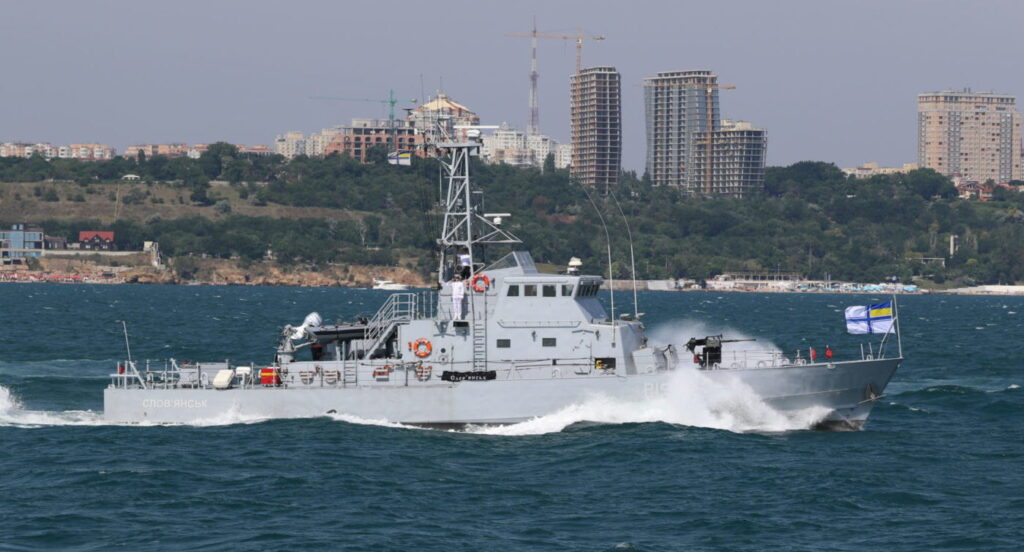
The Ukrainian Slovyansk, formerly the U.S. Coast Guard Island-class cutter Cushing, was reportedly destroyed on March 3. WIKIPEDIA

ARLINGTON, Va. — The Russian Black Sea Fleet has set up a naval blockade of Ukrainian ports along the Black Sea, a United Kingdom defense official said, and is continuing fire support of the Russian invasion of Ukraine. 

“The [U.K.] Ministry of Defence’s Defence Intelligence said Russian naval forces have established a distant blockade of Ukraine’s Black Sea coast, effectively isolating Ukraine from international maritime trade,” Air Vice-Marshal Mick Smeath, British defence attaché in Washington, said in a March 13 release.  

While the Russian navy has taken a lesser role than its army counterparts in the invasion of Ukraine, it has taken part in offensive operations and amphibious warfare. 

“Russian naval forces are also continuing to conduct missile strikes against targets throughout Ukraine,” Smeath said.  

Some Russian navy warships are equipped with Kalibr cruise missiles. 

Russian naval infantry — the equivalent of U.S. Marines — have landed ashore in Ukraine to participate in the campaign in southeastern Ukraine. 

“Russia has already conducted one amphibious landing in the Sea of Azov and could look to conduct further such operations in the coming weeks,” Smeath said. 

Ukraine’s main port on the Black Sea, Odesa, remains in Ukrainian hands.  

Press reports have said that a Ukrainian patrol boat — the Slovyansk, formerly the U.S. Coast Guard Island-class cutter Cushing — was destroyed by a Russian aircraft on March 3. 

A Russian patrol boat, the Vasily Bykov, reportedly was severely damaged and sunk on March 7 by rockets launched by a Ukrainian battery, according to press reports.  

Some of the Russian ships in the region entered the Black Sea after a transit from Russia’s Baltic Sea and Northern Fleet. These included several amphibious warfare ships and missile-armed surface warships.  
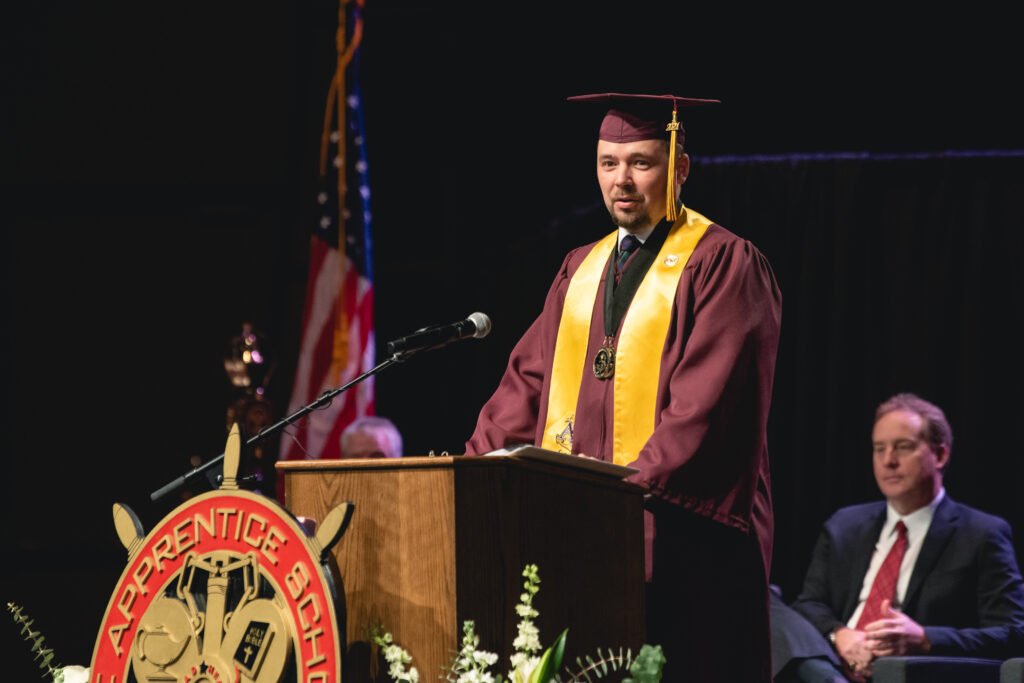


HII Celebrates 170 Graduates of The Apprentice School  

Chris Rose, recipient of the Homer L. Ferguson Award, speaks during the 2022 Apprentice School Commencement ceremony held March 12. HUNTINGTON INGALLS INDUSTRIES 

NEWPORT NEWS, Va. — Global engineering and defense technologies provider Huntington Ingalls Industries hosted commencement exercises March 12 for 170 graduates of the company’s Apprentice School at Newport News Shipbuilding, the company said in a release. The ceremony was held at Liberty Live Church in Hampton. 

“I want you to know how proud I am of each of you for everything that you’ve accomplished,” said Newport News Shipbuilding President Jennifer Boykin. “Today is just the next step towards your leadership role at Newport News Shipbuilding, and we and our country need you more than ever. As shipbuilders, we take on the truly unique honor of building vessels that protect our country and go into harm’s way.” 

The commencement address was delivered by Karen Henneberger, program manager for New Ship Design at Naval Reactors, a joint Department of Energy and Department of Navy program. She told graduates at the heart of The Apprentice School and their development is craftsmanship, leadership and scholarship. During her address she offered a deep Naval Reactors’ perspective on each of these tenets as they relate to the graduates’ current responsibilities at Newport News Shipbuilding, and their impact beyond the shipyard gates. 

Like Boykin, Henneberger, emphasized the Navy needs shipbuilders. 

“We need shipbuilders more than ever. We need to find ways to put more ships to sea, to maintain our nuclear-powered submarines and aircraft carriers in more efficient ways and to deploy innovative capabilities,” she said.

Speaking next, in Apprentice School tradition, was the apprentice receiving the Homer L. Ferguson Award, which recognizes the graduate with the highest honors. This year it was Christopher S. Rose, a deck electrician who began his career in 2017 at NNS. He has supported a variety of projects in the Virginia-class program, as well as the Nimitzclass and Ford-class programs, and is currently working on USS George Washington (CVN 73). 

“Always watch for your step, plan where you are going, and put the journey before the destination,” Rose said. “No matter what you’re doing, the most important step is the next one. Once you know what you need to do, it’s just a matter of logistics.” 

As the event closed, Boykin reminded the graduates what they heard at the ceremony.

“Your critical role in the defense of our nation cannot be understated,” she said. “The Navy depends on us to deliver capable, reliable vessels that help keep our sailors safe. And I’m depending on you to bring your skill, your experience, your knowledge and your heart to every challenge that you face. So always do your absolute best. Never settle for good enough and always keep learning. If you do this, I know that our nation’s future will be safer and brighter.” 


Center for Maritime Strategy Dean Foggo Accepts Canadian Meritorious Service Cross

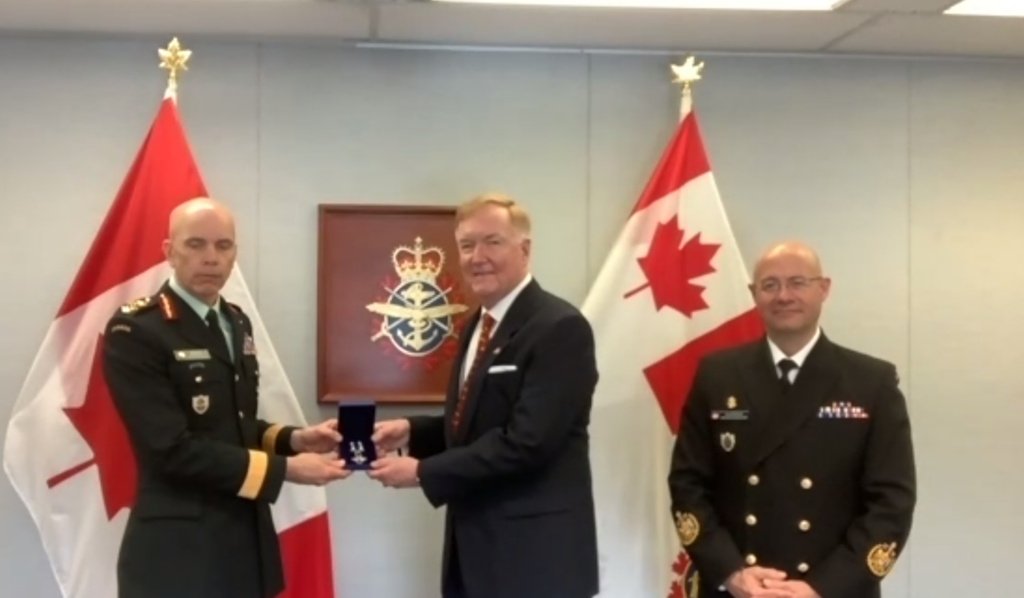
Foggo, center, accepts the Meritorious Service Cross from the Canadian Department of National Defence.

OTTAWA, Canada — Retired four-star Navy Adm. Jamie Foggo, dean of the new Center for Maritime Strategy at the Navy League of the United States, accepted the Meritorious Service Cross from the Canadian Department of National Defence on May 11 for his work with NATO.

Foggo’s last active duty assignment included three commands with a span of control over U. S. Navy maritime and Joint NATO Forces in Europe, Africa and the Middle East. 

Created by Queen Elizabeth II, Meritorious Service Decorations are an important part of the Canadian Honours System and highlight remarkable achievements accomplished over a limited period of time. Foggo was awarded the cross in 2020 for his work in planning a critical component of Canada’s commitment to NATO, and was presented it March 11 after speaking at the Ottawa Conference on Security and Defence.

During a ceremony, Foggo noted he “grew up in a Canadian forces family,” as his father and grandfather both served in Canada’s military. During his years working with NATO, Foggo noted, “Canadians were by my side.”

Foggo has been presented numerous other awards, including the Distinguished Service Medal, Defense Superior Service Medal, Legion of Merit and NATO Meritorious Service Medal. In addition, he is the recipient of the French Chevalier de l’Ordre National de Merité and the Legion d’Honneur, the Cross of Saint George (Portugal), the White Cross of the Naval Order of the Spanish Armada, the rank of Commendatore from the President of Italy and Knight of the Grand Cross of Kingdom of Two Sicilies.


Keel Authenticated for Future Destroyer USS Ted Stevens 

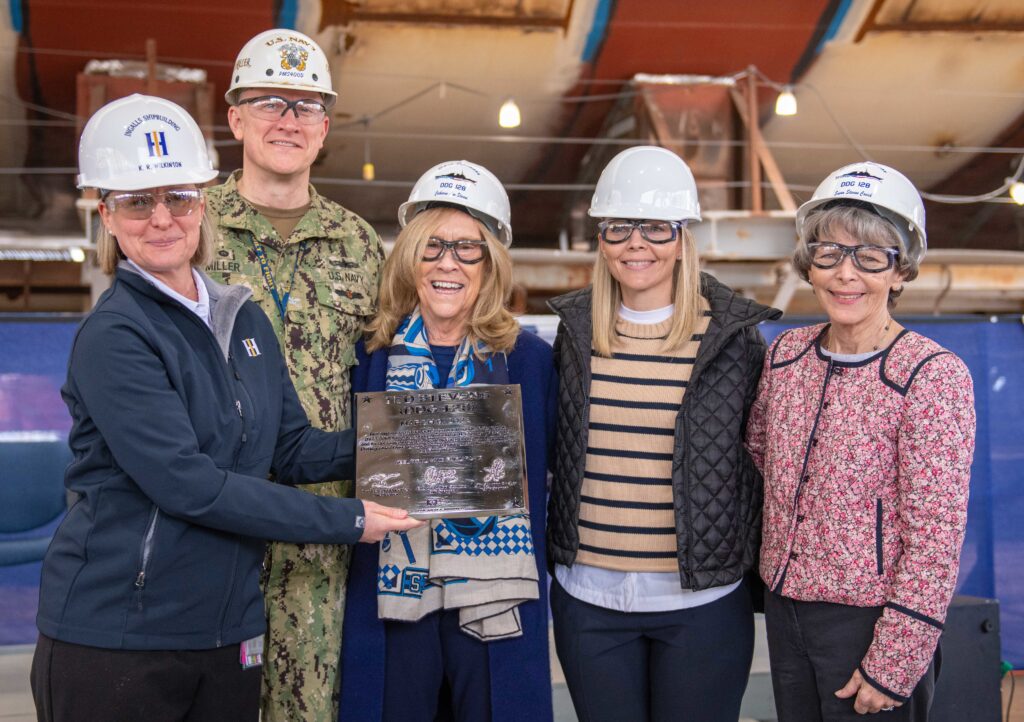
Ship sponsors Catherine Ann Stevens, Susan Stevens Covich and Lily Stevens Becker, Ingalls Shipbuilding President Kari Wilkinson and Capt. Seth Miller, DDG 51 class program manager, Program Executive Office Ships, at the rear, pose with the keel plate of the future USS Ted Stevens. HUNTINGTON INGALLS INDUSTRIES.

WASHINGTON — The keel of future USS Ted Stevens (DDG 128), the 78th Arleigh Burke-class guided-missile destroyer, was ceremonially laid at Huntington Ingalls Industries Ingalls Shipbuilding, March 9, Team Ships Public Affairs said in a release. 

The ship is named for the late Sen. Ted Stevens from Alaska. Stevens was the longest-serving Republican U.S. senator in history at the time he left office and was the third senator to hold the title of president pro tempore emeritus. He was the president pro tempore of the United States Senate in the 108th and 109th Congresses. 

The contemporary keel laying ceremony represents the joining together of a ship’s modular components at the land level. The keel is authenticated with the ship sponsors’ initials etched into a ceremonial keel plate as part of the ceremony. Sponsors of DDG 128 are Catherine Stevens, wife of the ship’s namesake, and Susan Stevens Covich and Lily Stevens Becker, daughters of the namesake. 

“The Flight III upgrade fulfills a critical need for the Navy. Flight III ships like the future USS Ted Stevens will serve as a deterrent to our adversaries using the ship’s increased power projection capability as a result of the upgraded Aegis Combat System and Air and Missile Defense Radar,” said Capt. Seth Miller, DDG 51 class program manager, Program Executive Office Ships. “We are honored to have the Stevens family with us today as we mark this important milestone in building the Navy’s and the nation’s next great warship.” 

The DDG 51 Flight III upgrade is centered on the AN/SPY-6(V)1 Air and Missile Defense Radar and incorporates upgrades to the electrical power and cooling capacity plus additional associated changes to provide greatly enhanced warfighting capability to the fleet. Flight III is the latest flight upgrade in the more than 30-year history of the class, building on the proud legacy of Flight I, II and IIA ships before it. 

HII’s Ingalls Shipbuilding is also in production on the future USS Lenah Sutcliffe Higbee (DDG 123), USS Jack H. Lucas (DDG 125), USS Jeremiah Denton (DDG 129), and USS George M. Neal (DDG 131). 


Russian Air Defenses Working Well When Operated by Ukrainians, ACC Chief Says

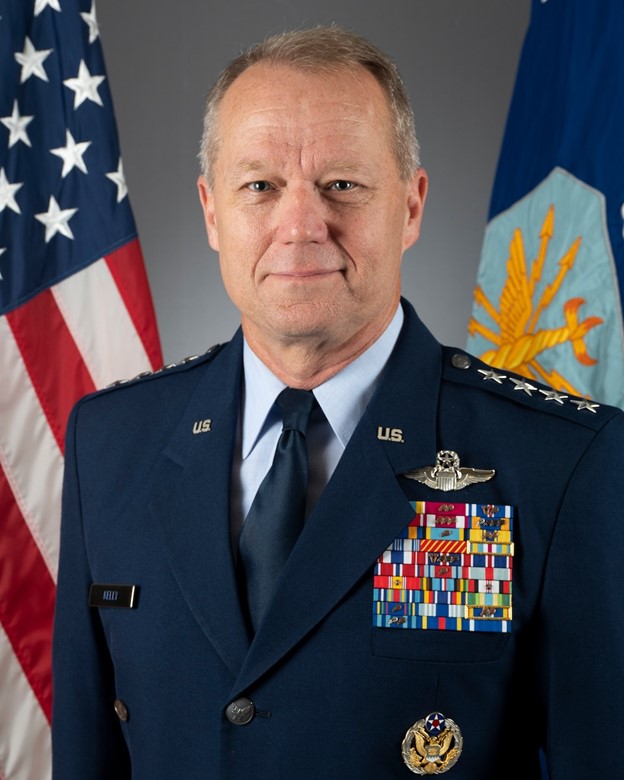
Air Force Gen. Mark D. Kelly, commander, Air Combat Command. U.S. AIR FORCE

WASHINGTON — Air Force Gen. Mark D. Kelly, who leads Air Combat Command, was asked about the capabilities of Russia’s air defense systems since the beginning of Russia’s invasion of Ukraine.  

“They’re operating pretty well when they’re operated by Ukrainians,” he said.

Kelly was one of the presenters at the McAleese & Associates conference in Washington on Wednesday, March 9. Generally speaking, Kelly said Russia does not have an air base defense challenge.

“They operate on layer upon layer upon layer of S-300 and S-400 (anti-air missiles), as well as SA-23s, etcetera,” he said.

Some of these systems are operated by Ukraine. According to Kelly, “The Russian air defense units, operated by the Ukrainians, they’re pretty capable systems.”

In the current war, Kelly acknowledged Russia has faced logistics and moral challenges. Furthermore, they are not used to operating without complete air dominance.

“The Russian air force has not adapted agile combat employment for a couple of reasons. One, in my opinion they’re not capable of doing it; and two, they don’t need to,” Kelly said. “They can operate pretty safe from their main air bases with that layer of defense over them.”

“The Russians themselves, I think — and ‘think’ is a key word — they’re struggling with fighting Russian systems and they’re not adhering to Russian doctrine. And we see the challenge that they have. But we also see the challenge of what happens your joint force is organized, trained, equipped to operate with air superiority, and not remotely designed operate without air superiority, what happens when you don’t have it,” he said.

In the Q&A after his remarks, Kelly commented on the value of the F-35 Joint Strike Fighter, even after all of its weapons have been expended.

Kelly said the F-35 can do significant amount of sensing, including the ground moving target indicator capability inherent to the aircraft.

“Very often, in big ‘Red Flag’ exercises, [the F-35] will expend all its weapons, and where traditionally we would go home once we’d expended all of our weapons, the information that it puts out to the rest of the joint force is so valuable, and with its air sensing ground sensing and data linking, they like to keep it out there to contribute to the rest of the joint force,” he said.


Cost of Critical Metals for Submarine Construction Climbs During Ukraine Crisis

The Bystrinsky Mining and Concentration Plant is the largest greenfield project in the Russian metals industry. WIKIPEDIA / Andrey Kuzmin

WASHINGTON, D.C. — The availability of raw materials and components was a topic of conversation at yesterday’s Submarine Industrial Base Council congressional breakfast in Washington, D.C.

Attendees noted the pandemic’s impact on the supply chain has made just-in-time deliveries virtually impossible. In the case of specialty steel companies, the availability and prices of raw material such as nickel, especially critical for the high-quality steel used in submarine construction, has been particularly troublesome. 

The London Metals Exchange, one of the oldest commodity exchanges, had to suspend trading of nickel because of heavy activity and the concern over Russia’s invasion of Ukraine. Nickel is a critical ingredient in heavy-duty vehicle batteries, stainless steel and other alloys and is vital to many defense-industry products.

Nickel is already in short supply, with inventories available on the LME being reduced by half since October. LME nickel prices more than doubled on Tuesday, March 8, to more than $100,000 per ton. The market panic caused the LME to temporarily stop posting prices for the mineral. Other exchanges have experienced similar activity.

Russia is a major supplier of nickel — about 10% of global output — and Russian company Nordickel is the world’s largest supplier of battery-grade nickel, providing 5%-20% of the world’s supply.

Prices on other commodities like copper, tin, lead and zinc are also higher this week

LME hopes to reopen trading on nickel soon. LME’s website currently states that the exchange has “been continuing to work on the evolving nickel situation, with the intention of ensuring it is able to reopen the market, with trading continuing in an orderly manner, in an appropriate timeframe.”

“The current events are unprecedented,” the LME said in a notice to members.


HII Appoints Dorsey as VP of Operations at Ingalls Shipbuilding 

Donny Dorsey, the new vice president of operations at Huntington Ingalls Industries’ Ingalls Shipbuilding. HII

PASCAGOULA, Miss. — Global engineering and defense technologies provider Huntington Ingalls Industries has appointed Donny Dorsey as vice president of operations at HII’s Ingalls Shipbuilding division, the company said March 10.

Dorsey, formerly ship program manager for all DDG waterfront efforts at Ingalls Shipbuilding, replaces George Jones, who will retire April 1 after 37 years of service. 

“George’s expertise in shipbuilding has influenced generations of shipbuilders and the capabilities of the shipyard,” said Kari Wilkinson, president of Ingalls Shipbuilding. “We are grateful for his focus on execution excellence and for shaping our ‘shipyard of the future.’ Thank you, George. As we move forward, I am confident that Donny will continue the Ingalls legacy of strong execution and will focus on strategic innovation and transformation as we look to the future.” 

In Dorsey’s new position, he will oversee all manufacturing operations through delivery, across all Ingalls Shipbuilding programs. He will also be responsible for working collaboratively with union partners, cost and schedule performance, process improvements and driving production strategies. 

Dorsey joined Ingalls Shipbuilding in 2000 as a robotic operations technician and spent a portion of his career focused on the Gulfport composite operations for LPD/DDG 1000 serving as quality manager, operations director and then site director. Most recently, Dorsey served in program management with a focus on the DDG 51 class where he and his team managed the installation, test and activation of multiple complex ship systems. 

He holds a bachelor’s degree in management from Nicholls State University, an MBA in project management from Capella University and is a graduate of the Gulf Coast Business Council’s Masters Leadership Program. 


FRCSW Inducts Its First CMV-22 to Suffer Mishap 

The VRM-30 CMV-22 Osprey inducted by FRCSW on January 13 is pictured in Building 333. The inner composite skin of the aircraft suffered a four-foot by two-foot crack during a mishap. FRCSW, FST, PMA-275 and industry partners developed a repair plan to return the aircraft to its squadron. U.S. NAVY

NAVAL AIR STATION NORTH ISLAND, Calif. — Fleet Readiness Center Southwest artisans and the Fleet Support Team recently joined industry partners and the V-22 Joint Program Office (PMA-275) to prevent the loss of an CMV-22 Osprey aircraft which had suffered damage during a mishap, the center said March 8. 

The right-hand inner composite skin of the $75 million aircraft sustained a four-foot by two-foot crack with other, but minor, composite damage. 

“A lot of people would have said, `Hey, we need to strike this aircraft,’ but the engineers at the FST and our industry partners decided to figure out a way to keep this asset in the fleet,” said Col. Brian Taylor, PMA-275 program manager. 

John Sandoval, sheet metal mechanic work lead, said the repair required replacing the inner skin panel. 

“We’ve removed over 1,200 fasteners separated by over 42 feet of composite inner skin to composite outer skin,” he said. “This proved to be difficult because this is the first of its kind repair.” 

The V-22 is unique to other airframes serviced by the command because of its aluminum, carbon/epoxy composite fuselage and empennage. Its wings and nacelles are also composite and fiberglass. 

The aircraft, assigned to Fleet Logistics Multi-Mission Squadron 30 (VRM-30), was inducted by FRCSW on Jan. 13 as an in-service repair, or repairs outside of scheduled maintenance. 

“This is the first major ISR and first mishap aircraft my team has performed on a CMV-22,” said Michael Dixon, FRCSW V-22 production manager. 

He said the labor-intense repair would require about 70 days and more than 2,800 man-hours to complete, with sheet metal work taking most of those hours. 

In addition to four sheet metal mechanics, other artisans needed to ensure a successful repair include electricians, mechanics, quality assurance and planner and estimator personnel. All will work in conjunction with engineering departments from the FST and Boeing. 

“These capabilities are what really makes Naval Air Systems Command, the FST and the PMA-275 program so incredibly important to this community because we have the ability to take care of our own stuff and keep these assets in the fight,” Col. Taylor said. 

“The planning department estimated the repair will cost $390,500. Currently, we are tracking to complete the repair on schedule and under budget,” Dixon added. 

The Osprey will be returned to VRM-30 when complete. In the meantime, a safety investigation relating to the mishap is underway. 


MQ-9A RPV Passes 2 Million Flight Hours 

The MQ-9A remotely piloted vehicle has surpassed 2 million flight hours in support of global customers. GENERAL ATOMICS AERONAUTICAL SYSTEMS

SAN DIEGO — The MQ-9A remotely piloted aircraft has surpassed 2 million flight hours in support of global customers, General Atomics Aeronautical Systems Inc. said March 2. The workhorse unmanned aircraft combines unmatched persistence and mission flexibility with a greater than 90% mission capable rate.   

“We developed the MQ-9A to set the standard for persistent surveillance and rapid strike capability, and it’s delivered on expectations,” said GA-ASI Vice President of DoD Strategic Development J.R. Reid. “The effectiveness of a military aircraft can be measured in how often its used [total flight hours] and in its readiness to perform, and the MQ-9A exceeds in performance on both metrics.” 

Combined with the flight hours of other GA-ASI aircraft, including Predator A and Predator XP; Predator B Extended Range, Guardian, Gray Eagle and Gray Eagle ER; Predator C Avenger; and MQ-9B SkyGuardian and SeaGuardian, the total flight hours for the GA-ASI fleet exceed 7.2 million, supporting close to 500,000 missions. 

GA-ASI aircraft average more than 48,000 hours per month supporting the U.S. Air Force, Army, Marine Corps, NASA, the Italian air force, the United Kingdom Royal Air Force, the French air force, the UAE armed forces, the Indian government, and new MQ-9As are being delivered to the Royal Netherlands Air Force now. Missions include helping protect ground units on the battlefield, supporting first responders in the wake of natural disasters and providing critical ISR around the world. With a host of additional reconnaissance, surveillance, and communications payloads in development and early fielding, GA-ASI UAS continue to demonstrate exceptional value across the full spectrum of current and future operations. 

The MQ-9A Block 5 has endurance of over 27 hours, speeds of 240 KTAS and can operate up to 50,000 feet. It has a 3,850-pound (1,746-kilogram) payload capacity that includes 3,000 pounds (1,361 kilograms) of external stores. It provides a long-endurance, persistent surveillance capability with full-motion video and synthetic aperture radar/moving target indicator/maritime radar. An extremely reliable aircraft, MQ-9A Block 5 is equipped with a fault-tolerant flight control system and triple redundant avionics system architecture. It is engineered to meet and exceed manned aircraft reliability standards.  


Israel Adapts Iron Dome Missile Defense to Navy Corvettes 

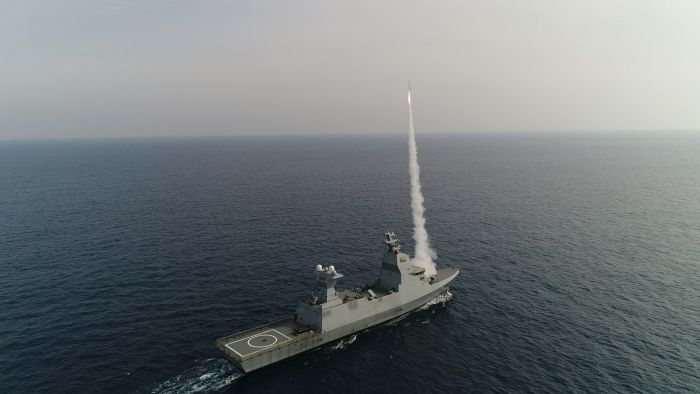
Israel has successfully tested the C-Dome, a naval configuration of the Iron Dome defense system. RAFAEL

HAIFA, Israel — The Israel Missile Defense Organization, Israeli Defense Forces and Rafael Advanced Defense Systems have completed a successful series of live-fire tests of the C-Dome, an advanced naval configuration of the Iron Dome defense system, Rafael said Feb. 25.

The C-Dome was operated for the first time aboard the Israeli Naval Ship Magen, a Sa’ar 6 corvette, against multiple advanced threats. Crew members of the INS Magen led the C-Dome tests. 

“I commend the DDR&D [Directorate for Defense R&D, parent of the missile defense organization], IDF and Rafael for the completion of an unprecedented test,” said Defense Minister Benny Gantz. “The systems that we are developing as part of Israel’s multi-tier missile defense array enable us to operate against Iranian proxies in the region and defend against their weapon systems, which are constantly being upgraded. We continue to be two steps ahead of them and we will continue developing and upgrading our capabilities in order to maintain security superiority in the region and to defend the citizens and assets of the state of Israel.” 

The test campaign consisted of a number of scenarios simulating advanced threats, including rockets, cruise missiles and unmanned aircraft. The C-Dome is capable of successfully intercepting such threats. 

This successful live-fire test is an important milestone and demonstrates the operational capability of the Israeli navy to defend the strategic assets and vital interests of Israel against current and evolving threats. 

The C-Dome onboard missile defense system is based on the Iron Dome defense system developed by Rafael, with the command-and-control system developed by mPrest. C-Dome interfaces with the Sa’ar 6’s Adir radar, developed by Israel Aerospace Industries’ Elta division. It joins other advanced systems that make up Israel’s multi-tier missile defense array, including the Arrow and David’s Sling systems. Development of C-Dome was led by the Israel Missile Defense Organization. 

“The success of this test constitutes a significant technological breakthrough in the field of missile defense and is the result of the directorate’s vision and cooperation with the IDF and Israeli defense industries,” said Brig. Gen. (Res.) Danny Gold, head of the Directorate for Defense R&D in the ministry of defense. 

“Today we mark another historic milestone for the Iron Dome defense system — the completion of a series of successful offshore tests of the missile defense system onboard a naval vessel,” said Moshe Patel, director of the Israel Missile Defense Organization. “The advanced detection system accurately identified various threats including rocket fire, cruise missiles and UAVs. The system successfully intercepted the threats with surgical precision. The success of today’s tests further strengthens our confidence in our missile defense systems as well as the ability of the Israeli navy to defend the maritime assets of the state of Israel.”