Navy Orders 65 Production BQM-177A Aerial Target Drones from Kratos

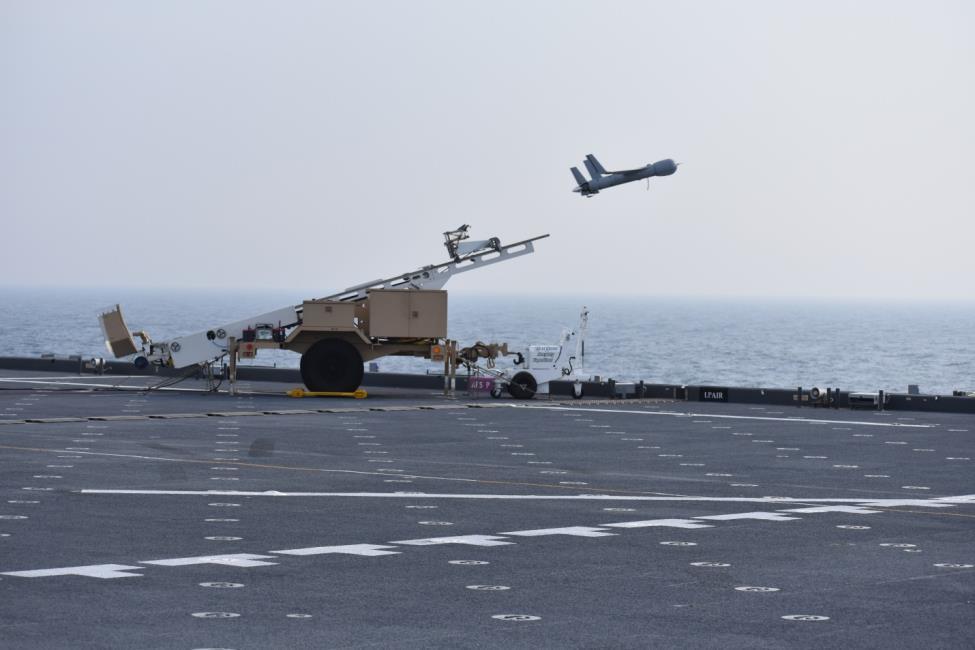
The Navy’s newest subsonic aerial target, BQM-177A, conducts a training test flight from USS Barry (DDG-52) Sept. 9, 2021, off the coast of Japan. U.S. NAVY

SAN DIEGO — Kratos Defense & Security Solutions Inc. announced Dec. 28 that its division Kratos Unmanned Aerial Systems has been awarded a $50.1 million contract modification to a previously awarded firm-fixed-price contract to exercise an option to procure 65 BQM-177A Subsonic Aerial Targets. 

The order includes 50 for the Navy, seven for Japan and eight for Saudi Arabia, as well as associated technical and administrative data in support of full rate production lot three. The Naval Air Systems Command, Patuxent River, Maryland, is the contracting activity.  

“The Kratos team is incredibly proud to receive this third consecutive full-rate production option award supporting our U.S. Navy customer,” said Steve Fendley, president of Kratos Unmanned Systems Division. “We are also excited that 15 of these drone aircraft will support the U.S. government’s foreign allies. Throughout the challenges of the last two years, Kratos has remained focused on developing, producing, and delivering target and tactical drone systems to support the established and forecasted customer needs.” 


16-year-old Sea Cadet Participates in Historic World War II Dive in Pearl Harbor

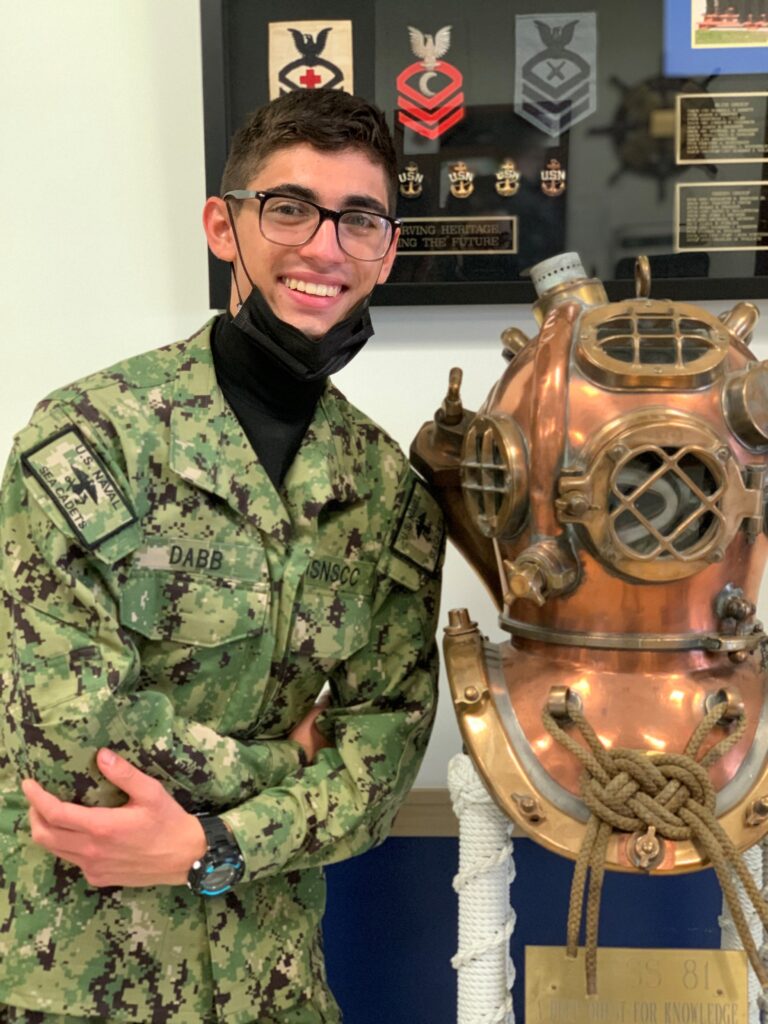
Sea Cadet Petty Officer 3rd Class Jack Dabb participated in the first dive to USS Utah, submerged in Pearl Harbor for 80 years. U.S. NAVAL SEA CADET CORPS / Brittany DiPippo

NEWPORT, Rhode Island – Sixteen-year-old Sea Cadet Petty Officer 3rd Class Jack Dabb, from Battleship New Jersey (BB-62) Division in Camden, New Jersey, attended a Sea Cadet Leadership Training in Newport and had an opportunity to share a once-in-a-lifetime experience on Dec. 28.

The commanding officer of the training, retired Master Chief Avionics Maintenance Technician (AW/IW) Barry Crawford, realized a rare convergence of history was about to occur and saw an opportunity for Dabb to bring a little of his personal story to his classmates.

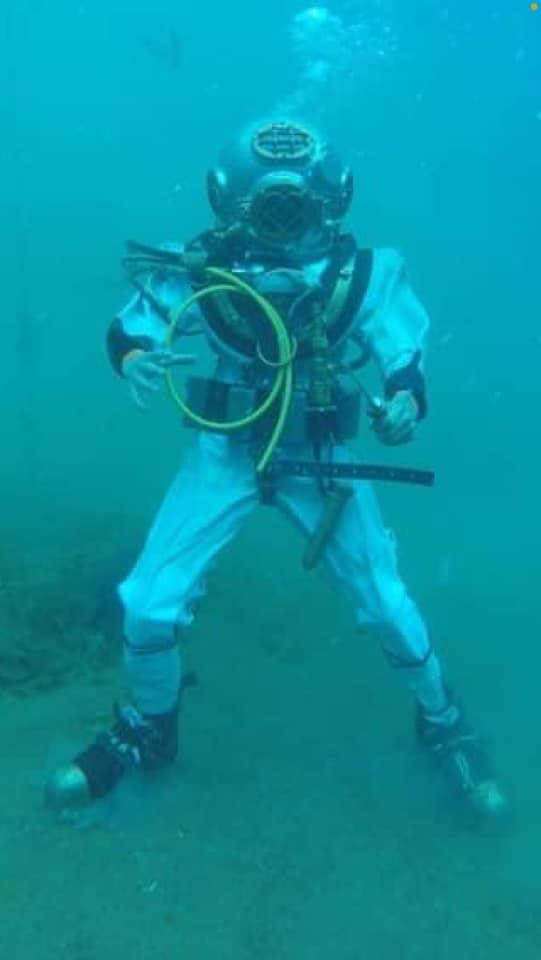
Dabb is also the youngest member of the Classic Diving Organization, LLC, and participates in deep-sea dives on historic vessels. In December 2021, just a couple of weeks before attending POLA in Newport, he had the privilege of participating in the first live dive to USS Utah (BB-31), submerged in Pearl Harbor for 80 years. Watch the historic dive: https://youtu.be/zjQipLBHohU.

“This leadership training event in Newport is held at Tomich Hall, which is where the U.S. Navy teaches advanced leadership to senior enlisted members of the military. The school’s namesake refers to Chief Watertender Peter Tomich, who posthumously received the Medal of Honor for his actions on board USS Utah on Dec. 7, 1941,” said Crawford.

Tomich and his fellow shipmates remain entombed onboard Utah. Still, Tomich is credited with saving the lives of hundreds of men through his heroic and selfless actions. For the Chief Petty Officers, Tomich is an iconic hero of our Navy’s past we reference when developing the leaders of today.”

Sea Cadet Dabb during the dive to the USS Utah. SEA CADETS

With cooperation between the U.S. Navy and the National Park Service, the Classic Diving Organization chose Dabb to participate in this rare event. Watch Dabb on Facebook live on Dec. 28, 2021 at 1 p.m. EST, share his diving experience.

“Jack was selected to participate as a crew member and safety diver for the USS Utah live dive broadcast with the National Park Service due to his vast experience with the MK-V diving apparatus,” said U.S. Navy Master Diver John Hopkins, Jr., and co-founder of the Classic Diving Organization, who is stationed at Hickam Air Force Base in Pearl Harbor.

“Jack was an important team member, and with his assistance, it made the event so much easier. This event was to bring back attention to the salvage efforts that took place after the attack on Dec. 7, 1941. This was the first live dive event for Utah, and it was the final piece for the remembrance events for the 80th anniversary of the attack.”

Hopkins added that Dabb has participated with the diving organization on other events in the past.

“He flawlessly folded into our team, and all of us, including the Park Service personnel, appreciated his time, effort, and great work ethic. It is always a joy to work with Jack, and I look forward to working with him again in the future,” said Hopkins.

Crawford added that having the opportunity to present pictures and Dabb’s experience diving to USS Utah and inside Tomich Hall was amazing.

“The faculty assigned to the U.S. Navy Senior Enlisted Academy were invited to the presentation, making a rare connection to things they walk by each day at work,” said Crawford. “Chief Tomich’s Medal of Honor, citation from President Roosevelt, and relics from Utah are on the hallowed quarterdeck at Tomich Hall.”

Crawford added that thousands of Navy leaders have walked by these cherished objects and could only imagine what Tomich sacrificed for his shipmates. “And here we have this 16-year-old Sea Cadet who saw it and shared it with us. What a great experience for us and the 85 participants of POLA Newport 2021.”

What does Dabb think about all this? “Diving on the USS Utah was an experience like no other. I truly can never express what this opportunity means to me because it was so monumental. It made me realize that without history, we have no future.”

For more information about U.S. Naval Sea Cadet Corps, visit www.seacadets.org.


Canadian Patrol Ship Circumnavigates North America on First Voyage

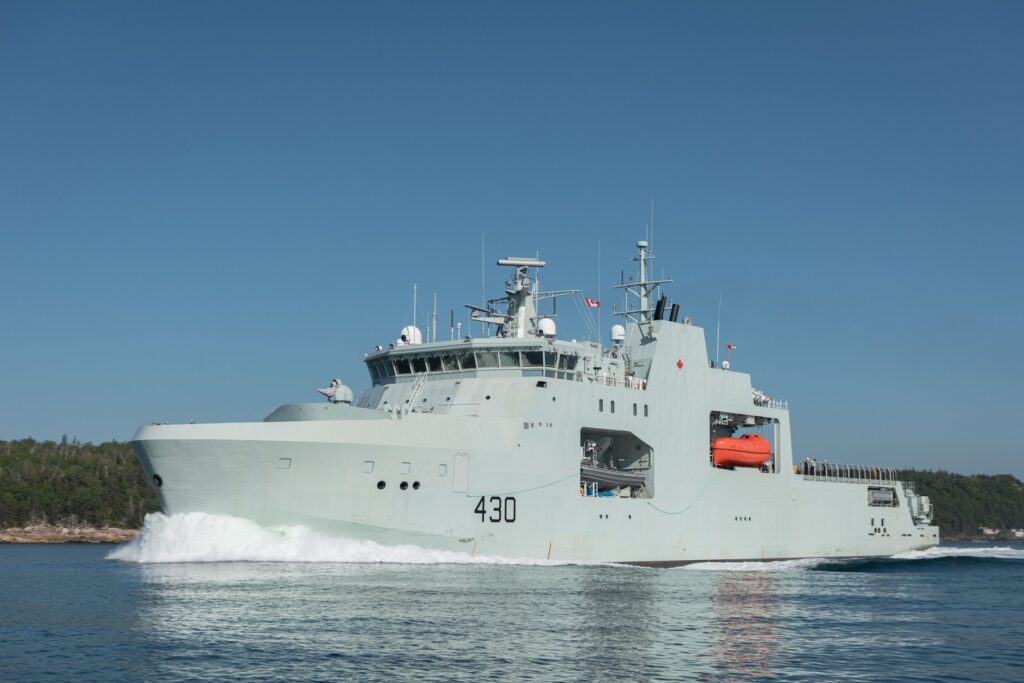
HMCS Harry DeWolf, which recently called at Naval Station Norfolk as part of its circumnavigation of North America. WIKIPEDIA / Hken 167

The Royal Canadian Navy Arctic and offshore patrol ship HMCS Harry DeWolf (AOPV 430) recently called at Naval Station Norfolk, Virginia, as the final stop on its historic circumnavigation of North America.

Commissioned in June, Harry DeWolf is the Royal Canadian Navy’s first new warship in 25 years and its first ice-capable vessel since HMCS Labrador in 1958.  

For its first voyage, Harry DeWolf transited to the Arctic to participate in Canada’s Operation Nanook annual training exercises in the high north, then continued through the Northwest Passage and working with the U.S. Coast Guard in Alaskan waters. From there the patrol vessel proceeded to San Diego and embarked a U.S. Coast Guard law enforcement detachment and conducted counter-narcotics operations in the Eastern Pacific and the Caribbean Basin.

In Alaska, the ship participated in a mass casualty drill with the U.S. Coast Guard. Further south, the crew took part in Op Caribbe, Canada’s contribution to U.S. enhanced counter-narcotics operations under U.S. Joint Interagency Task Force South in the Eastern Pacific and Caribbean. Working with an embarked U.S. Coast Guard Law Enforcement Detachment, Harry DeWolf helped with the seizure and offload of approximately 26,250 pounds of cocaine and 3,700 pounds of marijuana worth about $504 million from the USCGC Hamilton (WMSL 753) in Port Everglades, Florida, Nov. 22.

The ship arrived in Norfolk Dec. 9 and departed Dec. 12.

While highly capable for polar operations, the ship is also designed to conduct patrols wherever needed in the world.  HMCS Harry DeWolf Commanding Officer Cmdr.  Corey Gleason said the unique ship design is specific to Canadian needs.

“Our allies all have offshore patrol vessels, but they don’t have the Arctic stamp on it. If we are truly going to operate our domestic waters, we have to be to go north, not just during the navigable between July and October, but any time. Earlier this year we were up in the dead of winter breaking ice, with no other ships,” he said.

The deployment also demonstrated the endurance of the ship as it visited ports and communities in Nunavut, Northwest Territories and Yukon Territory. While the ship did take on fuel during port visits to Nuuk, Greenland, and Dutch Harbor, Alaska, Gleason said the ship has the range to sail from Halifax to the Esquimalt naval base in British Columbia on a single tank of fuel.

“I always knew that this ship had an incredible capability anywhere in the world. And we demonstrated that tenfold in the four and a half months that were deployed,” he said.

Gleason said the Royal Canadian Navy doesn’t have a great deal of experience operating in the ice. As the skipper of the first Arctic and offshore patrol ship, Gleason said he spent a lot of time providing ship-handling experience to his officers, and he’s been training the commanding officers, executive officers and navigators of the other ships to help them get ready for the Arctic when their ships are commissioned.

During the deployment, the ship underscored the close working relationship between maritime services of Canada and the U.S.

“In terms of our cooperation, the United States is really is our premier partner in the Arctic,” said Martin Loken, deputy head of mission for foreign policy and national security at the Embassy of Canada in Washington. “Canada’s Arctic and Northern Policy Framework sets out our overall government approach to the north and to the Arctic. There are a lot of elements there, and almost every single one of them aligns with U.S. interests in the Arctic, whether it’s providing economic opportunities for populations, building and investing in stronger, more resilient infrastructure, preparing for the impacts of climate change, advancing indigenous reconciliation, and the list goes on.”

A U.S. naval officer joined the ship for its first deployment. Lt. j.g. Kyle Luchau of the guided-missile destroyer USS Winston S. Churchill (DDG 80), served as a liaison officer and completed the circumnavigation of North America.

The RCN plans to build six Arctic and offshore patrol ships at the Irving Shipyard in Halifax, which are being constructed as part of Canada’s National Shipbuilding Strategy. Two more AOPS will be built for the Canadian Coast Guard.


Austal Finalizes Deal for San Diego Waterfront Ship Repair Facility

The Independence-variant littoral combat ships USS Gabrielle Giffords (LCS 10), bottom, and USS Montgomery (LCS 8) operate in the South China Sea. Shipbuilder Austal USA has finalized a deal to establish a repair facility in the Port of San Diego, including for littoral combat ships. U.S. NAVY / Mass Communication Specialist 2nd Class Chris Roys

SAN DIEGO — Austal USA has finalized a deal to establish a repair facility in the Port of San Diego, the company said Dec. 15.  

The deal includes a long-term lease of a waterfront site in National City adjacent to Naval Base San Diego. Austal USA’s 15-acre site will focus on ship repair for U.S. Navy, Military Sealift Command and U.S. Coast Guard ships. The site will be centered on a newly built dry dock designed to efficiently dock small surface combatants and similar sized ships.    

“This agreement marks a major milestone in the continued growth of Austal USA’s services business. When the dry dock is delivered, we will be able to provide the Navy a highly capable full-service repair facility located in the homeport of San Diego,” Austal USA President Rusty Murdaugh said. “We know how valuable this additional repair facility is to our customers, the Navy, Coast Guard, and Military Sealift Command, and we are ready to meet the growing demand. We are also looking forward to working closely with the National City community as we expand our presence in the area.” 

Austal USA will establish a full-service ship repair capability providing maintenance and modernization for small surface combatants, unmanned and autonomous vessels, and other ships. The site will include a dry dock optimized to execute availabilities on littoral combat ships and other small surface combatants. Services will include technical and material support, topside work, and drydocking availabilities. The new facility will enable more availabilities to be completed in their home port of San Diego reducing the strain on the fleet and Sailors.   

This lease agreement follows a string of maintenance contract awards for Austal USA. In August, the Navy awarded Austal SEC East and West contracts positioning the company to service all Littoral Combat Ships. In November, Austal received a contract to provide services and support for LCS deployed to the Western Pacific and Indian Ocean. These contracts are the result of the company’s significant investment in and continued focus on growing its service business and centers in Mobile, San Diego and Singapore. 


BAE Systems to Advance F-35 Electronic Warfare Capabilities

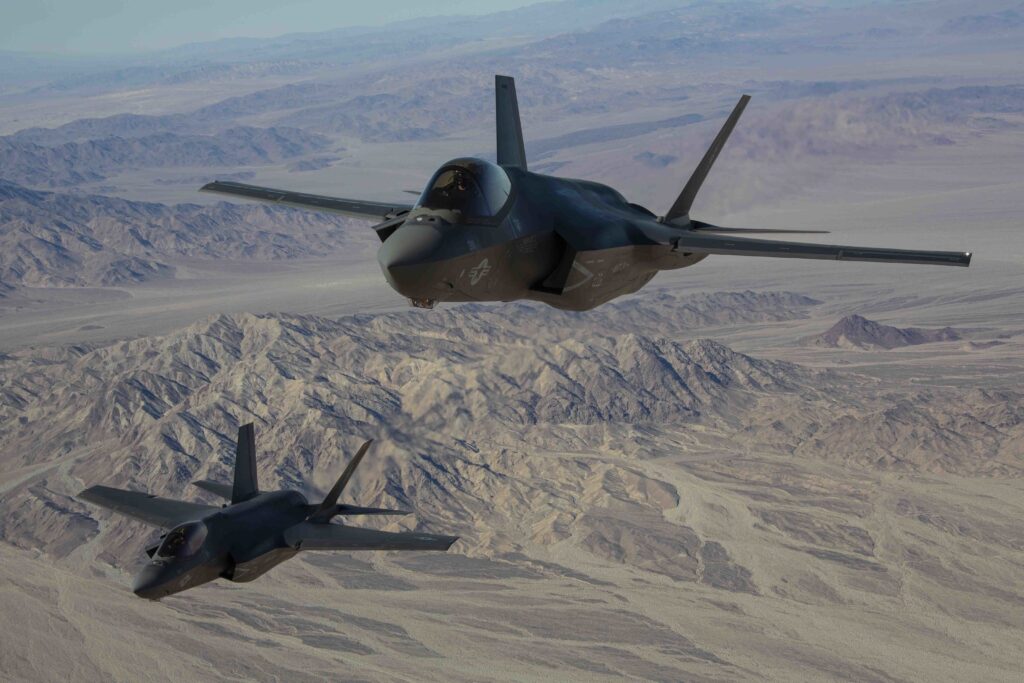
An F-35C Lightning II carrier variant joint strike fighter launches from the flight deck of the aircraft carrier USS Nimitz (CVN 68). U.S. NAVY / Mass Communication Specialist Seaman Shauna C. Sowersby

NASHUA, N.H. — BAE Systems has received a $493 million contract modification from Lockheed Martin to significantly upgrade and modernize the electronic warfare system for the F-35 Lightning II, enabling the fifth-generation fighter to quickly detect and address evolving electromagnetic threats in contested battlespaces, BAE Systems said Dec. 15. 

Under the contract, BAE Systems will deliver enhanced and highly capable core hardware for the F-35’s high-performance EW mission system, known as AN/ASQ-239, and will provide engineering support services and test infrastructure. The upgraded system will improve superior situational awareness and electromagnetic attack and countermeasure capabilities with new sensors and more powerful signal processing. 

“The capabilities we will deliver in this contract are foundational and will be leveraged to other platforms to ensure all warfighters have the most advanced EW capability at the ready,” said Lisa Aucoin, vice president of F-35 Solutions at BAE Systems. “The highly adaptable mission system will allow our warfighters to outpace evolving threats and defend democracy around the globe.” 

The enhanced electronic warfare system’s robust design will enable rapid future upgrades, aligning with the U.S. Department of Defense’s strategy for continuous capability development. The system’s modular architecture will also allow for efficient hardware upgrades that reduce lifecycle and retrofit costs, and support faster software updates across the global F-35 fleet. The system also includes the Non-Intrusive Electronic Warfare Test Solution fault isolation and diagnostics capability, which enables precise troubleshooting that further reduces maintenance costs. 

BAE Systems is a major global partner to Lockheed Martin on the F-35 program. In addition to delivering world-class EW systems, the company also manufactures the aft fuselage, active inceptor control system, and vehicle management computer for each F-35 at state-of-the-art manufacturing facilities in the United Kingdom, Australia, and U.S. The company also provides sustainability, technical support, and training services to keep the F-35s mission-ready. 


State Dept. Approves Possible Sale of Surface Combatant to Greece

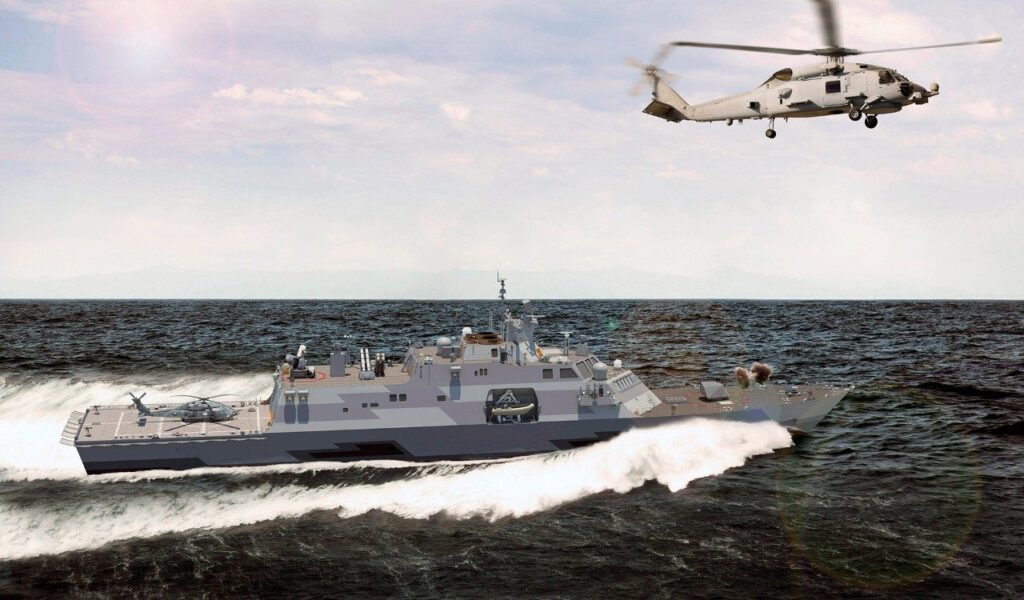
An artist’s conception of the Multi-Mission Surface Combatant vessel. LOCKHEED MARTIN

WASHINGTON — The State Department approved a possible Foreign Military Sale to Greece of Multi-Mission Surface Combatant ships and related equipment for an estimated $6.9 billion, the Defense Security Cooperation Agency said Dec. 10. 

Greece has asked to buy four MMSC ships and associated systems and equipment including combat management systems, sensors, communications equipment, weapons, weapon launchers, munitions and boats.  

The sale also would include “software delivery and support, facilities and construction support, publications and technical documentation, personnel training and training equipment, U.S. government and contractor engineering, technical and logistics support services, test and trials support, studies and surveys and other related elements of logistical and program support,” the announcement said.   

“This proposed sale will support the foreign policy and national security objectives of the United States by helping to improve the security of a NATO ally, which is an important partner for political stability and economic progress in Europe,” the announcement said. “The proposed sale will improve Greece’s capability to meet current and future threats by providing an effective combatant deterrent capability to protect maritime interests and infrastructure in support of its strategic location on NATO’s southern flank. This acquisition, which will be awarded to the winner of an international competition for Hellenic Navy frigate modernization, will enhance stability and maritime security in the Eastern Mediterranean region and contribute to security and strategic objectives of NATO and the United States. Greece contributes to NATO operations in Kosovo, as well as to counterterrorism and counter-piracy maritime efforts. Greece will have no difficulty absorbing these articles and services into its armed forces. 

“Implementation of this proposed sale will require the assignment of approximately eight additional U.S. government and 22 U.S. contractor representatives to Greece to support engineering and logistics support for the production and integration of Hellenic Future Frigates into the Hellenic Navy fleet,” the DSCA said. 

The principal contractor will be Lockheed Martin of Bethesda, Maryland. Lockheed Martin is the prime contractor for the Saudi Multi-Mission Surface Combatant program.   


Bollinger Delivers Ocean Transport Barge for Columbia SSBN to Electric Boat

OTB Holland arrives in Groton, Connecticut. BOLLINGER SHIPYARDS

LOCKPORT, La. — Bollinger Shipyards LLC has delivered the Ocean Transport Barge Holland to General Dynamics-Electric Boat’s Groton Shipyard, Bollinger said Dec. 13. 

The Holland will support the construction and maintenance of the United States’ Columbia-class ballistic-missile submarines and Virginia-class fast attack submarines. General Dynamics Electric Boat is the prime contractor on the design and build of the Columbia-class submarine (SSBN), which will replace the aging Ohio-class SSBNs and is a top strategic defense priority for the United States. 

“Bollinger is proud to partner with General Dynamics Electric Boat in support of the U.S. Navy and one of the top strategic priorities of our Nation,” said Bollinger President and CEO Ben Bordelon. “Being able to deliver OTB Holland on time and on budget is a testament to the strength, commitment and resilience of the men and women of the Bollinger workforce, especially following the significant damage sustained to our shipyards and communities following Hurricane Ida earlier this year. Bollinger looks forward to continuing to help meet the expanding needs of the United States’ Navy and supporting efforts to modernize our nation’s fleet.” 

“We are happy to welcome Holland to her new home in the Groton shipyard,” said Kevin Graney, President, General Dynamics Electric Boat. “Our fellow shipbuilders at Bollinger have delivered a terrific asset, on time and on budget. Holland will play an important role in the construction of the Columbia class of submarines, which will carry nearly 70% of the nation’s nuclear arsenal.” 

In November 2019, General Dynamics Electric Boat selected Bollinger to construct the Holland, a 400-foot by 100-foot Ocean Transport Barge. The concept and contract design was performed by the Bristol Harbor Group in Rhode Island, while Bollinger performed the detail design engineering at its Lockport, Louisiana facility and construction at the Bollinger Marine Fabrication facility in Amelia, Louisiana. 

The Columbia class is now being built at Electric Boat’s Quonset Point, Rhode Island, manufacturing facility. Skilled tradespeople will construct and outfit Columbia modules at Quonset Point which will then be transported by the Holland barge to the company’s final test and assembly facility in Groton. The first Columbia module is expected to arrive in Groton in 2023. 


GA-ASI Announces New Mojave STOL UAS

The new short takeoff and landing Mojave UAS. GENERAL ATOMICS AERONAUTICAL SYSTEMS

SAN DIEGO — General Atomics Aeronautical Systems Inc. is unveiling the new unmanned aircraft system Mojave, named for one of the harshest and most austere areas the world, where deadly rattlesnakes and horned lizards adapt to survive the extreme forces of nature, the company said Dec. 9. 

Mojave is based on the avionics and flight control systems of MQ-9 Reaper and MQ-1C Gray Eagle-ER but is focused on short-takeoff and landing capabilities and increased firepower. It features enlarged wings with high-lift devices, and a 450-HP turboprop engine.  

Mojave provides options for forward-basing operations without the need for typical airport runways or infrastructure. It can land and takeoff from unimproved surfaces while also retaining significant advantages in endurance and persistence over manned aircraft. These innovations make Mojave the perfect UAS to perform armed overwatch, attack and armed reconnaissance missions, the company said. 

 A prototype aircraft first flew this summer and is continuing to demonstrate exceptional short-field performance and other unique qualities.  

“We’re proud to bring these extraordinary capabilities to our Predator line of UAS,” said GA-ASI CEO Linden Blue. “We are providing the ground force with a long-endurance, armed overwatch UAS that can quickly reload weapons at austere sites, located close to the conflict zone. This revolutionary design, based on seven million flight hours of UAS experience, increases expeditionary employment options, making Mojave a real game changer.”  

STOL capability increases the number of employment options available to Mojave, potentially including aircraft carrier-based options, unlocking naval missions or sea-based support for special operations forces. 

Payload capacity is 3,600 pounds and Mojave can carry up to 16 Hellfire or equivalent missiles. Mojave can be equipped with a sensor suite including electro-optical/infrared, synthetic aperture radar and ground moving target indicator and signal intelligence to support land or maritime missions.  


Royal Australian Navy Awards ScanEagle Contract Extension to Insitu Pacific

A ScanEagle is launched during a Strait of Hormuz transit aboard USS Lewis B. Puller (ESB 3) in 2018. U.S. NAVY / Chief Logistics Specialist Brandon Cummings

BRISBANE, Australia — Insitu Pacific has been awarded a three-year contract extension by the Royal Australian Navy for the sustainment of its ScanEagle unmanned aircraft, the company said Dec. 6. 

The extension allows the Australian navy to continue to experiment and develop knowledge using the ScanEagle maritime UAS, leveraging the foundation capability developed during embarked operations on HMAS Newcastle in the Gulf of Oman in 2017. 

“Insitu Pacific is proud to continue to support [the Royal Australian Navy] in their ongoing [unmanned aircraft] experimentation and testing work over the next three years,” said Andrew Duggan, managing director of Insitu Pacific. “This contract extension provides us with an opportunity to deepen our existing sovereign capability and supply chains in Australia, and partner with RAN to offer up new capabilities for testing in the coming years.” 

ScanEagle has been in service with the Australian navy for experimentation and testing since 2014. 

The navy operates several ScanEagle systems at 822X Squadron in Nowra, and the contract extension enables continuation of MUAS training, tactics development and payload evaluation activities. 


Navy League Announces Active-Duty Military Now Eligible for Membership

Marines hike to the next training location during Exercise Baccarat in Aveyron, Occitanie, France, Oct.16. U.S. MARINE CORPS / Lance Cpl. Jennifer Reyes

ARLINGTON, Va. — The Navy League of the United States announced Dec. 2 it has opened membership to active-duty service personnel from every branch of the military to join the organization as individual members. 

The Navy League is a nonprofit civilian, educational and advocacy organization that supports America’s sea services: the Navy, Marine Corps, Coast Guard and U.S.-flag Merchant Marine.

This historical change in the Navy League’s bylaws, passed by its board of directors, has shifted its membership from an all-civilian organization to a joint civilian and active-duty organization. The Navy League currently has 30,000 members in 200 councils around the globe.  

“This important shift in our membership eligibility will lend to greater diversity and gravitas to the Navy League’s mission of education, advocacy and support to our sea services and its members.” said Navy League National President Dave Reilly. “This change also provides an important growth opportunity for the Navy League as we continue to expand our membership and the Navy League’s impact on our sea services.”  

Navy League councils, located primarily in the United States but also around the world, offer service members important ties to their community and a direct way to continue to serve the country once they transition out of service.   

Navy League member benefits include transition assistance, members-only discounts, council membership and a subscription to Seapower magazine. Active-duty sea service members’ children and grandchildren are also eligible to apply for a Navy League Foundation scholarship to aid in college tuition.  

Members can choose to join for one-, two-, three-, four- or five-year periods or can opt to join as a lifetime member. More information on active-duty membership, including an application, can be found on https://www.navyleague.org/become-a-member/active-duty-membership.