Navy League Announces Active-Duty Military Now Eligible for Membership
Marines hike to the next training location during Exercise Baccarat in Aveyron, Occitanie, France, Oct.16. U.S. MARINE CORPS / Lance Cpl. Jennifer Reyes
ARLINGTON, Va. — The Navy League of the United States announced Dec. 2 it has opened membership to active-duty service personnel from every branch of the military to join the organization as individual members.
The Navy League is a nonprofit civilian, educational and advocacy organization that supports America’s sea services: the Navy, Marine Corps, Coast Guard and U.S.-flag Merchant Marine.
This historical change in the Navy League’s bylaws, passed by its board of directors, has shifted its membership from an all-civilian organization to a joint civilian and active-duty organization. The Navy League currently has 30,000 members in 200 councils around the globe.
“This important shift in our membership eligibility will lend to greater diversity and gravitas to the Navy League’s mission of education, advocacy and support to our sea services and its members.” said Navy League National President Dave Reilly. “This change also provides an important growth opportunity for the Navy League as we continue to expand our membership and the Navy League’s impact on our sea services.”
Navy League councils, located primarily in the United States but also around the world, offer service members important ties to their community and a direct way to continue to serve the country once they transition out of service.
Navy League member benefits include transition assistance, members-only discounts, council membership and a subscription to Seapower magazine. Active-duty sea service members’ children and grandchildren are also eligible to apply for a Navy League Foundation scholarship to aid in college tuition.
Members can choose to join for one-, two-, three-, four- or five-year periods or can opt to join as a lifetime member. More information on active-duty membership, including an application, can be found on https://www.navyleague.org/become-a-member/active-duty-membership.
Service Logisticians: Mini Nuclear Reactors Might be a Solution to Future Expeditionary Energy Needs
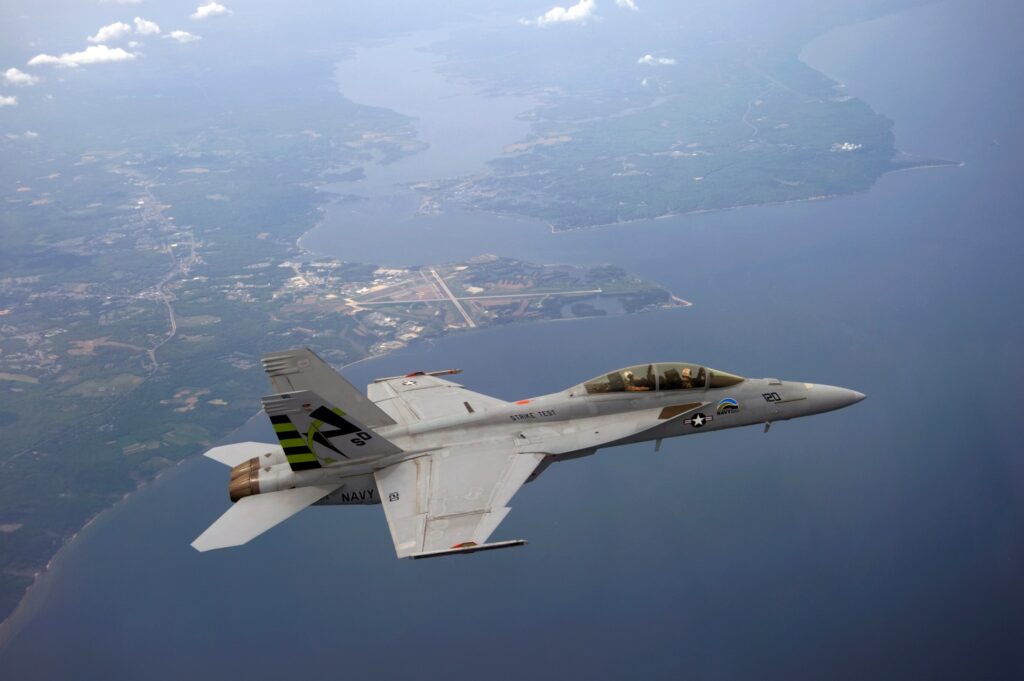
The Green Hornet flies over Naval Air Station Patuxent River April 22, 2010. On Earth Day 2010, the Super Hornet became the first Navy aircraft to demonstrate alternative fuel capability using a 50/50 blend of camelina biofuel and the Navy’s primary jet fuel, jet propellant (JP)-5. U.S. NAVY
ARLINGTON, Va. — Top logisticians of the U.S. Navy, Marine Corps and the other armed services told a congressional panel Dec. 2 they are exploring the development of deployable, micro nuclear reactors as an energy source for warfighters in remote and austere environments.
“The Marine Corps clearly appreciates the value and potential future benefits of alternative energy sources,” Lt. Gen. Edward Banta, deputy commandant for Installations and Logistics, told a House Armed Services Committee hearing on operational energy and logistics challenges.
“Through our Marine Corps Warfighting Lab, we have been involved in looking at hydrogen fuel as a potential future source, and I would think that combining that with both micro grids as well as potential micro reactors would provide great benefits to us in the future, but particularly operating in an expeditionary area environment,” Banta added.
Rep. John Garamendi (D-California), the subcommittee chair, noted in his opening statement the Defense Department is the world’s “largest single consumer of petroleum products,” using more than 85 million barrels of fuel in Fiscal 2017 at a cost of nearly $8.2 billion. “Such expensive requirements invite risk,” both to frontline troops who need it and those who provide it, he said.
The Pentagon defines operational energy as the energy required for training, moving and sustaining military forces and weapons platforms for military operations. The term includes energy used by tactical power systems, generators and weapons platforms.
For years, the individual services have been exploring alternative fuels, such as the Navy’s Green Hornet project — an F/A-18 Super Hornet strike fighter jet powered by a 50-50 biofuel blend — to save both money and the environment. However, lessons learned in the austere and isolated distances of Iraq and Afghanistan over the last 20 years showed the need not only for alternative fuels, but innovative ways to transport and store energy. Planners expect that need to grow with widely dispersed, highly mobile ships and ground units operating in contested areas of the vast Indo-Pacific region.
In 2015, Russia announced plans to build up to 30 small transportable nuclear reactors for the Arctic to provide electricity to remote bases under development as part of Russia’s Arctic militarization.
An image describing ways to transport a small nuclear reactor, from a GAO report on Project Pele, a DoD effort to design and build a prototype mobile nuclear reactor. GAO
Rep. Doug Lamborn of Colorado, the ranking Republican on the Readiness subcommittee raised the issue of small reactors as a promising solution to frontline forces’ energy needs, such as Project Pele, the Defense Department’s Strategic Capabilities Office project to design, build, and demonstrate a prototype mobile nuclear reactor.
“Anything that allows us the freedom to maneuver, we’re obviously very interested in,” said Vice Adm. Rick Williamson, the deputy chief of Naval Operations for Fleet Readiness and Logistics. To be able “to divorce the operational fleet from the logistics tether gives us maneuverability. Maneuverability equals survivability.”
While the Navy already has very big reactors to power aircraft carriers and submarines, “we have to look at the problem of sustaining the fleet as a whole. That is going to be done both ashore and afloat. So, if there is potential there [in small reactors], obviously it provides tremendous operational advantage for us,” Williamson said.
“I don’t think we can afford to not explore it within the realm of demand reduction,” Air Force Lt. Gen. Sam Barrett, the Joint Staff Director for Logistics, told the subcommittee.
Sofar Launches Wayfinder Weather Routing for Dynamic Voyage Optimization
Sofar Ocean’s new Wayfinder application. SOFAR OCEAN
SAN FRANCISCO, Calif. — Sofar Ocean has launched Wayfinder – The Dynamic Route Optimization Platform, a real-time, data-powered application to radically improve maritime route efficiency and reduce fuel emissions, the company said in a release.
Sofar’s proprietary open ocean sensor network and weather forecasts, combined with real-time market variables and personalized vessel performance models, deliver high-accuracy weather routing and daily speed and routing guidance to ensure more efficient and safer routes.
Optimized voyage and speed profiles can produce massive reductions of greenhouse gas emissions according to the International Maritime Organization. According to the IMO, with voyage optimization you can see anywhere from 1-10% reduction in GHG. With today’s optimization solutions there is no concept of continuous weather monitoring and daily updates to ensure that ships are always on the most optimal path. Wayfinder’s unique value is that it’s powered by the best weather data with continuously optimized routing recommendations. This gives fleet operators and captains the most recent weather and routing context they need to maximize voyage profitability, minimize safety risks, and track closer toward carbon neutrality with each transit.
Several major commercial shipping companies including Singapore-based Berge Bulk, Greece-based Star Bulk and Seaven as well as U.S.-based Class society ABS are leveraging the new technology to streamline fleet efficiency by identifying more direct, cost-effective, and energy-efficient routes.
As a pioneer in shipping sustainability, Berge Bulk has aggressively pursued decarbonization strategies over the last decade. In support of this initiative, they were one of the first pilot customers of the Wayfinder platform. According to their CEO, James Marshall, “Wayfinder allows us to increase vessel utilization and efficiency, ensuring that we balance profitability with emissions reduction objectives. By using Wayfinder’s data and voyage optimization, we’ve seen
efficiency gains in the range of 4.5% on dedicated voyages, which translates into as many as 14 additional sailing days per year per vessel.”
“Wayfinder is the Google Maps or Waze of the ocean. It’s your voyage partner — always looking out for the best options among the trillions of possible routes in the ocean,” said Tim Janssen, CEO and cofounder of Sofar Ocean. “Like navigation apps on land, Wayfinder integrates seamlessly into the captain’s workflow and is easy to use. It constantly updates its recommendations based on the latest weather data powered by thousands of live weather sensors, variations in the bunker and charter market, and vessel performance dynamics. Ocean intelligence is in our team’s DNA, and Wayfinder is a big step toward our mission of building a more connected ocean.”
Electrowatch Completes Revere Sensitization Treatments on USS Vicksburg
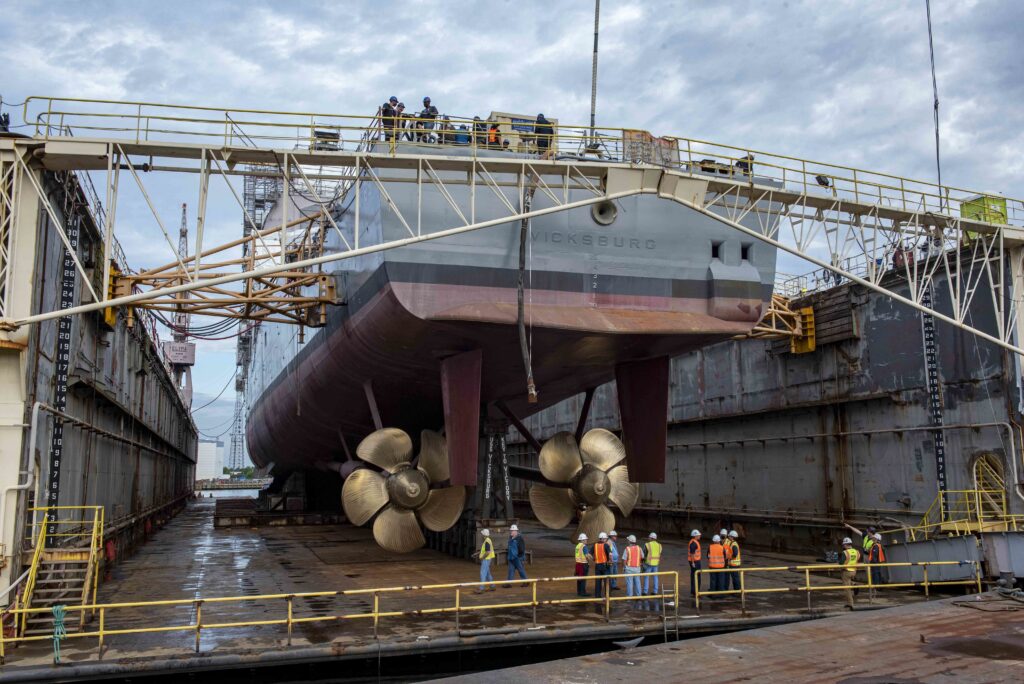
The Ticonderoga-class guided missile cruiser USS Vicksburg (CG 69), shown here awaiting dry dock flooding in June 2021. U.S. NAVY / Mass Communication Specialist 3rd Class Brandon Roberson
Norfolk, Va. — ElectraWatch, an Austal USA company, completed two successful reverse sensitization treatments of aluminum alloy in service on the U.S. Navy Ticonderoga-class guided missile cruiser USS Vicksburg (CG 69) in September 2020 and July 2021.
The process of reverse sensitization involves careful heating to restore shipboard aluminum to near-factory condition from a “sensitized” state, an out-of-spec condition susceptible to cracking that can develop at sea. This treatment reduces the need for replacement of the material or alternative surface treatment which is costly and time-consuming. Follow-up measurements verified the material had been returned to within specification.
“I’m proud of the hard work our engineering team has done to accomplish these treatments,” ElectraWatch General Manager Ryan Dunn said. “These results validate the Navy’s confidence in ElectraWatch and the process we have developed. Our cutting-edge tools and processes represent a major improvement over previous methods and will serve to extend the service life of the Ticondergoa-class ships.”
Donald Tubbs, ElectraWatch’s Senior Test & Research Engineer, explains: “These tests are the result of several years of collaboration with waterfront managers and the Navy’s technical and research and development communities.”
5000-Series Aluminum Alloy (Marine Grade) is used extensively on U.S. Navy guided-missile cruiser superstructures. The specific alloy used, AA5456, can become sensitized after long exposures to elevated temperatures, such as those that arise at sea during solar heating. Once sensitized, the combination of a corrosive environment like seawater and stress can lead to cracking of the plate.
By carefully controlling time and temperature, the reverse senstization treatment can return to near-factory condition or “heal” aluminum alloy that may have previously required costly complete replacement. Used in tandem with ElectraWatch’s proprietary non-destructive Degree of Sensitization Probe, which has been successfully used to conduct over 9,000 fleet-based sensitization measurements, the Navy now has a turnkey solution to conduct better-informed, cost-saving maintenance planning that limits scope creep and reduces the amount of aluminum replaced.
BAE Systems Provides First Zero-Emission Fuel Cell Propulsion System for U.S. Vessel
BAE Systems successfully installed its zero-emission propulsion system in the first U.S. hydrogen fuel cell powered marine vessel, the Sea Change. BAE SYSTEMS
SAN FRANCISCO and ENDICOTT, N.Y. — BAE Systems successfully installed its zero-emission propulsion system in the first U.S. hydrogen fuel cell-powered marine vessel, the Sea Change, the company said Nov. 30.
BAE Systems provided its HybriGen Power and Propulsion solution to Zero Emission Industries for integration on the Sea Change vessel that will operate in the San Francisco Bay Area. The Sea Change project is funded and owned by SWITCH Maritime, an impact investment firm building the first fleet of zero-carbon, electric-drive maritime vessels for adoption by existing ship owners and operators.
BAE Systems’ propulsion system interfaces with a hydrogen and fuel cell system provided by Zero Emission Industries and lithium-ion batteries to power the vessel without the need for a traditional combustion engine. The all-electric system eliminates diesel fuel use and reduces engine maintenance to create a clean mode of transportation.
“We are committed to getting our customers to zero emissions with highly reliable and flexible systems that are proven on land and in the water,” said Steve Trichka, vice president and general manager of Power & Propulsion Solutions at BAE Systems. “This historic milestone is the next step on that journey, as we provide San Francisco with an innovative solution that reduces emissions and creates a new clean form of daily transportation for hundreds of commuters.”
BAE Systems worked with the vessel’s builder, All American Marine, and designer, Incat Crowther, after previously teaming with both companies on multiple projects. BAE Systems uses proven controls and components that have passed certification and inspection by the U.S. Coast Guard.
The project is also partially funded by a $3 million grant from the California Air Resources Board, administered by the Bay Area Air Quality Management District, that comes from the California Climate Investments initiative, a California statewide program that puts billions of cap-and-trade dollars to work reducing greenhouse gas emissions, strengthening the economy, and improving public health and the environment, particularly in disadvantaged communities.
Oshkosh Defense Receives $591.6M JLTV Order for Army, Marine Corps, Others
U.S. Marines with Battalion Landing Team 3/5, 31st Marine Expeditionary Unit land on the beach in a joint light tactical vehicle (JLTV) to begin a light armored reconnaissance raid reherasal at Camp Schwab, Okinawa, Japan, June 19. U.S. MARINE CORPS / Sgt. Daisha R. Ramirez
OSKOSH, Wis. — The U.S. Army Contracting Command – Detroit Arsenal (ACC-DTA) has awarded Oshkosh Defense a $591.6 million order for 1,669 Joint Light Tactical Vehicles (JLTV), 868 companion trailers and associated packaged and installed kits, the company said Nov. 29.
The order includes Oshkosh Defense JLTVs for the U.S. Army, Marine Corps, Air Force and Navy. As part of the order, 125 vehicles will also be delivered to NATO and allied partners, including Brazil, Lithuania, Montenegro and Slovenia.
Since winning the competitive JLTV contract in 2015, Oshkosh Defense, a wholly owned subsidiary of Oshkosh Corp., has built more than 14,000 JLTVs, and that number continues to grow.
“Our team takes great pride in designing and building a versatile platform that can survive the extreme demands of future combat,” said George Mansfield, vice president and general manager of Joint Programs for Oshkosh Defense. “That’s what we do and what we’ve been doing for decades. And Oshkosh’s vast tactical wheeled vehicle experience, expertise and knowhow grows with every vehicle that comes off our production line.”
International momentum surrounding the Oshkosh Defense JLTV also continues to grow as customers seek a light tactical vehicle with lethal capabilities, fleet commonality attributes and design flexibility.
“Integrated lethality on an agile and protected vehicle like the Oshkosh JLTV is quickly filling capability gaps that exist in many international militaries,” said John Lazar, vice president and general manager of International Programs for Oshkosh Defense. “This past year, we’ve seen an increased interest in the Oshkosh JLTV from international customers with dynamic demonstrations and live fires across Europe, with more planned for 2022.”
CNO, CMC: Training Systems Need to Be Linked Like Operational Systems
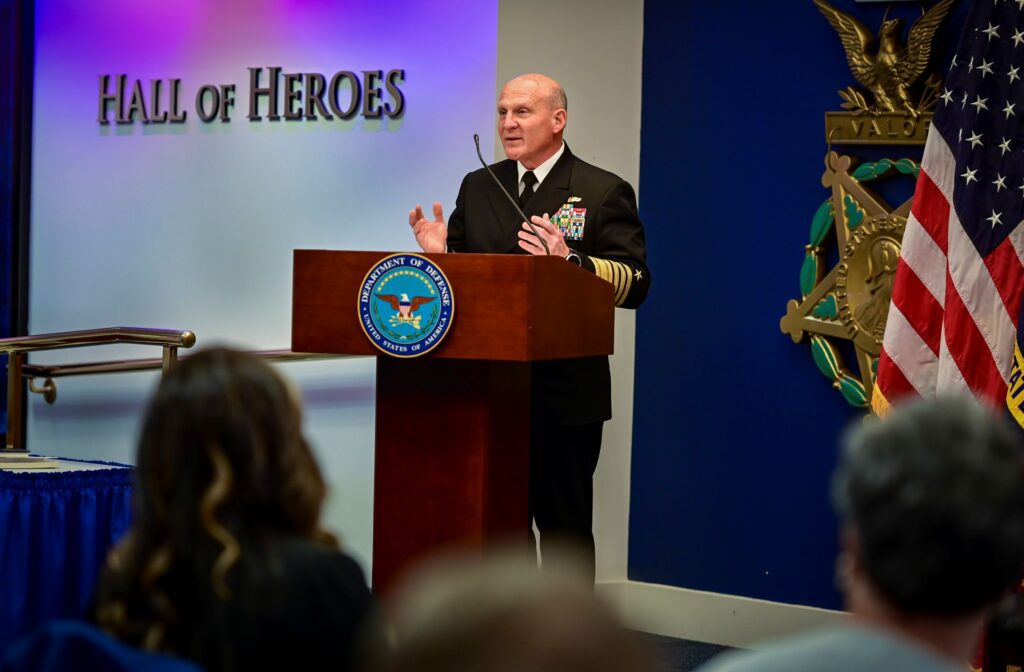
Chief of Naval Operations Adm. Mike Gilday, shown here delivering remarks during the Vice Adm. James Bond Stockdale Leadership Award ceremony in the Pentagon. U.S. NAVY / Mass Communication Specialist 1st Class Sean Castellano
ARLINGTON, Va. — The systems used to train Sailors and Marines need to be linked like their operational counterparts to make training realistic and relevant, the uniformed leaders of the Navy and Marine Corps said.
Chief of Naval Operations Adm. Michael M. Gilday and Commandant of the Marine Corps Gen. David H. Berger were participating Nov. 30 in a fireside chat at the Interservice/Industry Training, Simulation and Education Conference (I/ITSEC) in Orlando, Florida. They covered a wide range of topics related to training and simulation.
The two service chiefs said as their services proceed with increased integration and distribution and work together as a naval force, their training systems need to be linked to provide the realism needed to develop warfighting proficiency.
Berger pointed out that proprietary training systems pose the same challenge to integration as operational systems.
“How do we link them together?” he asked the audience.
Gilday pointed out the need for getting better at integrating lessons learned in exercises. He referred to the insights gained over the past year in fleet battle problems and fleet exercises, including a global large-scale exercise involving five fleets and 30,000 Sailors and Marines.
“As we develop those capabilities, there needs to be a continuous feedback loop … getting real-time feedback from operators,” Gilday said, noting the services also need the capability to record the training to enhance critiques and learning from the training.
What “live virtual constructive [LVC] training has allowed us to do is to test ourselves, to mature our warfighting concepts, to hone our skills, to sharpen those skills, to learn from them,” he said.
“We need the training capabilities that we’re going to invest in to be realistic and relevant,” he said. “So, to that end, they need to be based on physics-based performance aspects, not only of our forces but of potential adversaries.
“We need to rely on LVC more and more,” Gilday said, noting the increasing encroachment on training ranges “is just a fact of life” that can be accommodated by increased use of LVC.
He said it “is easy to take your eye off the training piece” in the competing demands of manning, training, equipping and supplying a warfighting force.
Berger stressed the urgency of increasing the pace of improving training capabilities, arguing, “we cannot be comfortable going at a comfortable, deliberate pace.”
The CMC also said training must be elevated in priority from its current state, and personnel must not only train to become proficient on their platforms but be able to out-think adversaries.
Berger pointed out in aviation training, student pilots start together in training but proceed at different paces toward graduation according to their proficiency. He said other warfare communities may need to adopt the same concept. He also pointed out that in many training pipelines, there are no incentives to learn faster or learn more, saying “we’re not built for that right now.”
Center for Maritime Strategy: Looking to History to Help Face the Threats Ahead
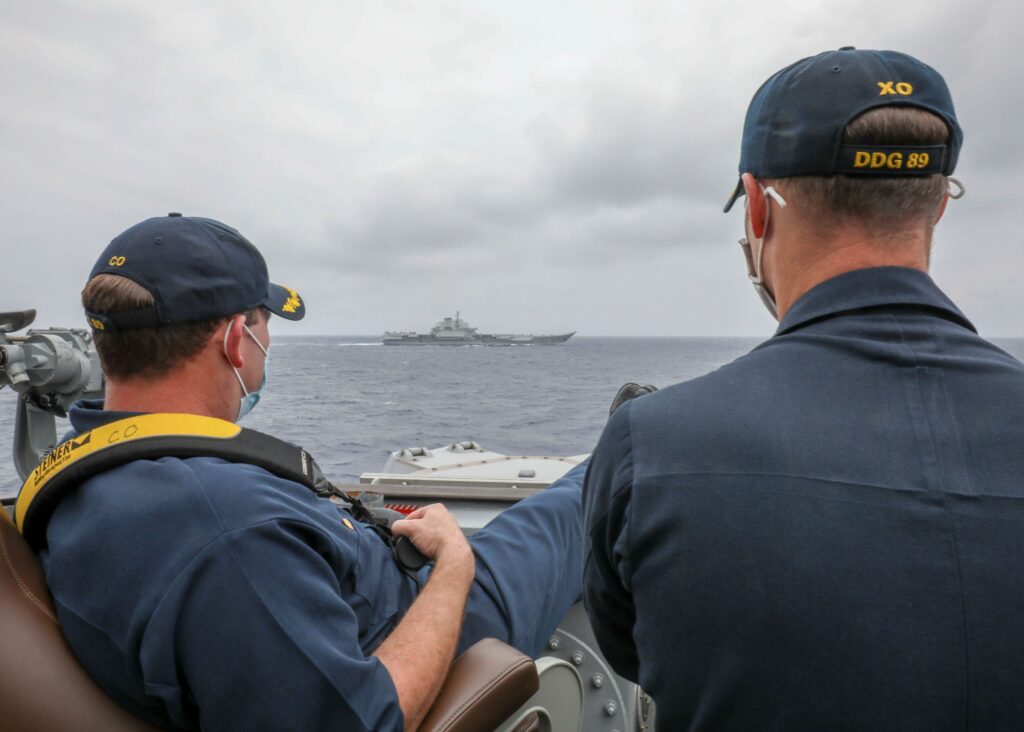
Cmdr. Robert J. Briggs and Cmdr. Richard D. Slye monitor the Chinese aircraft carrier Liaoning from the pilothouse of the Arleigh Burke-class guided-missile destroyer USS Mustin in April. U.S. NAVY / Mass Communication Specialist 3rd Class Arthur Rosen
The Navy League’s Center for Maritime Strategy set sail on a following sea of supportive calls, emails, and letters. The urgent cause of our nation’s maritime power resonates from commercial districts to the cargo terminals. With our ideal location inside the capital beltway, we will gather a coalition of maritime-minded business leaders, think tanks, concerned citizens and congressional leadership to drive the sea changes our maritime future needs.
Accordingly, I spent the first week in full “startup” mode, launching the office off the blocks while interviewing CMS candidates, fielding phone calls and taking CMS’s message on the road. I had the pleasure of introducing our mission and vision on two popular podcasts hosted by Francis Rose of Fedscoop and Walker Mills of Sea Control (affiliated with the Center for International Maritime Security, or CIMSEC). Both interviews will give you an idea of where we want to take CMS in the months and years to come
Meanwhile, over the Thanksgiving break, I had some time to reflect on the past and the future as CMS endeavors to become a strong advocate of America’s maritime power. In fact, just last month, I keynoted at Deep Blue 2021, a Canadian maritime conference. In preparing for my remarks, I harkened back to an assignment I undertook in the Pentagon in 1997 — a reflection indicative of the predictive errors that led how our maritime project decayed to its current state.
As a member of the staff of Dr. Paris Genalis, director of naval warfare in the Office of the Undersecretary of Defense for Acquisition and Technology (USD A&T), I served as a government adviser for the Defense Science Board Task Force on Submarines. The DSB’s team of talented, bi-partisan scientists, industrialists, civilian policy makers and uniformed services representatives chartered to decide the direction the nation would take in our next generation of submarines.
The task force first needed a vision of the future resolving what capabilities our next generation submarine required. Over its first few months, the task force embarked on a mini futures study to predict the security environment in the maritime domain in 2020 and beyond. It’s worthwhile to examine some of their conclusions, assess the accuracy of their predictions and then assess how we have done as a nation in responding to future threats.
The task force began with a prediction of the type of battlefield trends the military would face in 2020 and beyond. They envisioned:
Multiple, simultaneous and shifting geographic foci
Greater requirements for stealth, agility and self defense
Proliferation of technology in sensing, guidance and targeting significantly increasing weapons effectiveness for all parties
More effective coordination of sensors and shooters over longer ranges would allow smaller forces to conduct precision strike from greater distances
Mission diversity would increase, requiring a greater variety of warfighter skills and tradecraft
Reduced decision cycle would decrease warning time, intensifying the need for rapid response capabilities.
Twenty three years ago, the task force’s future military trend predictions were spot on. We are deterring and defending against multiple adversaries on multiple axes in complex competitions which threaten to explode into conflicts fought over extreme standoff ranges. Agile hypersonic weapons and stealthy, long-range and accurate weapons in the hypersonic family of missiles slash commanders’ available warning time and necessitate the evolution from simple Aegis-like decision systems to artificial intelligence assistance to the warfighter’s decision cycle.
The nature of the battlefield determined, the task force imagined the Navy’s role in 2020. A quick review of the U.S. Navy’s latest maritime strategy paper, “Advantage at Sea,” reveals the DSB’s assessment of the Navy’s mission priorities in 2020 and beyond was remarkably similar. You can read them at this link to “Advantage at Sea.”
Unfortunately, like many other future studies of the same era, the DSB’s geopolitical analysis of the “World from DoD’s Perspective — in the next 10 to 20, then 50 years” fell lethally short — wrong by either misestimation or misplaced optimism.
In 1998, the DSB predicted America would face “no plausible strategic competitor” in 10 to 20 years, beset instead by an increasing number of diffuse regional threats. This was dead wrong, even though the signs were predicted. The DSB noted the one-sided superiority of U.S. weapons systems will be reduced, that traditional alliances will become weaker and American overseas basing would decrease with more restrictions or national caveats on their use. DSB understood and reported technology diffusion would make our deterrence more challenging, especially as regional conflicts drew focus — all devastatingly true. Despite these trends, looking to the future from the heights of American power, we couldn’t conceive of a strategic adversary emerging before 2050.
While the DBS was dead wrong in its prediction of “no plausible strategic competitor” by 2020, the DSB was far from alone in banking on continued American global hegemony for another half century. Our inability as a nation to predict these threats 20 years ago suppressed our ability to act. America singularly focused on its fight against violent extremism across the Middle East and Africa to the exclusion of all else, assuming our competitive advantage would last. As we lay entrenched, other’s stole a march on us, filling the vacuums we left and grasping at the mantles we let droop.
So where do we go from here? Our strategic competitor out-paced our predictions by 30 years; and 20 years of counter-insurgency stymied our recognition and reaction. More than our future investments, our investment now must bias toward sea, air, space and the enabling signals domains. According to the Congressional Research Service, China will increase its fleet to 425 ships by 2030, with six carriers by the mid 2030s. The U.S. Navy will globally disperse only 300-305 ships, while the People’s Liberation Army Navy (PLAN) sits en masse on the WESTPAC doorstep. Even if estimations of the PLAN threat are overwrought, which they are not, a recapitalization of the fleet and bets on commercial maritime power still provide guaranteed economic improvement and a mobile deterrent hedge against any forward threat against American national interests.
Efforts like the $25 billion Shipyard Infrastructure Optimization Plan must be accelerated to improve the maritime industrial base over a decade, not two. We need the capability and capacity to build, modernize and repair our ships now. Doing anything less will leave our Sailors and national security within a lethal margin for potential defeat from which there will be no second chances.
Let’s act now and restore the great reserve of sea power our nation needs, sooner than later!
The DSB Report summary was published online in 1998 by the Defense Technical Information Center (DTIC).
Think Tank: USAF MQ-9 Reaper Drones Could Assist Arctic, Maritime and Littoral Operations
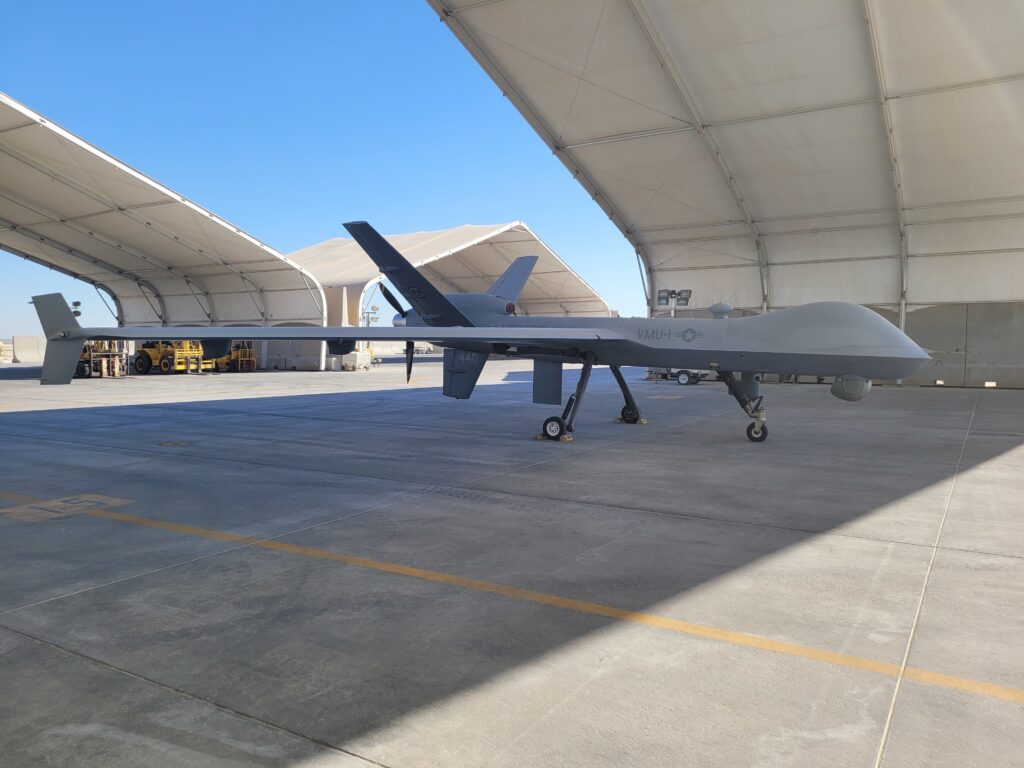
The Marine Corps’ first MQ-9A at an undisclosed location in the Central Command area of responsibility. The MQ-9A completed 10,000 flight hours in support of Marine Corps Forces, Central Command operations on March 31, 2021. U.S. MARINE CORPS
ARLINGTON, Va. — The U.S. Air Force wants to retire its MQ-9 Reapers by 2035 but an aerospace think tank says the drone fleet should be retained and modernized for new missions already challenging the sea services, such as maintaining domain awareness in the Arctic.
Facing severe future budget constraints while trying to fund modernization programs like the B-21 long range strike bomber, Air Force planners are considering retiring legacy aircraft they believe cannot survive in a high-end fight, like General Atomics Aeronautical Systems’ intelligence, surveillance, reconnaissance (ISR) and targeting drone.
While armed with Hellfire missiles, as well as ISR sensors and cameras, the RQ-9 has no defensive measures, except a counter-jamming pod, to keep it safe in contested airspace.
Rather than send its entire 280-Reaper fleet to the boneyard by 2035, the Air Force should upgrade it for a list of new missions such as air and missile defense, and communications relays, the Mitchell Institute for Aerospace Studies recommends in a paper, “Reimagining the MQ-9 Reaper,” by retired Air Force Major Gen. Lawrence Stutzriem.
“Reaper is more relevant today than most of the other aircraft that are in development or on the ramp,” Stutzriem, the institute’s director of research, told a livestreamed audience at the paper’s Nov. 19 virtual rollout. “And there’s a broad range of existing and new requirements that it could be used to fill in the future.”
The Navy and Coast Guard are focusing on the Arctic region as a contested area fraught with extreme weather conditions, immense distances and limited infrastructure — there is no port for deep water vessels within 1,000 miles of Alaska’s Arctic coast. Coast Guard officials have said communications are sketchy or nonexistent in the latitudes above 72 degrees north, and the Navy has no ice-hardened ships. The Coast Guard has just one heavy ice breaker, and new ones authorized by Congress won’t be ready for several years.
Meanwhile, Russia has built or reopened several military bases on islands along its Arctic coastline. Both Russia and China have built new fleets of ice breakers, some of them nuclear powered. Russia’s new Ivan Papanin-class multirole, icebreaking patrol vessels can be equipped with cruise missiles.
Recent technological enhancements to the MQ-9 “make it an attractive option for improving Arctic domain awareness,” Stutzriem’s paper says. General Atomics has tested an extended-wing variant of the Reaper that increases the drone’s endurance from 27 to over 40 hours. That would be a significant step for conducting ISR in the vast Arctic region. The MQ-9B SkyGuardian variant features an electro-expulsive de-icing system and an anti-ice heated engine inlet, important qualities for Arctic operations.
The MQ-9 can contribute to emerging high end missions as the U.S. military shifts to a mobile, widely dispersed force in the Indo-Pacific region to counter and deter adversaries, said Bryan Clark of the Hudson Institute, one of three other think tank analysts at the roll out who supported the continuing need for the MQ-9. To impose deterrence by detection, “I think the MQ-9 could contribute there quite a bit,” since it has targeting as well as ISR capabilities, Clark said. The Marine Corps has acquired three Reapers after three years of testing and planning with leased aircraft to see how they will fit into the commandant’s force design of small units, widely dispersed and armed with long-range fires to control access to sea lanes.
With a targeting mechanism for counter maritime operations, “they’ve got the whole kill chain with missiles ashore, with the naval strike missile, that will allow them to close that kill chain and actually achieve some of that deterrent effect that detection might provide,” Clark said.
DoD Concludes 2021 Global Posture Review
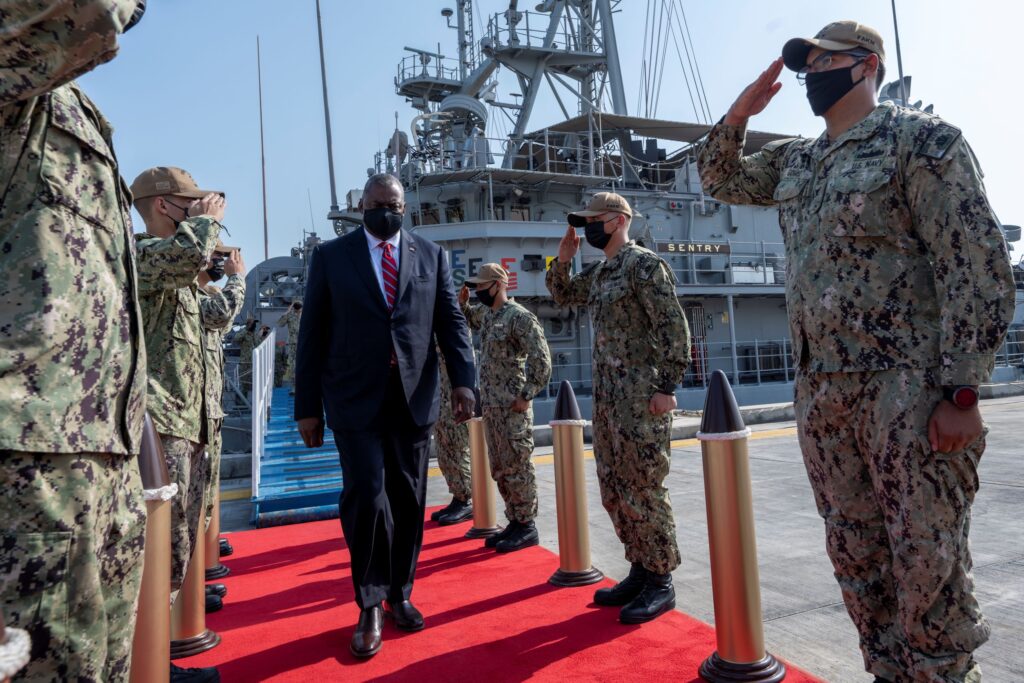
Secretary of Defense Lloyd J. Austin III is piped ashore after viting USS Sentry (MCM 3) in Bahrain, Nov. 21. Secretary Austin was traveling in the Gulf region to deliver remarks at the annual International Institute for Strategic Studies Manama Dialogue and met with senior government officials to affirm the strength of defense partnership and discuss joint priorities in the Middle East. DOD / Chad J. McNeeley
ARLINGTON, Va. — Following several months of analysis and close coordination across the U.S. government, the Department of Defense released the results of the Global Posture Review (GPR) Nov. 29.
The conclusion of the review comes at a key inflection point following the end of operations in Afghanistan and ongoing development of the National Defense Strategy. Nested within the Interim National Security Strategic Guidance, the GPR assessed DoD’s posture across major regions outside the United States and developed near-term posture adjustments, posture planning guidance and analysis on long-term strategic issues.
Through these assessments, the GPR will help strengthen posture decision-making processes, improve DoD’s global response capability, and inform the draft of the next National Defense Strategy.
In the Indo-Pacific, the review directs additional cooperation with allies and partners to advance initiatives that contribute to regional stability and deter potential Chinese military aggression and threats from North Korea. These initiatives include seeking greater regional access for military partnership activities; enhancing infrastructure in Australia and the Pacific Islands; and planning rotational aircraft deployments in Australia, as announced in September. The GPR also informed Secretary Lloyd Austin’s approval of the permanent stationing of a previously rotational attack helicopter squadron and artillery division headquarters in the Republic of Korea, announced earlier this year.
In Europe, the GPR strengthens the U.S. combat-credible deterrent against Russian aggression and enables NATO forces to operate more effectively. Based on an initial GPR assessments and a recommendation from Austin, in February 2021 President Biden rescinded the 25,000 active-duty force cap in Germany established by the previous administration.
Additionally, Austin announced in April DoD would permanently station an Army Multi-Domain Task Force and a Theater Fires Command, a total of 500 Army personnel, in Germany.
In the Middle East, the GPR assessed the department’s approach toward Iran and the evolving counterterrorism requirements following the end of DoD operations in Afghanistan. In Iraq and Syria, DoD posture will continue to support the defeat ISIS campaign and building the capacity of partner forces. Looking ahead, the review directs DoD to conduct additional analysis on enduring posture requirements in the Middle East.
In Africa, analysis from the review is supporting several ongoing interagency reviews to ensure DoD has an appropriately scoped posture to monitor threats from regional violent extremist organizations, support our diplomatic activities and enable our allies and partners.
Finally, in Central and South America and the Caribbean, the GPR reviewed the role of DoD posture in support of national security objectives, including humanitarian assistance, disaster relief and counter-narcotics missions. DoD posture will continue to support U.S. government efforts on the range of transnational challenges and partnership activities in the region.
The Department conducted the GPR with participation from Office of the Secretary of Defense components, the military departments, the Joint Staff, the combatant commands, the National Security Council staff, the U.S. State Department, U.S. Agency for International Development and the Office of the Director of National Intelligence, along with close consultation with dozens of allies and partners worldwide.