Oshkosh Defense Receives $152M Order for JLTVs to U.S. Military and NATO Allies
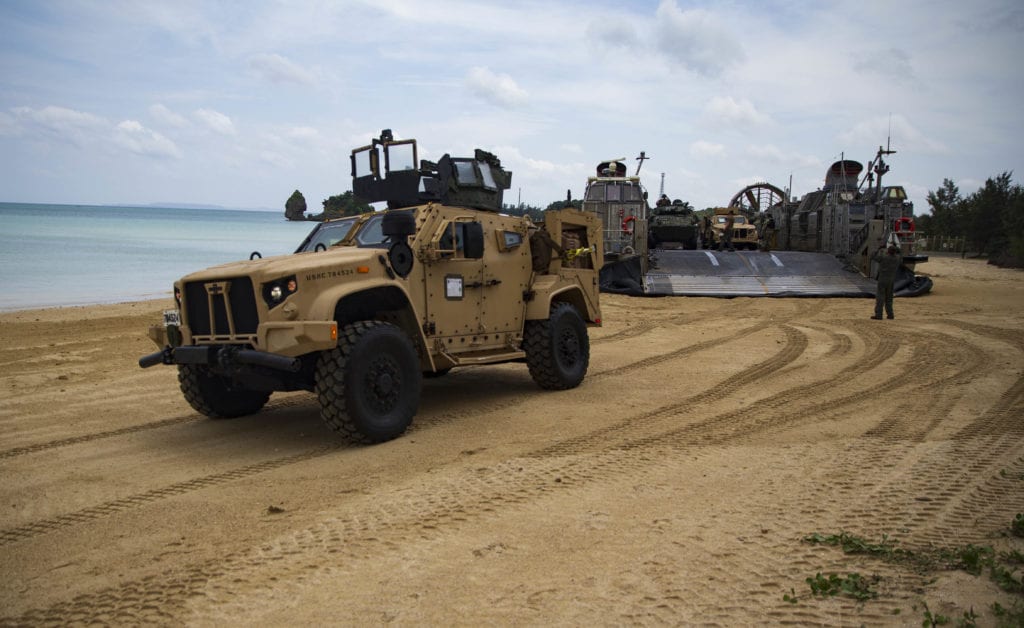
U.S. Marines with Battalion Landing Team 3/5, 31st Marine Expeditionary Unit (MEU), land on the beach in a joint light tactical vehicle (JLTV) to begin a light armored reconnaissance raid reherasal at Camp Schwab, Okinawa, Japan, June 19, 2021. U.S. MARINE CORPS / Sgt. Daisha R. Ramirez
OSHKOSH, Wis.— The U.S. Army Contracting Command – Detroit Arsenal has awarded Oshkosh Defense, a wholly owned subsidiary of Oshkosh Corp., a $152 million order for Joint Light Tactical Wheeled Vehicles (JLTV), companion trailers, and associated kits, the company said in a July 1 release.
The order includes Oshkosh JLTVs, trailers and kits for the U.S. Army, U.S. Marine Corps, U.S. Air Force, and U.S. Navy, as well as NATO allies Lithuania, North Macedonia, Slovenia, and Romania.
Since winning the competitive JLTV contract in 2015, Oshkosh has built over 12,500 JLTVs, fielded vehicles to over 40 U.S. and international military installations, and received commitments from eight NATO, Allied, and Coalition partners.
“We’ve spent over 10 years developing our vehicle, followed by nearly six years of manufacturing the vehicle in both low rate and full rate production,” said George Mansfield, vice president and general manager of Joint Programs, Oshkosh Defense. “We’ve refined the manufacturing process, matured our robust supply chain, and fulfilled the light tactical vehicle capability gap in eight additional countries with our proven platform. No one else can say that. And we have no plans to stop building the Oshkosh JLTV anytime soon.”
The U.S. Army recently increased Oshkosh’s option ceiling under the current contract from 18,170 to 23,163 vehicles to support critical missions worldwide.
“Oshkosh Defense is incredibly pleased with the reception the JLTV continues to receive around the world,” said John Lazar, vice president and general manager of International Programs, Oshkosh Defense. “The JLTV provides unprecedented levels of off-road mobility, survivability, and hosted firepower on a light tactical vehicle platform. We had a busy Spring and the momentum surrounding the platform continues to grow.”
In May, the North Macedonia minister of defense, Radmila Sekerinska, was able to ride in the JLTV for the first time. Sekerinska later tweeted, “These new American-made light armored vehicles will become part of the Army facilities. Today at Krivolak, we were convinced of their exceptional performance. This is what our Army looks like in #NATO.”
Later in June, the Slovenian deputy prime minister and minister of defense Matej Tonin, remarked at a JLTV acceptance ceremony, “Modernization of the Slovenian Army has finally begun. With the new light armored vehicles Oshkosh 4×4, our Soldiers will be more successful and safer in tasks at home and abroad.”
To date, Oshkosh has received orders or commitments from the following NATO, Allied, and Coalition partners including the United Kingdom, Belgium, Montenegro, Slovenia, Lithuania, Brazil, Romania, and North Macedonia.
Exercise Sea Breeze Underway in the Black Sea
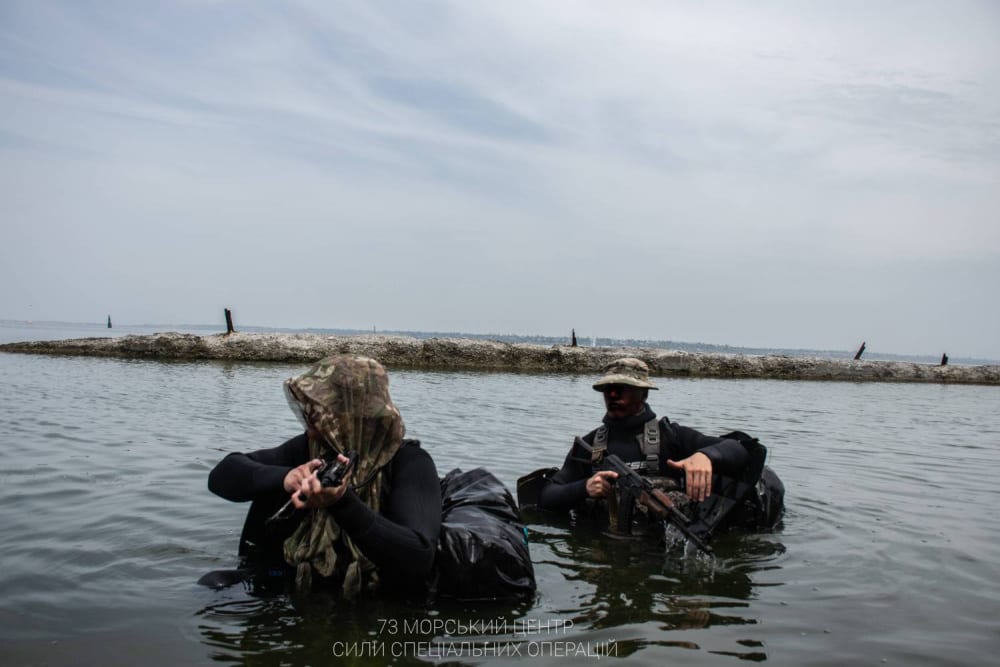
Special forces from several countries participated in Exercise Sea Breeze 2021 in Ukraine, June 30, 2021. Exercise Sea Breeze is a multinational maritime exercise cohosted by the U.S. 6th Fleet and the Ukrainian Navy since 1997. Sea Breeze 2021 is designed to enhance interoperability of participating nations and strengthens maritime security and peace in the region. U.S. NAVY / UKR SOF
U.S. 6th Fleet and the Ukrainian Navy are cohosting the annual naval Exercise Sea Breeze 2021 (SB21) in the Black Sea region. SB21 kicked off on June 28 and runs through July 10.
According to a statement from the U.S. 6th Fleet, SB21 will “focus on multiple warfare areas including amphibious warfare, land maneuver warfare, diving operations, maritime interdiction operations, air defense, special operations integration, anti-submarine warfare, and search and rescue operations.”
The first Sea Breeze exercise took place in 1997, and it has grown steadily to involve more nations and participants. “This year’s iteration has the largest number of participating nations in the exercise’s history with 32 countries from six continents providing 5,000 troops, 32 ships, 40 aircraft, and 18 special operations and dive teams scheduled to participate,” said Lt. Bobby Dixon, a spokesman for the 6th Fleet.
Nations participating in SB21 include Albania, Australia, Brazil, Bulgaria, Canada, Denmark, Egypt, Estonia, France, Georgia, Greece, Israel, Italy, Japan, Latvia, Lithuania, Moldova, Morocco, Norway, Pakistan, Poland, Romania, Senegal, Spain, South Korea, Sweden, Tunisia, Turkey, Ukraine, United Arab Emirates, United Kingdom, and the United States. Participants will engage in realistic maritime training to build experience and teamwork and strengthen interoperability.
NATO has participated in Sea Breeze since the beginning, and the annual exercise’s popularity has continued to grow in popularity over the years.
The ships and embarked aircraft of Standing NATO Maritime Group 2 will take part in the exercise. The exercise will focus on multiple warfare areas including amphibious warfare, land maneuver warfare, diving operations, maritime interdiction operations, air defense, special operations integration, anti-submarine warfare, and search and rescue operations in the Black Sea region.
According to a NATO press release, “This is good example to how allies and partners provide unique training opportunities, designed to enhance readiness, improve collaboration, and interoperability in the Black Sea region.”
“Sea Breeze allows allies and partners to come together and operate in the Black Sea and build capabilities and to conduct coordinated operations in international waters,” said Capt. Kyle Gantt, the deputy commodore and the deputy commander of Task Force 65.
Task Force 65, based at Rota, Spain, is the U.S. Navy’s forward-deployed destroyer squadron in Europe, and represents the United States annually as the lead task force executing exercise Sea Breeze.
Gannt said Sea Breeze improves partner capabilities and interoperability. “I’ve been very impressed with the capability of the Ukrainian navy,” said Gantt. “All of the exercises are conducted using standard procedures, which are common among our allies and we use when operating with our partners.”
The exercise is following appropriate COVID 19 protocols. “Last year, significant limitation was imposed due to COVID-19 pandemic and there were no ships were able to visit Ukrainian ports. This year training will be conducted to the fullest extent,” said Rear Adm. Oleksiy Neyezhpapa, commander of the Ukrainian navy. “More foreign equipment will be deployed than in the Sea Breeze of the past year.”
Capt. Cameron Chen, commander of Task Force 68, said the training and coordination with the Sea Breeze partners will help build and increase the capabilities of the Ukrainian military. “We are the Naval Expeditionary Force component for Sixth Fleet. We provide EOD [explosive ordnance disposal], divers, MCM [mine countermeasure] capability, and naval construction force and maritime expeditionary security to Europe and Africa. More Iterations like this, more exercises and continued partnerships, I think, is the key to strengthening ties and improving capabilities in the region.”
Since Russia’s illegal annexation of Crimea in 2014, NATO has increased its presence in the Black Sea. According to a statement from Supreme Headquarters Allied Powers Europe, NATO supports Ukraine’s sovereignty and territorial integrity within its internationally recognized borders, extending to its territorial waters.
“NATO does not and will not recognize Russia’s illegal and illegitimate annexation of Crimea and denounces its temporary occupation,” the statement said. “NATO continues to operate in international waters and the alliance’s actions are always defensive in nature, proportionate in posture, and in line with international laws and conventions. The multinational character of NATO deployments, and transparency in all of its exercises and activities, reflects allies’ fundamental commitment to the principles of collective defense, transatlantic unity, and interoperability in order to maintain peace and preserve security.”
No Provocation
Russia consistently monitors allied operations in the Black Sea with interest. This June, Russia fired warning shots at a Royal Navy destroyer that it said was in Russian waters, harassed a Dutch frigate, and has “spoofed” AIS tracking information to show allied ships near Crimea when they were actually faraway or in port in Odessa.
Gantt said the exercise was not intended to provoke Russia.
“This is a long-planned exercise. In fact, this is an exercise that has happened since 1997. In fact, this is the 21st iteration. This is in no way a reactive exercise. This is a longstanding commitment to an exercise in the Black Sea co-hosted by the United States and the Ukrainian navies. All nations have the right to operate in international waters, and this exercise will take place either in Ukraine or in international waters.”
“Russia routinely observes our operations, and it is their right to do so when they’re doing that in international waters,” said Gannt. “What we expect is that all nations will operate professionally at sea. We expect that all nations will respect the international laws and norms that govern safe and professional operations at sea. I expect that from Russia and I expect that from all of the forces here operating in Sea Breeze.”
Gannt pointed out that the U.S. and Russia have a longstanding Incidents at Sea agreement (INCSEA) to reduce the chance of an incident at sea between the two countries and, in the event that one occurred, to prevent it from escalating.
“INCSEA provides a standardized set of communications to make sure there is no question when ships communicate with each other how they are — what their intentions are, and it’s a longstanding process that, quite frankly, removes risk. That’s an important part of what we’re doing here with Sea Breeze. We are demonstrating to the world that the Black Sea is an international sea; it is open and available for the free transport of commerce, of shipping, for all nations, and it is not owned by any one nation.”
As in past years, Sea Breeze serves to demonstrate the commitment of the U.S., NATO and partner nations to the stability and prosperity of the region.
“We are committed to maintaining the safety and security of the Black Sea,” said Chargé d’affaires Kristina Kvien of the U.S. Embassy in Ukraine.
Navy Has the Highest COVID Vaccination Rate in DoD; Marine Corps the Lowest
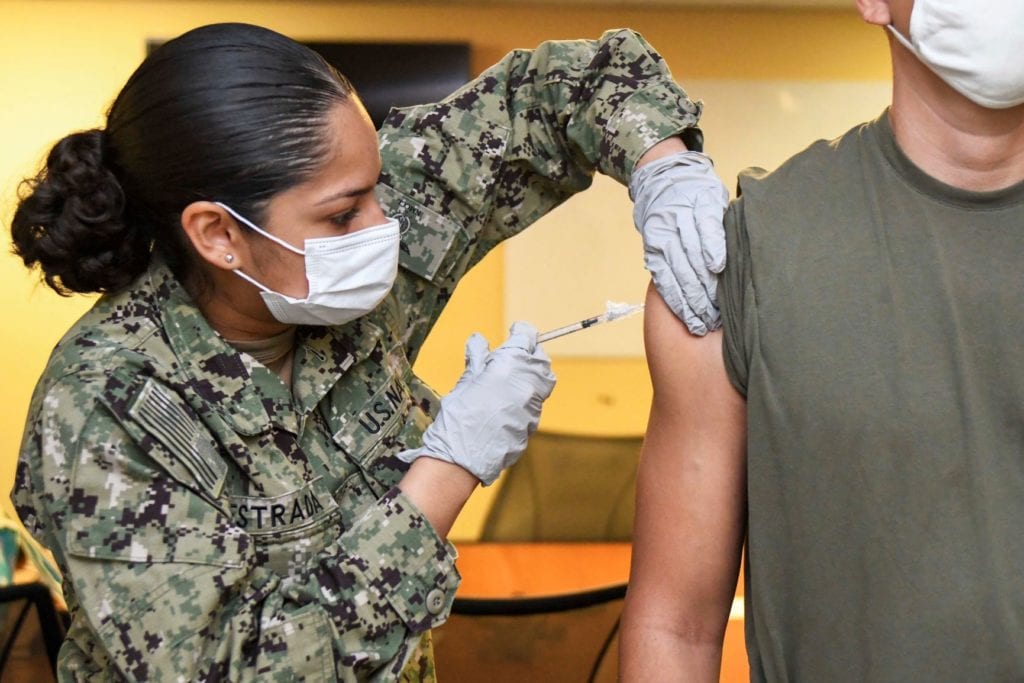
Navy Seaman Denisse Estrada-Suarez administers the COVID-19 vaccine during a Tiger Team visit to Marine Forces Special Operations Command at Camp Lejeune, N.C., June 15, 2021. NAVAL MEDICAL CENTER CAMP LEJEUNE
ARLINGTON, Va. — The U.S. Navy has the highest rate, 77%, of active duty personnel who have gotten at least one vaccination shot against COVID-19 virus, while the Marine Corps, at 58%, has the lowest, according to Defense Department health officials.
At a June 29 Pentagon briefing to update reporters on the Defense Department’s success in battling the coronavirus pandemic, officials announced efforts to determine why just 68% of the military overall have been vaccinated with at least one dose, and how to encourage more services members to roll up their sleeves to get their first and follow-on shots.
“The pandemic is not over, and we are not done with all-out efforts to encourage vaccination,” said Dr. Terry Adirim, acting Assistant Secretary of Defense for Health Affairs.
In addition to the Navy at one end of the active duty vaccination rate and the Marines at the other, officials said the first shot vaccination rate was 70% for the Army and 61% for the Air Force. There were no numbers for the Space Force and officials did not address reasons for the disparity of vaccination numbers among the services.
While COVID-19 case counts are dropping across the department and base commanders have been reducing local health protection condition (HPCON) levels, Adirim said recent data shows the unvaccinated or under-vaccinated are more susceptible to COVID variants, which are far more dangerous, especially the delta variant.
According to the military health system, the delta variant of COVID-19 is more transmittable, causes more severe disease, and results in higher cases of hospitalization and death than any other strain of the virus.
Of the 21 military personnel currently hospitalized with COVID, none were vaccinated, said Army Lt. Gen. Ronald Place, director of Defense Health Agency. He and Adirim said they were concerned about the risks posed to unvaccinated personnel at installations located in states and counties in the United States with low vaccination rates.
“The Delta variant poses a threat to unvaccinated personnel,” said Adirim, adding that the best way to beat it was through vaccination. Officials noted that a single dose of anti-COVID vaccine was only 33% effective against the Delta variant, while getting a second dose was 88% effective.
Germany Signs on for Five Boeing P-8A Poseidon Aircraft
Germany has signed a letter of offer and acceptance for five Boeing P-8A Poseidon aircraft under the Foreign Military Sales program. BOEING
BERLIN —The German Ministry of Defense signed a letter of offer and acceptance for five Boeing P-8A Poseidon aircraft under the U.S. government’s Foreign Military Sales (FMS) process, the company said in a June 30 release. With this order, Germany becomes the eighth customer of the multimission maritime surveillance aircraft, joining the United States, Australia, India, the United Kingdom, Norway, Korea and New Zealand.
“Boeing is honored to provide Germany with the world’s most capable maritime surveillance aircraft,” said Michael Hostetter, Boeing Defense, Space & Security vice president in Germany. “We will continue to work with the U.S. government, the German government and industry to establish a robust sustainment package that will ensure the German Navy’s P-8A fleet is mission ready.”
The P-8A Poseidon offers unique multimission capability and is the only aircraft in service and in production that meets the full range of maritime challenges faced by European nations. Deployed around the world with more than 130 aircraft in service, and over 300,000 collective flight hours, the P-8A is vital for global anti-submarine warfare, intelligence, surveillance and reconnaissance and search-and-rescue operations.
“Bringing this capability to Germany is not possible without the contributions of German industry,” said Dr. Michael Haidinger, president of Boeing Germany, Central & Eastern Europe, Benelux and the Nordics. “With the P-8A, we will expand our collaboration with German companies, create new jobs and contribute to long-term local economic growth.”
German companies that already supply parts for the P-8A include Aljo Aluminum-Bau Jonischeit GmbH and Nord-Micro GmbH. Recently, Boeing signed agreements with ESG Elektroniksystem-und Logistik-GmbH and Lufthansa Technik to collaborate in systems integration, training, support and sustainment work. By working with local suppliers, Boeing will provide support, training and maintenance solutions that will bring the highest operational availability to fulfill the German Navy’s missions.
EXU-1, Marines, NSWC Indian Head Team Up for Joint Forces
Ships participating in BALTOPS, the Baltic Operation Exercise. ROYAL CANADIAN NAVY / Sailor First Class Bryan Underwood
INDIAN HEAD, Md. — When the Navy’s Expeditionary Exploitation Unit-1 (EXU-1) teamed up with the U.S. Marine Corps’ Littoral Explosive Ordnance Neutralization (LEON) group for the first joint evolution with Marine explosive ordnance disposal (EOD) operators, they received some unexpected help from the Naval Surface Warfare Center Indian Head Division’s (NSWC IHD) Energetics Manufacturing (M) Department, the NSWD IHD said in a release.
Due to the inherent mission of EXU-1 and their expertise in expeditionary exploitation, the Marine Corps saw an opportunity to bolster that capability with the innate ordnance disassembly and inerting capability used by Marines for ordnance exploitation.
“Recognizing these complimentary capabilities, and the need for naval integration to succeed in the power competition, we devised an internal exercise to demonstrate the utility in Marines augmenting EXU-1,” said Master Gunnery Sgt. Jamie Lee, the EOD chief for the Marine Corps Detachment at NSWC IHD. “As this plan developed, additional opportunities with the Energetics Manufacturing Department and LEON were presented, allowing the Navy-Marine Corps EOD team to execute on a larger scale with support from Marine Corps Base Quantico EOD.”
This ultimately led to continued integration and successful capability development at the recent Baltic Operations (BALTOPS) exercise: the annual maritime-focused U.S. European Command and U.S. Naval Forces Europe exercise in the Baltic region.
“Navy and Marine EOD units possess the core EOD capabilities necessary to support [Department of Defense] and service level mission essential tasks. We differ slightly in the service specific niche EOD capability development,” said Lee. “In this case, Marine EOD is unique amongst the services in their ordnance disassembly and inerting skillsets, to include the depth of information and reporting generated in a tactical/expeditionary environment. Augmenting the technical exploitation capability of EXU-1 with Marine Corps ordnance exploitation skillsets provides the ability for on-site ordnance exploitation and analysis for near real-time information to support the intelligence cycle.”
According to Greg Johnson, EXU-1’s foreign materiel director, what started out as a joint exercise between the LEON platoon and EXU-1 became an opportunity to gather unused ordnance to use as training aids thanks to the input and hard work from the department’s employees.
“We had a requirement we were working on which generated a relationship between the U.S. Marine Detachment (MARDET) and EXU-1 so we were looking to push our combined capabilities out to the field for the operators to integrate,” he said. “We were meeting with M Department personnel on a separate issue when the subject came up about them having excess ordnance they were planning on disposing.”
This joint initiative was the first time this was done to such a large scale, in a compact timeline to support multiple Navy and Marine Corps exercises. A large quantity of excess ordnance items including landmines, anti-tank and anti-personnel munitions, and shallow water mines were made inert by the MARDET operators for use as training aids and various exercises at Camp Pendleton, California. This evolution between the three groups occurred in approximately two months, resulting in quicker deployment of these training aids to the joint force EOD operator and at a significant cost savings as new material purchases were not required.
M Department personnel “were instrumental with logistics such as transportation of the ordnance to Quantico, inspection of the equipment and handling the paperwork,” said Johnson. “There was no work plan. They just jumped on board and fully supported us the entire time. They came in early, they stayed late, they did everything they could to help us accomplish the mission.”
According to Christopher Bruce, a supervisory technician with the department’s Explosives and Energetics Division, what originally happened as circumstance turned into an opportunity to provide the joint service warfighter with much-needed training aids quicker than anyone expected.
“A few meetings occurred and we discussed EXU-1’s needs and wants,” he said. “From there we began coordination with them directly to provide information into items they felt would help support their needs in training and exploitation.”
After several planning meetings, the department’s Explosives and Energetics Division and Magazine Logistical Support gathered the requested items and began inspections at the command’s Explosive Production Facilities to allow the ordnance to be safely shipped from NSWC IHD to various training sites. Once the inspections were complete, both divisions and EXU-1 collaborated to load multiple vehicles in just a few days to be transported off station to training sites.
“Our hope is that this collaboration is one of many. We want to continue to provide real-world items to the warfighter for training to help develop knowledge and understanding,” said Bruce. “I personally am extremely grateful for all the time and dedication from all members involved. So many hours of sacrifice for an urgent need and it all accumulated with a great outcome.”
MARTAC Selects Blue Sky Network’s SkyLink for Its USVs
MARTAC will equip its unmanned surface vehicles with Blue Sky Network’s SkyLink system. BLUE SKY NETWORK
SAN DIEGO — Blue Sky Network has been selected by MARTAC, an innovative provider of unmanned surface vehicles (USVs), to equip their USVs with Blue Sky Network’s device and data management solution, SkyLink, Blue Sky announced in a release.
SkyLink by Blue Sky Network leverages the Iridium Certus network as well as local GSM/LTE services for continuous, end-to-end sensor reporting, two-way messaging, asset utilization, and IoT/M2M monitoring. The device is small-form and low space, weight and power (SWAP) for use in any location or environment, with demonstrated versatility in both manned and unmanned maritime applications.
“To work with MARTAC is a great honor,” said Tucker Morrison, CEO of Blue Sky Network. “Autonomous missions are becoming more prevalent, and it’s the powerful, cutting-edge solutions like MARTAC’s USVs that inspired us to develop SkyLink.”
“We look forward to partnering with MARTAC to provide real-time command and control datalink for autonomous and remotely-piloted operations via our SkyLink solution,” said Jason Hicks, vice president of business development at Blue Sky Network. “SkyLink is a lightweight, durable, and low-latency solution that enables Iridium Global Line of Sight for beyond-visual-line-of-sight performance, supporting the vast needs of MARTAC’s Devil Ray and MANTAS USVs.”
“We are very excited to be working with Blue Sky Network’s leading edge, low SWAP, multi-carrier network for our USVs. Our Devil Ray and MANTAS vessels operate beyond human capability and therefore reliable, robust, low-latency communications anywhere in the world is critical,” said Tom Hanson, COO of MARTAC.
First Canadian Arctic Offshore Patrol Vessel Commissioned
The Royal Canadian Navy officially welcomed into service the first Arctic and Offshore Patrol Ship, Her Majesty’s Canadian Ship (HMCS) Harry DeWolf, with the time honored tradition of a Commissioning Ceremony, on 26 June 2021 at Her Majesty’s Canadian Dockyard Halifax NJ Jetty. Three cheers by the ship’s company. MARLANT Public Affairs / Mona Ghiz
HALIFAX, Nova Scotia — Premier Iain Rankin, also minister responsible for military relations, participated in the June 26 commissioning of Her Majesty’s Canadian Ship (HMCS) Harry DeWolf, the Royal Canadian Navy’s lead ship in its class of Arctic Offshore Patrol Vessels, the premier’s office said.
The Harry DeWolf is the first ship completed as part of the National Shipbuilding Procurement Strategy and was built at Irving Shipbuilding’s Halifax Shipyard. The ship is named after Vice Adm. Harry DeWolf, a former head of the Royal Canadian Navy from Bedford. This is the first time a class of ships will be named after a prominent Canadian navy figure in the RCN’s 108-year history.
the Harry DeWolf will help to assert Canadian sovereignty in Arctic and coastal Canadian waters in addition to supporting international operations as required. It will deploy for its first mission in August.
“Nova Scotia has long been known for its expertise in shipbuilding, and now we have the first commissioned vessel ready for deployment,” said Rankin. “The economic value of these ship contracts is vital to Nova Scotia, providing millions of dollars in direct and indirect impact. Over 1,100 Nova Scotians were directly employed in the construction of HMCS Harry DeWolf at the Halifax Shipyard, and the construction of the remaining ships will provide opportunities for thousands more. Since 2015, 2,100 employees were hired in Halifax alone, with more jobs to come.”
In support of the multi-billion-dollar shipbuilding contract awarded to Irving Shipbuilding, the government of Nova Scotia launched programs to help Nova Scotian workers and companies take part in shipbuilding opportunities, including partnering to provide the Pathways to Shipbuilding program.
Pathways to Shipbuilding provides equitable access to opportunities, programs and training for Nova Scotians who are historically underrepresented in the shipbuilding trades. Through the program, women, African Nova Scotians and indigenous people are able to gain skills allowing them to take part in shipbuilding opportunities. More than 65 apprentices from underrepresented groups have completed the pathways program.
“Many Nova Scotian families have long histories serving our country on land, sea and in the sky,” said Rankin. “I want to congratulate them today, along with all our expert shipbuilders on the momentous commissioning of the Harry DeWolf into the service of the Royal Canadian Navy. It’s a proud day for Nova Scotia and for our country.”
“Irving Shipbuilding and its many partners take great pride in seeing HMCS Harry DeWolf officially join the Canadian Navy,” said Kevin Mooney, president of Irving Shipbuilding. “Today’s commissioning is proof that Canada’s bold initiative to revive its shipbuilding industry is working. As the lead vessel of the Arctic and Offshore Patrol Ship [AOPS], our Navy has taken Harry through many demanding trials since delivery last July and achieved one success after another. Irving’s new generation of talented shipbuilders is ready to meet the challenges that lie ahead, with the remainder of the Navy AOPS ships on track, the Coast Guard AOPS variant completing the design phase, and design and build plans well underway on the new Canadian Surface Combatant.”
The Pathways program is funded through federal and provincial governments and with support from the Nova Scotia Apprenticeship Agency, Nova Scotia Community College, Irving Shipbuilding, Unifor and many community partners such as Women Unlimited, the East Preston Empowerment Academy and Mi’kmaw Native Friendship Centre.
“I was looking for a new career path with opportunity for growth. I’d worked in male-dominated professions all my adult life,” said Antonia Wareham, graduate of the first Pathways to Shipbuilding Program in 2015, and currently a journeyman welder and mentor at the Halifax Shipyard. “I knew I could do anything I put my mind to. It’s an unexplainable feeling to know that you’ve worked on something that may very well outlive you. I’m incredibly proud.”
Peraton to Deliver Next-Gen Capabilities to U.S. Navy Unmanned Maritime Systems
Explosive ordnance disposal technicians assigned to EOD Mobile Unit 2 expeditionary mine countermeasures company 2-2 prepare to launch an unmanned undersea vehicle to search for a potential target during an ExMCM certification exercise in April. U.S. NAVY / Chief Mass Communication Specialist Jeff Atherton
HERNDON, Va. — Peraton has been awarded a position on the Unmanned Maritime Systems Support II (UMSS II) indefinite-delivery/indefinite-quantity (IDIQ) contract to provide hardware and software development, as well as in-service operational support, for the U.S. Navy’s unmanned maritime systems, the company said in a June 29 release.
The IDIQ covers work across both unmanned surface and subsurface systems engaged in waterborne and underwater mine countermeasures missions on behalf of Navy Explosive Ordnance Disposal. The IDIQ is worth up to $250 million over an eight-year period.
Peraton will compete for task orders covering a broad range of requirements, including specification and design, fabrication, installation, testing and evaluation, fielding, maintenance, training, and configuration and program management for the Navy’s unmanned maritime systems.
Peraton has supported the Navy’s unmanned activities since 2001. Over the span of the first UMSS IDIQ, Peraton has received 20 task orders, providing technical and operational support to Naval Information Warfare Center (NIWC) Pacific for unmanned underwater vehicles, marine mammal systems and CONUS and OCONUS fleet units.
“We are honored to continue our decades-long partnership supporting the Navy’s mine countermeasure mission,” said Jeff Bohling, president of the company’s Defense Solutions sector. “We are committed to delivering next-generation capabilities to the warfighter.”
“Our experience fielding unmanned technology and our familiarity with the evolving needs of the fleet operator enables Peraton to provide sailors operating around the world with the critical tools they need for successful mission outcomes,” said Matt Clements, UUV program manager. “We are excited to build upon our trusted relationship with the Navy and continue supporting the nation’s national security mission at sea.”
Vanilla UAS Demonstrated in Unmanned System Battle Problem
A Vanilla ultra endurance land-launched unmanned aerial vehicle (UAV) undergoes operational pre-flight checks during U.S. Pacific Fleet’s Unmanned Integrated Battle Problem (UxS IBP) 21 at Naval Base Ventura County, Point Mugu. U.S. NAVY / Construction Mechanic 2nd Class Michael Schutt
POINT MUGU, Calif. — Vanilla Unmanned successfully demonstrated multi-day maritime domain awareness (MDA) operations during the Pacific Fleet’s (PACFLT) inaugural Unmanned Integrated Battle Problem (UxS IBP) in April, the company said in a release.
Vanilla’s 45-hour, 23-minute unrefueled flight took off from Naval Air Station (NAS) Point Mugu and performed maritime domain awareness (MDA) tasking in coordination with manned PACFLT units. The beyond-line-of-sight flight provided high-definition electro-optical video over satellite communications at ranges greater than 200 nautical miles from Vanilla’s ground control station.
The multi-mission Vanilla took off partially fueled and returned to base on schedule with fuel reserves sufficient for nearly doubling the length of this MDA sortie.
The UxS IBP event also showcased Vanilla’s proprietary truck-mounted launch and recovery system, a key enabler for runway-independent operations that has been proven in repeated off-road launches and recoveries.
“This flight showed Vanilla can provide a tactical capability without necessarily needing to be launched from the front line. It’s a concept of operations unique to Vanilla’s endurance and propulsion,” said Dan Edwards, Platform Aerospace chief technology officer. In addition to the heavy lift multi-mission variant that flew in UxS IBP, a vertical-takeoff-and-landing variant is in advanced development and will begin flights in early 2022.
Prior to the flight, Vanilla was showcased at the UxS IBP Distinguished Visitors event for senior Navy leadership, including Acting Secretary of the Navy Thomas W. Harker, Commander of U.S. 3rd Fleet Vice Admiral Scott D. Conn, and Chief of Naval Research Rear Adm. Lorin Selby. The overall event demonstrated how Vanilla could integrate into the Navy’s Unmanned Campaign Framework, providing a variety of C5ISR capabilities in coordination with both manned and unmanned units.
Vanilla’s participation in UxS IBP was supported by PACFLT and the Office of Naval Research (ONR), as well as NAS Point Mugu and the Small Business Innovation Research (SBIR) program.
NATO Trains Crews in Anti-Submarine Warfare off Norway
Commodore Bradley Peats of the Royal Canadian Navy, who is commanding ships from NATO Standing Maritime Group 1. ROYAL CANADIAN NAVY
Ships and aircraft participating in one NATO’s signature maritime exercises head to the waters of the high north for Dynamic Mongoose 2021 (DYMO 21). The exercise, sponsored by NATO’s Allied Maritime Command (MARCOM), based at Northwood, U.K, will take place between June 29 and July 9.
Vice Admiral Didier Piaton of the French navy, the MARCOM deputy commander, said MARCOM is organizing planning and conducting the exercise in the maritime joint environment. “It’s important to our nations and our navies to maintain and enhance our collective skills in maritime warfare,” he said.
Dynamic Mongoose exercises are held annually in the North Atlantic, in which NATO trains and practices anti-submarine warfare (ASW) skills under various circumstances. MARCOM also leads the annual ASW exercise Dynamic Manta in the Mediterranean. Together, they represent NATO’S premier deep water, high-end ASW and anti-surface warfare exercises.
Ships from NATO Standing Maritime Group 1 (SNMG1), under the command of Commodore Bradley Peats, Royal Canadian Navy, will participate along with submarines from the U.S. and Norway. Peats commands SNMG1 ships from Canada, Denmark, Netherlands, Norway and the U.K. from his flagship, HMCS Halifax (FFH 330).
Dynamic Mongoose exercises “will improve our surface, subsurface and maritime air forces abilities to work together effectively and seamlessly while enhancing our joint warfighting capabilities and proficiency in the surface and sub-surface threat subsurface domain,” said Peats. “These efforts pay dividends in times of crisis and conflict and proves NATO’s collective capability to respond in a timely and effective manner to potential threats to maritime security, stability and commerce in the region.”
Peats, speaking to reporters today, said ASW requires complex and close coordination between surface ships, submarines, maritime helicopters and maritime patrol aircraft to effectively find, track, and, if necessary, neutralize submarines. “Each type of asset brings its own unique capabilities to the table. For example, surface ships have a long endurance and can host anti-submarine warfare capable maritime helicopters. Fixed-wing patrol aircraft can cover long distances and wide areas relatively quickly. Submarines are excellent and covert searches and tracking,” he said.
Aviation units from Canada, Germany, U.K., Norway, U.S. and the Netherlands are participating. Rotary winged aircraft will operate from the ships and land-based maritime patrol aircraft will operate from Lossiemouth, U.K., Keflavik, Iceland, and Andoya, Norway.
Representing the host nation, Chief of the Royal Norwegian Navy Rear Adm. Rune Andersen said allied maritime presence in the North Atlantic is very welcomed. “NATO is the cornerstone for Norwegian security. Our ability to operate together is vital for our security. Supporting allied training and activity in and around Norway is a key task for the Norwegian armed forces.”
Andersen said the significance of exercises like Dynamic Mongoose has grown with the increased military activity in the North Atlantic. “Anti-submarine warfare is a complex undertaking. The undersea domain is a challenging operating environment. It requires good command and control and coordination between surface and air units. Operators at sea and in the air need advanced exercises to train, practice and to improve and maintain their skills.”
Rear Adm. Andrew Burcher, who is Commander Submarines NATO and the officer-in-charge of the exercise, said an in-stride debriefing team has been established, as it has for several previous Dynamic Mongoose and Dynamic Manta exercises, to provide real-time feedback to the assets that are at sea. The team is supported by the NATO Centre for Maritime Research and Experimentation in La Spezia, Italy, to gather data and evaluate what the different assets are doing, collating that information and then providing feedback on how the units they are performing.
“It’s a real value to the units participating in the exercise to get real-time feedback that they can then put into practice for the next case-ex or serial that they do,” Burcher said. “With each subsequent exercise we’ve increased the level of detail and information provided through this methodology. It gives us a significant advantage.”
Burcher said it’s all part of a process of continuous improvement. “We make improvements, and with the next iteration we can we make improvements on top of that, and part of that process is practice. Each time we have an exercise like Dynamic Mongoose, we practice that capability, and demonstrate it in the environment where it’s going to be utilized.”
Reporters wanted to know if the exercise was an attempt to send a message to Russia. Piaton said Dynamic Mongoose, like all exercises in NATO, is conducted in a transparent and unprovocative manner with a declared defensive posture. “NATO’s daily mission is deterrence. We’re here to train our crews and make sure our deterrence is credible.”
Andersen noted the annual exercise has been taking place for many years, and is occurring within Norway’s EEZ. “It’s quite far from Russia, actually,” he said.
According to NATO spokesman Cmdr. S. Korhan Zorlu of the Turkish navy, appropriate COVID 19 protocols are being observed afloat and ashore.