USSOCOM Awards AeroVironment $26 Million for Switchblade 600 Tactical Missile Systems
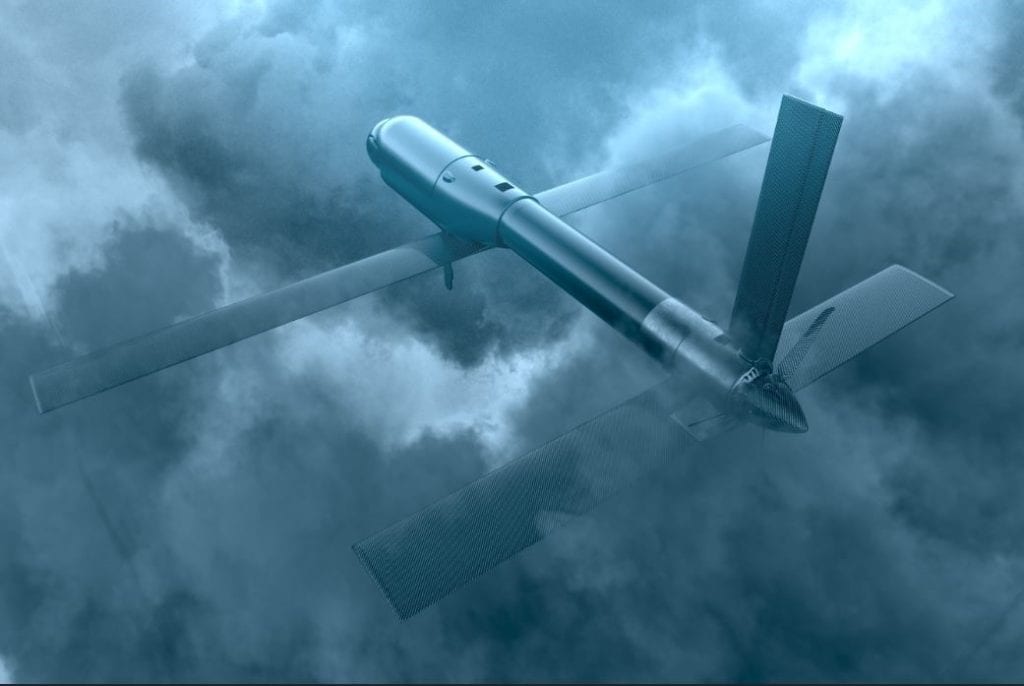
An artist’s illustration of the Switchblade 600. AEROVIRONMENT
SIMI VALLEY, Calif. — AeroVironment Inc. has been awarded a cost-plus-fixed-fee contract on March 31, 2021, by the United States Special Operations Command (USSOCOM) for $26 million with $7 million funded upon receipt. The contract includes delivery and integration of Switchblade 600 tactical missile systems into specialized maritime platforms, scheduled to be completed by January 2023.
“Our team worked closely with our customers to develop Switchblade 600, a loitering missile system that addresses the increasingly complex needs and mission requirements of counterinsurgency operations and those against peer and near-peer adversaries,” said Brett Hush, AeroVironment vice president and product line general manager for tactical missile systems. “Integrating Switchblade 600 into combat platforms, such as the USSOCOM’s specialized maritime vessels, enhances force overmatch, minimizes warfighter exposure to enemy direct and indirect fires and accelerates the maturation of this innovative solution.”
The AeroVironment Switchblade 600 is an all-in-one, man-portable system equipped with a high-performance electro-optical/infrared gimbaled sensor suite, precision flight control and more than 40 minutes of flight time to deliver unprecedented tactical reconnaissance, surveillance and target acquisition (RSTA). Its anti-armor warhead enables engagement and prosecution of hardened static and moving light armored vehicles from multiple angles — without external ISR or fires assets — for precise, localized effects and minimal collateral damage.
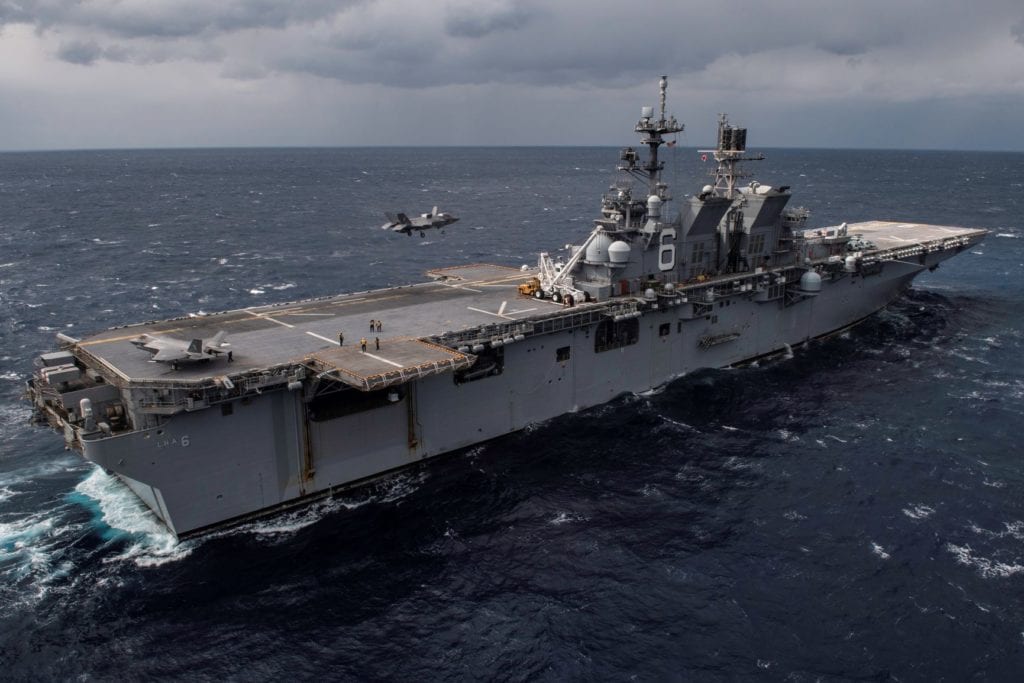
An F-35B Lightning II assigned to the 31st Marine Expeditionary Unit (MEU) lands on the flight deck o the forward-deployed amphibious assault ship USS America (LHA 6). America, lead ship of the America Amphibious Ready Group, along with the 31st MEU, is operating in the U.S. 7th Fleet area of responsibility to enhance interoperability with allies and partners and serve as a ready response force to defend peace and stability in the Indo-Pacific region. U.S. NAVY / Mass Communication Specialist Seaman Matthew Cavenaile
ARLINGTON, Va. — Sustaining the troubled Lockheed Martin F-35 Lightning II strike fighter over its expected 66-year service life will cost more than the total purchase price of thousands of the aircraft, the Pentagon’s most expensive weapons platform, a government watchdog told lawmakers.
The Defense Department plans to acquire nearly 2,500 F-35 aircraft for about $400 billion over the next five decades for the Air Force, Navy and Marine Corps. However, the latest Government Accountability Office (GAO) report on the nation’s biggest weapons program indicates the services will incur an additional $1.3 trillion in sustainment costs for maintenance, repairs and technology upgrades over that same period.
That raises the issue of the services’ affordability targets, “how much the Air Force, the Navy and Marine Corps can afford to spend to sustain the F-35,” GAO’s Diana Maurer, director of military structure and operational issues, told a joint hearing by two subcommittees of the House Armed Services Committee (HASC) April 22. Originally estimated at $1.11 trillion in 2012, sustainment costs for the Fifth Generation fighter have grown to $1.27 trillion, despite efforts to reduce costs.
“The bottom line here is the services have a plane that they can’t afford to fly the way they want to fly it, at least in the long term,” Maurer told the HASC Tactical Air and Land Forces and the Readiness subcomittees.
The services face a substantial and growing gap between estimated sustainment costs and affordability constraints — costs per tail, per year that the services project they can afford. The preliminary GAO report to Congress said the gap would total about $6 billion in steady state year 2036 alone. The services will collectively be confronted with tens of billions of dollars in sustainment costs that they project as unaffordable during the program.
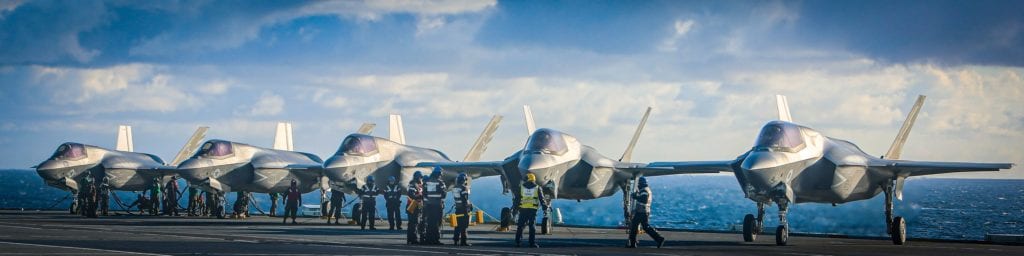
Marines with Marine Fighter Attack Squadron (VMFA) 211 conduct pre-flight checks on F-35B Lightning II Joint Strike Fighters aboard the Royal Navy aircraft carrier HMS Queen Elizabeth (R 08) in the North Sea, Oct. 10, 2020. VMFA-211 is an F-35B Lightning II squadron assigned to Marine Aircraft Group 13, 3rd Marine Aircraft Wing. Its mission is to intercept and destroy enemy aircraft under all weather conditions and attack and destroy surface targets in support of Fleet Marine Expeditionary Forces. U.S. MARINE CORPS / 1st Lt. Zachary Bodner
The Air Force, which is buying the most aircraft, 1,763 F-35As — the conventional takeoff and landing variant — needs to reduce estimated annual per-plane costs by $3.7 million (or 47%) by 2036, or costs in that year alone will be $4.4 billion more than the Air Force can afford, the GAO said. The Navy and Marine Corps, which are buying hundreds fewer aircraft, face smaller, but significant affordability gaps. For the Navy, which plans to buy 273 F-35Cs, the aircraft carrier variant, the gap would total $655 million, and for the Marine Corps buy of 353 F-35Bs, the short takeoff and vertical landing variant, and 67 of their own F-35Cs, the total cost overrun in 2036 would be $886 million.
GAO’s draft report suggested Congress consider requiring annual Pentagon reports on progress in achieving the affordability constraints. It also suggested making F-35 procurement decisions contingent on Defense Department in achieving these constraints.
Subcommittee members’ reaction to the report ranged from outrage to dismay. If the F-35 program can’t control and reduce sustainment costs, “we may need to invest in other, more affordable programs,” said New Jersey Democrat Rep. Donald Norcross, chairman of the readiness subcommittee.
Indonesian Navy Finds Broken Hull on Bottom, Declares Submarine KRI Nanggala Lost
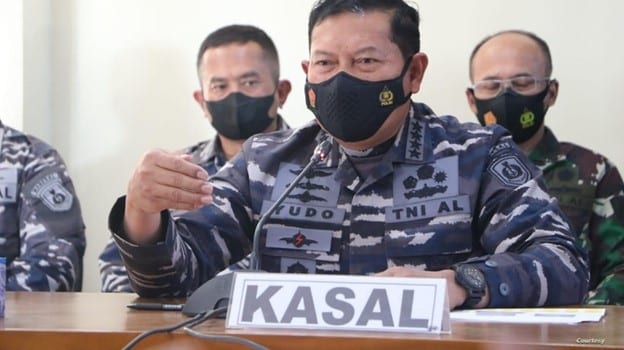
Navy Chief Yudo Margono talks to the media on the retrieval of items from the missing KRI Nanggala sub, at Ngurah Rai Military Air Base in Bali, Indonesia, April 24, 2021. INDONESIAN MILITARY / VOICE OF AMERICA
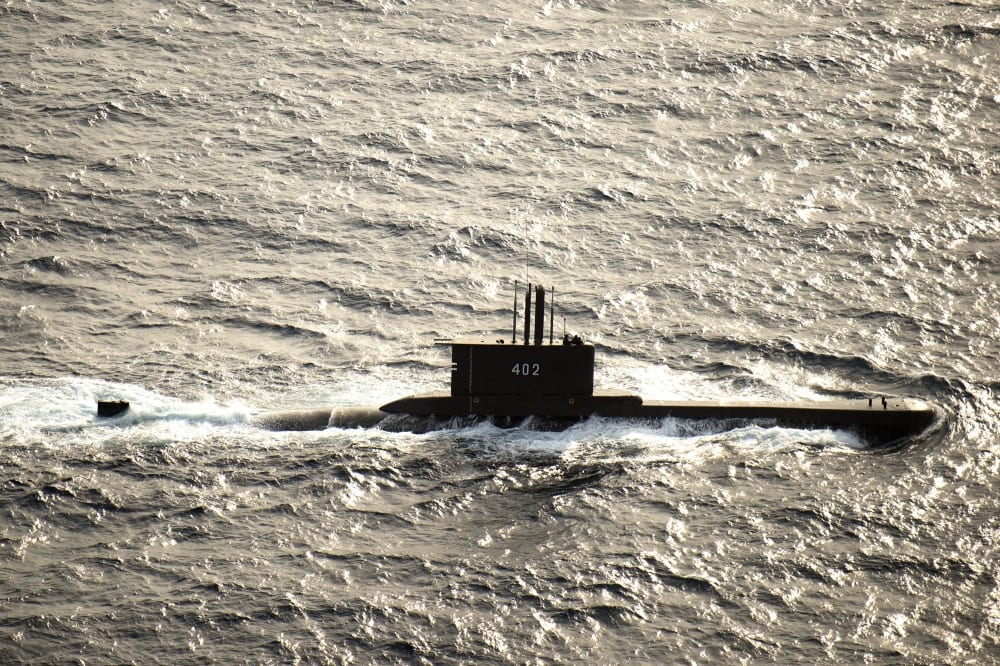
The Indonesian navy has changed that status of its submarine, KRI Nanggala (402), and her crew of 53, from “sub miss” to “sub sunk.”
Indonesian authorities said the damaged submarine has been located.
“The KRI Nanggala is divided into three parts, the hull of the ship, the stern of the ship, and the main parts are all separated, with the main part found cracked,” said Indonesian navy Chief of Staff Yudo Margono.
“We received underwater pictures that are confirmed as the parts of the submarine, including its rear vertical rudder, anchors, outer pressure body, embossed dive rudder and other ship parts,” said military chief Hadi Tjahjanto, speaking to the media in Bali on Sunday.
KRI Nanggala went missing during a torpedo firing exercise on Wednesday in waters between Bali and Java, Indonesia. A massive search effort was conducted by the navy, known officially as the Tentara Nasional Indonesia-Angkatan Laut (TNI-AL). Other nations, including the U.S., dispatched ships, aircraft, personnel to help in the search and rescue of the crew.
Aircraft searching the area noted an oil slick was which was suspected to have come from the submarine. “That oil spill location is the last time we had contact with the submarine,” Indonesian navy spokesman First Adm. Julius Widjojono said.
In addition to the oil slick, confirming the likelihood that the submarine broke apart was the retrieval of several items that were shown to journalists. A container of grease used for periscopes, part of a torpedo launcher, part of a metal tube, prayer mats and fuel were recovered were about two miles from the where the submarine commenced its dive before it went missing. Later a life vest from the sub was found. The water at the location where the floating debris was found is 2,788 feet.
There were no reports of loud underwater noises that would point to an explosion, but Margono said the heavy pressure on the vessel probably caused the hull to lose integrity, permitting some items to escape and rise to the surface.
“With the authentic evidence we found believed to be from the submarine, we have now moved from the ‘sub miss’ phase to ‘sub sunk,’” Margono said at a press conference.
Margono later said sonar detected a submarine-like object at 850 meters (2,790 feet), far below the Nanggala’s safe operating depth.
“It can be stated that the KRI Nanggala has sunk and all of its crew have died,” military chief Marshal Hadi Tjahjanto told reporters.
The Indonesian submarine KRI Nanggala (402) participates in Cooperation Afloat Readiness and Training (CABAT) in 2015. U.S. NAVY / Mass Communication Specialist 3rd Class Alonzo M. Archer
Although initial reports stated the submarine was last reported at a location north of Bali, a later statement from the Indonesian Ministry of Defense said the sub was lost in the Bali Strait, between the islands of Java and Bali that connects to the Indian Ocean to the south and Bali Sea to the north.
The search effort was coordinated from the naval base at Banyuwangi, on the eastern tip of Java, the most populated of Indonesia’s 17,000 islands.
Earlier in the search effort, an Indonesian ship, KRI Rimau, detected a very strong magnetic signature, in an area consistent with the submarine’s last known position, later confirmed by survey ship, KRI Riguel.
Before the submarine was confirmed sunk, a number of nations sent help or offered to support the search effort. Singapore, Malaysia and India dispatched submarine rescue ships and two Australian warships sailed to join the search efforts.
“HMA Ships Ballarat and Sirius, both presently at sea on separate regional deployments, are making best speed for the search area,” said a Friday press release from Australia’s defense department.
Rear Adm. Mark Hammond, of the Australian task force, added that his thoughts were with the submariners of KRI Nanggala, their families and the Indonesian people. “As always, we stand ready to assist our fellow mariners in the Indonesian navy,” he said.
The U.S. Navy sent a P-8 Poseidon maritime patrol aircraft to support the effort.
“It’s a sophisticated platform that could be helpful in leading the Indonesian government to a better idea of the location,” said Pentagon spokesman John Kirby.
Secretary of Defense Lloyd J. Austin III spoke with Indonesian Defense Minister Prabowo Subianto to inform him that the aircraft was coming and provide any additional assistance that might be needed, Kirby told reporters.
In addition to the P-8, the U.S. sent three C-17 aircraft carrying boats and underwater search and rescue equipment from Dover Air Base on Friday.
Indonesian President Joko “Jokowi” Widodo directed that the search and rescue efforts for Nanggala and crew was a national priority. “To the families of the crew, I understand your feeling right now. However, the government has done and will continue to do its utmost to search and rescue all crew on board,” he said while the search was underway.
“I am deeply saddened to learn the Indonesian submarine lost at sea earlier this week is now believed sunk. Our thoughts and prayers are with the Indonesian navy, their Sailors and all those families who lost loved ones,” said Chief of Naval Operations, Adm. Mike Gilday. “As Sailors, we share a love for the sea and have a bond of fellowship with all who sail on it. We have a respect for its dangers and also understand the importance of the worlds’ oceans to our collective way of life.
“No doubt, Indonesia is a good friend and partner. Despite this tragic loss, it is my hope that we will continue to operate together in support of a free and open Indo-Pacific,” Gilday said.
The mission now changes from rescue to recovery.
Logos Technologies Successfully Tests WAMI Sensor on RQ-21A Blackjack
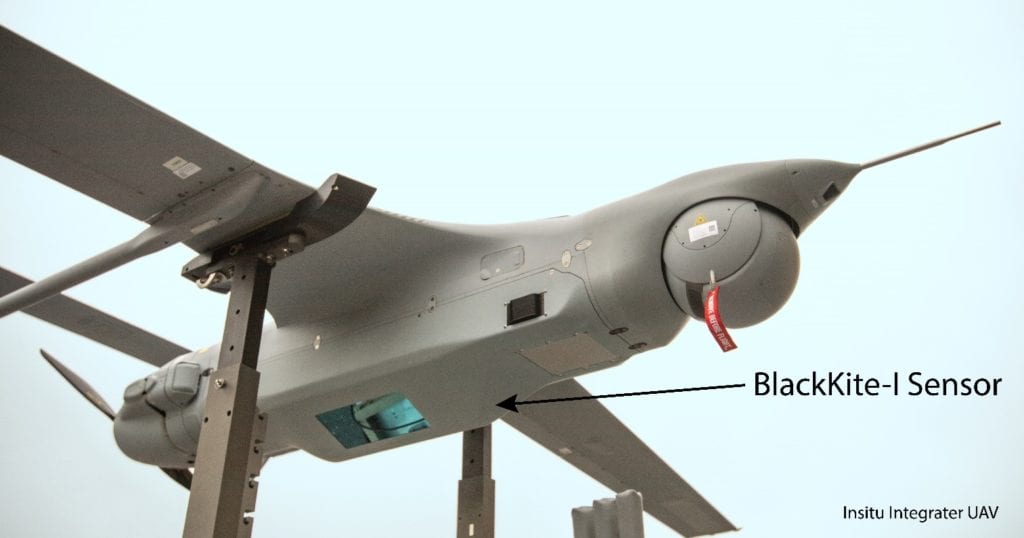
The BlackKite-I sensor on an Insitu Integrator unmanned aircraft system. LOGOS TECHNOLOGIES
FAIRFAX, Va. — Logos Technologies LLC successfully flew its wide-area motion imagery (WAMI) sensor aboard an RQ-21A Blackjack unmanned aircraft at a test range in Boardman, Oregon, the company said in an April 22 release.
The two-week-long test — which included preparatory groundwork in Bingen, Washington — comes on the heels of a $5.3 million contract the U.S. Naval Air Systems Command had recently awarded to Logos, to develop more WAMI sensors for Navy and Marine users.
“We are very excited by our recent test aboard the RQ-21A Blackjack,” said Doug Rombough, vice president for Business Development at Logos Technologies. “Our ongoing effort to develop an ultra-light WAMI capability for the Blackjack and other small, tactical unmanned aircraft is clearly paying off.”
Logos has created a U.S. military version of BlackKite, currently called Cardcounter, an ultra-light (26 pounds) infrared WAMI system developed by Logos. Despite its low SWaP, BlackKite can detect and track in real time every significant target moving within a city-sized area, giving tactical operators a powerful, hereto unheard of, capability.
In addition, thanks to the WAMI system’s multi-modal edge processor — which can store six or more hours of mission data — users on the ground can also access recorded imagery for on-the-fly forensic analysis.
“No military in the world has anything like the Logos WAMI sensor on their tactical unmanned aircraft,” said Rombough. “This WAMI system views and records the entire area and can stream multiple real-time and recorded video ‘chip-outs’ down to handheld devices.”
Logos was first tasked with converting their BlackKite system to meet government requirements in September 2019, with two units being produced for the U.S. Naval Air Systems Command. The follow-on $5.3 million development contract and March test flight are part of the same effort.
“In total, we will be producing four modular WAMI systems for the Navy,” Rombough said, “with the hope that this will open the door for a wider U.S. military adoption of WAMI, both for the Blackjack and other Group 3 unmanned aircraft.”
Pentagon IT Challenge: Introducing New Technology, While Still Using Legacy Systems
Sailors simulate the navigation of a littoral combat ship inside Integrated Tactical Team Trainer 2 at the Center for Surface Combat Systems LCS Training Facility, April 6, 2021. In 2007 the LTF became the first surface warfare training facility to provide integrated bridge and combat systems tactical-scenario training for Sailors assigned to a littoral combat ship. U.S. NAVY / Mass Communication Specialist 2nd Class Kevin C. Leitner
ARLINGTON, Va. — As the U.S. Defense Department races to develop a 21st century systems of systems linking all services, commanders, platforms and personnel, two top Pentagon officials say the challenge won’t be just acquiring new technology, but getting rid of the old 20th century stuff.
The Defense Department’s Joint All-Domain Command and Control (JADC2) strategy aims to connect sensors from all of the military services — Air Force, Army, Marine Corps, Navy and Space Force — into a single network to share intelligence, surveillance and reconnaissance (ISR) data to enable faster decision making. The change is needed because in a digital-driven world, decisions in future conflicts with degraded environments will have to be made swiftly, perhaps within seconds, say Pentagon officials.
An unclassified version of the strategy for public release is still awaiting approval by Defense Secretary Lloyd Austin and other leaders, Marine Corps Lt. Gen. Dennis Crall, the chief information officer for the Joint Chiefs of Staff (J6), told the virtual C4ISRNET conference April 21. Crall, who is overseeing JADC2, said Army Gen. Mark Milley, the chairman of the Joint Chiefs, and Deputy Defense Secretary Kathleen Hicks have already been briefed on the document. “We’re making some final revisions on that draft and it should move quickly” from Milley to Hicks and then on to Austin, he said, possibly “in days.”
The massive shift to artificial intelligence and machine learning across the department presents a test for a decades-old, platform-centric culture, Crall said. “The biggest challenge is our own history,” he added, noting that once legacy platforms and technologies are rolling, “it is incredibly difficult” to bring the new thing on-board.
“Then you have a resource problem. You’ve got to keep the legacy alive while you’re on-boarding the very thing you’re trying to do,” Crall said, adding that there comes a curve in the cost continuum where “it’s the most expensive to operate during that transition.” How funding streams are made available should get a hard look, the general said. “We need to collapse those things that are both expensive and not delivering results.”
In the conference’s last session, Vice Adm. Jeffrey Trussler, the director of Naval Intelligence, made a similar point about Project Overmatch, the Navy’s plan to develop a new fleet architecture using artificial intelligence and manned/unmanned teaming to enable Distributed Maritime Operations.
“The Navy is a platform-centric service, big capital ships and submarines. That’s what we do, and it enables us to operate around the world 24/7/365,” Trussler said. “As we’ve gotten into the Information Age in the 21st century, the Navy has discovered, as have all the services, we ought to be able to connect those sensors and pass data seamlessly among each other.
“It’s not really a technological problem we have,” Trussler said, “our challenge in that technology is the legacy platforms and systems we have now,” and replacing them across a 298-ship Navy with software-defined radios and other digital systems.
Philippines Looks to Bolster Fleet with Retired Patrol Coastal Boats
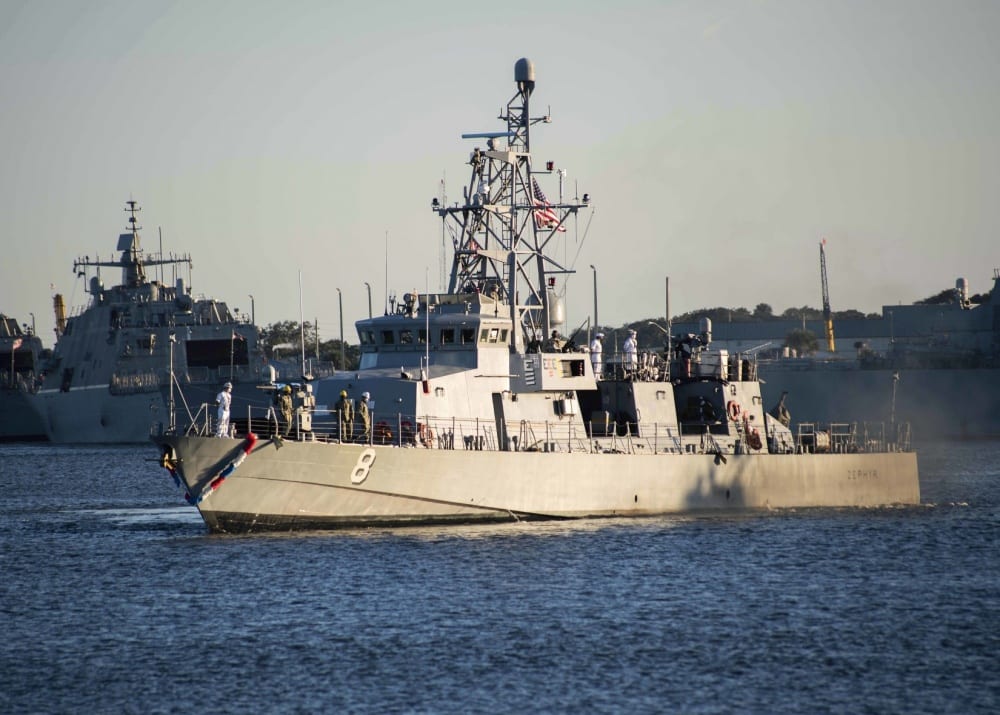
The Cyclone-class coastal patrol ship USS Zephyr (PC 8), shown here returning to Naval Station Mayport after a 2016 deployment to the U.S. 4th Fleet area of operations in support of Joint Interagency Task Force South’s mission, which included counter illicit drug trafficking in the Caribbean. U.S. NAVY / Mass Communication Specialist 1st Class Brian G. Reynolds
As the U.S. Navy divests itself of its Cyclone-class of Patrol Coastal (PC) boats, the Philippine navy (PN) has said the PCs would be welcome in its fleet.
In a statement, PN chief Vice Adm. Giovanni Carlo Bacordo said, “The PN has manifested its interest in the decommissioned Cyclone-class patrol vessels [CCPVs] of the U.S. Navy as a stop-gap to the decommissioned legacy PN ships. As to how many, that depends on the seaworthiness and efficiency of the CCPVs that will be offered, and this will be determined by the PN Joint Visual Inspection Team.
“We have manifested our interest with JUSMAG [Joint U.S. Military Assistance Group] and U.S. INDOPACOM,” the Indo-Pacific Command, he added.
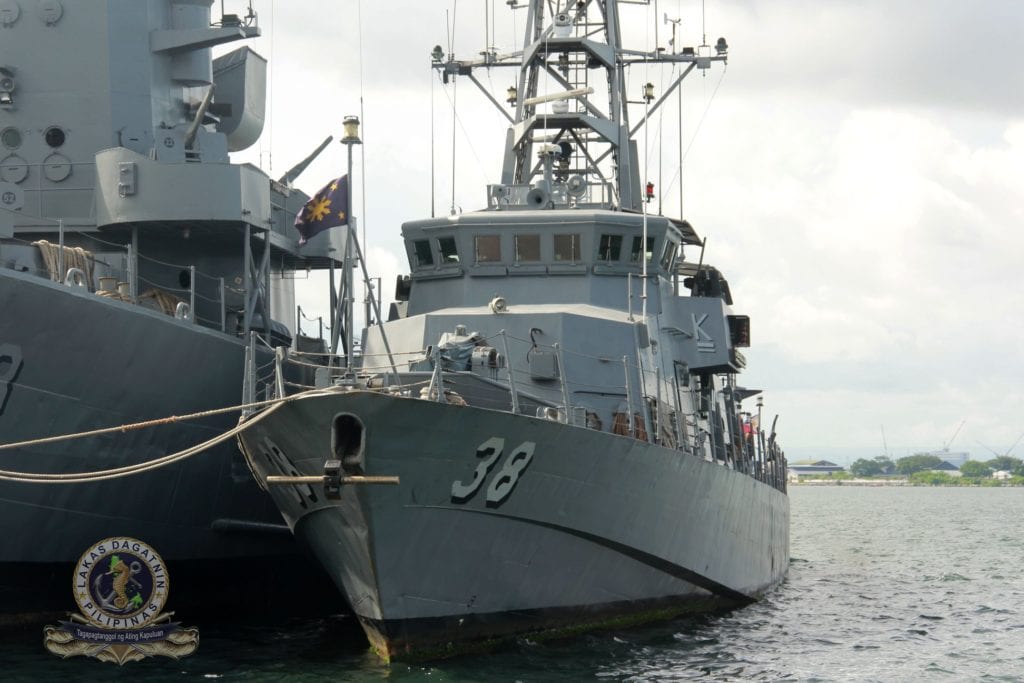
At present, the PN has one Cyclone-class patrol vessel in its service, the BRP General Mariano Alvarez (PS 38), formerly the ex-USS Cyclone (PC 1), which was transferred to the PN in 2004.
Of the 14 ships in the class, four were loaned to the Coast Guard but later returned. The lead ship, Cyclone, then was transferred to the Philippines in 2004.
Three of the remaining 13 USN PCs were recently decommissioned. Ten more remain in service in Bahrain as part of the U.S. 5th Fleet. Of the three retired ships, the U.S. Navy said one would be made available for foreign military sale, but the other two would be scrapped.
USS Zephyr (PC-8), USS Shamal (PC-13) and USS Tornado (PC-14) were decommissioned in March. All three ships were based in Mayport, Florida, where they supported the U.S. 4th Fleet with counter-drug trafficking and illegal migration patrols in the Eastern Pacific, off Central America and in the Caribbean.
“These three warships have served our Navy and our country well,” said Capt. Mike Meyer, commander, Naval Surface Squadron Fourteen. “Each of them has operated well past their designed service life, with their crews contributing demonstrably to meeting our national objectives.”
The Navy said Zephyr and Shamal would be scrapped, while Tornado would be considered for possible foreign military sale.
BRP General Mariano Alvarez (PS38) at Naval Base Cavite, Philippines, in 2019. DEFENSE OF THE REPUBLIC OF THE PHILIPPINES
According to a USN release, the decision to decommission these three ships stems from the fact they all exceeded their designed service life. “Based on the rising cost of modernization efforts, the Navy will receive a better return by decommissioning and freeing up funds to invest in other platforms,” the statement said.
The PCs were specifically tailored to support Special Operations Forces insertion and extraction and related duties. In that role, however, the PCs were too large for covert missions, but too small to effectively serve as surface combatants. So, the Navy planned to divest itself of the class, transferring the lead ship to the Philippines, and loaning three more to the Coast Guard. Events surrounding 9/11, however, made clear the need for ships able to operate in littoral waters.
PCs have four diesel engines and four screws, capable of speeds up to 35 knots. They have a range of 2,000 to 2,500 nautical miles and an endurance of 10 days.
For their size, they are well armed. The U.S. ships were upgraded with remotely-operated stabilized 25 mm guns, and carried unmanned aircraft for surveillance and monitoring of boarding parties. Griffin missiles were installed on 5th Fleet ships to be used against surface threats.
And unlike many patrol vessels, PCs look like a surface combatant. “We’ve got a beautiful silhouette coming over the horizon with the sun in the background,” said Lt. Cmdr. Roger Young, who commanded officer of USS Firebolt (PC 10) in 2018. “I mean, you say, ‘that’s a warship.’”
Increased interoperability
The top military officer in the Indo-Pacific theater said the U.S. is committed to its Philippine ally and treaty partner. That means a more capable navy.
In Congressional testimony, Commander of U.S. Indo-Pacific Command Adm. Phil Davidson said his command is focused on strengthening allies and partners.
“The United States’ network of allies and partners is our principal advantage against any adversary. USINDOPACOM depends upon the collective capabilities of our allies and partners to address the challenges to a Free and Open Indo-Pacific,” Davidson said. “Through increased interoperability, information-sharing, and expanded access across the region, we will present a compatible and interoperable coalition to our adversaries in crisis and armed conflict. Terrorism continues to pose a security challenge in the Philippines, and USINDOPACOM is committed to helping the Philippines ensure that the southern Philippines does not become a safe-haven for terrorists that would threaten the entire region. I am also focused on helping to develop the territorial defense capability of the Armed Forces Philippines and look forward to re-engaging with the Philippines National Police Maritime Group to continue improving their ability to protect their sovereign interests.”
PN modernization
The PCs were designed for a 15-year life service. But Zephyr, for example, served for 26 years.
While the PCs are more than two decades old, they are decades newer than a pair of recently deactivated ships in the PN, the 221-foot BRP Quezon (the former USS Vigilance (AM-324),) and 185-foot BRP Pangasinan (formerly USS PCE 891). Both ships were commissioned in the U.S. Navy in 1944. Quezon was commissioned in the PN in 1967, and served for 53 of years with the Philippine Navy. Transferred from the U.S. to the Philippines in 1948, Pangasinan had 72 years of service with the Philippine navy when she was decommissioned.
Even as older ships are retired, the PCs would be among the newer and more capable ships in the PN.
“This makes sense for the Philippine navy,” said retired Capt. Brian Buzzell, who is very familiar with the Philippine navy and the regional security issues. “They have had the lead boat for years. The issue will be what armaments will come with the boats.”
Buzzell notes that China has been ratcheting up the pressure on the Philippine government to accept their incursions into their economic zones. “The Cyclone-class PC would be a perfect vessel to patrol the disputed fishing areas,” he said. “Additionally, the PCs would complement the two new South Korean frigates.”
The PN recently added two new Jose Rizal-class frigates built in South Korea, the BRP Jose Rizal (FF 150), commissioned in 2020; and BRP Antonio Luna (FF 151), commissioned at Subic Bay in March of this year.
Italian Aircraft Carrier ITS Cavour Departs Norfolk, Completing F-35B Certification
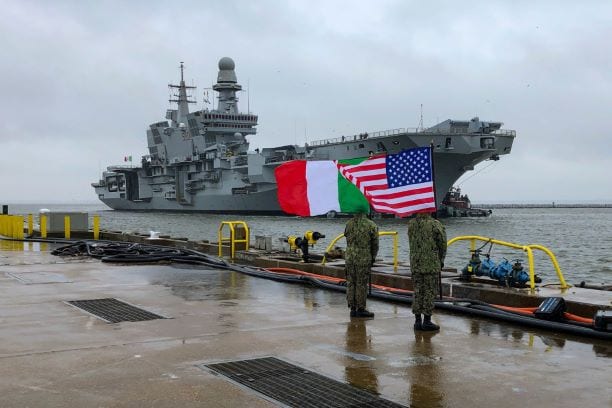
U.S. Sailors, assigned to the aircraft carrier USS John C. Stennis (CVN 74), greet the Italian navy flagship, aircraft carrier ITS Cavour (CVH 550), as it arrives at Naval Station Norfolk, Virginia, Feb. 13, 2021. The Cavour’s visit is part of a series of operations alongside U.S. military assets to attain the Italian navy’s “ready for operations” certification to safely land and launch F-35B aircraft, U.S. 2nd Fleet exercises operational authorities over assigned ships, and landing forces on the East Coast and the Atlantic. U.S. NAVY
NORFOLK, Va. — The Italian navy flagship, the aircraft carrier ITS Cavour (CVH 550), departed Naval Station Norfolk April 16 after Joint Force operations with U.S. military forces in the Atlantic Ocean, the U.S. 2nd Fleet Public Affairs said in an April 21 release.
ITS Cavour participated in a sequence of operations with U.S. assets and the F-35 Joint Program Office has delivered a flight clearance recommendation to the Italian navy for the safe operation of fifth generation F-35B fighter aircraft.
“I am very proud for the success of ITS Cavour’s ‘Ready for Operations’ campaign,” said Italian navy Capt. Giancarlo Ciappina, commanding officer of ITS Cavour. “Our allies will soon perceive the Italian navy and the Italian armed forces as a whole, as enhanced cooperative partners thanks to the strategic enabler that the fifth-generation aircraft carrier capability would represent, in either specific maritime or wider joint operations.”
An F-35 Joint Program Office (JPO) test team embarked on ITS Cavour to conduct sea trials, a series of tests and functional activities to create a safe flight operating envelope for the short-takeoff-and-vertical-landing (STOVL) variant of the aircraft aboard the recently upgraded ship.
The F-35 Pax River Integrated Test Force (ITF) team from Naval Air Station Patuxent River, Maryland, includes almost 200 people with the engineering and test pilot expertise and experience to conduct F-35B envelope expansion flight test, two specially instrumented developmental flight test aircraft, and support equipment.
During the sea trials, two F-35Bs of the ITF were embarked aboard Cavour and carried out more than 50 flight missions in challenging weather conditions sea states, a night session, around 120 vertical landings, 115 short takeoffs with the aid of the ski jump, and two vertical takeoffs. These activities were followed by a sufficient amount of data analysis, yielding the information telling the U.S. Marine Corps and the Italian navy how to safely conduct F-35B flight operations on Cavour.
“It was a privilege to work alongside our Italian counterparts while they certified their flagship to launch and recover the cutting-edge F-35B,” said Vice Adm. Andrew Lewis, commander, U.S. 2nd Fleet. “I look forward to continuing to build upon our trans-Atlantic bridge, enhancing our collective capabilities and strengthening partnerships with our NATO allies.”
In coordination with the Italian navy, U.S. Marine Corps MV-22s conducted shipboard landing qualifications on the deck of the Italian Carrier ITS Cavour.
Also while operating in the western Atlantic, ITS Cavour collaborated with the Arleigh Burke-class guided-missile destroyer USS Stout (DDG 55). They conducted a three-day interoperability exercise with support from Carrier Air Wing Seven and Patrol and Reconnaissance Wing 11. ITS Cavour also conducted dual-carrier operations alongside USS Gerald R. Ford (CVN 78), marking the first time a Gerald R. Ford-class and Italian carrier operated jointly.
ITS Cavour departed Norfolk after disembarking the ITF personnel prior to completing the necessary preparation to undertake the last phases of the ready for operations campaign before returning to Italy. Cavour was also greeted by a performance by the U.S. Fleet Forces band as an expression of goodwill between the U.S. and Italian navies.
For decades, the bond between Europe and North America has made NATO the strongest alliance in history. Conducting training and exercises alongside allies and partners increases our collective capacity and capabilities as well as increased interoperability with the U.S. forces.
Bollinger Shipyards Acquires Gulf Island Fabrication’s Shipyard Facilities
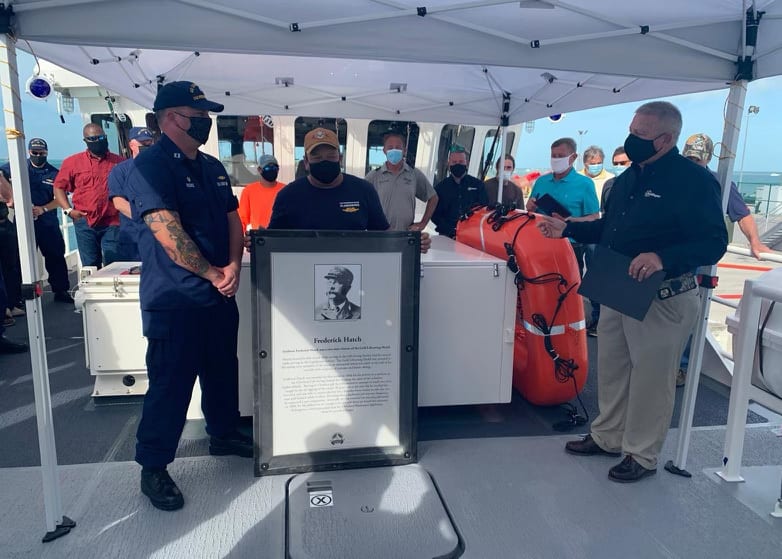
The Coast Guard accepts delivery of its newest Sentinel-class fast response cutter (FRC), the Coast Guard Cutter Frederick Hatch (WPC 1143), from Bollinger Shipyards in Key West, Florida, Feb. 10, 2021. Bollinger has now acquired Gulf Island Fabrication’s shipyard facilities, expanding its construction and repair capacity. U.S. COAST GUARD / Ensign Alexandra Hughes
LOCKPORT, La. — Bollinger Shipyards, a privately-held designer and builder of steel military and commercial vessels for the past three quarters of a century, has acquired Gulf Island Fabrication Inc.’s shipyard facilities, expanding Bollinger’s new construction and repair capacity and capabilities to better serve its key defense and commercial customers, the company said in an April 19 release. Financial terms of the transaction were not disclosed.
This acquisition creates expanded opportunities for Bollinger to better serve and deepen its relationships with key defense and commercial customers with an increased capacity for new projects and footprint, access to a larger workforce skilled in steel construction, improved efficiencies and enhanced economies of scale. Current customers for Bollinger include the U.S. Coast Guard, U.S. Navy, General Dynamics-Electric Boat, and non-defense and commercial customers servicing energy production to dredging. Gulf Island had been building the Towing, Salvage and Rescue Ships for the U.S. Navy and Regional Class Research Vessels for the National Science Foundation and Oregon State University. These projects conveyed with the transaction.
“The addition of the new Houma shipyard further strengthens our position within the U.S. defense industrial base as a leading shipbuilder and vessel repair company,” said Ben Bordelon, CEO and president of Bollinger Shipyards. “For 75 years, we’ve developed a deep expertise in and proven track record of building reliable, high endurance steel vessels for the Coast Guard, Navy and our commercial customers. As the needs of these customers change and grow, we are constantly looking for ways to invest in and expand our capabilities and innovative solutions so that we can continue to provide them with the highest levels of quality, support and service in our industry.”
Bordelon continued, “For three quarters of a century, Bollinger’s greatest strength has and continues to be our people and their American ingenuity and quality craftsmanship. I am excited to welcome the Gulf Island Shipyard employees into the Bollinger family. Together, we will ensure that the ‘Bollinger standard’ will be the high bar we measure ourselves against for superior quality and safety as we work to deliver the next generation of American made high-performance vessels for our government and commercial customers.”
The new Bollinger Houma facility encompasses 437 acres on the west bank of the Houma Navigation Canal, of which 283 acres is unimproved land that is available for expansion. The facility includes 18,000 square feet of administrative and operations facilities, 160,000 square feet of covered fabrication facilities and 20,000 square feet of warehouse facilities. It also has 6,750 linear feet of water frontage, including 2,350 feet of steel bulkheads. Located just 30 miles from the Gulf of Mexico, the strategic location provides short and unrestricted access to the newly acquired Houma facility from open waters.
The acquisition also includes a 15,000-short ton drydock, a 4,000-short ton drydock, a 3,000-short ton drydock and a 1,500-short ton drydock.
Bollinger’s acquisition increases the shipyard’s growing new construction and repair portfolio. In December of last year, Congress appropriated funds for Bollinger to build four additional Sentinel-class Fast Response Cutters (FRCs) for the U.S. Coast Guard. In addition to construction of the FRC, Bollinger is under contract to construct an Ocean Transport Barge and Floating Dry Dock for General Dynamics Electric Boat Division. In addition, Bollinger is participating in industry studies for five government programs, including the U.S. Coast Guard’s Offshore Patrol Cutter and the U.S. Navy’s Common Hull Auxiliary Multi-Mission Platform, Auxiliary General Ocean Surveillance, Large Unmanned Surface Vehicle and Light Amphibious Warship programs.
HII Announces Commercial Release of REMUS 300 Unmanned Underwater Vehicle
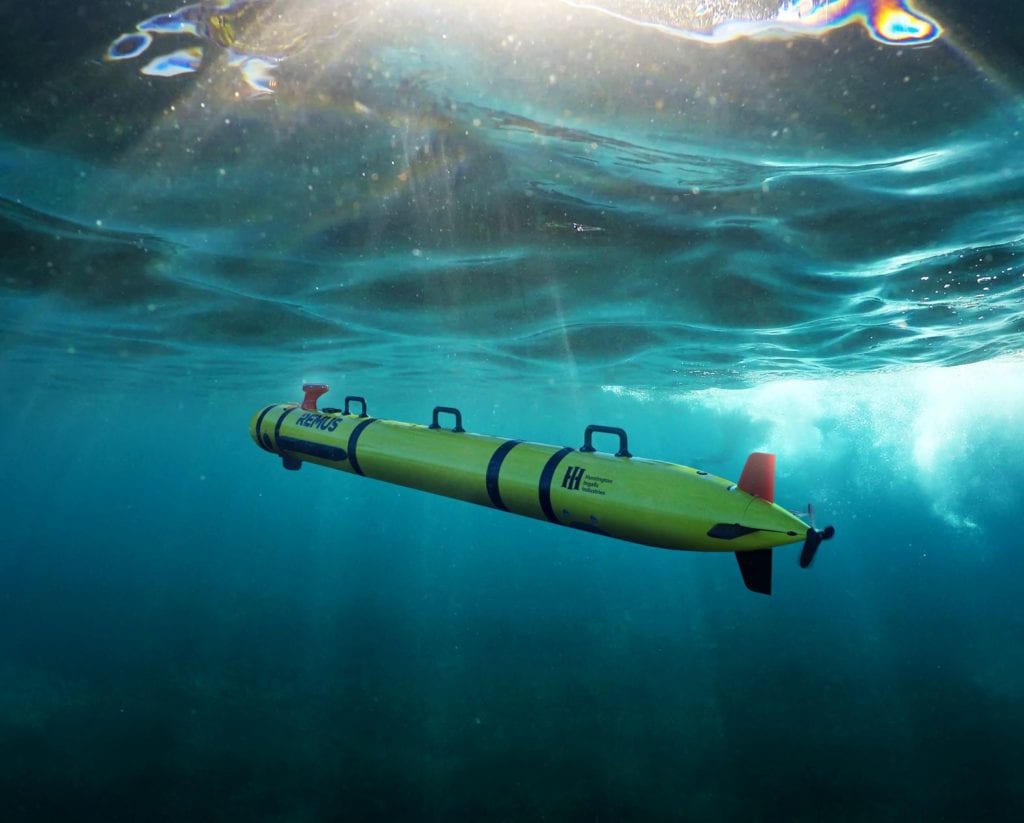
Huntington Ingalls Industries’ Technical Solutions division has announced the commercial release of its REMUS 300 unmanned underwater vehicle, shown here in an artist’s rendering. HUNTINGTON INGALLS INDUSTRIES
NEWPORT NEWS, Va. — Huntington Ingalls Industries announced on April 19 the commercial release of its REMUS 300 unmanned underwater vehicle (UUV). This new, open architecture, small-class UUV can dive to depths of 305 meters (1,000 feet) and has endurance options up to 30 hours.
“The REMUS 300 is the most advanced small-class UUV on the market,” said Duane Fotheringham, president of the Unmanned Systems business group in HII’s Technical Solutions division. “It combines everything we’ve learned from more than 20 years of development on our REMUS 100 systems with enhancements like advanced modularity and a more robust structure and sensors. We’re excited to offer this solution to customers who are looking to dive deeper and go longer with a flexible, man-portable system.”
Built on the REMUS Technology Platform, the REMUS 300 has compact and efficient core electronics, advanced autonomy and a common operating system that allows for interoperability with the entire REMUS family of systems. Its open architecture design and modularity enable integration of the latest hardware and software, with an optional hardware development kit and software development kit to enable third-party integration.
The REMUS 300 design incorporates feedback from hundreds of REMUS 100 users and provides the ability to exchange payloads, allowing application flexibility. Common applications include mine countermeasures, hydrographic survey, rapid environmental assessment, search and recovery, and marine research. Modular energy sections allow for field replacement of 1.5, 3.0 or 4.5 kilowatt-hour lithium-ion batteries enabling up to 10, 20 or 30 hours of endurance.
More than 500 REMUS UUVs have been sold to 25 countries worldwide. Standard configurations of the REMUS 300 can now be acquired internationally and commercially, with orders being accepted now for delivery in 2022.
China and International Crime Cartels Threaten U.S. Influence in the Americas, Commanders Say
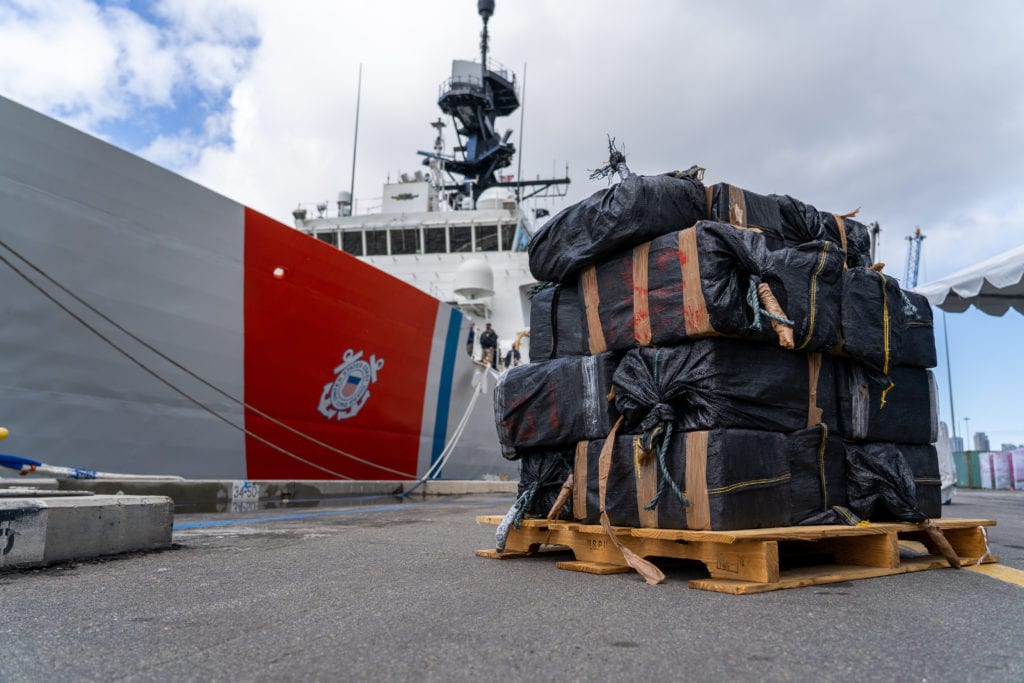
The crew of the Coast Guard Cutter Bertholf (WMSL-750) offloads approximately 7,500 pounds of seized cocaine and marijuana in San Diego, March 20, 2021. The drugs, worth an estimated $126.7 million, were seized in international waters of the Eastern Pacific Ocean between January and February representing 10 suspected drug smuggling vessel interdictions off the coasts of Mexico, Central and South America. U.S. COAST GUARD / Petty Officer 2nd Class Travis Magee
ARLINGTON, Va. — The chaos created by transnational organized crime groups in Central and South America is creating opportunities for China and Russia to undermine United States influence in the Western Hemisphere, top U.S. military commanders say.
“Two of the most significant threats are China and transnational criminal organizations,” Navy Adm. Craig S. Faller told a House Armed Services Committee hearing April 14. China is the “Number One strategic threat of the 21st century,” said Faller, the commander of U.S. Southern Command (Southcom), adding “the Chinese Communist Party with its insidious, corrosive and corrupt influence seeks global dominance.”
Faller said China was increasing its influence in the Western Hemisphere with more than 40 commercial port deals, making significant loans for political and economic leverage, pushing its IT structure and “engaging in predatory practices” like illegal fishing by industrial fleets.
Southcom’s 2021 posture statement to Congress notes that South and Central America have been reeling under a wave of challenges, including the coronavirus pandemic that has savaged Brazil, political instability and corruption in Venezuela and back-to-back hurricanes that devastated Central America, prompting mass migrations north. The statement notes external state actors like China and Russia are “looking to exploit the conditions posed by these threats.”
Russia has been pushing narratives on social media about U.S. mismanagement of COVID-19 and claiming U.S. government sanctions are choking the Venezuelan people at their most vulnerable time. Meanwhile, China is offering $1 billion in loans to the region for their COVID-19 vaccine and improvements to medical infrastructure, securing agreements with Argentina, Brazil, Peru, and Venezuela. “This will further indebt the region to the PRC [People’s Republic of China], which already holds $165 Billion in loans,” according to the posture statement.
“Transnational criminal organizations (TCOs) pose a direct threat to our national security,” Faller testified. “They traffic in arms, humans, drugs and claim tens of thousands of lives here in the United States each year. Their murderous tactics has resulted in 43 of the 50 most violent cities of the world in this hemisphere. They drive illegal migration, and they allow bad actors like China to gain influence.”
Air Force Gen. Glen VanHerck, commander, U.S. Northern Command (Northcom) and the North American Aerospace Defense Command, agreed, saying the rise of TCOs “and subsequent instability they create has generated opportunities for our competitors to exploit.”
He noted China has been very active making deals in the Caribbean including a facility in the Bahamas, part of Northcom’s Area of Operations. China has new and very aggressive ambassador and the largest embassy in the Bahamas. “They do have access right now to an over watch, if you will, of Navy test and training facilities, [off Florida] which is very concerning,” VanHerck said.