Astronics Awarded Boeing Contracts to Support Navy’s MQ-25 Unmanned Tanker
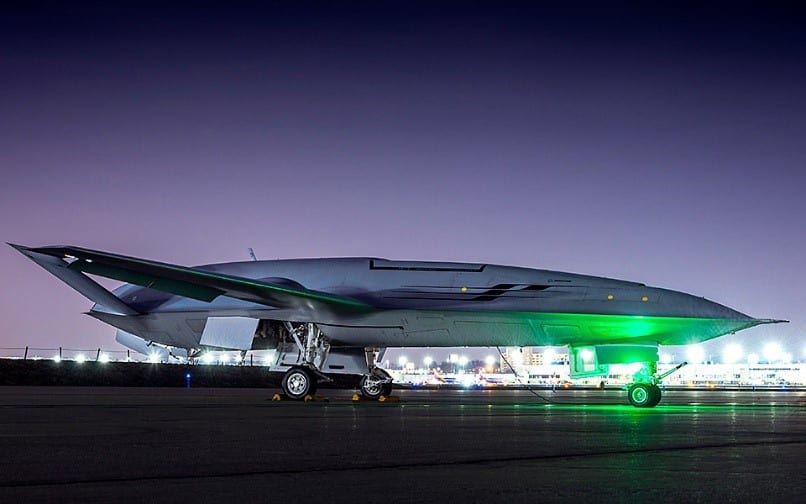
The MQ-25 unmanned aerial refueling tanker. Boeing

EAST AURORA, N.Y. — Astronics Corp. has been awarded contracts by Boeing to supply CorePower aircraft power distribution units and custom-engineered exterior lighting for the MQ-25 unmanned aerial refueling program, Astronics said in a Feb. 17 release. 

“Our CorePower Electronic Circuit Breaker Unit (ECBU) technology is ideally suited for use in unmanned aircraft. This COTS [commercial off the shelf] power distribution technology will support the success of the MQ-25 program by providing intelligent control and visibility of the on-board power systems,” said Pete Gundermann, president and CEO of Astronics. “Additionally, we are proud to bring our exterior lighting expertise for military programs to Boeing on this project.” 

The CorePower system replaces pilot-operated, thermal mechanical breaker systems with intelligently controlled, solid-state switches to provide safe, reliable performance remotely. The system planned for the MQ-25 incorporates the use of Astronics’ latest generation ECBU products to create an evenly distributed system at a fraction of the wire weight and increased reliability compared with traditional systems. 

Astronics is also currently working with Boeing to design custom lighting for the MQ-25 that to provide for safe operations for flight deck personnel and aid in the aerial refueling process. 

The MQ-25 is the U.S. Navy’s first operational carrier-based unmanned aircraft and is designed to provide a much-needed refueling capability. The contract supports Boeing’s engineering and manufacturing development program. 

“The MQ-25 program is vital because it will help the U.S. Navy to extend the range of the carrier air wing and Boeing and our industry team is all-in on delivering this capability,” said Dave Bujold, Boeing’s MQ-25 program director. “The work we’re doing is also foundational for the future of Boeing — where we’re building autonomous systems from seabed to space.” 


Fairbanks Morse Opens Mayport Facility to Support Navy, Coast Guard

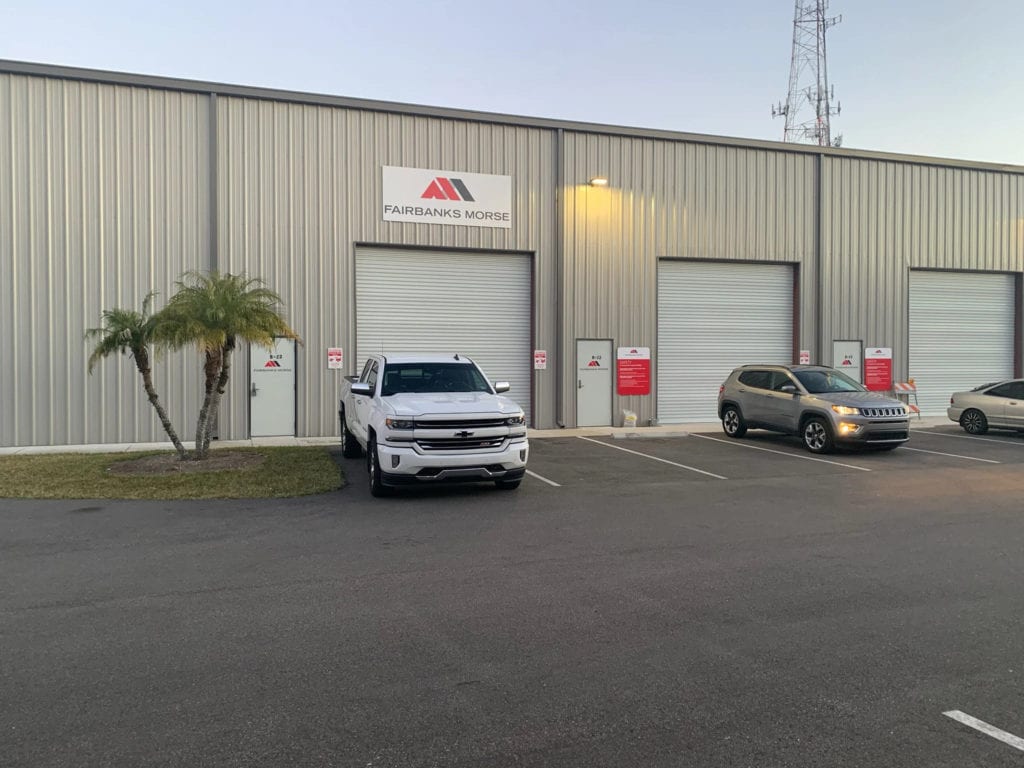
Fairbanks Morse’s new Mayport Service Center in Jacksonville Beach, Florida. Fairbanks Morse

BELOIT, Wis. and JACKSONVILLE BEACH, Fla. — Fairbanks Morse, a portfolio company of Arcline Investment Management, announced the opening of its 8,000-square-foot Mayport Service Center at 950 10th Street, Building B in Jacksonville Beach, Florida, the company said in a Feb. 16 release.

The facility represents a $350,000 investment in the community and places Fairbanks Morse in closer proximity to core customers such as Mayport Naval Station, Naval Submarine Base Kings Bay, and other U.S. Navy and U.S. Coast Guard installations.  

“The opening of our Mayport Service Center is another step that Fairbanks Morse is taking to fulfill its promise to deliver world-class service to our customers,” said George Whittier, CEO of Fairbanks Morse. “From this facility, we are stocking a wide range of inventory to make parts available when and where our customers need them. This is just the beginning of our broader plan for a geographic expansion that extends our aftermarket services to help customers meet their mission-critical power needs.”  

The Mayport Service Center will be staffed with factory certified, OEM [original equipment manufacturer] technicians to provide local engine, motor and controls maintenance and repair services to improve performance and reliability. Fairbanks Morse’s OEM technicians undergo rigorous qualifications to meet the company’s high standards for delivering best-in-class support. 

A wide range of Fairbanks Morse engine and Ward Leonard motor and controls inventory will be available at the Mayport Service Center to reduce the amount of time for installation, repair and maintenance services. The move is part of the company’s renewed emphasis on expediting aftermarket services to military and commercial maritime customers across the nation.  


Xerox and Naval Postgraduate School Collaborate on 3-D Printing Research

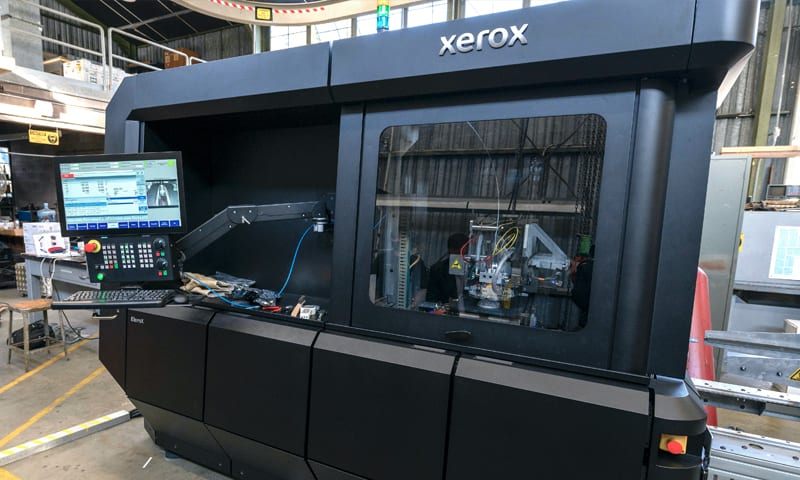
At the cutting-edge of additive manufacturing technology, this new Xerox ElemX 3-D Liquid Metal Printer is now operational in NPS’ Large Experiment Annex on campus. Naval Postgraduate School

NORWALK, Conn. & MONTEREY, Calif. — Xerox and the Naval Postgraduate School (NPS) have formed a strategic collaboration focused on advancing additive manufacturing research, specifically 3-D printing, which has the potential to dramatically transform the way the military supplies its forward-deployed forces, Xerox and NPS said in a joint release. 

As part of a Collaborative Research and Development Agreement (CRADA), NPS was the first to receive an installation of the Xerox ElemX Liquid Metal Printer on the university campus in December. The Xerox system will provide NPS faculty and students with hands-on exploration of new ways the technology can deliver on-demand 3-D printing of metal parts and equipment. 

“The military supply chain is among the most complex in the world, and NPS understands first-hand the challenges manufacturers must address,” said Xerox Chief Technology Officer Naresh Shanker. “This collaboration will aid NPS in pushing adoption of 3-D printing throughout the U.S. Navy, and will provide Xerox valuable information to help deliver supply chain flexibility and resiliency to future customers.” 

With access to the latest additive manufacturing equipment, NPS faculty and students will use the ElemX printer to conduct thesis research to develop new capabilities for the Navy and Marine Corps. 

“As the Department of the Navy’s applied research university, NPS combines student operational experience with education and research to deliver innovative capabilities and develop innovative leaders with the knowhow to use them,” said NPS President Ann Rondeau, a retired vice admiral. “This collaborative research effort with Xerox and the use of their 3-D printing innovations is a great example of how NPS uniquely prepares our military students to examine novel approaches to create, make, prototype and manufacture capability wherever they are.” 

“From the age of sail to the nuclear era, Sailors have been fixing things at sea so they can complete the mission,” Rondeau continued. “This partnership is about the strategic ability of the Navy to have Sailors on ships with the capability through creativity and technology to advance their operations at sea. Through collaboration, NPS and Xerox are helping build a Navy for the 21st Century.” 

The Xerox ElemX printer uses cost-effective aluminum wire to fabricate end-use parts that can withstand the rigors of operational demands. This ability to produce reliable replacement parts on-demand reduces the dependency on complex global supply chains for deployed forces and also addresses the hidden costs of traditional manufacturing. 

“The NPS Alumni Association and Foundation supported bringing the ElemX liquid metal printer to NPS because it will enable soldiers, sailors, airmen, and marines to solve their problems where they are, when problems occur,” noted retired U.S. Marine Corps Col. Todd Lyons, vice president of the NPS Alumni Association and Foundation. “By providing the right digital tools and the liquid metal printer, all of a sudden we’ve helped transform not just the supply chain, but how the Department of Defense (DoD) thinks operationally about supplying war.” 

“This is one way to bend the cost curve so that the DoD is not spending a thousand dollars for every dollar that a peer competitor spends,” he added. 

“Global supply chains leave industries like aerospace, automotive, heavy equipment, and oil and gas vulnerable to external risks,” said Tali Rosman, vice president and general manager, 3D Printing, Xerox. “Our goal is to integrate localized 3D printing into their operations, and the real-time feedback from NPS gives us actionable data to continuously improve the ElemX.” 


Northrop Grumman to Develop Advanced Air-to-Air Missile Engagement Concept

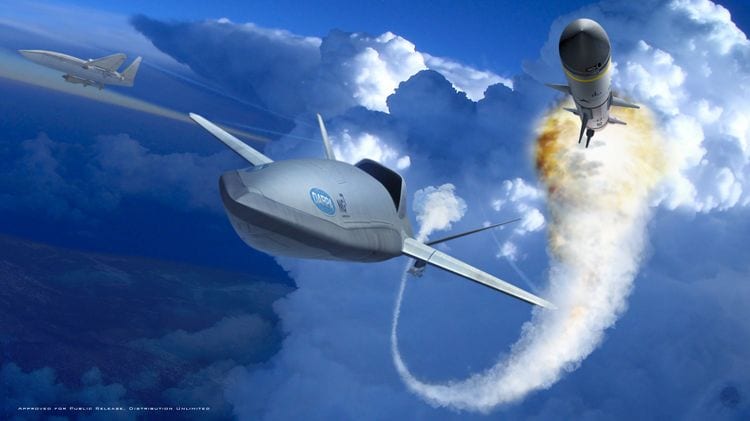
An artist’s conception of the LongShot advanced weapons concept. Northrop Grumman

REDONDO BEACH, Calif. — Northrop Grumman Corp. has been awarded a contract by the U.S. Defense Advanced Research Project Agency (DARPA) Tactical Technology Office to develop an advanced technology weapon concept designed to significantly increase engagement range and weapon effectiveness of U.S. forces against adversary air threats, the company said in a Feb. 10 release. 

“Our collaboration with DARPA is the critical first step in the development of innovative operational concepts and solutions that will enhance our warfighter’s combat capability against a rapidly growing threat,” said Jaime Engdahl, program director, kinetic weapons and emerging capabilities, Northrop Grumman. “The LongShot program enables us to combine our digital engineering skillset with our extensive knowledge in advanced technology weapons, autonomous systems and strike platforms to increase weapon range and effectiveness.” 

Spurred by rapid technological advancements and an ever more dangerous and disruptive battlefield, DARPA’s LongShot program will explore new lethal engagement concepts by leveraging multi-modal propulsion, weapon systems that can be operationally deployed from existing fighters or bombers. 

DARPA’s advanced aerospace systems activities are focused on utilizing high pay-off opportunities to provide revolutionary new system capabilities, as opposed to incremental or evolutionary advancements, in order to achieve undeterrable air presence at dramatically reduced costs. 

The LongShot program enables Northrop Grumman to combine its expertise in weapon system design, survivability, autonomy, advanced mission systems and rapid prototyping to deliver advanced solutions that help to maintain a competitive military advantage in highly contested environments. 


Kongsberg Drone to be Deployed on Canadian Coast Guard Vessels

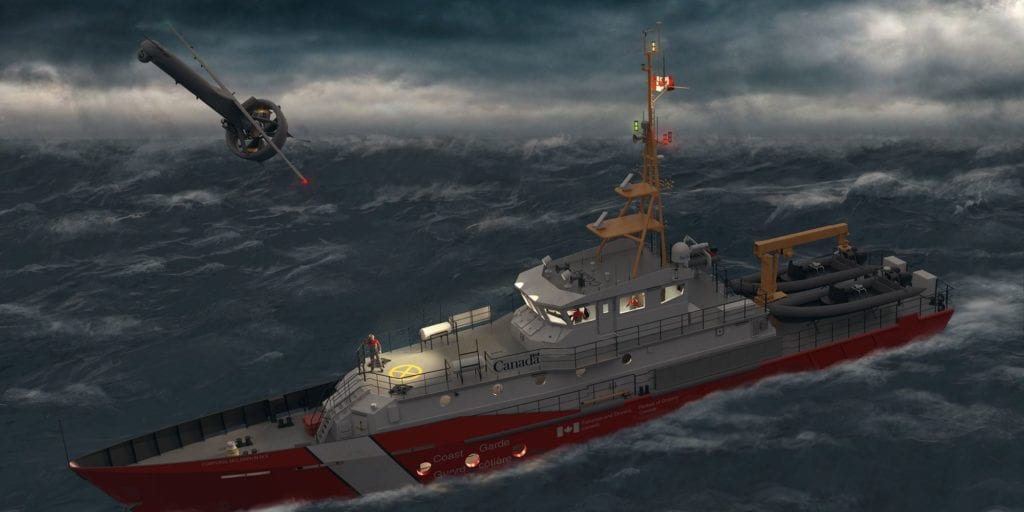
An artist’s conception of a Martin UAV V-BAT operating from a Canadian Coast Guard vessel. Kongsberg Geospatial

OTTAWA, Canada — Kongsberg Geospatial has been selected by Defence Research and Development Canada (DRDC) to conduct trials of a new long-endurance unmanned aircraft surveillance system for the Canadian Coast Guard, the company said in a Feb. 9 release. The Martin UAV V-BAT aircraft was selected to provide the unique ability to combine takeoff and landing from the small confines aboard ship with the long endurance of a fixed-wing aircraft while carrying multiple sensors. 

The aircraft will communicate with the Kongsberg Geospatial sensor data management system, called MIDAS, which allows a range of sensor data, including full-motion video from unmanned systems to be processed and exploited in near real-time by analysts on board Canadian Coast Guard ships. MIDAS provides the capability to compare historical and live data from the mission area, and to examine sensor data with a variety of tools, including motion and object detection, in near-real time. This near real-time analytical capability can greatly enhance the effectiveness of UAVs for a variety of mission types. 

The V-BAT provided by Martin UAV is a fixed-wing vertical take-off and landing aircraft specifically designed to operate from very small spaces on ships, land, and nearly any environment. The V-BAT is a long-endurance aircraft capable of carrying multiple sensors, including land and maritime wide area surveillance. 

Kongsberg Geospatial’s MIDAS is derived from technologies created for the NATO Alliance Ground Surveillance project which required the storage and retrieval of vast amounts of intelligence data for intelligence analysts. The system directly addresses the problem that the vast majority of UAVs have no standards-compliant capability to process, exploit, and distribute their sensor data where it is being used. MIDAS provides a fully standards-compliant system that allows intelligence analysts to view, process, and analyze sensor data in near real-time, from where the drone is being operated. MIDAS has packaged these capabilities into a tactical and portable form factor to enables those surveillance capabilities to be deployed as a portable system on board a ship, or in a temporary command post. 

CINTIQS Military Technology Consulting will be providing consulting services for the planning and conduct of the flight trials and sensor employment to validate systems performance. 

The combination of the Martin UAV V-BAT and the Kongsberg MIDAS sensor data management system will allow Coast Guard vessels to significantly expand their surveillance range for search and rescue missions, and for the surveillance of the movement of icebergs, without requiring the use of manned aircraft. 

“UAVs are a useful tool, but they are only truly effective if they can collect sensor data that results in actionable intelligence,” said Ranald McGillis, president of Kongsberg Geospatial. “Our MIDAS system allows users to fully exploit raw sensor data and derive useful intelligence at the tactical edge where the UAV is being used. In a search and rescue context, that could mean using infrared sensors, or near real-time motion detection to locate a subject when visibility or weather conditions are poor.” 


DARPA Selects Performers to Advance Unmanned Underwater Vehicle Project

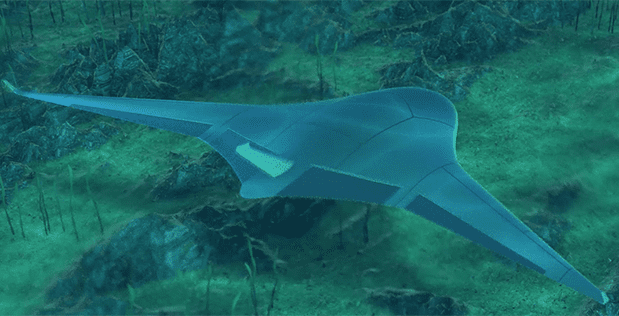
An artist’s conception of DARPA’s Manta Ray project. DARPA

ARLINGTON, Va.—The Defense Advanced Research Projects Agency (DARPA) has executed contract options to continue the Manta Ray project that began in 2020, the agency said in a Feb. 5 release.  

The Manta Ray effort seeks to demonstrate innovative technologies allowing payload-capable unmanned underwater vehicles (UUVs) to operate on long-duration, long-range missions in ocean environments. The three prime contractors will be Northrop Grumman Systems Corp., Martin Defense Group LLC (formerly Navatek, LLC), and Metron Inc. 

The Manta Ray project seeks to develop UUVs that operate for extended durations without the need for on-site human logistics support or maintenance. It also aims to address critical challenges spanning energy management, UUV reliability, biofouling, corrosion control, navigation, underwater obstacle avoidance, and many other areas that could benefit Navy operations. 

“Manta Ray performers have each taken unique approaches to solving the wide range of challenges related to UUV endurance,” said Cmdr. Kyle Woerner, the program manager for Manta Ray. “To me, this is a clear sign we are tackling a complex problem without a clear ‘one size fits all’ solution.” 

The Manta Ray program concluded its first major milestone with the completion of preliminary design reviews in early 2021. Later this year, selected performers will advance their designs toward a critical design review that will confirm design maturity before vehicle fabrication and testing in an anticipated Phase 2. 

“The goals of this new class of undersea vehicle and its critical component technologies are to inform, as well as transition into, future Navy UUV efforts,” added Woerner. 

Two of the selected performers, Northrop Grumman Systems Corp. and Martin Defense Group LLC, will continue development of fully integrated demonstration vehicles. A third performer, Metron Inc., will advance progress on a novel energy harvesting subsystem. 


L3Harris Awarded Systems Integration Contract for Navy Frigate Program

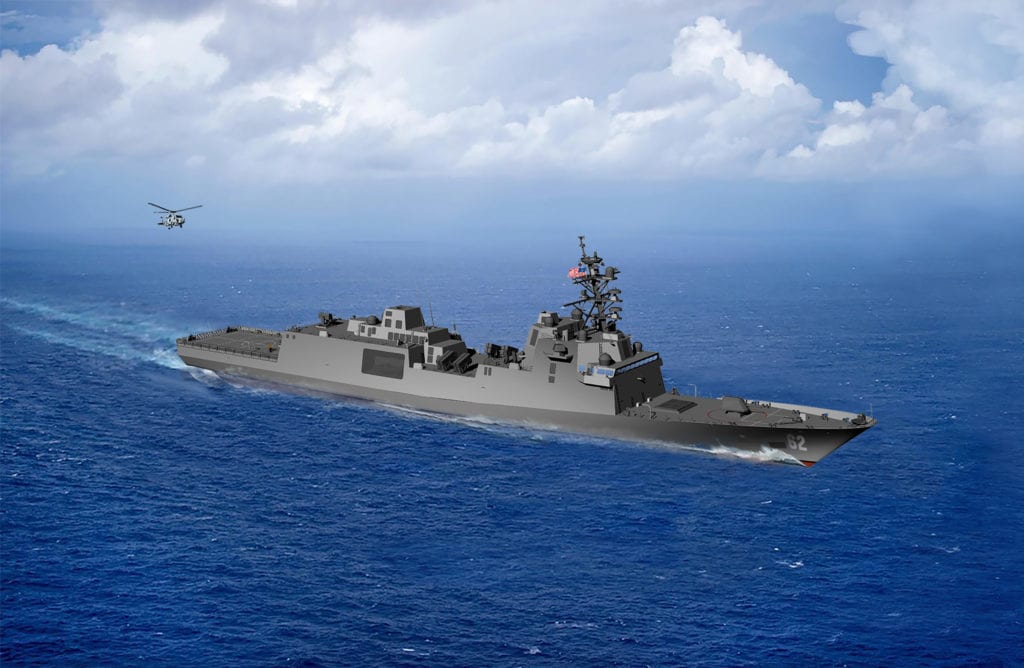
An artist’s rendering of the guided-missile frigate (FFG). The new small surface combatant will have multi-mission capability to conduct air warfare, anti-submarine warfare, surface warfare, electronic warfare, and information operations. U.S. Navy

CAMDEN, N.J. — L3Harris Technologies has been awarded a contract by Fincantieri Marinette Marine for the shipboard integration and production of major subsystems onboard the U.S. Navy’s guided-missile frigate, FFG 62, the company said in a Feb. 10 release. L3Harris is prepared to support the Navy’s plans to build at least 10 ships. The value of the L3Harris program could exceed $300 million if all design, development, and production options are awarded. 

L3Harris is the largest member of the Fincantieri FFG team and will provide integrated systems that include the electric and propulsion systems, bridge and navigation systems, and aviation integration services. The diversified capabilities that L3Harris delivers on the Constellation-class frigate program will distribute the power and propulsion needed to meet the U.S. Navy’s mission requirements throughout the world. 

“We’re excited by the opportunity to join the Fincantieri Marinette Marine team on the Frigate program and we look forward to bringing to bear industry-best speed, innovation and affordability as we deliver the advanced integrated capabilities that will ensure the Navy’s ability to operate this ship with impunity upon any sea,” said Sean Stackley, president, Integrated Mission Systems, L3Harris.  

The Navy recently awarded a contract to Fincantieri to design and build the FFG, the Navy’s first new build in more than a decade. L3Harris will support Fincantieri at its Marinette, Wisconsin, shipyard, where it will build the frigate based on the company’s Italian FREMM multi-mission frigate. 


State Dept. Approves Sale of SM-2 Missiles to Chile

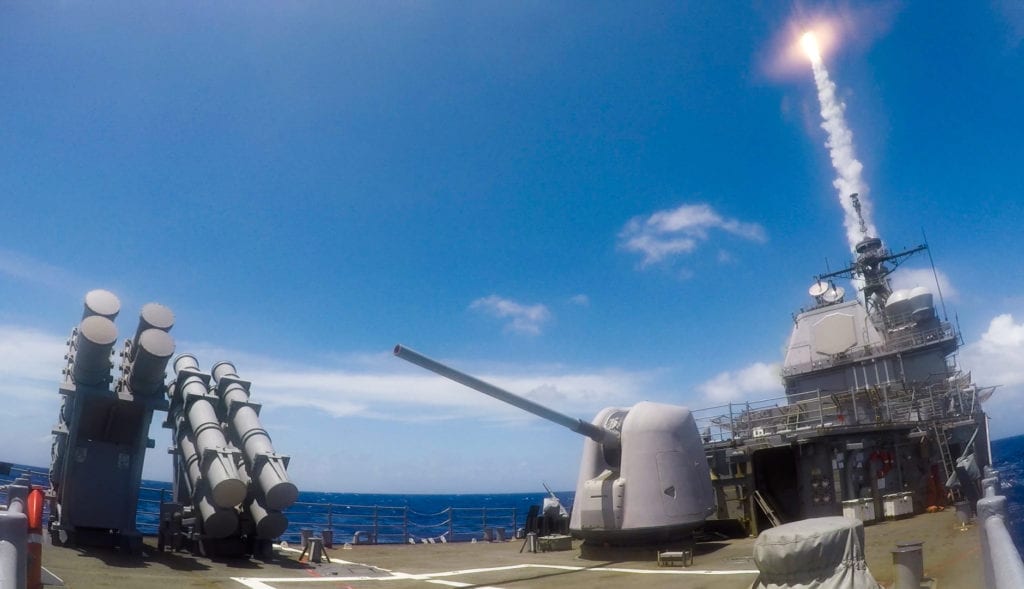
An SM-2 telemetry surface to air missile is launched from the forward vertical launch system of the Ticonderoga-class guided-missile cruiser USS Shiloh (CG 67) while conducting a live-fire exercise. U.S. Navy / Mass Communication Specialist 2nd Class Ryre Arciaga

WASHINGTON — The State Department has approved a possible Foreign Military Sale to the government of Chile of Standard Missile-2 (SM-2) Block IIIA missiles and related equipment for an estimated $85 million, the Defense Security Cooperation Agency said in a Feb. 5 release. 

The government of Chile has requested to buy up to 16 Standard Missile-2 (SM-2) Block IIIA missiles, rail launched, including two missiles with manufacturer installed telemeter; two Mk89 Mod 0 Guidance Sections; and one Target Detection Device Kit (including shroud), Mk45 Mod 14, the release said.   

The potential sale also includes “Intermediate Level Maintenance Facility; spare parts and associated containers; personnel training and training equipment; publications and technical data; U.S. government and contractor technical assistance and other related logistics support, including ordnance handling equipment, and other related elements of logistics and program support.   

This proposed sale would support Chile’s anti-air warfare capabilities for the two recently transferred former Adelaide-class frigates to the Chilean navy.   

The principal contractor will be Raytheon Missiles and Defense, Tucson, Arizona.   


Besides Supplying Food, Fuel and Equipment, Logistics Could Confuse an Adversary, Pentagon Planner Suggests

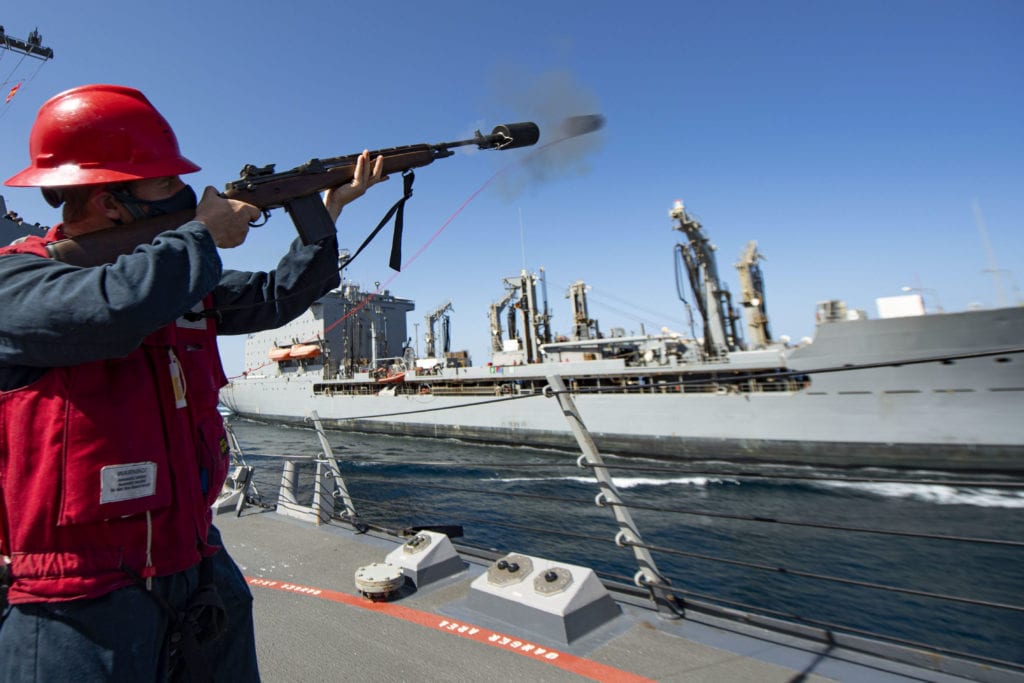
Gunner’s Mate 3rd Class Gage Duncan, from Cardington, Ohio, fires a shot line from the deck of the guided-missile destroyer USS Sterett (DDG 104) to the fleet replenishment oiler USNS Leroy Grumman (T-AO 195) during a replenishment-at-sea. U.S. Navy / Mass Communication Specialist Seaman Drace Wilson

ARLINGTON, Va. — Supporting United States forces in the vast and likely contested areas of great power competition will be an enormous challenge, but a top Defense Department planner says using logistics “as a warfighting function” could throw adversaries off balance.

Logistics isn’t just about planes, ships and trucks carrying stuff, Marine Corps Maj. Gen. David Maxwell, the Pentagon’s vice director for logistics (J4) told a virtual defense industry conference Feb. 3. “In fact, I would offer that we really need to be thinking about employing logistics as a warfighting function,” he said.

“The military challenge for logistics,” Maxwell told the Defense Industrial Association’s Expeditionary Warfare Conference, “is that under all domain persistent attack, we have to be able to rapidly aggregate and deploy forces worldwide and support those forces potentially over vast distances, through contested domains and most likely over a protracted time frame.”

That’s going to be a tall order, compared to the decades after the Cold War, when the maritime environment was largely uncontested.

“Logistics support, something we’ve taken for granted for quite a while, is no longer a given,” Maxwell said, adding that in a contested environment the integration of logistics, operations and command and control is more critical than ever, but “our ways of doing it are no longer adequate.”

U.S. strategy calls for a geographically distributed force across the Pacific to confound and deter adversaries armed with increasingly formidable air and sea denial capabilities. In addition to reducing the signatures of supply vessels, greater use of autonomous vehicles, artificial intelligence, machine learning and better training the troops who will use those digital tools, Maxwell said logistics, itself, should be added to the commander’s toolbox.

He suggested logistics could be used as a reconnaissance or counter reconnaissance tool “to probe and identify” competitors’ surface areas. “Would a commander intentionally use logistics movement as a signaling activity to assess adversary reactions as either a deterrent or an indication of escalation?” he asked. He also suggested a commander could conceal logistics activities “in order to deceive the adversary and retain an element of surprise.”

Those actions “have the potential to either deter or deny adversary objectives if we employ them intentionally,” Maxwell said.


DLA Awards Crowley Fuel Delivery Contract to Remote Aleutian Air Station

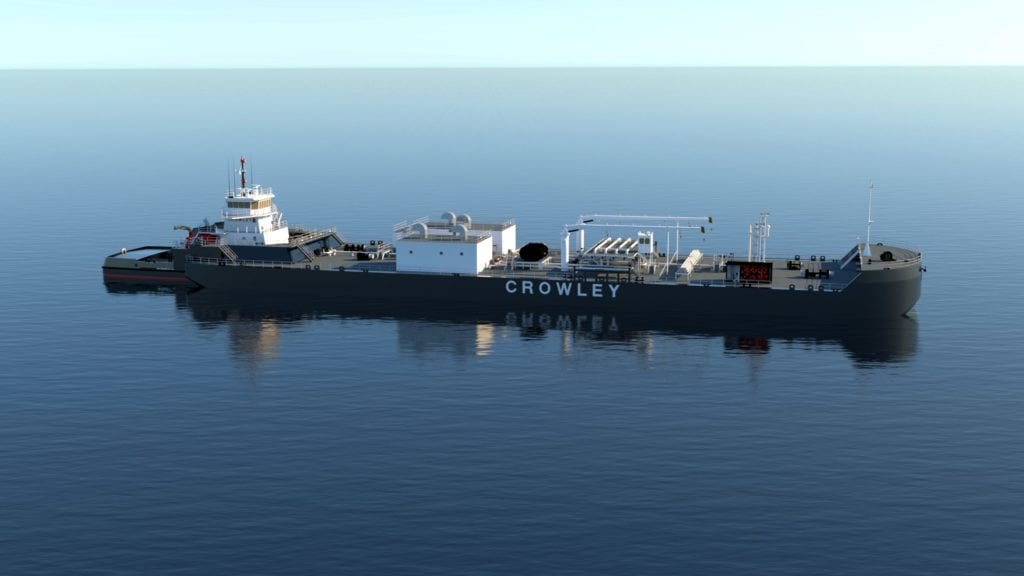
Crowley will provide transformational improvements and cost efficiencies through the utilization of the company’s new, purpose-built articulated tug-barge. Crowley

ANCHORAGE, Alaska — Crowley Solutions has been awarded the five-year contract to deliver military specification fuel to the Eareckson Air Station located on the remote Aleutian Island of Shemya, Alaska, the company said in a Feb. 1 release. 

Under the U.S. Defense Logistics Agency-Energy contract, beginning in 2021, Crowley will provide lightering and transportation of 4 million gallons of fuel annually for the radar and aircraft refueling station and its 180 military, contractors and civilians who operate it. 

Crowley has consistently transported and delivered the fuel since 1956 to the base 1,200 miles from Anchorage in the remote western reaches of the Aleutian Island archipelago. The U.S. government has counted on the company’s experience and innovative logistics capabilities in remote and austere environments, including a unique over-the-shore evolution successfully developed and executed by Crowley in 2020 as featured in this video. However, under the new contract term, Crowley will provide transformational improvements and cost efficiencies through the utilization of the company’s new, purpose-built articulated tug-barge (ATB) in a joint service by Solutions and Crowley Fuels, the company’s Alaska-based fuel transportation and distribution business unit. 

The 55,000-barrel capacity (2.3 million-gallon) ATB Aurora/Qamun will serve the air station and Crowley’s customers throughout western Alaska and the Arctic. The 410-foot ATB is specifically designed to meet Ice Class and Polar Code requirements in order to safely and effectively operate in Western Alaska year-round. 

“Crowley’s record of dependability and high performance will add a new chapter under this contract when Aurora/Qamun enters service to the government and military,” said Sean Thomas, vice president for Crowley Solutions. “It is an honor to continue serving our warfighters by safely providing value through a resilient and dependable supply chain whenever and wherever they need fuel.” 

“We appreciate the confidence the government continues to show in Crowley,” said Rick Meidel, vice president and general manager, Crowley Fuels. “The new contract award reflects the proficiency and skill of the dedicated men and women of Crowley Fuels, and the strong collaboration by the Fuels and Solutions teams.”  

The ATB, which was designed by Crowley Engineering Services powered by subsidiary Jensen Maritime, is undergoing its final outfitting prior to entering service this year. The tug is being constructed by Master Boat Builders of Bayou La Batre, Alabama. The barge is being built by Gunderson Marine LLC, a wholly owned subsidiary of the Greenbrier Companies Inc., in Portland, Oregon.