Coast Guard takes delivery of 19th HC-130J long range surveillance aircraft
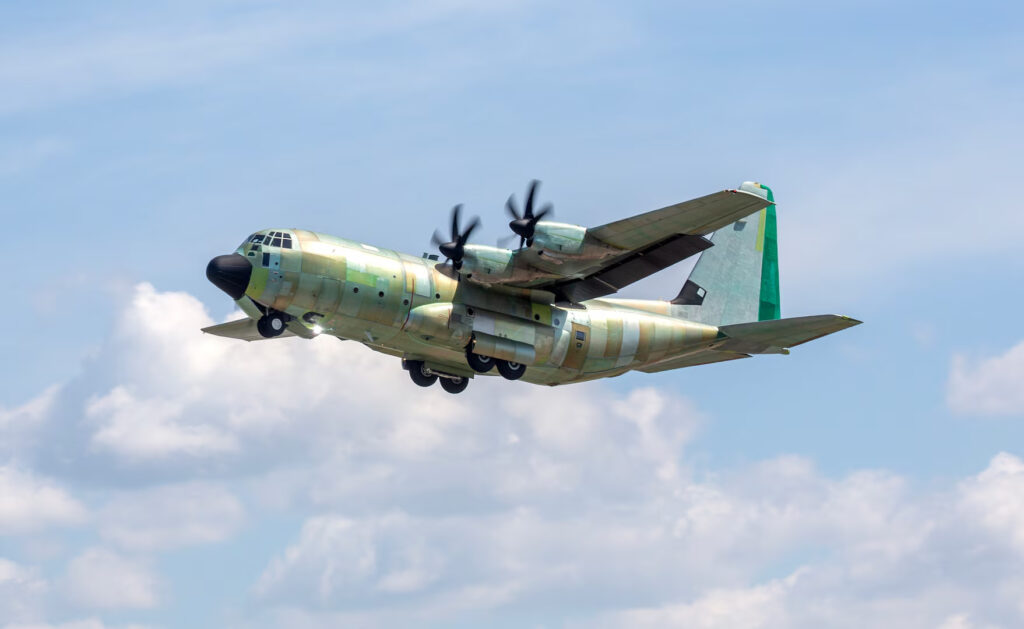
WASHINGTON — The Coast Guard accepted delivery of its 19th HC-130J Super Hercules long range surveillance aircraft, designated CGNR 2019, from Lockheed Martin Aeronautics in Marietta, Georgia, on April 10, 2026.
The aircraft entered the year-long missionization effort needed to make it fully mission-ready on June 3, following completion of warranty and logistics flights by the Coast Guard Aviation Projects Acquisition Center in Elizabeth City, North Carolina.
The acquisition of CGNR 2019 is part of a broader, ongoing modernization of the Coast Guard’s aviation fleet. The HC-130J serves as the long-range search and rescue variant of the C-130J. Compared to the legacy HC-130H model, the new HC-130J aircraft features a more advanced engine and propellers, yielding a 20 percent increase in speed and altitude, as well as a 40 percent increase in range. Notably, this is the first C-130J aircraft delivered to the Coast Guard in which a Block 8.1 upgrade – providing enhanced approach and landing systems, expanded diagnostics, and civil GPS – was installed during baseline production at Lockheed Martin.
These enhancements allow the aircraft to travel further, stay on scene longer, and respond more rapidly to emergencies.
“Every new HC-130J we add to the fleet drastically expands our operational reach and maritime domain awareness,” said Rear Adm. Mike Campbell, Director of Systems Integration (CG-SI) and Assistant Commandant for Aviation (CG-AIR). “CGNR 2019 represents our ongoing commitment to providing our aircrews with the most advanced command and control platforms available to execute our complex, demanding missions across the globe.”
With an extended endurance of over 20 hours, the HC-130J plays a vital role in executing the Coast Guard’s most demanding traditional missions. These include search and rescue, drug and migrant interdiction, law enforcement, cargo and personnel transport, and securing U.S. maritime borders and approaches. Furthermore, its advanced command, control, communications, computers, cyber, intelligence, surveillance, and reconnaissance (C5ISR) equipment allows it to serve as a vital command and control platform, identifying objects and seamlessly sharing real-time data with operational forces and cooperating agencies.
The missionization process, executed by L3Harris Integrated Mission Systems in Waco, Texas, integrates specialized equipment necessary to execute Coast Guard missions, including the Minotaur Mission System Suite. This advanced open-architecture system provides real-time tracking and Rescue 21 integration to enhance the common operating picture and maritime domain awareness. The aircraft will also be equipped with an advanced electro-optical/infrared (EO/IR) sensor turret and a 360-degree, belly-mounted, multi-mode surface search radar, a feature that was first used on the Coast Guard’s HC-130J configuration.
The expansion of the HC-130J fleet is heavily supported by the Fiscal Year 2025 (FY25) budget reconciliation. This investment will enable the Coast Guard to expand HC-130J operations to two additional air stations, bringing the total number of funded aircraft to 25. Using the historic $25 billion investment provided by the FY25 budget reconciliation, the Coast Guard has already ordered over $13 billion in new fleet assets and capabilities, demonstrating the Service’s commitment to modernizing acquisition and delivering next-generation technology.
The Coast Guard currently operates the HC-130J out of three air stations: Elizabeth City, North Carolina; Kodiak, Alaska; and Barbers Point, Hawaii. After completing its missionization process in mid-2027, CGNR 2019 will be fully operational as an HC-130J and will support the transition of Air Station Sacramento, California, from C-27J to HC-130J operations.