Lockheed Martin to Integrate PAC-3 MSE Into Aegis Combat System
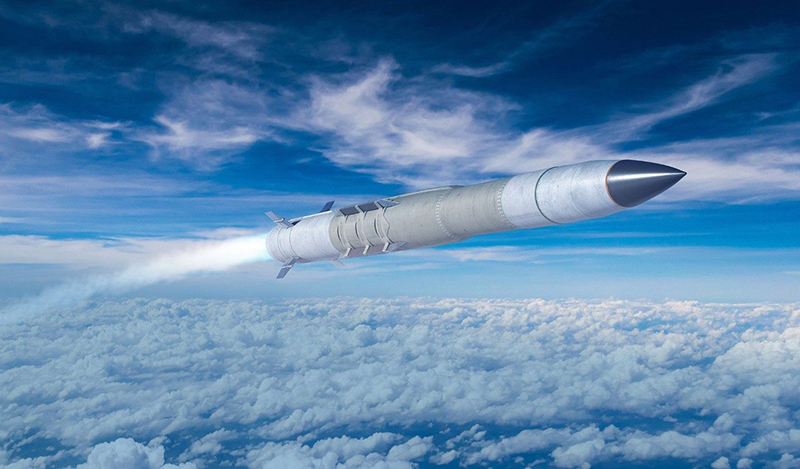
The U.S. government announced a contract with Lockheed Martin (Booth 901) for the development, integration and testing of PAC-3 Missile Segment Enhancement (MSE) into the Aegis Combat System for the first time.
This move places the U.S. Navy among the ranks of PAC-3 MSE users around the world, including the U.S. Army and 16 partner nations, giving Navy warships “a razor-sharp defense that helps keep America’s freedom of the seas unchallenged,” the company announced Tuesday.
PAC-3 MSE is a key integrated air and missile defense capability for the U.S. and its allies. The U.S. government awarded Lockheed Martin a multi-million contract to continue munitions acceleration efforts and deliver a record number of PAC-3 MSE interceptors in 2026. This new contract builds on the framework agreement Lockheed Martin signed with the U.S. Department of Defense to rapidly accelerate the production and delivery of PAC-3 MSE.
“By integrating PAC‑3 MSE’s capabilities into Aegis, the Navy is taking a decisive step forward in defending America’s fleet and our global interests against the most advanced threats,” Jason Reynolds, vice president and general manager of Lockheed Martin IAMD, said in a press release. “Lockheed Martin is driving the innovation behind this effort — bringing together advanced, combat‑proven systems in new ways to accelerate capability and deliver a decisive advantage in maritime defense.”
Before receiving government funding, Lockheed Martin said it made internal investments to integrate the system with Aegis and the MK41 Vertical Launching System.
“This integration further expands the capability of Aegis to engage missile threats at multiple layers, enabling a more comprehensive and effective defense against evolving threats, ensuring the warfighter has the strategic advantage,” Chandra Marshall, vice president of Lockheed Martin Multi-Domain Combat Solutions, said in the release.
PAC-3 MSE hit-to-kill technology that delivers exponentially more kinetic energy on the target than can be achieved with blast fragmentation mechanisms, the company said. PAC-3 MSE is combat proven against ballistic and cruise missiles as well as hypersonic and airborne threats.