SECNAV Del Toro Names Future John Lewis-class Oiler USNS Dolores Huerta

From SECNAV Public Affairs, 18 September 2024

WASHINGTON – Secretary of the Navy Carlos Del Toro announced that the future John Lewis-class oiler, T-AO 205-class, will be named USNS Dolores Huerta (T-AO 214). Del Toro made the announcement during a speaking engagement at the Veteran Affairs Center for Minority Veterans Hispanic Heritage Month Commemorative Event in Washington, Sept. 18. 
 
The future USNS Dolores Huerta honors American labor leader and civil rights activist Dolores Huerta, a central figure in the farmworkers’ labor movement from the 1950s through 1990s. 
 
The naming selection of the future USNS Dolores Huerta (T-AO 214) follows the tradition of naming John Lewis-class oilers after civil rights leaders and will be the first to bear her name. Secretary Del Toro previously named USNS Thurgood Marshall (T-AO 211), USNS Ruth Bader Ginsberg (T-AO 212), and USNS Harriet Tubman (T-AO 213). 
 
“Dolores Huerta has been a leading figure in the Hispanic community and a champion of civil and workers’ rights for over 70 years,” said Secretary Del Toro. “Dolores Huerta dedicated her life to caring for those voiceless and underrepresented—she dedicated her life to taking care of people. I am honored to announce the next John Lewis-Class fleet replenishment oiler, T-AO 214, will be named USNS Dolores Huerta.” 
 
After a brief stint as a public school teacher, Huerta in 1955 co-founded the Stockton chapter of the Community Service Organization to promote voter registration and economic opportunity initiatives for the local Hispanic community. 
 
In 1962, she along with Cesar Chavez, co-founded the National Farm Workers Association, a forerunner of the United Farm Workers. In the 1960s and 1970s, Huerta helped lead local labor strikes and national boycotts of lettuce, grapes, and Gallo wine that improved the working and living standards for farmworkers. During this period, she also coined the phrase that remains the motto of the farmworkers’ labor movement, “Sí, se puede”—“yes, we can.” 
 
From 1988 – 1993, Huerta served on the Commission on Agricultural Workers, established by Congress to review the effects of farmworker and immigration legislation. In 2002, she founded the Dolores Huerta Foundation, a non-profit organization dedicated to empowering other volunteer organizations that pursue social justice. 
 
Over the course of her career, Huerta has received numerous accolades including the Eleanor Roosevelt Human Rights Award in 1998. When President Barack H. Obama awarded Huerta the Presidential Medal of Freedom in 2012, he praised her lifelong devotion to “advocating for marginalized communities.” 
 
The future USNS Dolores Huerta is the tenth ship of the John Lewis Class. The class and lead ship are named in honor of the late civil rights icon Rep. John Lewis from Georgia. 
 

The ships are designed to supply fuel to the Navy’s operating carrier strike groups.  

The oilers have the ability to carry a load of 162,000 barrels of oil and maintain significant dry cargo capacity. 


Midshipmen Visit Unmanned Surface Vessel Squadron One

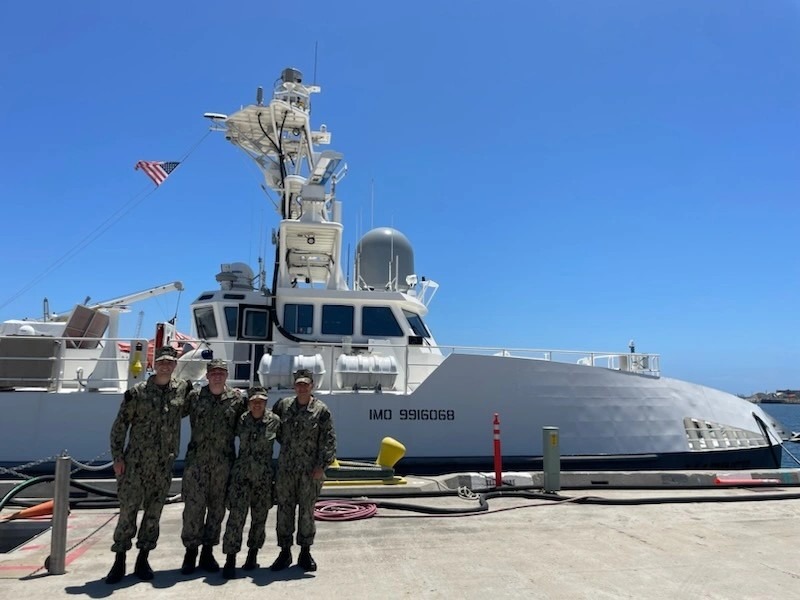
Midshipman 1st Class Joseph Kapszukiewicz, Midshipman 1st Class Axel Fisher, Midshipman 1st Class Athena Dinh and Midshipman 1st Class Robert Montoya with Overlord Unmanned Surface Vessel (OUSV) Ranger in Port Hueneme, Caliornia. Unmanned Surface Vessel Squadron (USVRON) One has established a summer training program with USNA for midshipmen interested in furthering the Navy’s integration of robotic and autonomous systems into the fleet.

From Naval Surface Forces, 16 September 2024 

Unmanned Surface Vessel Squadron (USVRON) One welcomed four first class midshipmen from the United States Naval Academy for their summer cruises to focus on the development unmanned surface systems. 
 
Although not a traditional surface cruise, the midshipmen were given an inside look at the Navy’s advances in the unmanned systems that will support the future of the Surface Fleet. The midshipmen were specifically selected for this opportunity based on their interest and undergraduate degree focus in robotics, autonomy, and unmanned systems. 
 
The midshipmen received training on the maritime autonomy control software for the USVs and associated payloads, familiarization tours onboard all the USVs, and assisted in USVRON 1’s planning efforts for future exercises, experimentation, and concepts of operations. 
 
“It’s good to see the future of what our Navy might be. I can’t wait to work alongside USVs when I commission,” said Midshipman 1st Class Axel Fisher. 
 
During the visit, the midshipmen also received familiarization tours of Zumwalt-class guided-missile destroyer USS Michael Monsoor (DDG 1001) and Global Autonomous Reconnaissance Craft (GARCs) operated by USVRON Three in San Diego. Additionally, they received training on the future MQ-25 Stingray Carrier-Based Unmanned Aerial System (CBUAS) and tours of the MQ-4C Triton training facilities at Point Mugu. 
 
“We wanted to give the Midshipmen a broad overview of what the Navy is doing in the unmanned space,” said Lt. Jonathan Dibling, the training officer and midshipman training coordinator at USVRON 1. 
 
“It was fascinating to get to see the behind the scenes of USVs. I was able to use the knowledge from my Electrical Engineering major to understand the capabilities and can see the important future of unmanned craft,” said Midshipman 1st Class Joey Kapszukiewicz at the conclusion of the cruise. 
 
Mariner, Ranger, Seahawk and Sea Hunter are the current USVs assigned to USVRON One and recently completed the first overseas USV deployment to the Indo-Pacific region during Integrated Battle Problem 23.2. During this deployment, they traveled a combined 46,651 nautical miles, navigated primarily by autonomous systems, and visited partners in Japan and Australia. 
 
Based in Port Hueneme, California onboard Naval Base Ventura County, USVRON One’s mission is to test, evaluate and operate USVs in support of medium and large unmanned surface vessel development and integration into fleet operations and provide recommendations to Navy leadership on the development of unmanned systems. 


Fairbanks Morse Defense to Acquire Rolls-Royce Naval Propulsors & Handling Business

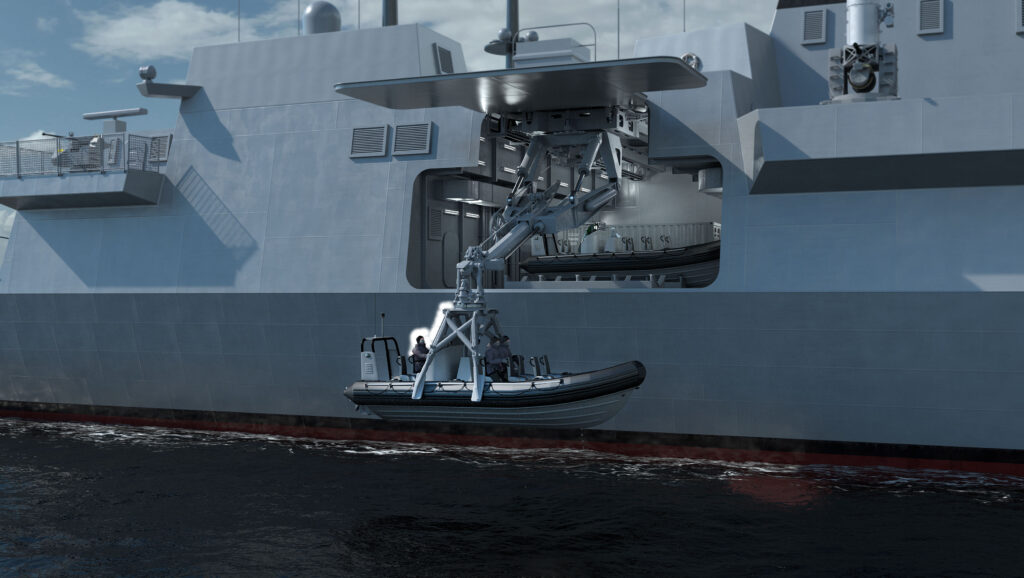
A rendering of a marine handling system from Rolls-Royce’s Naval Propulsors and Handling business, which will be acquired by Fairbanks Morse Defense. Fairbanks Morse Defense

BELOIT, Wisconsin — Fairbanks Morse Defense, a portfolio company of Arcline Investment Management, has entered into an agreement with Rolls-Royce to acquire its Naval Propulsors and Handling business. The acquisition will include a range of propellers and waterjets for naval applications, as well as marine handling systems, which enable the deployment and recovery of manned and unmanned craft, and other cargo, from naval vessels. 

“When you look at the 150-year history of Fairbanks Morse Defense, you will find a handful of distinctive moments that completely transformed this company. We believe the acquisition of Rolls-Royce naval propulsors and handling businesses will become one of those moments,” said George Whittier, CEO of Fairbanks Morse Defense. “The way that our products and services complement each other is unmatched in the defense industrial base. Combining our capabilities allows Fairbanks Morse Defense to substantially increase what we offer to our U.S. maritime defense customers while also offering our systems and components solutions to Rolls-Royce’s global customer base.”  

The acquisition will add the following to the Fairbanks Morse Defense portfolio: 

  • Rolls-Royce Pascagoula, Mississippi Facility – Pascagoula is a fully integrated marine propeller and waterjet manufacturing campus that is responsible for producing controllable pitch propeller blades and hub body castings, large fixed-pitch propellers, and waterjets for the U.S. Navy. It is the country’s only privately owned foundry that is qualified to cast propellers for the U.S. Navy’s surface and submarine fleet, making it a United States National Asset.  

  • Rolls-Royce Walpole, Massachusetts Facility – For over 50 years, the Rolls-Royce Walpole campus has delivered critical ship propulsor systems and aftermarket services for the U.S. Navy and Coast Guard and other international navies, including controllable pitch propellers, fixed propellers, and waterjets.

  • Rolls-Royce Peterborough, Ontario Canada Facility – The Centre of Excellence for Naval Handling in Peterborough, Ontario supports the design and manufacture of handling systems, launch and recovery systems, and undersea sensors and systems for navies across the globe. Its products include the next-generation Mission Bay Handling System for the Global Combat Ship program, a frigate program for the UK Royal Navy, Royal Canadian Navy, and Royal Australian Navy.

Rolls-Royce Naval-Marine propellers can be found on all the U.S. aircraft carriers currently in service. They are also used on U.S. Navy fleet supports, amphibious ships, surface combatants, submarines and more, as well as on U.S. Coast Guard vessels. Rolls-Royce handling systems are found on many of the U.S. Navy’s surface combatants.

“Rolls-Royce Naval Propulsors & Handling is an industry leader and trusted supplier to navies around the world. We are pleased to collaborate with Fairbanks Morse Defense, who recognizes the value of this business and the outstanding opportunities for its strong future,” said Adam Riddle, president – Defense and chairman and CEO of Rolls-Royce North America. “We believe this transaction represents the best outcome for the business, its people, and the military customers they serve.”  

Fairbanks Morse Defense has built a diverse portfolio that now includes engines, electrical hardware, motors, valves, cranes, davit systems, fans, fittings, and water treatment solutions. The company has also advanced its technology offerings with AI, digital defense, telerobotics, additive manufacturing, smart engineering, uncrewed mission management, extended reality, and remote collaboration tools. 


Leonardo celebrates delivery of 100th TH-73A thrasher to the US Navy 

PHILDELPHIA,  17 September 2024 — Leonardo celebrated a significant milestone with the 100th delivery of the TH-73A Thrasher helicopter to the United States Navy on September 17 at a ceremony in Northeast Philadelphia.  Attendees included Vice Adm. Daniel L. Cheever, Commander, Naval Air Forces/Commander, Naval Air Force, U.S. Pacific Fleet and Lt. Gen. Bradford Gering, Deputy Commandant for Aviation for the U.S. Marine Corps, along with a crowd of over one hundred dignitaries representing government, military, and nonprofit institutions. 

In early 2020, the Navy selected the Leonardo TH-73A, an advanced Instrument Flight Rules (IFR) rated version of the commercial AW119Kx, to replace its aging fleet of TH-57B/C Sea Rangers as the primary training helicopter to produce the next generation of rotary and tilt-rotor pilots for the Navy, Marine Corps, Coast Guard, and selected allied nations. 

“We’re proud to continue to provide our contribution to the Navy as it aims at delivering the highest level of quality for their next generation naval aviators’ training,” said Gian Piero Cutillo, Managing Director of Leonardo Helicopters. “We’re committed to sustaining this capability with our technology to make sure our partners’ needs are met as frontline capabilities and operational requirements keep evolving.”     

“We are thrilled to deliver the 100th TH-73 to our esteemed U.S. Navy partners,” said Clyde Woltman, Chief Executive Officer of Leonardo Helicopters U.S. “This production milestone is a testament to all the collaboration and hard work between our organizations, and we remain focused on preparing for the fleet’s readiness for decades to come.”   

The TH-73A Advanced Helicopter Training System represents a pivotal modernization in Navy helicopter training technology, shifting from analog to digital avionics, and is projected to serve the U.S. Navy through 2050 and beyond. This enhanced training capability will help maintain the highest standard of military flight training with current and relevant training platforms. The TH-73A will facilitate a higher quality and more proficient naval aviator who will be ready to meet the operational challenges faced in the fleet.  

“The advanced capability of the TH-73 Thrasher is a great training addition for our warfighters,” said Vice Adm. Daniel Cheever, Commander Naval Air Forces. “This means our newest Naval Aviators arrive ready to preserve the peace, respond in crisis, and win in war.” 

TH-73A’s advanced design, based on the IFR-certified variant of the commercial AW119Kx, sets it apart as the ideal selection for initial flight training with the capacity to support advanced operational maneuvers. The helicopter is powered by a robust Pratt & Whitney PT-6 engine and features dual safety and hydraulic systems, ensuring reliability and safety during all aspects of flight operations. With modern digital avionics provided by Genesys Aerosystems, the Thrasher excels in every maneuver within the Navy’s training program and expanded the training syllabi, facilitating a seamless transition from fundamental flying activities to complex operational training.  

Training by the numbers 

As of mid-August, the Navy’s advanced helicopter training syllabus is currently comprised of more than 317 total Student Naval Aviators (SNAs), of which 185, or 58%, are currently in the TH-73A training curriculum. This number is projected to peak at 66% when the second of three squadrons complete the transition this fall. The third and final squadron, Helicopter Training Squadron (HT) 28, is expected to begin the transition to the TH-73 later this year.  

In addition, the commitment to flight training is unwavering, evidenced by the safe and effective execution of more than 43,000 flight hours flown in support of the Navy’s training requirements. To support the dynamic training environment, 133 Training Air Wing (TW) 5 instructor pilots have been qualified in the TH-73A, comprised of 86 conversion instructors and 47 new Instructors Under Training (IUTs). Many additional IUTs continue to hone their skills within the helicopter instructor training unit. The program also benefits from the expertise of eight contract maintenance provider Functional Check Pilots who have been qualified in the model in direct support of the program. More than 200 SNAs have completed the TH-73A syllabus and been winged Naval Aviators to date. 


Chief of Naval Operations Releases Navigation Plan for America’s Warfighting Navy 

18 September 2024 

From Chief of Naval Operations Public Affairs 

Chief of Naval Operations Adm. Lisa Franchetti released her Navigation Plan (NAVPLAN) for America’s Warfighting Navy at the Naval War College, Sept. 18. 

NAVPLAN 2024 follows the CNO’s release of America’s Warfighting Navy in January, and serves as an update to the 2022 NAVPLAN. 

“The Navigation Plan for America’s Warfighting Navy is my overarching strategic guidance to make our Navy more ready, prioritizing raising our level of readiness for potential conflict with the People’s Republic of China by 2027 while also enhancing the Navy’s long-term warfighting advantage,” said Franchetti. “The NAVPLAN continues where my predecessor’s Navigation Plan left off and sets our course to raise our Fleet’s baseline level of readiness and put more ready Players on the Field – platforms that are ready with the requisite capabilities, weapons, and sustainment and people that are ready with the right mindset, skills, tools, and training.” 

This strategic guidance focuses on two strategic ends: readiness for conflict with the PRC by 2027 and enhancing long-term advantage. It aims to achieve these ends through two central ways: implementing seven “Project 33” targets and expanding the Navy’s contribution to the Joint warfighting ecosystem. These efforts are reinforced by an ongoing call to action to think, act, and operate differently. 

You can download the NAVPLAN and find additional resources at: America’s Warfighting Navy


USCG Strengthens Partnership with Palau to Combat Illicit Maritime Activity

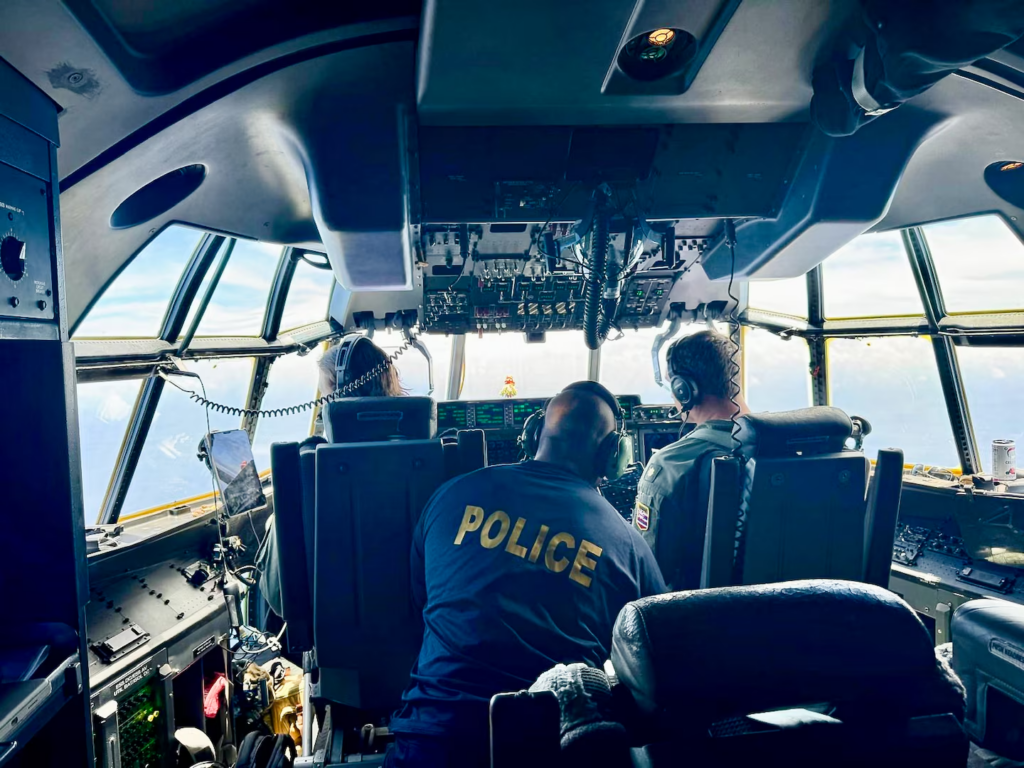
In a recent joint operation, which occurred Sept. 6-8, 2024, a U.S. Coast Guard HC-130 Hercules and aircrew embarked Palauan enforcement officials and Coast Guard specialists to patrol over 6,000 miles, identifying numerous illegal fish aggregation devices (FADs) and sighting vessels in and around Palau’s EEZ. (U.S. Coast Guard photo)

From U.S. Coast Guard Forces Micronesia Sector Guam, Sept. 17, 2024 

KOROR, Republic of Palau — At the request of the Republic of Palau and in response to their concerns of potential illicit maritime activity occurring in Palau’s Exclusive Economic Zone (EEZ), U.S. Coast Guard Forces Micronesia Sector Guam (FMSG) and U.S. Coast Guard Air Station Barbers Point dispatched personnel and equipment to enact the agreement between the U.S. and Palau Concerning Operational Cooperation to Suppress Illicit Transnational Maritime Activity (U.S. – Palau Bilateral Agreement), and in doing so enhanced Palau’s maritime domain awareness.  
 
In the recent joint operation, which occurred Sept. 6-8, 2024, a U.S. Coast Guard HC-130 Hercules and aircrew embarked Palauan enforcement officials and U.S. Coast Guard specialists to patrol over 6,000 miles, identifying numerous illegal fish aggregation devices (FADs) and sighting vessels in and around Palau’s EEZ.  
 
Exercising provisions of the U.S.–Palau bilateral agreement, the operation employed a Palauan air rider, Palau’s Joint Operations Center (JOC), and U.S. Coast Guard liaisons to maximize technologies and maritime domain awareness tools to monitor and patrol Palau’s waters and domestic fishing zones. 
 
“Our collaboration with the Palauan air rider and Palau’s Division of Marine Law Enforcement was instrumental in swiftly identifying illicit activities within Palau’s waters. This mission demonstrates the power of partnership and shared commitment to protecting maritime resources and maintaining sovereignty,” said Lt. Cmdr. Derek Wallin, the U.S. Coast Guard Compact of Free Association maritime advisor. 
 
U.S. Coast Guard liaison officers collaborated with the Division of Marine Law Enforcement and the Joint Operations Center in Koror to enhance maritime domain awareness alongside a U.S. Coast Guard HC-130 Hercules aircrew deployed to Palau by the U.S. Coast Guard 14th District. The U.S. Embassy in Koror coordinated the request from the government of Palau.  
 
“It was fantastic to have members of the Republic of Palau’s maritime law enforcement team aboard the aircraft, who’ve previously sailed with us on our Fast Response Cutters and participated in Operation Irensia in Guam earlier this year,” said Wallin. “The participation underscores the deep and enduring ties between our teams, demonstrating the strength of our partnership and our shared commitment to protecting Palau’s waters and the wider Blue Pacific.” 
 
Operational Highlights  
– U.S. Coast Guard Assets and Personnel Involved:  
– 03 U.S. Coast Guard liaison officers and specialists  
– Aircraft and aircrew from U.S. Coast Guard Hercules from Oahu, Hawai’i  
 
– Enacted Agreement:  
– Exercising the U.S. and Palau agreement to suppress illicit transnational maritime activity in and around Palau’s EEZ and territorial waters. 
 
– Results:  
– Approximately 50 hours of JOC watchstanding to coordinate and analyze maritime domain awareness efforts.  
– Hercules aircrew patrolled approximately 2,000 miles daily.  
– Hercules aircrew patrolled nearby high seas and verified 12 vessels and additional radar signatures of FADs along the Palau EEZ. 
 
One of the Palauan air riders described the operation as an unforgettable experience, praising the smooth flight, the professionalism of the aircrew, and the lasting memories made during the mission. The reports gathered during these operations will guide future efforts by Palauan and U.S. Coast Guard surface asset crews to locate, dismantle, and deter illegal fishing operations. This collaborative mission emphasizes the importance of aerial surveillance and the enduring U.S.-Palau partnership in safeguarding sovereignty and promoting good governance across the Blue Pacific. 
 
“The U.S. Coast Guard is proud to work alongside the Republic of Palau in this vital effort. The value of aerial support cannot be overstated, and together, we are strengthening maritime governance to ensure a secure and prosperous future for the Pacific. Our enduring partnership reflects our mutual dedication to protecting these vital waters from exploitation,”  
said Capt. Robert Kistner, commander of U.S. Coast Guard Forces Micronesia.  
 
The U.S. Coast Guard remains dedicated to supporting Palau’s maritime security through continued aerial, surface, and information-sharing operations, fostering a secure maritime environment for all who rely on the region’s resources. 


RTX’s Collins Aerospace Receives First-Ever FAA Approval to Increase Cockpit Processing Power

Collins’ Display with Mosarc increases cockpit processing power by 75% and decreases certification risk  

From RTX  

CEDAR RAPIDS, Iowa (Sept. 18, 2024) — Collins Aerospace, an RTX (NYSE: RTX) business, received the first-ever FAA Technical Standard Order (TSO) approval for a fully enabled multi-core processor. The Collins Multifunction Display, powered by Mosarc™, will increase the speed, capacity and flexibility of an aircraft’s flight deck, providing 75% more capability than traditional single core processors. 

With this authorization, the Multifunction Display is now the world’s first multi-core processor that’s certified for civil and military aircraft and facilitates simultaneous use of all processing cores across all Design Assurance Level (DAL) standards. This certification paves the way to utilize the processor for future hardware to enable multi-core processing.  

“On a military mission, every second counts and access to information is critical,” said Dave Schreck, vice president and general manager of Military Avionics and Helicopters at Collins Aerospace. “Collins’ display is the only multi-core processor on the market that is certified by the FAA and is being used by the U.S. Army. This translates to being much more efficient in integrating new capabilities while also being able to safely run more applications in parallel than ever before.” 

This enhanced performance comes from the system’s ability to process data 12 times faster than a single core processor, consuming 40% less power. It integrates multiple operating systems, which enables rapid third-party integration and reduces vendor lock. Ultimately, this provides platforms the flexibility to integrate evolving mission-systems capabilities in weeks rather than recertifying flight critical applications every time, which can take months or longer.  

Collins has been a leading provider of civil-certified, high integrity, safety-critical processors for military aircraft for more than two decades. To date, the display has completed more than 6,000 hours of flight tests and is optimized for use in rotary-wing, fighter, bomber and trainer environments. 


Silver Ships Expands to Second Location Increasing Production Capacity                          

Company expansion driven by industry growth 

MOBILE, Ala. (September 17, 2024) – Silver Ships recently expanded to a second location to maximize the efficiency of their boat manufacturing process. Silver Ships, headquartered in Theodore, Alabama specializes in producing high-quality aluminum workboats for military, federal, state and municipal governments as well as commercial applications. 

Today, they are announcing their recent manufacturing warehouse expansion that is strategically located less than one mile from their original 95,000 square-foot facility and headquarters. The new facility adds 16,500 square feet to its extensive manufacturing process and creates an additional 18,500 square feet of additional outfitting space in the original location. 

“Adding a second manufacturing location is a natural progression of our team’s work to support the growing workboat segment,” said Steven Clarke, Silver Ships CEO. “Our team works tirelessly to provide customers with the highest-quality, customized, mission-ready aluminum vessels in the industry. Facility expansion to meet the demands of the market is necessary to achieve the quality and deliver timelines of our customers.” 

Silver Ships is applying Just-In-Time manufacturing principles to reduce unnecessary inventory through continuous improvement, response to customer demand and an increase in throughput to improve efficiency. The new facility serves as the metal warehouse and houses the design and engineering departments. Silver Ships will transport materials to the original facility to begin the build process. To accomplish Silver Ships manufacturing goals, new team members will be added as needed. Watch their updated company video to learn more about Silver Ships and their facilities.  

Silver Ships’ extensive facilities, on-site Naval Architect and engineering staff and production resources keep customers’ needs at the forefront to produce a low-stress and rewarding workboat build experience. 


Navy Accepts Delivery of Future USS Robert E. Simanek

By Team Ships Public Affairs, Sept. 13, 2024

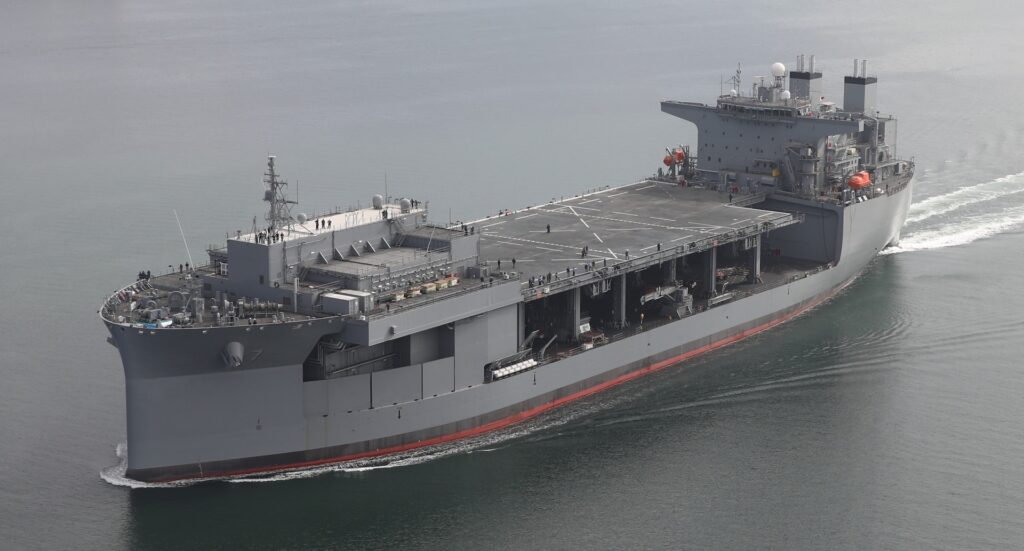
SAN DIEGO – The future USS Robert E. Simanek (ESB 7) was delivered to the U.S. Navy, Sept. 12. 

The ship is named for Private First Class Robert Ernest Simanek, who was awarded the Medal of Honor for shielding fellow Marines from a grenade at the Battle of Bunker Hill during the Korean War. The Medal of Honor was presented to him by President Dwight D. Eisenhower in a White House ceremony in 1953. 

“From christening in May 2024 to delivery, it has been an exciting time for those who spend each day preparing this ship to support our fleet,” said Tim Roberts, Strategic and Theater Sealift program manager, Program Executive Office (PEO) Ships. “The ESB ship class is a highly flexible platform used across various military operations. ESB ships are mobile sea-based assets and are a part of the critical access infrastructure that supports the deployment of forces, equipment, supplies, and warfighting capability.” 

ESBs are optimized to support a variety of maritime based missions, including Special Operations Forces, Airborne Mine Counter Measures, Crisis Response Force Sea Basing, Intelligence, Surveillance, and Reconnaissance and Unmanned Aviation Systems. The ESBs, which include a four spot V-22 sized flight deck, mission deck and hangar, are designed around four core capabilities: aviation facilities, berthing, equipment staging support, and command and control assets.  

Follow-on ship, future USS Hector A. Cafferata Jr. (ESB 8) is under construction at NASSCO. 

PEO Ships, one of the Department of Defense’s largest acquisition organizations, is responsible for executing the development and procurement of all destroyers, amphibious ships and craft, auxiliary ships, special mission ships, sealift ships and support ships. 


Industry Leaders Share Ideas at Maritime Economic Deterrence Executive Council 

Secretary of the Navy Carlos Del Toro’s Chief of Staff Mr. Christopher Diaz delivered remarks at the Center for Naval Analyses (CNA) Maritime Economic Deterrence Executive Council (MEDEC) to discuss the importance of the initiative at Arlington, Virginia, Sept. 17, 2024. (U.S. Navy photo by MC2 William Bennett IV)

From SECNAV Public Affairs, 17 September 2024

WASHINGTON – Secretary of the Navy Carlos Del Toro’s Chief of Staff Mr. Christopher Diaz delivered remarks at the Center for Naval Analyses (CNA) Maritime Economic Deterrence Executive Council (MEDEC) to discuss the importance of the initiative at Arlington, Virginia, Sept. 17, 2024. 
 
MEDEC is the Navy’s acknowledgement of maritime economic risks and represents the department’s commitment to helping researchers identify and address problems early for the safety of Navy personnel, as well as the security of U.S. allies and partners. 
 
The council brought together industry leaders to form breakout groups and discussions throughout the day. The findings and recommendations generated today will directly inform Secretary Del Toro to develop MEDEC’s approach to working with Navy partners throughout the government, in industry, and in the investment community. 
 
For over 80 years, the Department of the Navy has challenged the analysts of CNA with tackling the hardest problems facing our Navy-Marine Corps team, informing national decisionmakers as they chart our nation’s course. 
 
“MEDEC serves as the coordinating body for the organizations throughout the Department of the Navy that are focused on addressing adversarial economic activities that threaten the technologies and capabilities our Sailors and Marines rely on for their competitive advantages in the maritime domain,” said Diaz. 
 
Secretary Del Toro announced the creation of MEDEC in New York City during a panel discussion hosted by the Aspen Institute and the Bloomberg Foundation Feb. 22, 2024. 
 
“We have brought together experts from a wide range of disciplines from across our department, including supply chain management, technology protection and security, foreign investment review, intelligence and law enforcement, among others,” said Diaz. 
 
MEDEC is co-chaired by Principal Military Deputy Assistant Secretary of the Navy (Research, Development and Acquisition), Vice Adm. Scott Pappano. 
 
“Our adversaries are pushing the boundaries and pursuing courses of actions that go beyond leveraging their military might, to include exploitation of the investment, industry, and innovation ecosystems that serve as the engine of the economies of the United States, our allies, and our international partners,” said Pappano. 
 
“It is critical that we get this right, for every compromise of a capability, every loss of intellectual property that is critical to the technologies we rely on, represents a material loss to investors, firms, and their employees,” said Diaz. “More importantly, loss or compromise creates serious risk for our personnel operating around the globe, and that is a risk we are unwilling to accept.” 
 
CNA is an independent, nonprofit research and analysis organization dedicated to the safety and security of the nation. For 80 years, CNA’s scientific rigor and real-world approach to data has been indispensable to leaders facing complex problems.