MQ-4C Triton anti-ice testing underway at Pax River 
Release from Naval Air Systems Command

******* 

Published: Jan 26, 2023 

Naval Air Systems Command, Patuxent River, Md. — 

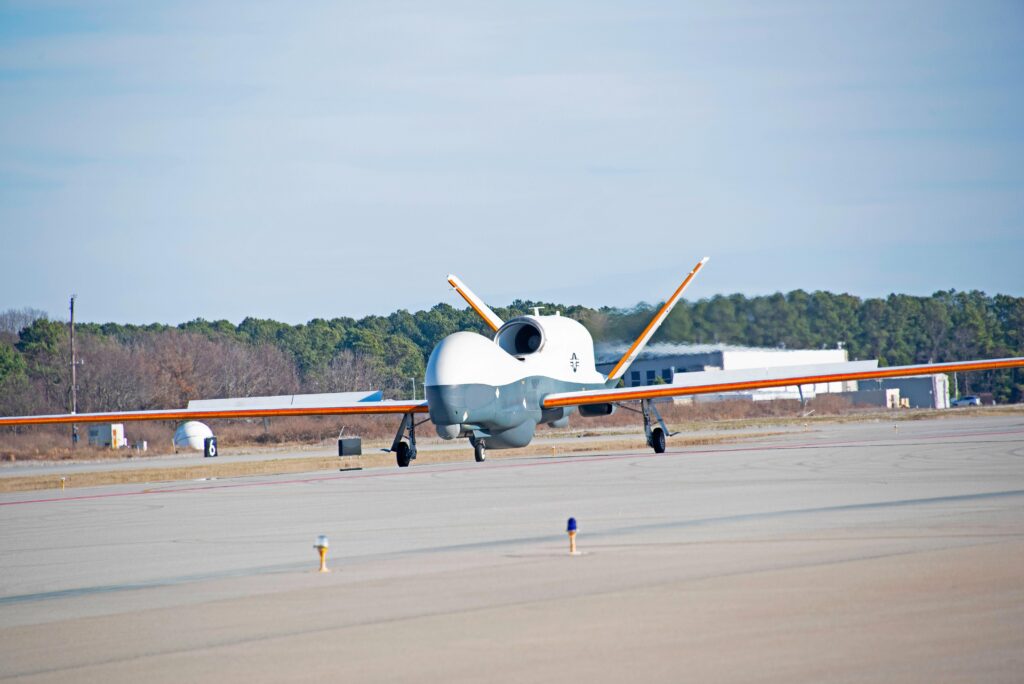
The MQ-4C Triton test team conducted the first flight to assess the unmanned aircraft system’s ability to fly with wing ice accumulation Jan. 25 at Patuxent River. 

This was the first of approximately 15 flights planned through spring 2023 that will clear Triton to fly in icing conditions. 

“Triton’s ability to fly in icing conditions is a top priority for the fleet,” said Capt. Josh Guerre, MQ-4C Triton Program Manager. “The greater ability we have to fly in harsh weather conditions, the more capability we can provide to the fleet.” 

In late 2022, the Integrated Test Team (ITT) installed 3D-printed nylon ice shape blocks designed to simulate ice accumulation on the wings and V-tail if the aircraft were to fly through moderate icing. The orange-colored ice shapes are coated with a coarse grit that makes them textured and rough like ice that accumulates on the inside of a freezer, said Amanda Marge, MQ-4C Triton lead test engineer. 

“The objective is to verify that there’s sufficient stability and control in order to remove the restrictions in the flight clearance for flying in icing conditions – which could significantly increase the fleet’s sortie rate,” she said. 

During the initial flight, the team executed basic flying qualities maneuvers such as control surface pulses, sideslips, and sustained turns at 20,000 feet. The team will analyze data from the flight to confirm that the aircraft responds as predicted to inputs and that the team can safely proceed with further testing.  As flights continue, the average planned duration for ice shape testing will increase to approximately five hours. 

Triton will fly with this simulated ice accumulation on the wings throughout points in the operational envelope to determine the impact on aircraft flying qualities and performance. The testing will enable MQ-4C transits through moderate icing later this year. ”This timeline will support deployment of the latest MQ-4C multi-intelligence variant,” Guerre said. 

The MQ-4C Triton is a long endurance, high altitude UAS that provides up to 24 hours of flight time.  It is currently conducting Intelligence, Surveillance, and Reconnaissance (ISR) missions overseas. 


U.S. Navy Showcases Operational Readiness, Flexibility in Exercise with Israel 

Release from U.S. Naval Forces Central Command Public Affairs

January 29, 2023

******* 

MEDITERRANEAN SEA — 

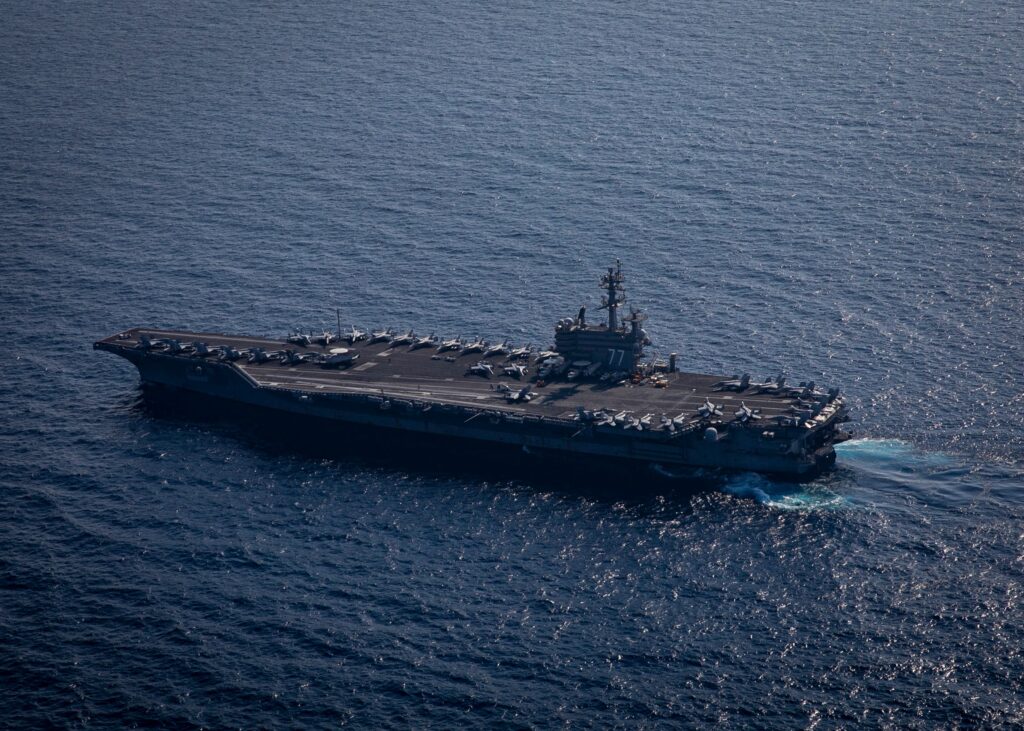
U.S. naval forces participated in the largest-ever bilateral exercise between the United States and Israel last week, which culminated in a visit to aircraft carrier USS George H.W. Bush (CVN 77) on Jan. 26 by senior military leaders from both nations.  

During exercise Juniper Oak 23-2, the George H.W. Bush Carrier Strike Group operated in the Mediterranean Sea in support of U.S. 5th Fleet while still under the operational control of U.S. 6th Fleet. The command-and-control setup demonstrated the inherent flexibility of U.S. naval forces to simultaneously support operations in two regions – Europe and the Middle East.    

“I’m proud of the effort from our team to support Juniper Oak, which showcased a high level of dedication, professionalism and readiness from our Sailors alongside our Israeli partners,” said Rear Adm. Dennis Velez, the strike group commander. “The command-and-control arrangement in Juniper Oak also highlighted the flexibility U.S. Navy carrier strike groups have to operate across multiple theaters of operation, and reflects the value the Navy provides to national security and regional stability anywhere in the world.”  

The strike group coordinated complex, combined military operations with Israel on land, in the air and at sea, involving all elements of the team. Guided-missile destroyer USS Truxtun (DDG 103) participated in a live-fire drill in addition to a large-scale strike with air assets from Carrier Air Wing (CVW) 7.  

Aircraft from CVW-7 involved in the strike exercise included 16 F/A-18 Super Hornets, four E/A-18G Growlers and two E-2D Hawkeyes. Four GBU-16 laser-guided bombs were expended on training targets.  

Additionally, strike group ships also sailed in formation with Israeli vessels in the Eastern Mediterranean. Participating ships included George H.W. Bush, Truxtun, guided-missile cruiser USS Leyte Gulf (CG 55), guided-missile destroyer USS Nitze (DDG 94), and Israeli Navy Sa’ar corvettes INS Hanit, INS Eliat, INS Oz, and INS Tarshis. The Israeli Navy submarine INS Dolphin also joined.  

During Juniper Oak’s final day, top U.S. and Israeli military leaders flew out to George H.W. Bush to meet and discuss the results of the exercise as well as observe carrier flight operations.  

“Juniper Oak has raised our level of planning and our level of implementation of combined operations,” said Israeli Lt. Gen. Hertzi Halevi, chief of the general staff for Israel Defense Forces. “It is always good to have our best partner here with us to learn from each other. This interoperability strengthens our ability to cope with a range of security challenges over the area.”  

The U.S. 5th Fleet operating area includes 21 countries, the Arabian Gulf, Gulf of Oman, Red Sea, parts of the Indian Ocean and three critical choke points at the Strait of Hormuz, Bab al-Mandeb and Suez Canal.  


Navy Accepts Delivery of Future USS Carl Levin 

Release from Naval Sea Systems Command 

******* 

Jan. 26, 2023 

Navy Accepts Delivery of Future USS Carl Levin 

By Team Ships Public Affairs 

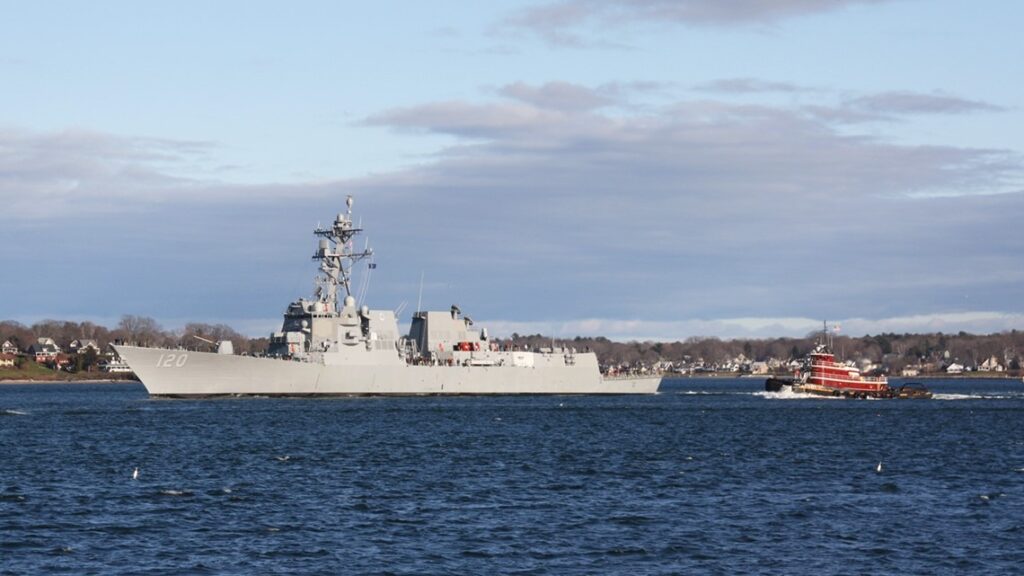
Bath, Maine – The Navy accepted delivery of the future guided missile destroyer USS Carl M. Levin (DDG 120) from General Dynamics Bath Iron Works, Jan. 26. 

Delivery represents the official transfer of the ship from the shipbuilder to the Navy. Prior to delivery, the ship conducted a series of at-sea and pier-side trials to demonstrate its materiel and operational readiness. 

“Delivery of this ship will provide critical capacity to our surface fleet today and well into the future,” said Capt. Seth Miller, DDG 51 program manager, Program Executive Office (PEO) Ships. “All who serve aboard DDG 120 will be a reflection of Sen. Carl M. Levin’s commitment to our Nation through service.” 

A Flight IIA destroyer, DDG 120 is equipped with the latest Aegis Combat System.  The Aegis Combat System provides large area defense coverage against air and ballistic missile targets, and also delivers superior processing of complex sensor data to allow for quick-reaction decision making, high firepower, and improved electronic warfare capability against a variety of threats. 

The shipyard is also in production on future destroyers John Basilone (DDG 122), Harvey C. Barnum Jr. (DDG 124), Patrick Gallagher (DDG 127), Louis H. Wilson Jr. (DDG 126), William Charette (DDG 130), and Quentin Walsh (DDG 132). 

As one of the Defense Department’s largest acquisition organizations, PEO Ships is responsible for executing the development and procurement of all destroyers, amphibious ships, special mission and support ships, boats and craft. 


New Commanders Nominated for 5th, 7th Fleets 

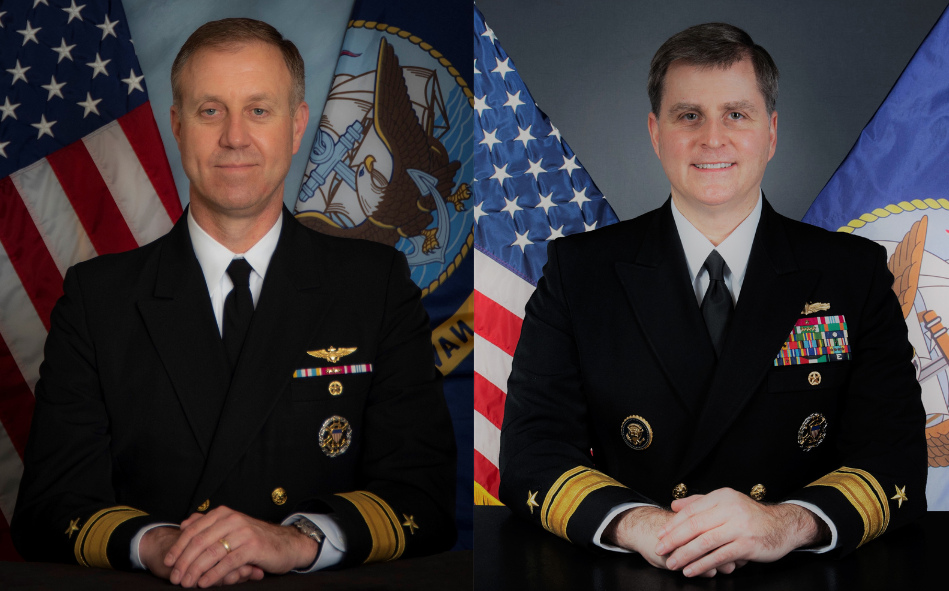
Rear Admiral Fred Kacher and Rear Admiral Fred Kacher

******* 

ARLINGTON, Va. — President Joe Biden has nominated two Navy rear admirals for the rank of vice admiral and as numbered fleet commanders. 

In a Jan. 27 announcement, Defense Secretary Lloyd J. Austin III said that Navy Rear Adm. George M. Wikoff and Rear Adm. Frederick W. Kacher had been nominated for the next rank and as commanders of the U.S. 5th Fleet and U.S. 7th Fleet, respectively. Wikoff also would become commander, Combined Maritime Forces, Manama, Bahrain. Both admirals currently serve in the Joint Staff, Wikoff as vice director and Kacher as vice director of operations.  

Wikoff, a native of New Brunswick, New Jersey, is a naval aviator and served as a fighter pilot. He commanded a fighter squadron, a strike fighter fleet replacement squadron, a carrier air wing and a carrier strike group. Kacher, a native of Oakton, Virginia, is a surface warfare officer who served on cruisers and destroyers. He commanded a guided-missile destroyer, a destroyer squadron and an expeditionary strike group. 

If confirmed, Wikoff would succeed Vice Adm. Brad Cooper and Kacher would succeed Vice Adm. Karl Thomas. 


UK Frigate Forward-Deployment Programme: Demonstrating value through improved availability    

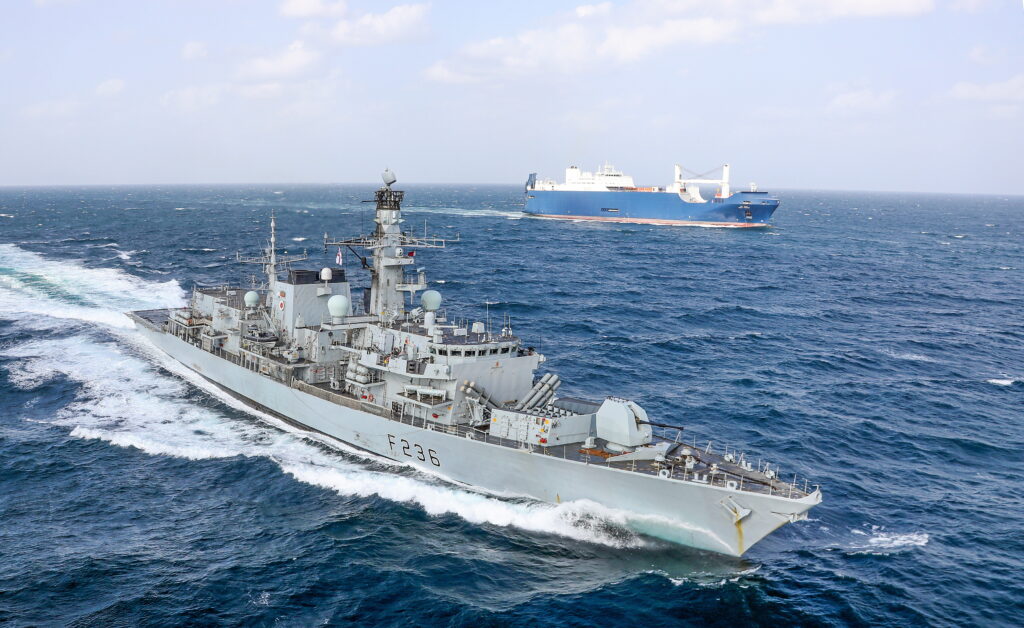
Pictured: HMS MONTROSE carrying out duties, protecting British shipping in the Gulf.

HMS MONTROSE is currently carrying out duties patrolling the Gulf, keeping the shipping lanes safe and ensuring that international trade is not threatened. In the first two months on patrol in 2019 HMS MONTROSE safeguarded over 6 million tonnes of British Shipping. HMS MONTROSE is also carrying out counter narcotic operations for CTF 150.
HMS MONTROSE is a type 23 frigate originally based in Plymouth and is the Royal Navy’s forward operating ship based out in the Gulf for the upcoming years and works on a watch rotation basis. Every 4 months the port and starboard crew rotate. The Starboard crew of HMS MONTROSE is made up from sailors from HMS MONMOUTH.

Dr. Lee Willett, London 

The UK’s forward-deployed frigate programme in the Gulf is demonstrating operational value for the UK, senior Royal Navy (RN) officers told Seapower as HMS Montrose – the Type 23 frigate that was the first ship deployed under the programme – returned home on 17 December 2022. Type 23 sister ship HMS Lancaster took over on station in late November. 

Under the forward-deployed programme, a Type 23 frigate operates across the Gulf and wider region, using the UK’s Naval Support Facility in Manama, Bahrain and other regional facilities (including Duqm Naval Dockyard, Oman) for operational support, maintenance, and rotation of the ship’s two crews (port and starboard). Montrose arrived in the Gulf region in April 2019, having sailed from the UK in November 2018 and conducting a global deployment en route. 

The programme’s purpose is to improve availability at sea in a critical region by eliminating rotational ship transits; and to improve effect on station by building understanding of the region and partnerships with regional countries. 

As regards availability, Montrose was on operations for 1300 of the 1509 days it was away from the UK, Rear Admiral Steve Moorhouse, the RN’s Director Force Generation, told a media briefing onboard Montrose as the ship sailed back into HM Naval Base Devonport, Plymouth, UK. In current operational terms, that increased availability allowed the UK to maintain increased presence around the critical choke points located in the region, Rear Adm. Moorhouse explained: in future operational terms, it allowed the RN to learn lessons to feed into the planned forward deployment for the incoming Type 31 frigates (which are scheduled to enter service from the mid-2020s).  

Keeping Ships in Shipshape Condition 

“The key lesson is the model and the concept work,” Rear Adm. Moorhouse told Seapower. “It will change almost everything in how we traditionally go about our business …. Every element changes and modernises, such that we get the best value for money out of the hull.” Such changes, he explained, included ensuring the platform is fully prepared before deploying, for example conducting major refit and upgrade work in the UK, but also conducting maintenance at various partners’ dockyard facilities across the Gulf region. In training terms, there is a need to complete crew and individual training prior to the crew departing from the UK, including through using simulation; in theatre, training can be supported through working with allies and partners or by dispatching training teams from the UK. 

As regards in-theatre upkeep, Commander Claire Thompson – commanding officer (CO) of Montrose‘s starboard crew – told Seapower that conducting “operational spring cleans” with a “little and often” approach has been the model used for Montrose. Little and often helps build a maintenance baseline, Cdr Thompson explained. “When you get the opportunity, you can get above that baseline – but don’t drop below it is the key thing.” 

As regards improved regional understanding, forward deployment enables the RN to maintain presence for much longer periods. “[The ship’s crews] understand the region far, far better now because they’re persistently there,” said Rear Adm. Moorhouse. 

Cdr Thompson added that the handover process with Lancaster‘s CO included detailed discussion of operational routines based around this improved understanding – how to employ the best tactics, how to achieve the mission, and what operational approaches Montrose‘s crews found successful. 


USCGC Mohawk returns home following 46-day Caribbean Sea patrol 

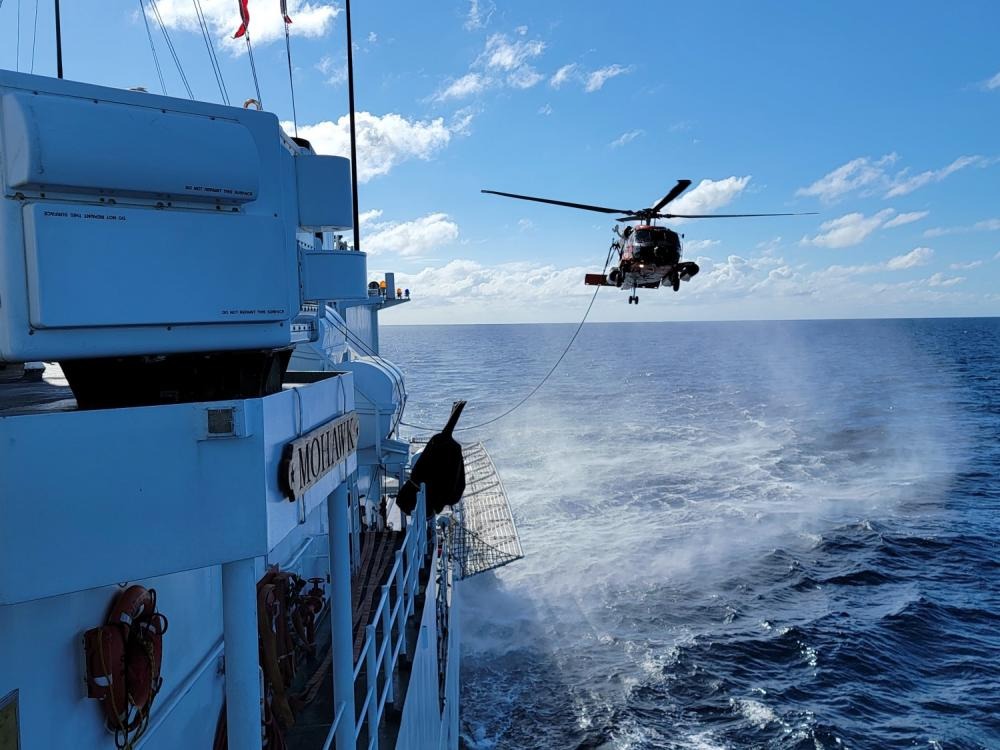
Photo by Petty Officer 3rd Class Kate Kilroy

Release from U.S. Coast Guard Atlantic Area 

******* 

KEY WEST, Fla.— The crew of the USCGC Mohawk (WMEC 913) returned to their home port in Key West, Monday, after a 46-day deployment in the Florida Straits and Caribbean Sea.  

Mohawk patrolled the Florida Straits and Caribbean Sea in support of Homeland Security Task Force—Southeast and Operation Vigilant Sentry in the Coast Guard Seventh District’s area of operations. While underway, Mohawk’s crew conducted counter drug and maritime safety and security missions while working with other Coast Guard cutters and air assets to detect, deter and intercept unsafe and illegal migrant ventures bound for the United States. 

During the patrol, Mohawk’s crew cared for 670 migrants interdicted at sea and rescued personnel from seven different unseaworthy vessels. Notably, Mohawk’s crew assisted with the repatriation of 110 Haitian migrants to Cap-Haitien, Haiti, and 273 Cuban migrants to Matanzas, Cuba.  

Mohawk’s patrol efforts highlight the Coast Guard’s critical mission of maintaining safety at sea and preventing the potential for loss of life by deterring migrants from taking to the sea in dangerously overcrowded vessels while attempting to enter the United States through non-legal channels. 

“It’s never easy being deployed over the holidays, away from family members,” said Cmdr. Andrew Pate, Mohawk’s commanding officer. “I am incredibly proud of the women and men aboard who continue to position Mohawk for success – their role in this historic effort, alongside our state and local partners as well as other Coast Guard units, is nothing short of heroic.”   

Mohawk is a 270-foot, Famous-class medium endurance cutter with a crew of 100. The cutter’s primary missions are counter drug operations, migrant interdiction, enforcement of federal fishery laws and search and rescue in support of U.S. Coast Guard operations throughout the Western Hemisphere. 

For information on how to join the U.S. Coast Guard, visit GoCoastGuard.com to learn about active duty and reserve, officer and enlisted opportunities. Information on how to apply to the U.S. Coast Guard Academy can be found here

For more, follow us on Facebook, Instagram and Twitter


TE 2030 to Develop ‘More Offensively Minded’ Marine Infantry 

******* 

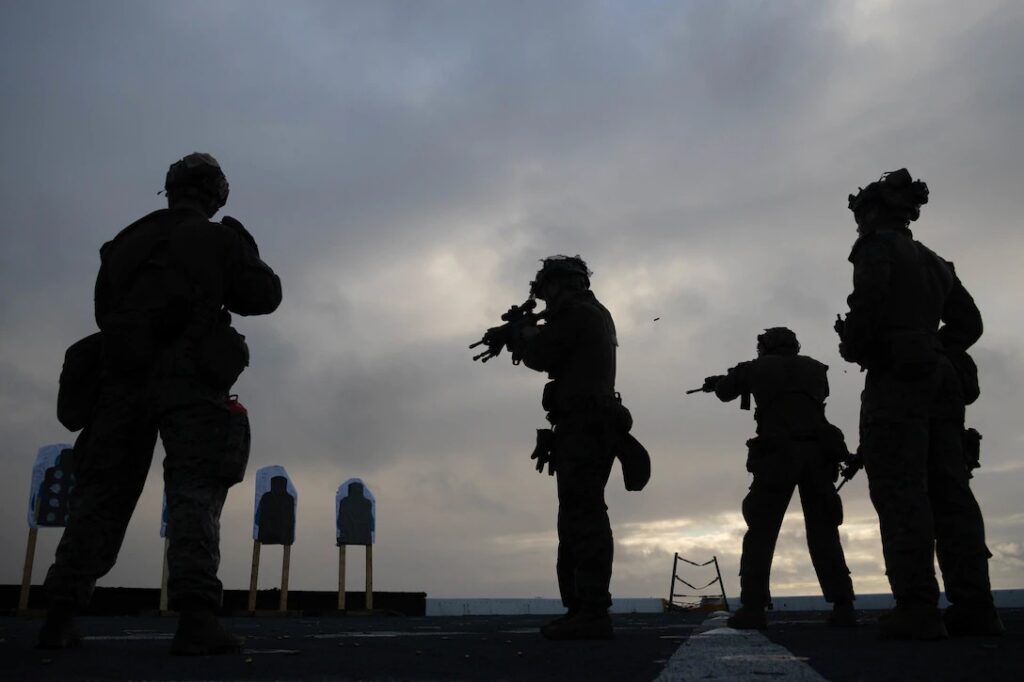
ARLINGTON, Va. — Marine infantry force-wide will be firing at moving robotic targets, not just static paper targets, as the Marine Corps continues integration of the new Advanced Rifle Qualification (ARQ) course to meet the requirements of warfighting in the future, the Corps said. 

“We have in our mind how we’re going to build [Marines] to be cognitive warfighting thinkers for the future,” said Lt. Gen. Kevin M. Iiams, commanding general of Training and Education Command, discussing with reporters Jan. 24 about the upcoming rollout of the Marine Corps’ Training and Education 2030 (TE 2030) concept, launching a series of initiatives in concert with Force Design 2030, the concept initiated three years ago by the Marine Corps commandant, Gen. David H. Berger. These initiatives are designed to lay the foundation for future training and education of Marines and assigned Sailors for warfighting in the future. 

“We’re getting away from where we were previously in the Marine Corps where we were about rote, repetitive training. We want cognitive, problem-solving thinkers for the future,” Iiams said. “It is more offensively minded. It’s combat related. It’s positional shooting. Its teaching how they’re actually going to employ their weapons in combat instead of just marksmanship.” 

In the more challenging and rigorous ARQ, Marine infantry in a combat scenario will start firing at the 500-meter line instead of the 200-meter line. 

Advanced Simulation 

Iiams said the Corps will introduce advanced simulation capability “to be able to train them to higher levels, to be able to use some of the robot targets that we’re putting out there, to give them more realistic training scenarios in the field, not just shooting paper static targets but actually 3-dimensional roaming targets throughout the battlefield, which create a completely different scenario for them and cause them to figure out, are they going to shoot or not shoot as they move through some of these regimes.” 

“One of the systems currently being fielded is the Trackless Mobile Infantry Target (TMIT). TMITs are 3-dimensional, free-roaming, variable speed / variable acceleration moving targets with 360 degrees of untethered mobility that maneuver with teleoperation and semi-autonomous control,” the TE 2030 document said. “They provide a dynamic and realistic representation of human targets in both live-fire and non-live fire training environments.” 

The pilot ARQ course has been completed and the course is being implemented Corps-wide, progressing toward full operational capability. 

The Corps also will be developing and incorporating an automatic scoring range to use training time more efficiently. 


CH-53K lifts F-35C in external load test 

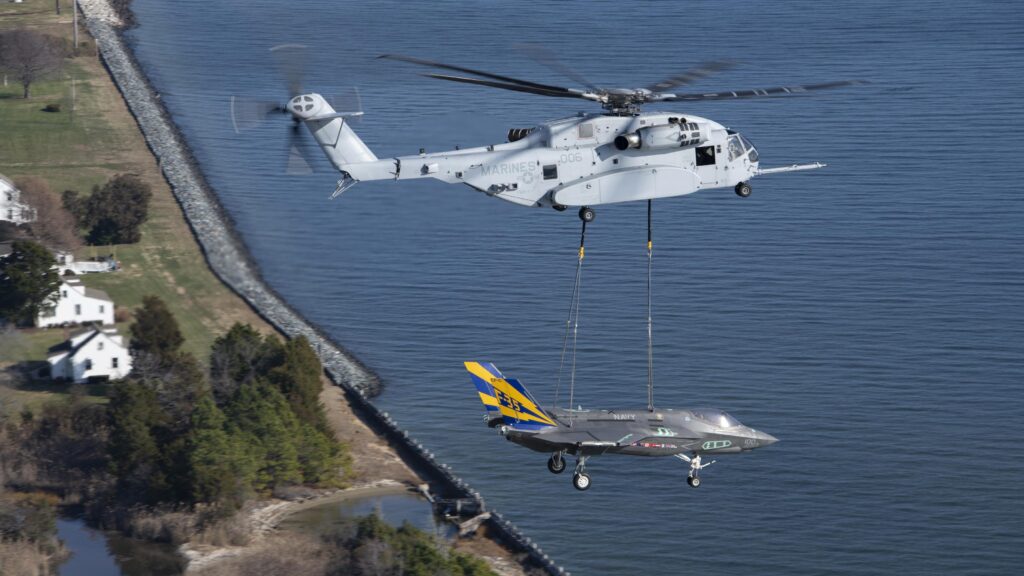
A non-flyable F-35C Lightning II airframe is flown as part of a CH-53K King Stallion external load certification lift Dec. 13, 2022, at Naval Air Station Patuxent River, Md. The structure is from the first F-35C carrier variant aircraft, CF-1, a former developmental flight test jet from the Patuxent River F-35 Integrated Test Force (ITF). ITF test teams collaborated with Marine Operational Test and Evaluation Squadron One (VMX-1) and a Marine helicopter support team with Combat Logistics Battalion (CLB) 24, Combat Logistics Regiment 2, 2nd Marine Logistics Group to conduct the lift. (U.S. Navy photo by Kyra Helwick)

Release from Naval Air Systems Command 

******* 

NAVAL AIR SYSTEMS COMMAND PATUXENT RIVER, Md. 

— 

A CH-53K King Stallion heavy lift helicopter from Marine Operational Test and Evaluation Squadron (VMX) performed an external load certification lift of an inoperable F-35 Lightning II airframe in December at Naval Air Station (NAS) Patuxent River, Maryland. The lift was to evaluate the load and inform future lift capabilities. 

The CH-53K is the most powerful helicopter ever developed by the United States government.  This new-build helicopter will continue to fill the CH-53E Super Stallion mission as a pillar of logistics and assault support for the U.S. Marine Corps efforts, but with significant improvements such as state-of-the-art, fly-by-wire technology reducing pilot work load, contributing to aircraft stability, and improving overall safety. The recent full rate production decision for the CH-53K is validation of the aircraft’s value to the U.S. Marine Corps and last month’s test lift is one more demonstration of its performance and reliability. 

The NAS Patuxent River F-35 Integrated Test Force (ITF) test team, Naval Air Warfare Center Aircraft Division (NAWCAD) Cargo Lab, and others ensured a successful lift and flight by conducting load certification testing, sling configuration analysis, and cargo characteristics documentation were completed as required. Data from the tests will inform the flight envelope for future events. An earlier crane test lift verified the sling, rig, pitch and bank attitudes of the jet, and control surface states. 

The aircraft lifted is a developmental test carrier variant F-35C fighter jet that had accrued 750 flight hours during 450 test flights between 2010 and 2016. The F-35C and rigging weighed about 22,000 pounds after removal of its mission and propulsion systems, outer wings, and additional equipment. 

The CH-53K is currently cleared to conduct a 27,000-pound external lift and is projected to be cleared for a 36,000-pound external lift, nearly three-times more under high, hot conditions than its predecessor, the CH-53E. 

In September 2021, the CH-53K performed its first operational mission by lifting a Navy MH-60S Knighthawk helicopter from a 12,000-foot mountain top in California. That aircraft weighed approximately 15,000 pounds and was successfully transported 23 miles to Fallon, NV. 

“This type of mission is precisely what the K was designed and built to do,” said Col. Kate Fleeger, program manager for the Heavy Lift Helicopter Program Office (PMA-261). ”It continues to prove its value in support of Marine Corps operations, transporting equipment that no other rotary wing platform can lift.” 

The CH-53K entered its full rate production and deployment phase in December and is on schedule to declare Full Operational Capability in FY2029. 

The F-35 Lightning II Joint Program Office (JPO) leads the life-cycle program management of the F-35A, F-35B, and F-35C; the fifth-generation joint strike fighter (JSF) air system of choice for the U.S. Air Force, U.S. Navy, U.S. Marine Corps, international partners and foreign military sales customers. 

Heavy Lift Helicopter Program Office (PMA-261) manages the cradle-to-grave procurement, development, support, fielding and disposal of the entire family of H-53 heavy lift helicopters. 


BAE Systems to support Columbia-class submarine effort 

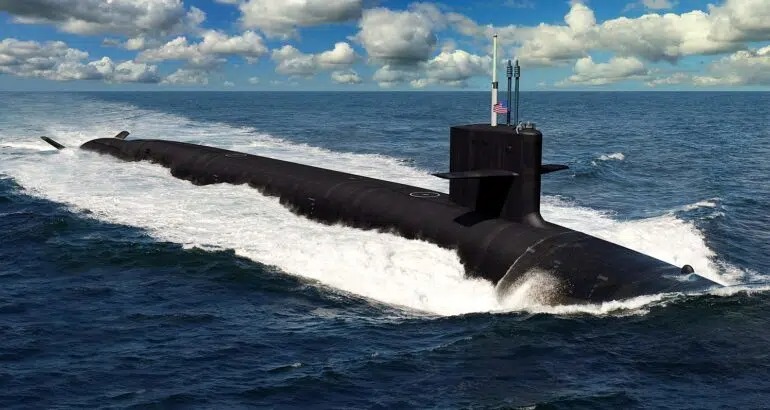
Artist rendering of Columbia-class submarine (US Navy image)

Release from BAE Systems

******* 

BAE Systems won a $71 million competitive contract award to manufacture and deliver U.S. Navy Columbia-class submarine components.  

This is the second contract award received by BAE Systems for work on the U.S. Navy’s key nuclear sea-based deterrent, Columbia-class submarines.  

“We look forward to continuing to support the U.S. Navy’s Undersea Force by providing critical submarine components for this key national deterrent,” said Brent Butcher, vice president of the Weapon Systems product line at BAE Systems. “Our decades of experience in supporting submarine programs and our selection for this opportunity demonstrates that the BAE Systems team has the trusted expertise required to manufacture and deliver components that promote the Navy’s undersea dominance and excellence.”  

For over 30 years, BAE Systems has supported the Navy’s submarine programs by providing more than 30 Virginia-class propulsors, Virginia payload module tubes, and Seawolf-class propulsors. Work under the current contract will be performed in Louisville, Kentucky and Minneapolis, Minnesota with a completion expected by the third quarter of 2030. 


Marine Corps reactivates base on Guam 

Release by U.S. Marine Corps

******* 

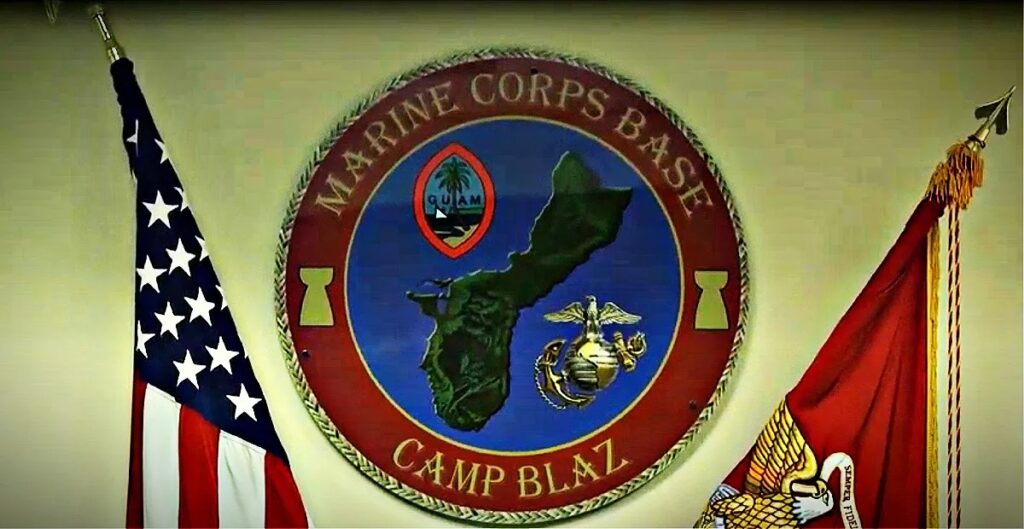
ASAN BEACH, GUAM — The U.S. Marine Corps reactivated a new base on Guam in a ceremony, Jan. 26, honoring the long-shared history of the Marine Corps and Guam and establishing a forward presence in the Indo-Pacific that will endure into the future. 

Marine Corps Base (MCB) Camp Blaz is the first newly constructed Marine Corps base in 70 years and serves as a testament to the U.S.-Japan alliance. Guam was chosen as the location for the new base during the 2012 Bilateral Agreement between the U.S and Japanese governments, under the Defense Policy Review Initiative, which set the framework for the relocation of Marines from Okinawa to Guam. The base is named in honor of Brigadier General Vicente Tomas “Ben” Garrido Blaz, the first CHamorro Marine to attain the rank of general officer. 

“Today is an important day that marks the future of the Marines on Guam, and it is also a day to reflect on the century-long history of the Marine Corps in this beautiful place we call home,” said Col. Christopher Bopp, Commanding Officer, MCB Camp Blaz. “On this island Marines and their CHamoru brethren have lived in peace and fought in war together and we are proud to carry on this legacy of honor and courage.” 

Guam’s history is marked by the enduring partnership between the U.S. military and the people of Guam. Since the establishment of Marine Barracks Guam in 1899, the Marine Corps has had a nearly continuous presence on Guam. The Marine Barracks was reactivated after World War II and deactivated November 10, 1992. 

During the ceremony at War in the Pacific National Historical Park, honors were rendered to the Honorable Lou Leon Guerrero, Governor of Guam; Commandant of the Marine Corps; U.S. Assistant Secretary of the Navy for Energy, Installations and Environmental; Japanese Parliamentary Vice-Minister of Defense and Parliamentary Vice-Minister for Foreign Affairs provided remarks. The ceremony ended with a traditional pass and review. 

“I believe that on the horizon lies the opportunities that Ben (Blaz) wished for our people,” said the Honorable Leon Guerrero. “No longer are we dealing with challenges and isolation, we are cultivating a more sustainable and comprehensive Indo-Pacific allyship. The future of Guam is inseparable from the future of the broader Indo-Pacific and the success of the Marines is inseparable from the success of Guam’s people. Together we are an island and an ocean united; together we are always better and always stronger; together we are always faithful. Semper Fidelis.” 

Situated on Guam’s northern plateau, Camp Blaz will serve as a strategic hub as the Department of Defense realizes the vision of the 2022 National Defense Strategy. The base construction projects currently underway are partially funded by a large monetary contribution from the Government of Japan. 

“Forward, persistent presence is key to the regional security and stability in the Indo-Pacific. Marine Corps Base Camp Blaz is a critical part of that. More than that, it shows our undivided relationship with the Government of Japan,” said the Commandant of the Marine Corps, Gen. David H. Berger. 

Camp Blaz represents a significant milestone for the future of both the Marine Corps and Guam. The base’s forward presence and engagement in the Pacific will play an essential role in strengthening the ability of the U.S. and its allies and partners for a collective defense and to promote regional security. 

“The Japan and U.S. alliance is the cornerstone of the people, the peace and prosperity of the Indo-Pacific region and the linchpin of Japan’s foreign policy,” said Ms. Yoshikawa Yuumi, Vice-Minister for Foreign Affairs. 

The Marine Corps is committed to upholding the legacy of Brig. Gen. Blaz’s, prioritizing environmental and cultural stewardship, and building on the established relationships with the people of Guam remains integral in all aspects of development of this installation. 

“It is right here, today, that we come together to demonstrate the power of partnership and the importance of community,” said the Honorable Mrs. Meredith Berger, Assistant Secretary of the Navy for Energy, Installations and Environment. 

For additional information, visit https://www.mcbblaz.marines.mil.