Northrop Grumman Delivers First Airborne Laser Mine Detection System Pod to Korea
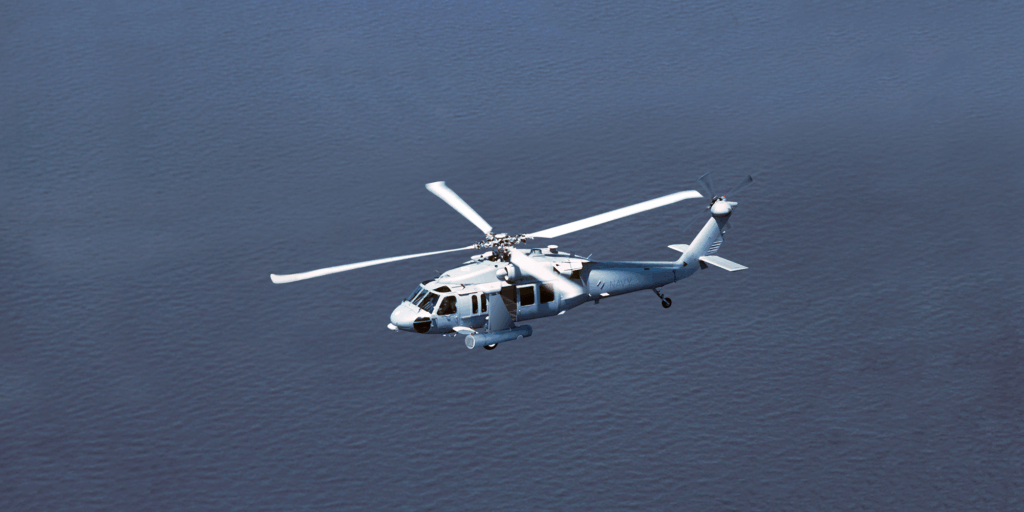
Northrop Grumman in collaboration with Korea Aerospace Industries delivers the first ALMDS pod for the Republic of Korea’s MCH-1 helicopter. (Photo Credit: Korea Aerospace Industries)
From Northrop Grumman, Oct. 15, 2025
MELBOURNE, Fla. – Oct. 15, 2025 – Northrop Grumman Corporation (NYSE: NOC) has delivered the first Airborne Laser Mine Detection System (ALMDS) sensor pod to the Republic of Korea, furthering the country’s advanced mine detection solutions.
Northrop Grumman was awarded a contract by Korea Aerospace Industries (KAI) in 2023 to supply cutting-edge ALMDS technology and comprehensive technical support for the engineering, manufacturing and design phase of the Republic of Korea’s Korean Mine Countermeasures Helicopter (KMCH) program.
ALMDS is a proven and effective capability that provides rapid detection and classification of mines in coastal waters and is operated today by the U.S. Navy and the Japan Maritime Self-Defense Force.
ALMDS is capable of untethered day or night operations, allowing it to attain high area search rates, and provide users accurate target geolocation to support the neutralization of detected mines from a variety of helicopter platforms.
Janice Zilch, vice president, multi-domain command and control programs, Northrop Grumman: “ALMDS exemplifies Northrop Grumman’s ability to deliver trusted technology for critical missions, consistently performing where it matters most. Our collaboration with KAI shows our commitment to advancing defense capabilities together with Korean industry and delivering vital capabilities, ensuring the safety and security of our allies.”
Details:
Northrop Grumman’s AN/AES-1 ALMDS is manufactured in the United States and detects, classifies and locates floating and near-surface moored mines. Northrop Grumman has delivered 24 ALMDS units to the U.S. Navy and four units to the Japan Maritime Self-Defense Force, demonstrating Northrop Grumman’s leadership in discriminating technology as a cutting-edge solution for a complex challenge.
Northrop Grumman is a leading global aerospace and defense technology company. Our pioneering solutions equip our customers with the capabilities they need to connect and protect the world, and push the boundaries of human exploration across the universe. Driven by a shared purpose to solve our customers’ toughest problems, our employees define possible every day.
Coast Guard Seizes 100,000 Pounds of Cocaine Through Operation Pacific Viper
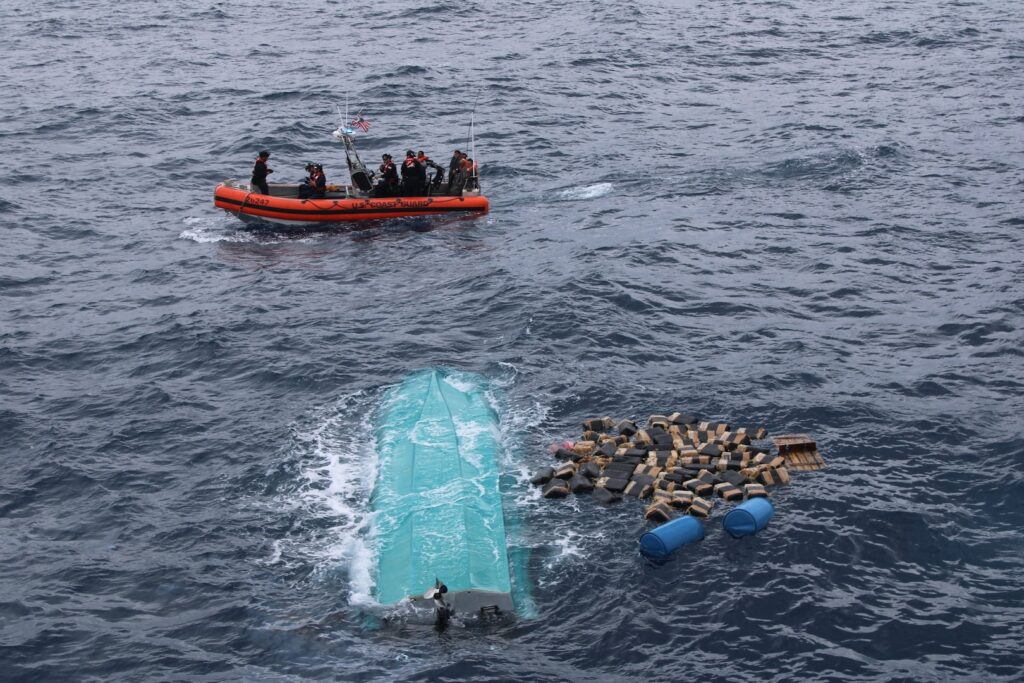
The crew of the U.S. Coast Guard Cutter Seneca (WMEC 906) recovers bales of cocaine after a suspected drug smuggling vessel capsized in the Pacific Ocean, Sept. 17, 2025. Seneca’s crew worked alongside interagency partners to interdict illicit narcotics in the international waters in the Eastern Pacific Ocean. (U.S. Coast Guard photo)
WASHINGTON – The U.S. Coast Guard announced Tuesday it has seized more than 100,000 pounds of cocaine in the Eastern Pacific Ocean since launching Operation Pacific Viper in early August, averaging over 1,600 pounds interdicted daily.
These drug seizures, and the apprehension of 86 individuals suspected of narco-trafficking, were the result of 34 interdictions since early August.
Through Operation Pacific Viper, the Coast Guard is accelerating counter-drug operations in the Eastern Pacific Ocean, where significant transport of illicit narcotics continues from Central and South America. In coordination with international and interagency partners, the Coast Guard is surging additional assets — cutters, aircraft and tactical teams — to interdict, seize and disrupt transshipments of cocaine and other bulk illicit drugs. Operation Pacific Viper continues the Coast Guard’s efforts to protect the Homeland, counter narco-terrorism and disrupt Foreign Terrorist Organizations and Transnational Criminal Organizations and cartels seeking to produce and traffic illicit drugs into the United States.
“The Coast Guard’s seizure of over 100,000 pounds of cocaine, in such a short timeframe, is a remarkable achievement,” said Rear Adm. Jeffrey Novak, deputy commander of U.S. Coast Guard Pacific Area. “When we say the Coast Guard is accelerating counter-narcotics operations, we mean it. Alongside our partners and allies, our maritime fighting force is scouring drug smuggling routes in the Eastern Pacific and dismantling narco-terrorist networks. We are complementing the Coast Guard’s unique law enforcement authorities with cutting-edge capabilities to stop the flow of deadly drugs that threaten U.S. communities. As we mark our interdiction of 100,000 pounds, we are already working towards the next milestone.”
Detecting and interdicting narco-terrorism on the high seas involves significant interagency and international coordination. U.S. Southern Command’s Joint Interagency Task Force-South, based in Key West, Florida, detects and monitors both aerial and maritime transit of illegal drugs. Once interdiction becomes imminent, the law enforcement phase of the operation begins, and control of the operation shifts to the U.S. Coast Guard throughout the interdiction and apprehension. Interdictions in the Eastern Pacific Ocean are performed by members of the U.S. Coast Guard under the authority and control of the Coast Guard’s Southwest District, headquartered in Alameda, California.
The Coast Guard is the United States’ lead federal agency for maritime drug interdiction. We are part of the Department of Homeland Security team protecting our nation and are at all times a military service and part of the joint force defending it.
Sev1Tech Awarded $49M U.S. Navy SeaPort NxG Contract
Support for NIWC Atlantic’s Expeditionary Enterprise Systems and Services (E2S2) Divisions will enable IT modernization, system efficiency and force readiness
WOODBRIDGE, Va., October 15, 2025 – Sev1Tech, a leader in providing information
technology (IT), engineering, program management, C5ISR and cybersecurity systems
integration and support services, was awarded a $49 million contract under SeaPort NxG by the U.S. Navy’s Naval Information Warfare Center Atlantic.
Sev1Tech will provide full system lifecycle support including cyber engineering, network operations and security support services for NIWC Atlantic’s Expeditionary Enterprise Systems and Services (E2S2) Division.
NIWC Atlantic delivers integrated information warfare solutions across all warfighting domains, safeguarding national security and empowering the Fleet and warfighter to succeed in today’s dynamic information warfare battlespace.
Sev1Tech’s Maritime Division will provide C4ISR, Cyber and IT systems and engineering
services to meet the information warfare needs of the U.S. Marine Corps. Sev1Tech will support the rapid development, delivery and operations of critical cloud and local infrastructure services, manpower systems, logistic and network implementation, monitoring, and sensor-based services to Garrison and forward-deployed units. These capabilities will significantly enhance warfighter operational readiness, ensuring they have the advanced technology and support necessary to maintain information superiority and achieve mission success.
“Sev1Tech has proudly supported NIWC for over 20 years with reliable, mission-ready
solutions,” said Joe Re, Maritime Division General Manager at Sev1Tech. “The cyber-secure
systems and networks we support will enable naval information warfare superiority and drive modernization of enterprise infrastructure, cloud architectures and application migration across expeditionary systems and services.”
Expanding Sev1Tech’s footprint in Charleston, South Carolina, the contract will equip NIWC Atlantic with a strategic advantage in challenging CONUS and OCONUS mission environments. The contract includes one base year with four option years.
Royal Navy’s newest submarine goes under water for the first time
From Andrew McDowell, BAE Systems, Oct. 13, 2025
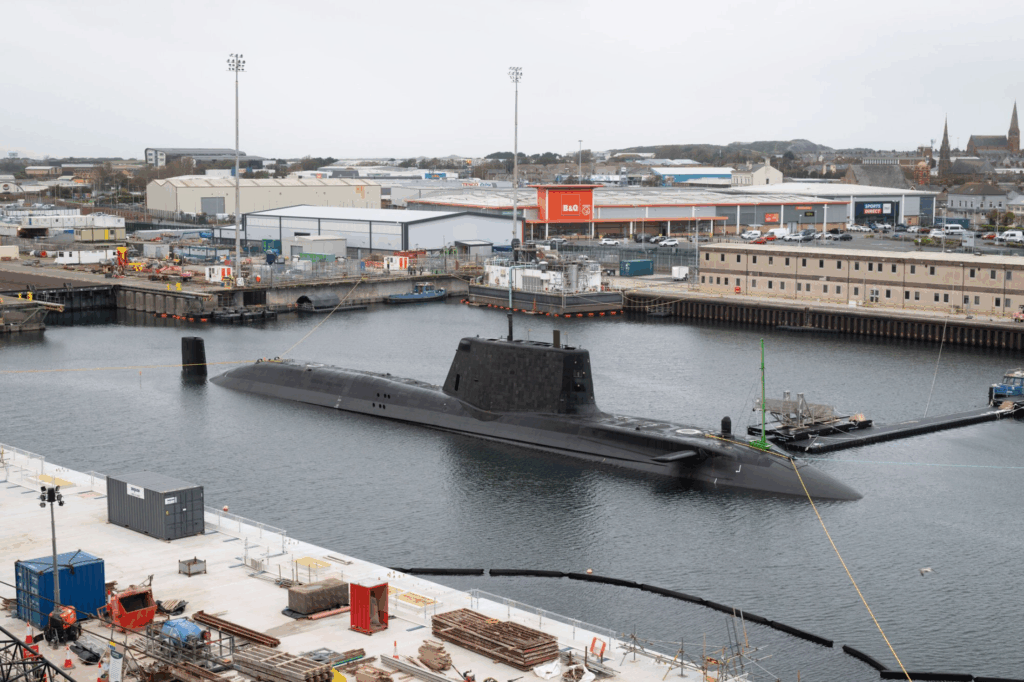
BARROW, Cumbria, United Kingdom — The UK’s newest nuclear submarine has successfully submerged for the first time at BAE Systems in Barrow, Cumbria.
The Royal Navy crew achieved the major milestone as part of HMS Agamemnon’s ‘trim dive’, a three-day period of testing in the town’s Devonshire Dock to prove the 7,400-tonne, 97-metre-long attack vessel’s stability and safety.
The process, which comes shortly after King Charles III officially commissioned the Astute class submarine into the Royal Navy, is a key moment in the lead up to its departure from Barrow to join her sister boats in the fleet, based at His Majesty’s Naval Base, Clyde.
“This trim dive is the culmination of months of hard work. I’d like to thank all teams involved for their commitment and professionalism,” said Pete Tumelty, Astute Programme Director, BAE Systems’ Submarines business. “We’re incredibly proud of the contribution we’re making to the nation’s security and Barrow’s long and distinguished heritage as the home of UK submarine design and build.”
“The trim and basin dive is a key step in the commissioning of HMS Agamemnon. This period enables us to set the boat’s internal weight, prove her water-tight integrity, test sensors and put some of our systems through their paces ahead of sailing for the first time,” said Commander David ‘Bing’ Crosby, HMS Agamemnon commanding officer. “It takes a great deal of planning and preparation to achieve this key step and all involved should be very proud of the part they have played.”
Alongside the build of seven Astute class submarines – of which HMS Agamemnon is the sixth – BAE Systems is also constructing four Dreadnought class boats in partnership with the wider Defence Nuclear Enterprise.
The Dreadnought vessels, due to enter service from the early 2030s, are the replacement for the Vanguard-class submarines, which currently deliver the Continuous At Sea Deterrent (CASD) for the Royal Navy. The critical role underpins the nation’s defence as the ultimate security guarantee and sees at least one of the boats deployed in an unknown location at sea every minute of every day.
“The successful completion of HMS Agamemnon’s trim dive marks a pivotal milestone in our mission to safely deliver available and capable submarines to the Royal Navy in defence of our nation,” said Henry Musgrave, Head of Astute Delivery Team, Submarine Delivery Agency. “This achievement reflects the exceptional collaboration between the SDA and our partners across the Defence Nuclear Enterprise, demonstrating our unwavering commitment to supporting the UK’s nuclear deterrent as a national endeavor.”
Design work is also continuing on the future nuclear-powered AUKUS attack submarines as part of an agreement between the UK, the US and Australia.
BAE Systems has grown its submarines workforce from 10,700 in 2023 to 15,000 today to support the healthy order book and it is expected to reach 17,000 in the coming years.
AV Unveils Next Generation of Switchblade Loitering Munitions
From AeroVironment Inc., Oct. 13, 2025
Switchblade 600 Block 2, Switchblade 400, and Switchblade 300 Block 20 with EFP Deliver Multi-Domain, Scalable Lethality and Mission Flexibility
ARLINGTON, Va. — October 13, 2025 —AeroVironment, Inc. (“AV”) (NASDAQ: AVAV), the leading global provider of loitering munition systems, today announced the expansion of its combat-proven Switchblade family of precision loitering munitions with three new systems: the Switchblade 600 Block 2, the Switchblade 400, and the Switchblade 300 Block 20 equipped with a modular explosively formed penetrator (EFP) payload. Together, these systems expand the Switchblade product line across echelons and mission sets–from backpackable, close-in lethal precision effects to long-endurance, multi-domain anti-armor solutions, ensuring warfighters maintain tactical overmatch in the most contested environments.
“Warfighters require scalable, reliable, and interoperable effects that can be tailored to the threat and the environment,” said Trace Stevenson, President of Autonomous Systems at AV. “These three new Switchblade variants deliver that flexibility and scalability. Each design builds on proven fielded capability while adding important new capabilities that reduce risk and expand mission sets.”
Switchblade® 600 Block 2 is a next-generation, long-endurance, multi-domain loitering munition with advanced avionics, pinpoint precision, and a secondary payload bay for multi-mission flexibility. Enhanced AI/ML-enabled onboard processing with advanced Automatic Target Recognition (ATR), encrypted M-Code GPS, and integrated Silvus MANET radios provides unmatched situational awareness and resilient Command and Control (C2) in contested environments. Switchblade 600 Block 2 offers 20% longer endurance and 100+km handoff and relay range and is IP67-rated for maritime applications.
The all-new Switchblade® 400 is a medium-range, man-portable anti-armor loitering munition with rocket-assisted take-off (RATO). At under 40 pounds for the all-up round (AUR), the effector provides a single soldier with lethal standoff capability in under five minutes to defeat tanks and heavily armored targets with precision accuracy. Sized to fit in common launch tubes (CLT), the unit’s design streamlines training and enables rapid, plug-and-play integration. Its ATR and advanced edge computing provide autonomous detection, classification, and elimination of threats–day or night.
The combat-proven Switchblade® 300 Block 20 now features a modular payload bay, supporting an Explosively Formed Penetrator (EFP) warhead for increased lethality against armored threats. With the AUR weighing just 7.2 lbs, the backpackable precision loitering munition enables a single operator to deliver beyond-line-of-sight (BLOS) lethal effects in less than two minutes with improved endurance. The updated platform features an enhanced sensor and panning camera suite, a touchscreen tap-to-target interface with multiple commit angles, user-selectable point of detonation with continuous Positive Identification (PID), and extended range with an optional 30 km antenna.
Developed with Modular Open Systems Approach (MOSA) standards, the new Switchblade systems allow seamless integration with command and control (C2) platforms, including ATAK, Nett Warrior, and AV_Halo™ Command Tactical software with Kinesis universal tactical control architecture for fast, intuitive operation. Driven by AV_Halo Vision (previously AV’s SPOTR-Edge™ software) – part of AV’S unified suite of mission-ready software tools – these platforms provide onboard computer vision for detection, classification, localization, and tracking of operationally relevant objects, including people, vehicles, and maritime vessels–day or night, even in GPS-denied or comms-degraded environments. With a common design architecture, the systems share the same tablet-based Fire Control user interface (UI), patented wave-off and recommit features, encrypted datalinks, and mission planning–reducing logistical burdens and operator training time.
“AV has delivered thousands of Switchblade systems over the last 13 years, with hundreds of combat engagements shaping our design evolution,” said Jimmy Jenkins, Executive Vice President of Precision Strike and Defense Systems at AV. “The new Switchblade systems are warfighter-driven solutions—faster, smarter, and optimized for multi-domain operations. Our continuous innovation ensures US and allied forces remain equipped with rapid, adaptable, and overwhelming precision strike effects to maintain a tactical advantage on the modern battlefield.”
From US soldiers to frontline Ukrainian warfighters, Switchblade is the trusted, battle-proven loitering munition system of choice–offering cost-effective lethality in contested, congested battlespaces. The all-new Switchblade 400, Switchblade 600 Block 2, and Switchblade 300 Block 20 with EFP build on this legacy of innovation and reliability. AV is investing in the rapid expansion of its Switchblade manufacturing capacity–accelerating production of its Switchblade 600 over the last year from 40 to 240 systems per month. With growing demand from US and allied forces, continued investments in its Simi Valley, California, manufacturing facility, and the opening of its new next-generation manufacturing facility in Salt Lake City, Utah, AV anticipates production growth to more than 1,200 per month in the near future.
USS Roosevelt Visits Algiers, Algeria, Highlighting Defense Cooperation and Partnership
By U.S. 6th Fleet Public Affairs, Oct. 13, 2025
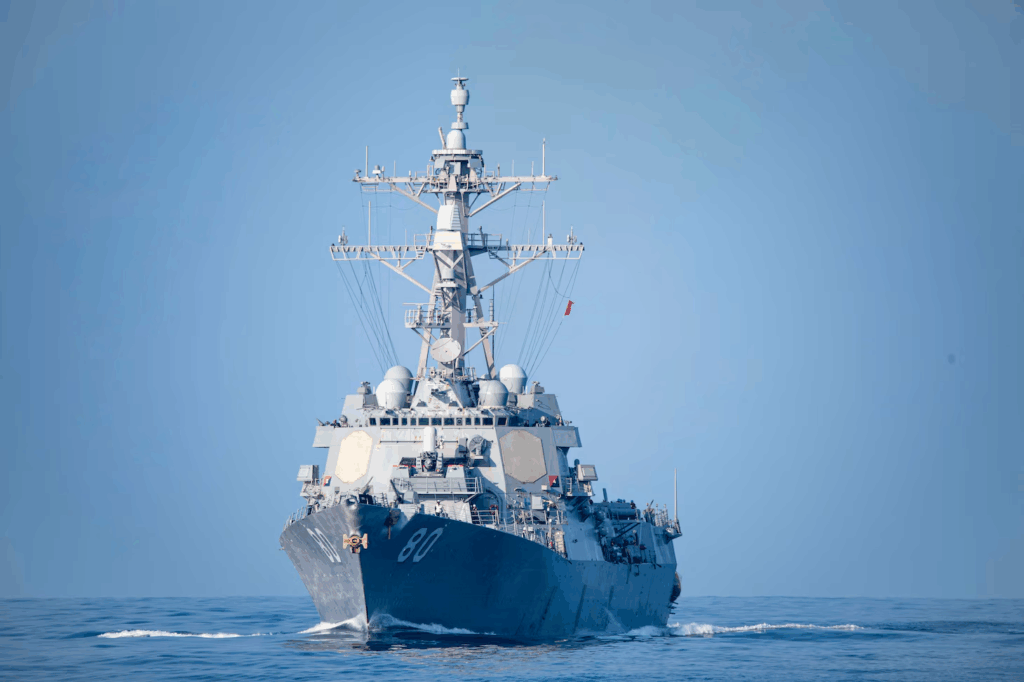
ALGIERS – USS Roosevelt (DDG 80) made a routine port visit in Algiers, Algeria on October 12, 2025. The port visit follows USS Forrest Sherman’s (DDG 98) port visit to Algiers in May 2025.
Roosevelt and Algerian Navy’s multi-mission frigate Erradii (910) will also conduct a passing exercise in the Mediterranean Sea, demonstrating the ongoing friendship and security cooperation between the U.S. and Algeria.
“This port visit underscores a shared interest in maritime security and stability in the Mediterranean Sea, a critical region for global trade and security,” said Cmdr. Jared Carlson, commanding officer of Roosevelt. “The more we can collaborate with partners like Algeria, the better we can ensure freedom of navigation and economic prosperity in North Africa.
The visit will coincided with the 250th birthday of the U.S. Navy on October 13, 2025. Roosevelt hosted Algerian government and military officials in a reception Monday night to celebrate the occasion and ongoing naval cooperation.
“For 250 years, our Navy has sailed the globe in defense of freedom and economic prosperity, including in the Mediterranean Sea,” said Ambassador Elizabeth Moore Aubin, U.S. Ambassador to Algeria. “Today, we welcome the crew of USS Roosevelt as we look forward to strengthening our relationship for decades to come.”
Roosevelt is on a scheduled deployment in the U.S. 6th Fleet area of operations to support the warfighting effectiveness, lethality and readiness of U.S. Naval Forces Europe-Africa, and defend U.S., Allied and partner interests in the region.
The U.S. 6th Fleet, headquartered in Naples, Italy, conducts the full spectrum of joint and naval operations, often in concert with allied and interagency partners to advance U.S. national interests, security, and stability in Europe and Africa.
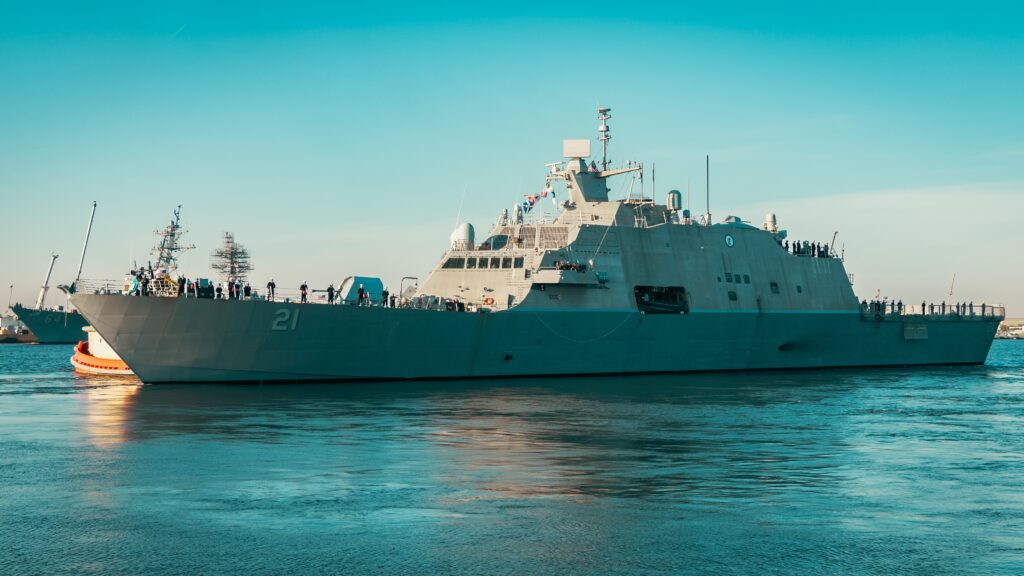
USS Minneapolis-Saint Paul Returns to Mayport Following Maiden Deployment to U.S. Fourth Fleet
NAVAL STATION MAYPORT, Fla. - USS Minneapolis-Saint Paul (LCS 21), a Freedom-variant Littoral Combat Ship (LCS), returned to Naval Station Mayport, concluding its maiden deployment to the U.S. Fourth Fleet Area of Responsibility (AOR).
“Over the past seven months, the Minneapolis-Saint Paul crew has demonstrated resilience, determination, and flexibility,” said Cmdr. Steven Fresse, commanding officer of Minneapolis-Saint Paul. “We successfully completed every assigned mission while also focusing on training and refining our skills, enabling us to become a cohesive unit. The keys to our success have been synergy, positivity, unity, and self-sufficiency. Teamwork and determination ensure success.”
After a seven-month deployment, this marked an important chapter in the ship’s service history, showcasing the versatility and capabilities of the LCS class within the U.S. Navy’s surface fleet, while making an operational impact and achieved historic milestones.
“I’m proud of the excellent execution demonstrated by Minneapolis-Saint Paul,” said Rear Adm. Joe Cahill, commander, Naval Surface Force Atlantic. “Underway for 130 of her 200 days deployed and maintaining an operational availability of more than 90 percent, Minneapolis-Saint Paul marked a decisive moment of self-sufficiency for the class, one we will continue to build upon. This signifies an important milestone as we continue the shift from contractors repairing the LCS to Sailors operating and fixing their own warships. Fielding innovative warfighting capability, including airborne tactical scouting, Minneapolis-Saint Paul and her crew were ready on arrival, delivering combat power for fleet commanders. They are a tremendously cohesive warfighting team.”
While assigned to TASK FORCE 45/Destroyer Squadron 40, operating primarily in the Caribbean Sea, Minneapolis-Saint Paul achieved successful counter-narcotics interdictions upon arriving in the AOR. The crew seized an historic amount of over 7,153 kgs (15,737 lbs) of narcotics, worth a total of just under $195 million. This was executed with the embarked U.S. Coast Guard Law Enforcement Detachment 104 and 108, Helicopter Maritime Strike Squadron 50 Detachment 3, U.S. Coast Guard Maritime Patrol Aircraft, AEROSONDE sUAS, and the ship’s organic boat crew and partnered nations.
During its first port visit to Curacao, Minneapolis-Saint Paul welcomed Rear Adm. Carlos Sardiello, commander, U.S. Naval Forces Southern Command/U.S. Fourth Fleet, for an official engagement with distinguished military and civic leaders. This engagement served to strengthen international relationships and advance regional maritime partnerships.
While deployed, Minneapolis-Saint Paul conducted a bilateral anti-submarine warfare (ASW) exercise with the Colombian Navy. This collaborative training event significantly enhanced tactical interoperability, strengthened operational coordination, and laid the groundwork for future combined maritime security operations involving ship platforms.
During operations off the coast of Jamaica, Minneapolis-Saint Paul, in partnership with the Jamaican Defense Force Coast Guard and utilizing its surface and airborne assets, conducted an interdiction demonstration aimed at fostering interagency training and enhancing interoperability. Upon conclusion of this training, Minneapolis-Saint Paul conducted a port visit in Kingston and participated in community relations initiatives and a key leader engagement commemorate the 62nd anniversary of the Jamaican Defense Force Coast Guard.
Minneapolis-Saint Paul is assigned to Littoral Combat Ship Squadron Two (LCSRON TWO). Located in Mayport, Florida, LCSRON TWO oversees all operational and administrative tasking of nine independently-assigned LCSs. LCSs are a fast, agile, mission-focused platform designed to operate in near-shore environments and winning again 21st-century coastal threats. The LCS is capable of supporting forward presence, maritime security, sea control, and deterrence.
RTX’s Raytheon Begins Initial Production of SharpSight Surveillance Radar
Radar will deliver unmatched search and track capabilities for both land and maritime surveillance missions
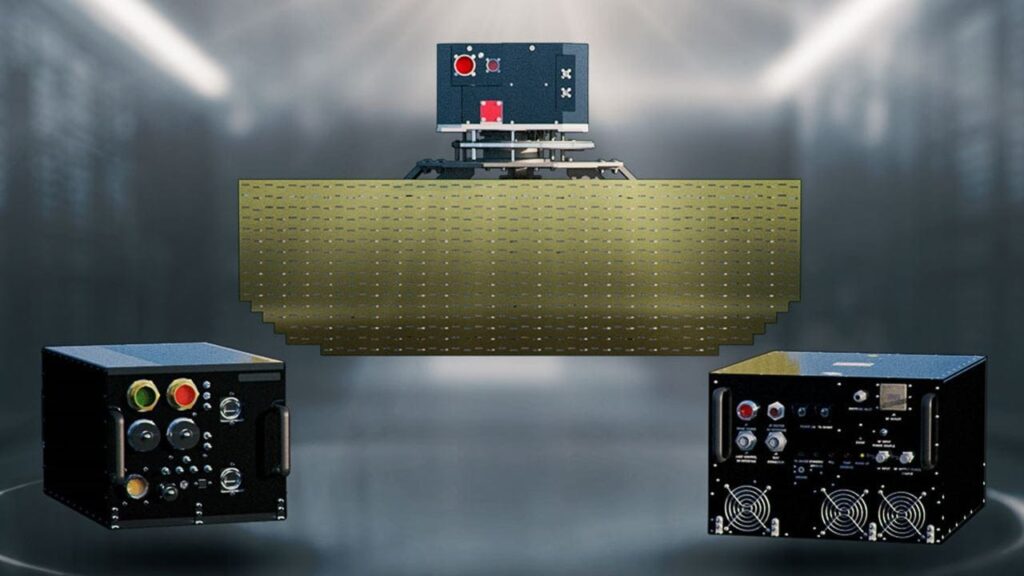
MCKINNEY, Texas (October 13, 2025) — Raytheon, an RTX (NYSE: RTX) business, has launched the initial production of its new SharpSight multi-domain surveillance radar. This next-generation system will provide high-altitude, real-time, high-resolution imaging with wide-area search and tracking for land and maritime surveillance, operating day or night in any weather condition.
SharpSight fuses the capabilities of two of Raytheon’s proven radar families – the Highly Integrated Synthetic Aperture Radar (HISAR) and the SeaVue Multi-Role Radar (SVMR) – and can be rapidly integrated on a variety of manned and unmanned systems. Its open architecture enables inexpensive, rapid upgrades, ensuring operators remain ahead of emerging threats.
“This radar represents the next step in Raytheon’s long legacy of intelligence, surveillance and reconnaissance innovation,” said Daniel Theisen, president of Advanced Products and Solutions at Raytheon. “By merging the proven capabilities of HISAR and SeaVue, we’re delivering a flexible, exportable and affordable radar system designed to outperform on the most demanding multi-domain surveillance missions.”
SharpSight is designed for high-altitude precision and persistence, enabling critical missions such as anti-surface warfare, border protection, coastal monitoring, search and rescue, long-range surveillance, and more. It conforms with the latest U.S. Government export policy guidance enabling these advanced intelligence, surveillance and reconnaissance capabilities to be offered to global partners and allies.
Coast Guard Supports State Response, Conducts Mass Rescue Operations in Alaska
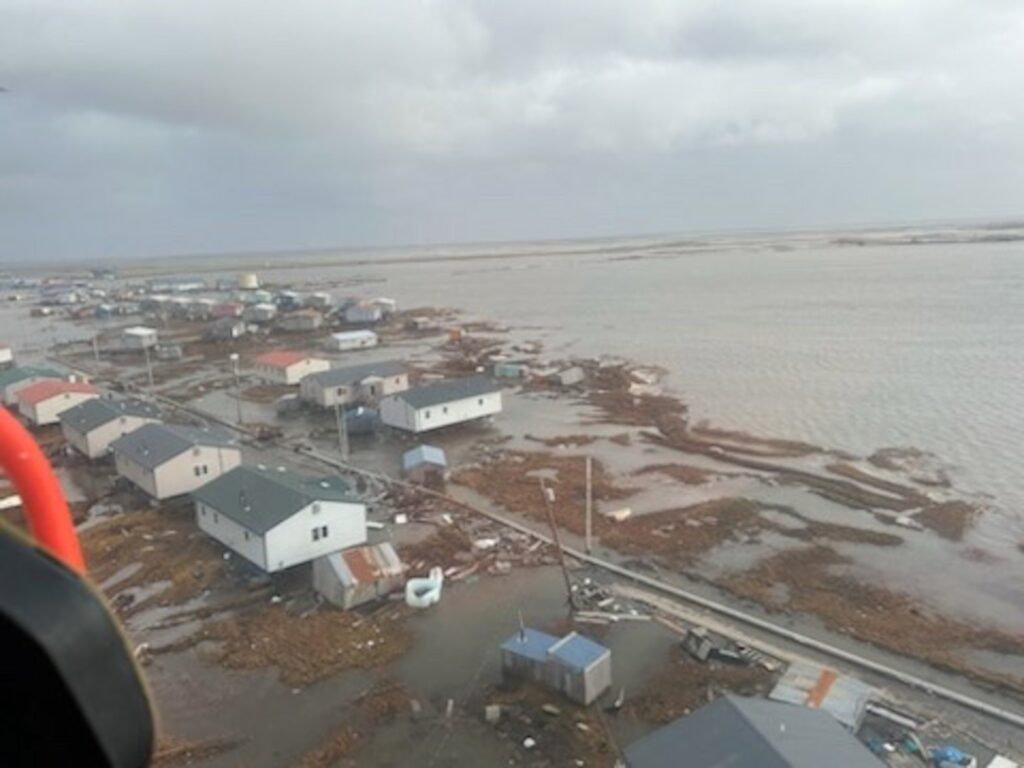
U.S. Coast Guard MH-60 Jayhawk helicopter aircrews conduct overflights of Kipnuk, Alaska, after coastal flooding impacted several western Alaska communities, Oct. 12, 2025. The Coast Guard continues to support the state of Alaska’s response efforts in impacted communities. (U.S. Coast Guard photo courtesy of Air Station Kodiak)
ANCHORAGE, Alaska — The Coast Guard is conducting search and rescue operations Monday in Kipnuk and Kwigillingok, Alaska, where communities have been impacted by severe flooding.
In support of the state of Alaska’s response, Coast Guard crews from Air Station Kodiak successfully rescued 18 people in Kwigillingok and 16 people in Kipnuk. All were transferred to safety in stable condition.
Search efforts are ongoing for three residents of Kwigillingok who remain unaccounted for. A Coast Guard MH-60 Jayhawk helicopter aircrew searched 76 square miles for the missing individuals Sunday and resumed first light searches this morning. Search efforts are currently underway.
The crew of Coast Guard Cutter Kimball (WMSL 756) aided in search and rescue efforts using unmanned aerial surveillance, providing logistics support for aviation assets participating in rescue operations. Relief crews and supplies are being staged in Bethel to support a multi-day response.
The Coast Guard is working closely with partner agencies, including the Alaska State Troopers, the Alaska Rescue Coordination Center, the Alaska Division of Homeland Security and Emergency Management, and the Alaska Air and Army National Guard to coordinate ongoing rescue operations in impacted communities.
“Preservation of life is our top priority,” said Capt. Christopher Culpepper, commander of U.S. Coast Guard Sector Western Alaska and U.S. Arctic. “The Coast Guard remains closely connected to the State Emergency Operations Center in full support of combined rescue and response operations alongside State Troopers, National Guard, and various additional agencies.”
The situation is ongoing, and more information will be released as it becomes available.
Eureka Naval Craft’s New Ultra High-Speed Catamaran Set to Revolutionize Army and Marine Expeditionary Operations
Bobcat offers rapid, resilient, and cost-effective access to contested coastlines, rivers, and islands; production-ready in U.S. shipyards.
WASHINGTON — Eureka Naval Craft today unveiled the AIRCAT Bobcat, a 57-foot, ultra high-speed catamaran landing craft designed to move personnel and materiel rapidly into littoral zones, up rivers, and through estuaries where ports and infrastructure are limited or denied.
Autonomous or optionally manned, the all-aluminum Bobcat can carry up to 10 tons of cargo or 36 troops. It has a top speed of 50 knots and a range of 350 nautical miles at an average speed of 38 knots, while range can be extended with additional modular fuel tanks.
“The Bobcat is quite literally the pick-up truck of the littorals and will revolutionize Army and Marine Corps expeditionary operations,” said Bo Jardine, CEO of Eureka Naval Craft. “It is the practical workhorse for modern ship-to-shore movement, and it is production-ready today.
“Bobcat can be produced rapidly and cost-effectively in multiple Tier 2 and Tier 3 U.S. shipyards with which we have collaborated, including Bordelon Marine in Houma, LA, and Shoreline Offshore in New Bedford, MA.”
Jardine explained that Eureka is scheduling Bobcat briefings, technical exchanges, and virtual demonstrations during AUSA week.
The Bobcat’s open-top deck can carry outsized and irregular loads, support modular weapons payloads, and enable offshore load and discharge alongside larger ships and port quaysides.
The vessel is fitted with both bow and stern ramps to provide rapid roll-on/roll-off capabilities. It is also equipped with SH Defense’s modular deck lock system to allow rapid securing of containers, mission modules, small vehicles, and other cargo.
With its catamaran design, the Bobcat can operate effectively in as little as 1.6 feet of water, and is capable of beaching and self-recovery. It is optimized for conveying personnel and materiel into littoral zones and for transit up rivers and estuaries.
Richard Byno, EVP of Defense at Eureka Naval Craft said: “The design supports ship-to-shore and island-to-island operations as well as inland-waterway operations. We have designed it for high-tempo forward operations with features to support sustained sorties and rapid turnaround in austere environments.”
For contested littoral operations, the low-profile craft with minimized visual signature can be fitted with a stabilized remote weapon station and a compact counter-UAS systems suite for self-protection. Appliqué armor can be added to the hull and superstructure as required for specific missions.
Byno emphasized the Bobcat’s field serviceability with main engines fitted on quick-change modular mounts at main deck level with standardized mechanical and electrical interfaces. Accessible service hatches and on-deck lifting provisions allow engine swaps and repairs without the need for specialized shore support equipment. Additionally, parts commonality with commercial energy-industry components simplifies spares and reduces mean time to repair – keeping the warfighter in the fight.