Ready to Dive: ROV Pioneer Shares Seafaring Stories in New Book
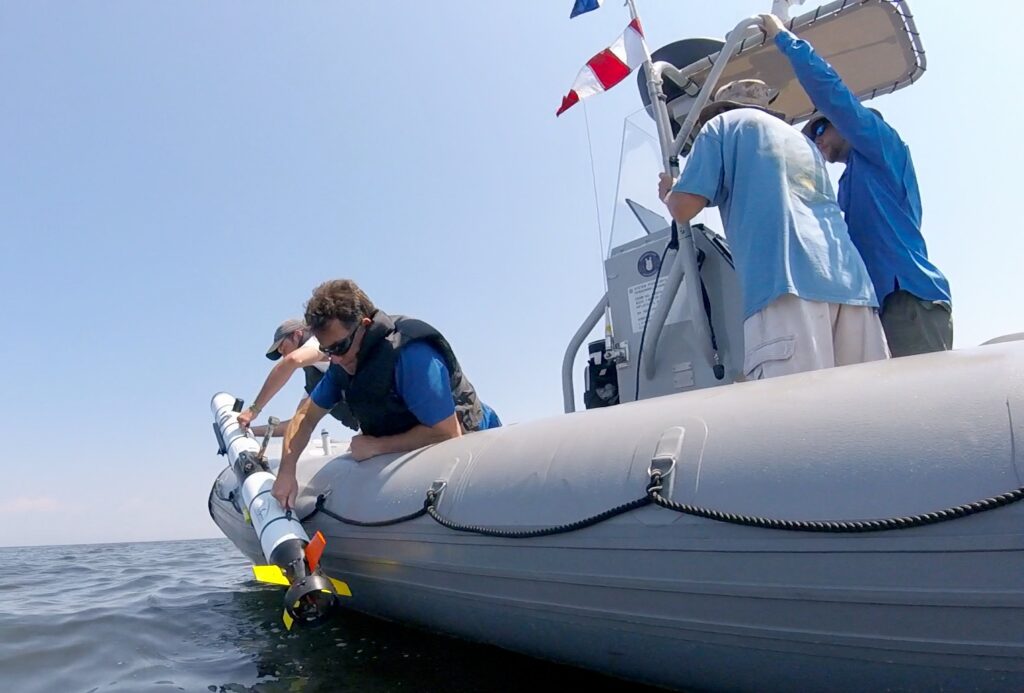
Curt Newport spent his career as a member of an elite club — as an underwater salvage expert, he has participated in more than 150 undersea operations, ranging from the recovery of astronaut Gus Grissom’s Liberty Bell 7 suborbital spacecraft to salvaging Air India Flight 182, the space shuttle Challenger and even sending images back from the RMS Titanic.
After 47 years as a trailblazer for using robotics for underwater salvage, Newport retired in 2022 and is the author of a new memoir, “Ready to Dive,” about his career, published by Purdue University Press. (He has also been a race car driver and musician, but there is only so much room in the magazine.)
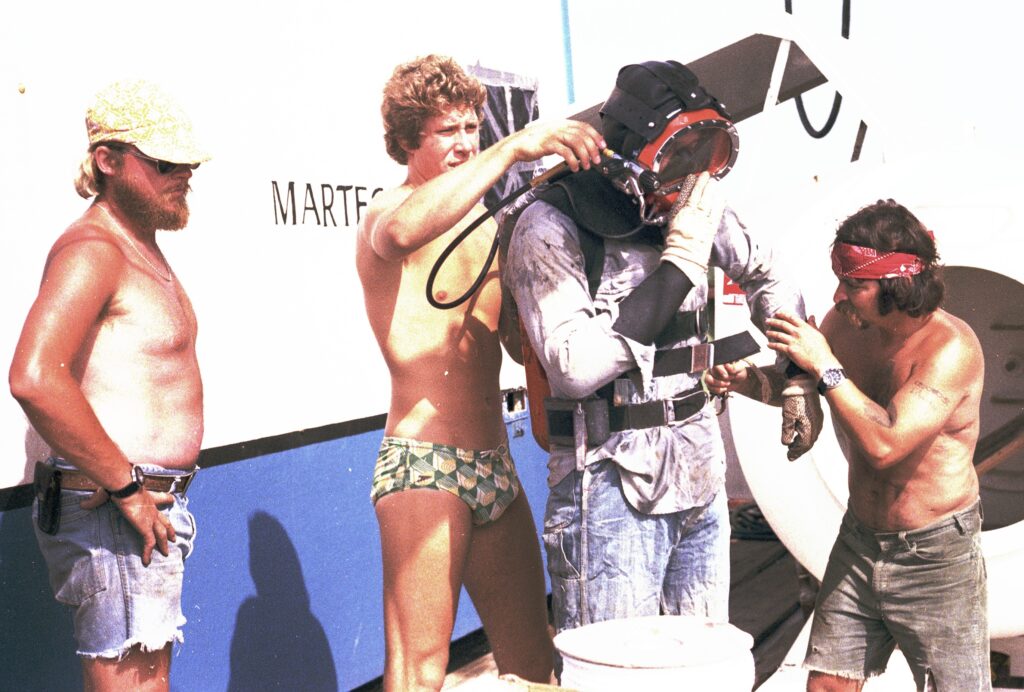
Underwater explorers such as Jacques Cousteau and TV shows such as “Sea Hunt” helped stoke Newport’s early interest in the undersea world. He got a job building ship fenders for $3.50 an hour, then graduated to building and maintaining saturation diving systems before deciding to attend commercial diving school in California.
When he graduated, the company Ocean Systems had purchased a remotely operated vehicle (ROV) named Scorpio One, and Newport was hired to work on that team. He worked on oilfields with ROVs, did submarine cable work for communications companies such as AT&T, “and eventually graduated up into doing deep-ocean search and recovery, mostly for the Navy,” he told Seapower. With that, he was off to the races for a career stretching nearly five decades.
Undersea Technology
Technology has long been used in deep-ocean work, from towed sonar arrays to ROVs, each with their own strengths and weaknesses.
Towed arrays or camera sleds are useful and can provide real-time data but have a sizable turning radius. “The downside of those towed systems is if you’re working in deep water you’re going to have some very long turnaround times. When you get to the end of a search line, you’re going to make a turn, and in deep water, that can take anywhere from nine to 12 hours,” he said.
ROVs are nimbler to deploy and have gotten larger and more capable over the years, being able to dive anywhere from 300 meters down to 7,000 meters (almost 23,000 feet). They have been joined by autonomous underwater vehicles that require no tether.
There are also manned submersibles, which hit the news again last summer when the Titan submersible imploded during a dive to the ruins of the Titanic. Newport has done two dives in the Russian Mir 1 manned submersible, to 4,800 meters (including a dive to a sunken ship) but now it and the Mir 2 have been decommissioned and are displayed in museums.
“Really for the deep work, the advantage of an autonomous vehicle is you don’t have those long turn times. And actually, the quality of the side-scan data is better because you’re not being towed by a ship. It’s a very stable imaging platform,” he said. “The problem is, you can’t see any of the side scan data until you’ve recovered the vehicle and downloaded the data. That’s a disadvantage. And they tend to be kind of complicated.”
In the early days, the crews spent as much time wrestling with the vehicles as they did diving, Newport said.
“When I first started out with the Scorpio One vehicle, we spent most of our time broken down as opposed to diving because they were just complicated vehicles there, it was a new technology and we had a lot of problems with them. And you still have problems with it, but they’ve gotten to be a lot more reliable,” especially with their communication systems and sensors.
“And the imaging systems were nothing like what we have now,” he said. “I mean, the first vehicle I worked with, we didn’t even have a colored camera. We had a black and white. We had one black and white SIT camera, SIT means silicon, silicon intensified target. It’s a low-light camera,” Newport said.
“And you know, nowadays vehicles will have four or five, six cameras. You got cameras all over the place. And we didn’t have that. And the manipulators we had back then were fairly crude. But, you know, for the type of salvage work we were doing, you don’t need a really sophisticated manipulator. In fact, it’s better to not have one.”
Now there are also sophisticated acoustic tracking systems that can operate as deep as 11,000 meters. In a nutshell, the differences between now and when Newport started in the diving business are “reliability and the ability to tell where the heck the vehicle is relative to the ship,” he said.
The Subsea Bounty
There are a great many things at the bottom of the world’s oceans waiting to be recovered or discovered.
It’s “just limitless,” he said. “When you think about human history, how long humans have been using the ocean to go from one place or another, thousands of years, and the things that are lost in deep water are generally well preserved.”
At one wooden shipwreck in 16,000 feet of water, he found silk fabric still intact and gold wrapped in newspaper that was still readable. In the deep ocean environment, “it’s only 36 degrees down there forever, pretty much. There’s no light. There’s no oxygen. So, everything is really well preserved. … Airplanes, ships, whatever, it’s all down there, but it costs money to do that stuff.”
Newport said the most interesting salvage of his career “has got to be Grissom’s Liberty Bell 7 spacecraft.”
That cramped vehicle was launched on July 21, 1961, in the early days of the space race with the Soviet Union. It conducted a short, sub-orbital flight and made Virgil “Gus” Grissom the second American to fly in space, but it started to sink after splashdown and nearly drowned him. It stayed below the waves for nearly four decades until Newport’s team found it in an expedition funded by the Discovery Channel.
“It’s one of those things that no one really expected us to ever be able to find it,” he said. “You know, the thing is only nine feet tall, six feet in diameter, is lost in deep water, about 6,000 feet. And everybody who knew anything about this said, ‘well, it’s lost and gone forever.’”
The salvage team was just starting their work “and it was the first target we dove on. It just came out of the gloom down there, there it was. So that, that was the most amazing ever,” he said.
Now that he’s retired, one thing Newport doesn’t do is spend time on boats.
“Ever since I started in this business, I have very rarely ever got on a boat for recreation. It just seems too much like work,” he said. “If you’re a bus driver, and then [on] your vacation time, you don’t go on a cross-country trip. You stay home. The same thing with boats, with ships, you know. People can go out in little liners and whatever all they want, I’ll just stay here and have my cocktail or something.”

Book Excerpt from ‘Ready to Dive’
On Finding the Wreck of the Challenger
I was in California visiting my brother when Challenger was lost. Like other Americans, I watched with a heavy heart as another American spacecraft was lost at sea. Unlike Liberty Bell 7, this one did not remain intact, and its location would be marked by tangled debris drifting in the Gulf Stream currents. Tons of wreckage peppered the seafloor, much like the Air India jetliner, and once again, it would be up to people like me to help find the one piece of wreckage that provides conclusive proof of the cause of the disaster. The salvage of Challenger was the largest search and recovery operation in history and required the use of a mixture of underwater technologies: side-scan sonars to map the debris field, manned submersibles to identify wreckage, and divers and remote vehicles to recover the evidence.
The task confronting the Navy was overwhelming: Search an area encompassing about 470 square nautical miles and identify all targets as being Challenger or non-Challenger, inspect and categorize the targets, then recover all wreckage that might bear evidence of the disaster. Unfortunately, the location where Challenger went down was heavily traveled by ship and air traffic and drug smugglers, and it had been the repository of a large percentage of NASA’s launch failures. There was a lot of space junk littering the seafloor.
The Navy set up their priorities as follows. First, they simply had to find the smoking gun. While it was strongly suspected that a segment of Challenger’s right-hand booster had failed, NASA had to be sure. In the tons of debris stuck on the bottom, we had to find that one piece. Second, for humanitarian purposes, the Navy had to recover the astronauts’ remains. Based on my Air India experience, I knew there would not be much left to recover. Challenger’s crew compartment had struck the ocean at over 200 miles per hour and broken up into several pieces. Third, we had to find and recover the tracking and data relay satellite located in the shuttle’s cargo bay. If it was not found, the government would have to spend millions of dollars to change satellite communication codes so the Soviets could not find the TDRS and subsequently monitor our military communications.
And finally, we found what everyone wanted to see: a 6,000-pound chunk of steel. On one edge was an opening unlike what we had seen before. It was rounded and melted, not broken and sharp. This was how Challenger had perished.