Retooling the Workforce: U.S. Coast Guard’s Oldest Command Invites Infusion of New Talent
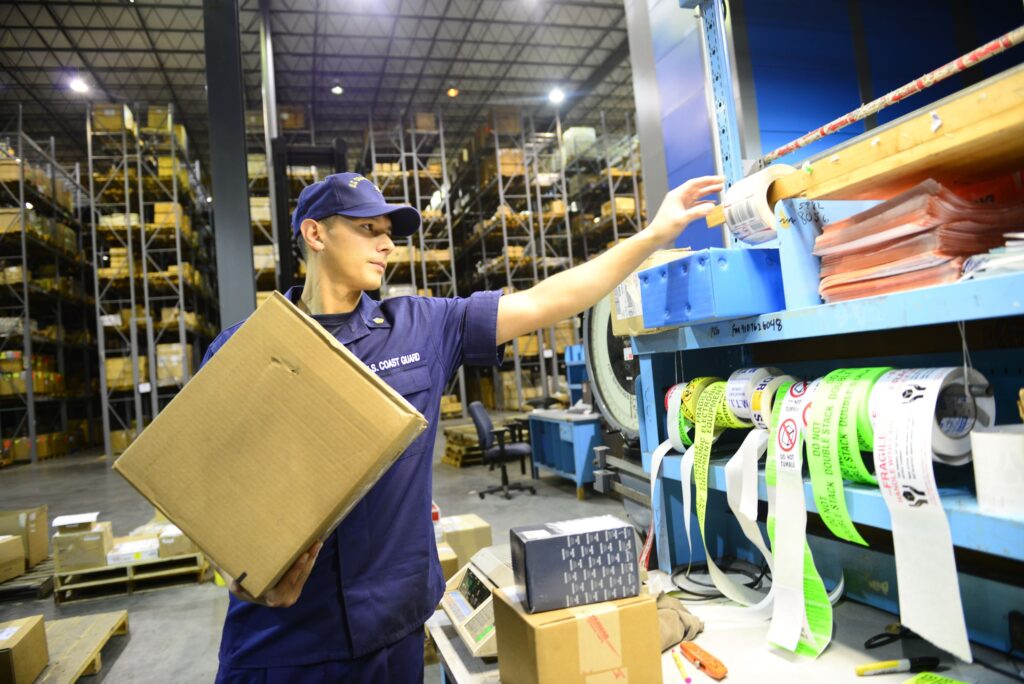
The 122-year-old U.S. Coast Guard Shipyard at Curtis Bay in Baltimore is a full-service shipyard and an integral part of the Coast Guard’s Surface Forces Logistics Center.
Known simply as the yard, it has a growing workload as new classes of cutters and boats come into the service. However, its experienced workers are retiring, creating a potential gap in skilled tradespeople. Although yard internship programs have existed for decades, growing the workforce organically has increasingly become a priority over the past several years.
New workers with high-tech skills are needed to replace the generation that is retiring, but the available pool of qualified shipyard workers near the Curtis Bay yard has decreased dramatically in recent years.
There are challenges to attracting employees. While workers at the yard are government employees with significant benefits and career potential, the salaries for entry-level engineers and naval architects are not always competitive with industry, making it a challenge to attract young professionals.
And although the yard used to be able to hire experienced workers from local shipyards — there were 40,000 shipyard jobs in Baltimore 20 years ago — today, apart from the Coast Guard yard, there are only a handful.
So, as the Coast Guard is recapitalizing its fleet, the yard is retooling its workforce.
“A lot of our older generation workers, our experienced personnel, are gone,” said John Bragaw, production manager for the Coast Guard yard. “We’re trying to fill in the gap and create that workforce for the future.”
Bragaw said the yard is intensifying its outreach efforts to acquaint the local area with what it does and the availability of quality employment opportunities. The yard has been very proactive in working with schools, arranging class visits and tours, mentorships and participation in job fairs. Through partnerships with local vocational schools and community colleges, the Coast Guard has created innovative internship programs that permit students attending classes to also work as government employees.
“We want to be part of the community,” he said. “We have good partnerships with the local vocational-technical schools. Our employees have visited schools, mentored students and shared their excitement of working on boats. We donated old engines to the school so students could take them apart and reassemble them. We want to get the talent out of those schools and get the people who want to be the future supervisors and leaders of our shipyard.”
The yard has a diverse workforce of about 679 personnel in 12 trade shops, with 465 production craftsmen, 120 managers, engineers and support personnel and 80 military personnel.
Elijah Dorsey, 20, started as a painter and is now also a sandblaster. He has been promoted from helper to worker and will soon be a leader. That’s why Bragaw said the yard is also providing leadership training to help those workers who rise into supervisory positions.
“In the military, you get leadership training from day one, but we can have workers who do essentially the same job for years, and suddenly they get promoted to supervisor, and they don’t have the knowledge or skills,” said Bragaw. “We have to fill that gap. Right now, we train leaders once they get into that supervisory role. But we are beginning to start that leadership training process before they become a supervisor.”
Dorsey is a product of the City of Baltimore’s summer “pathways” internship with the yard.
“The interns spend nine weeks working in different departments to get an overview of what the shipyard does,” said Lamont McCloud, supervisor of the sandblasting and paint shop. “And they get paid. If they decide to enroll in college, or community college, they can continue in that pathways program. Or they can start working full time here when they graduate.”
McCloud said the internships help young people mature.
“When you become an intern and then an employee, you earn trust and can take on assignments that require you to travel,” McCloud said. “You have to know what you’re doing, because there’s limited supervision when you are on the road.”
Although several generations apart in age, McCloud and Dorsey share a lot in common. McCloud said about three quarters of the yard’s employees live within about 7 miles of the gate. McCloud comes from the same inner-city Baltimore neighborhood as Dorsey and went to the same high school. Then, as now, opportunities were limited.
“We’re part of the community. We, as men, have taken advantage of the opportunity to learn and benefit from a good job. And people see that we have good jobs and are taking care of ourselves and our families,” he said. “The Coast Guard benefits, too, because it needs a stable, trained, skilled and motivated workforce.”
And, he said they are making a difference. “Every one of these boats and ships that we’ve worked on has gone back out and is saving lives and stopping bad guys.”
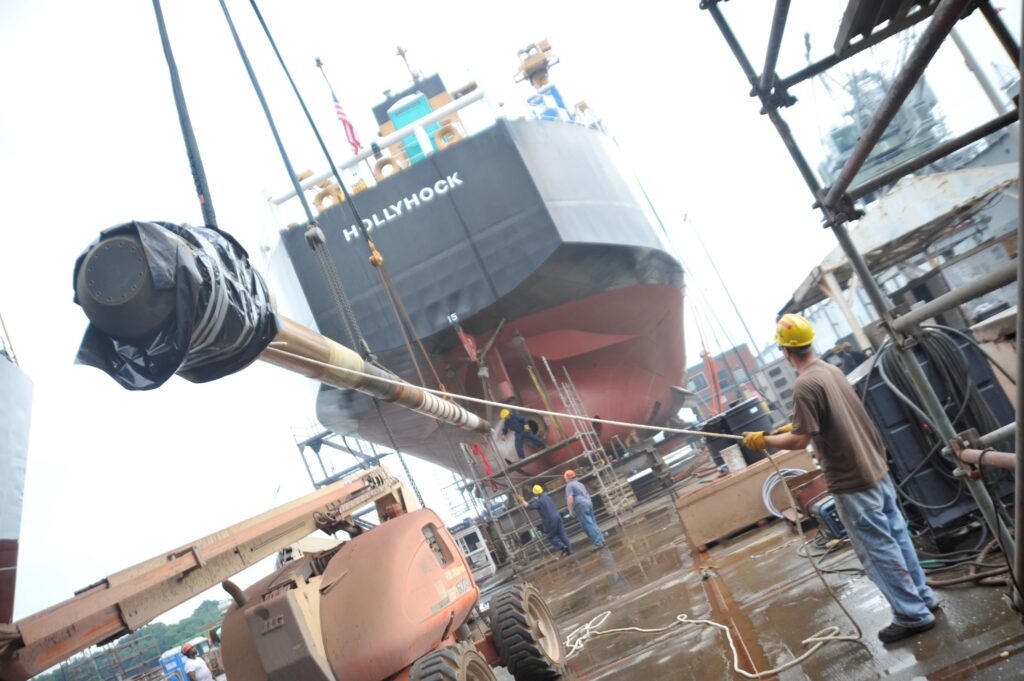
Starting Young
Much of the yard’s outreach effort is aimed at young people in elementary, middle and high school, to make them aware of the types of careers available to them and acquaint them with the Coast Guard and how the yard supports the service and its mission. In fact, many of the yard’s workers started when they were in high school.
Adam Cole grew up right down the road from the yard in Pasadena, Maryland, but wasn’t familiar with it until he started attending the Center of Applied Technology North (CAT North) in Anne Arundel County. “I didn’t know much about the Coast Guard Yard. I knew they had boats. But representatives from the yard came to CAT North and interviewed a few of us and told us about what they offered.”
At age 16, he began in an internship program within the structural shop.
“When I began working, the average age in the structural shop was about 60 years old. I began as a WG1, going to classes and then working here after school. I started as a full-time employee when I graduated at age 18. Today I’m 36, and I’m the shop foreman.”
For Olivia Wells, working at the yard helped her decide to get her four-year degree. Like Cole, she attended CAT North, and like him, she didn’t know much about the yard beforehand.
“They came to my class, explained what they do and the jobs that were available. They helped us with some mock interviews, and then I did an actual interview. I got accepted, started the process in my junior year of high school, and began working here during the summer before my senior year. I went to school during the day and then came to the yard and worked after classes. Now I’m planning to enter the University of Delaware to get a B.S. in construction engineering and management.”
“We’d like her to come back and work here after she gets her degree,” Cole said.
Tate Stott, Trent Craig and Jack Williams are former interns from CAT. Brandon Mack participated in the summer intern program for three summers with the New Era Academy partnership youthworks In Baltimore. They came into the electrical program but are being taught electronics out of necessity.
“It’s hard for us to find qualified electronics candidates, so we take people who come in as electricians and train them, so they’re learning both the electrician and electronics skills and they have greater promotion potential,” said Ron Viands, supervisor of the electrical and electronics shop. “We’re going to be stretched with the OPC [offshore patrol vessel] post-delivery availability, which includes the installation of the GFE [government furnished equipment], including classified systems that the contractor won’t be installing. Some of those may be done here, or we may send teams to do it at their homeports. Either way it’s going to be a huge workload.
“These young gentlemen are here to pick up knowledge, display skills and move up. They’re already thinking about their future,” Viands said. “They’re very motivated. They’re here for careers.”
Viands said there are a lot of motivators for people coming to work at the yard.
“When we interview new people, we show them the ships and all the work we’re doing on them, and how the men and women that go out on those ships absolutely depend on the work they will be doing here. We tell them, ‘Crews depend on the work you will do on those ships, the mission support provided here at the yard is vital to operation mission capability.’ They’re either interested in working here right away or not.”
Although they are young, they are already being entrusted with traveling to support work at remote sites. One of Viands’ youngest employees, 20-year-old Tate Stott, recently returned from Alaska where he serviced Rescue 21 system transponder upgrades on remote towers that could only be reached by helicopter. Sometimes the team had to camp for several days, with the ever-present danger of grizzly bears.
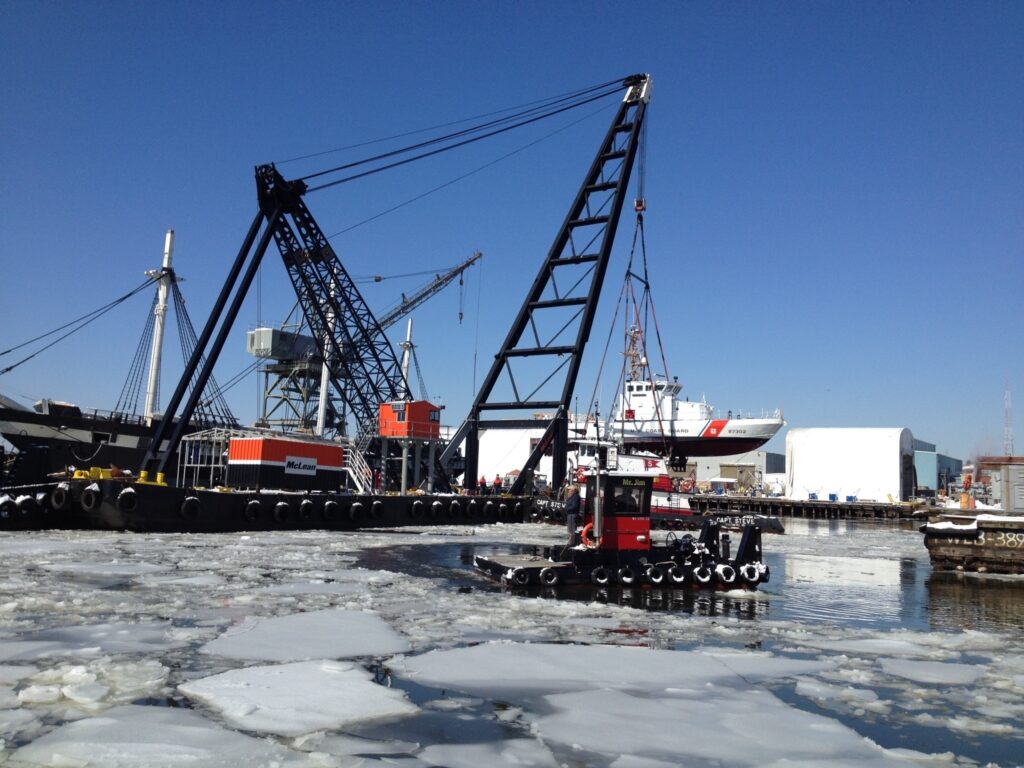
Mutually Beneficial
Anne Arundel County’s two career technical schools, CAT North in Severn and CAT South in Edgewater, have a close partnership with the yard.
According to Adam Sheinhorn, the principal at CAT South, the Coast Guard yard provides opportunities for a multitude of students in a number of programs CAT offers.
“Many of our business partners have a very narrow industry that they work in,” he said. “But with the Coast Guard yard, we’re able to involve students in a variety of our construction trades.”
Sheinhorn said CAT has program advisory committees — made up of people from industry, higher education and the community — for each of the curriculum programs, to make sure what the schools are offering the students is up to date and consistent with what the industries need.
“We don’t want to deliver an outdated education for kids,” he said.
The program advisory committees serve as a great connection point to connect students with industry representatives. “The Coast Guard yard is always sending representatives to those meetings that align with their needs,” Sheinhorn said.
CAT North Principal Joe Rose said he agrees.
“The Coast Guard bring our graduates back here to talk to our classes about how our school prepared them for their jobs, and what they’re doing — the work, training and travel — and the professional development opportunities the Coast Guard makes available to them. They have a lot of credibility, because those workers are not much older than the students here, and the kids can relate to them.”
Tom Dickinson, who manages internships and work study programs at both schools, said the teachers at CAT North and South do an amazing job preparing students.
“The young people that the Coast Guard are selecting are qualified to do the job and have the right attitude and work habits,” he said. Dickinson said the relationship is mutually beneficial.
“They participate as guest speakers, come to our open house events, and serve on our program advisory committee. When they have openings, they visit the classrooms and work with the students on getting their profile set up and applying for the position. They come in multiple times during the year. They set up field trips. They help teach classes. During COVID, they created a video featuring many of our former students giving our current students a virtual tour of the yard and the opportunities there,” he said. “They give a lot back.”