Sea-Air-Space: Lockheed Martin Touts Readiness to Build ‘Golden Dome’ Missile Shield
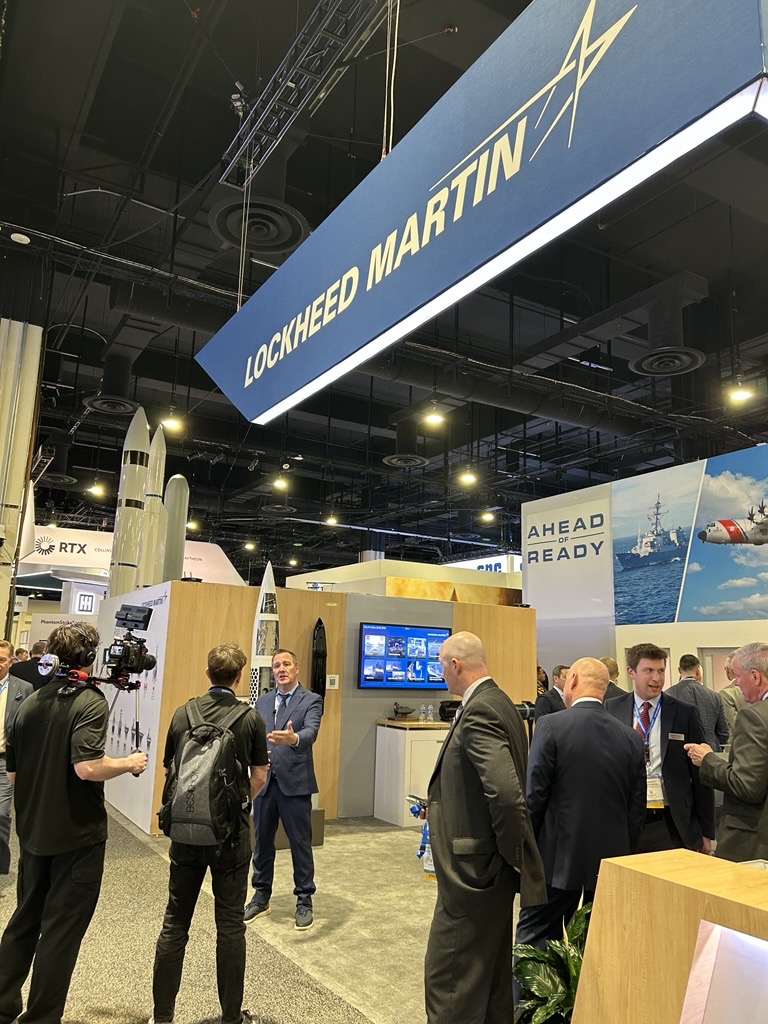
A representative from Lockheed Martin said at Sea-Air-Space 2025 the firm is “ready now” to help the nation stand up the “Golden Dome” missile defense system, a new priority of the Trump administration that resurrects some aspects of the Reagan-era Strategic Defense Initiative.
“What does it mean to be ready now? I think it means we have systems that are fielded, they’re operational, they’re proven,” said Dan Tenney, vice president of Strategy and Business Development for Lockheed Martin’s Rotary and Mission Systems section. “They’re actually in operation today.”
A Jan. 27 White House executive order calling for America to develop its own version of Israel’s Iron Dome air defense system unleashed a flood of activity in the defense community. This comes as the government develops the fiscal 2026 defense budget request to Congress, which reportedly could approach $1 trillion, to jumpstart Golden Dome and to support the many other defense priorities.
A March 19 story published by DOD News confirmed the Pentagon is working to bring the Golden Dome from concept to reality.
“Consistent with protecting the homeland and per President Trump’s [executive order], we’re working with the industrial base and [through] supply chain challenges associated with standing up the Golden Dome,” said Steven J. Morani, acting undersecretary of defense for acquisition and sustainment, in the article. “This is like the monster systems engineering problem. This is the monster integration problem.”
This is also a costly proposition. So far, the United States has funneled around $3 billion to Israel — an 8,500-square-mile country roughly the size of New Jersey — for batteries, interceptors and other costs related to Iron Dome, which it stood up in 2011, according to a 2023 Congressional Research Service report.
Establishing a missile defense system covering the entire United States — with a land area of nearly 3.8 million square miles — is estimated to cost billions of dollars annually and present many more barriers to success.
Nevertheless, Tenney said Bethesda-based Lockheed Martin is well positioned to assist.
“We think the future is really going to be around this integration,” Tenney said. “We do operate from seabed to space,” he said, with deep experience developing systems in global positioning, missile warning and tracking, radar, missile defense, high-energy lasers and other capabilities.
“When I think about Golden Dome,” Tenney said, “in so many ways I think we’re going to use existing systems but bring them together.”