
The Marines’ Ground Arsenal in the 2020s and 2030s
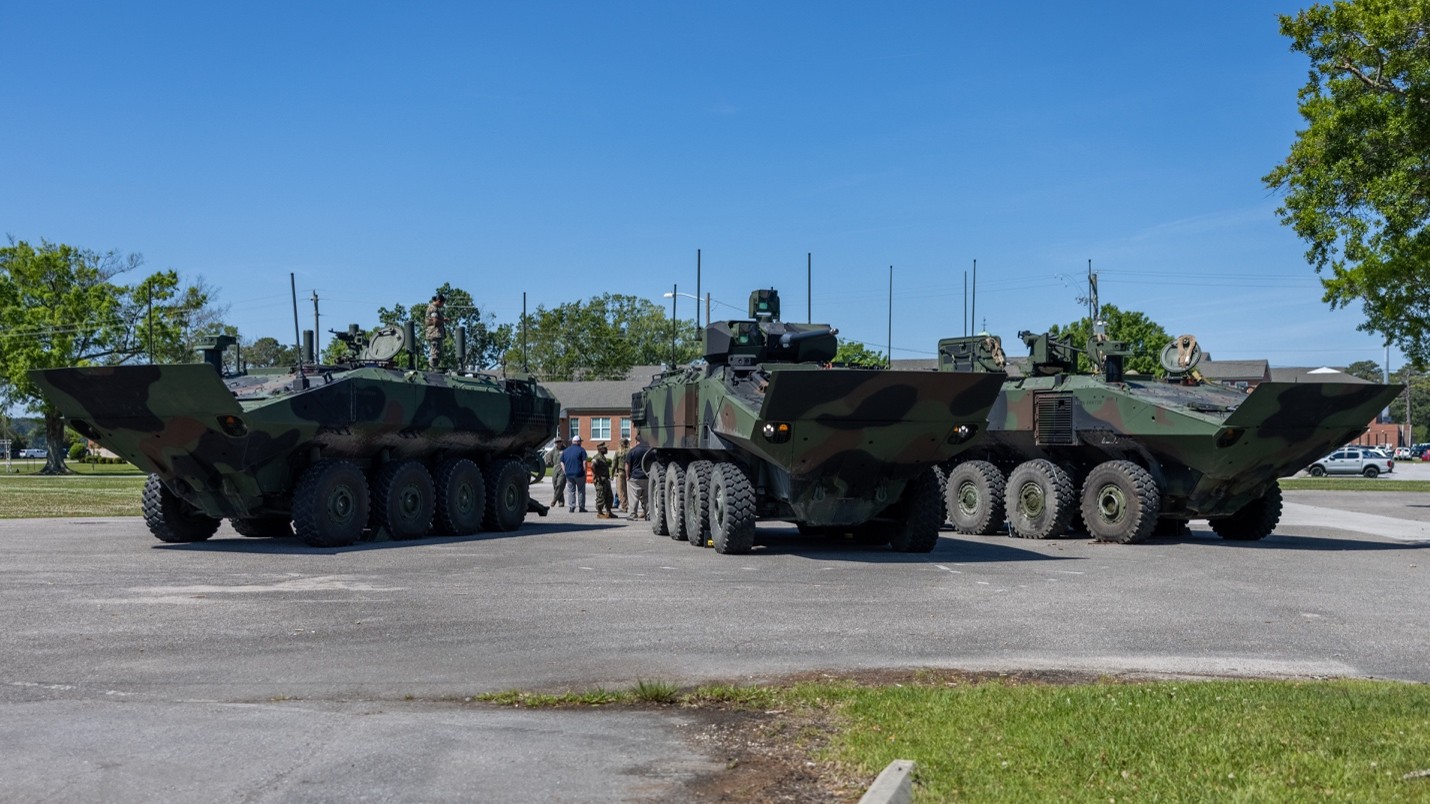


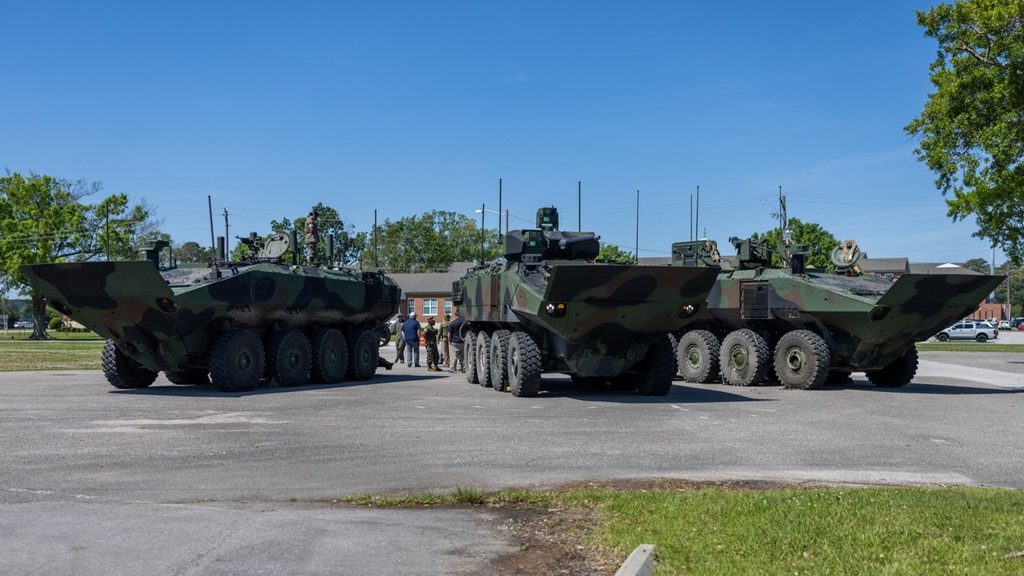
The U.S. Marine Corps hosted a media roundtable on its Ground Combat Element visions for 2040, the service’s outlook, arsenal investments and planning for the next 14 years. Seapower sent the USMC questions that were addressed and answered outside of the media roundtable.
Ground Combat Element 2040 Vehicles
“The Marine Corps is exploring all avenues to modernize our force, focusing on an enterprise system approach that creates scalable and easily produced attritable systems,” wrote Captain Steven J. Keenan, Communication Directorate, Plans, Policies, and operations media officer from Marine Corps headquarters. “As we build the Ground Combat Element of 2040, we are shifting away from relying solely on exquisite, highly complex, and expensive legacy platforms. Instead, our modernization strategy prioritizes agility, adaptability and mass. We are focusing on open architectures and a unified enterprise systems approach. This allows us to rapidly integrate new technologies, update software and seamlessly share data across the Joint Force, rather than being locked into bespoke, standalone prototypes that cannot communicate with one another. A core component of our Human-Machine Teaming strategy is the use of attritable uncrewed platforms that are affordable enough to be lost in combat without compromising mission success or risking Marine lives. These easily produced systems will be pushed to the tactical edge to absorb first contact risk, conduct reconnaissance, and deliver precision fires.”
The Marines acknowledge GCE vehicles for 2040 still have to fit within the size constraints of the C-130, V-22, CH-53K, Landing Ship Medium and the Navy’s hovercrafts. “To remedy these transport limitations, the Marine Corps created the Ground Systems Enterprise to bring all systems under a common family. This ensures each system is complementary and limits the addition of bespoke platforms that cannot operate within the enterprise of systems that enable Marine Air Ground Task Force structure,” Keenan said.
“The Marine Corps is prioritizing highly mobile, expeditionary wheeled platforms over tracked vehicles to align with the demands of worldwide deployment in support of distributed maritime operations,” Keenan told Seapower when asked if any tracked or Arctic-specific vehicles will be acquired in the future. “We continue to aggressively experiment with, develop, and field next-generation combat and tactical vehicles, ensuring our Marines maintain a decisive advantage in any clime and place. Additionally, the Amphibious Combat Vehicle (ACV) is fully capable of conducting cold-weather operations.”
Concerning lighter wheeled vehicles and potential lack of heavy firepower, armor, and limited ammunition quantities compared to a M1A2 Abrams tank, Keenan replied, “The Marine Corps is not compromising on lethality; we are modernizing it. By divesting our heavy armor, we are replacing larger, less agile systems with a highly mobile, distributed web of anti-armor systems and Organic Precision Fires (OPF). We have traded a singular, easily targeted platform for a survivable and agile network of precision-strike capabilities that radically expand a commander’s operational reach.
“Ultimately, our newest wheeled vehicles enable a lighter, more agile force designed to outmaneuver the enemy. We rely on speed, signature management, low detectability and rapid dispersion to avoid being targeted in the first place. These platforms do not operate in isolation; they are mobile, sensor-fused nodes integrated with the Joint Force. By leveraging capabilities such as the Family of Integrated Targeting Cells (FITC), our Marines on the ground can rapidly tap into the substantial magazine depth of naval vessels, aviation assets, and joint theater fires bringing overwhelming combat power to bear at the time and place of our choosing.”
Asked if the U.S. Army’s 155mm Multi-Domain Artillery Cannon System (MDACS) might replace the Marines’ divested M1A1 tanks, Keenan said, “The Marine Corps is not currently exploring the use of the U.S. Army 155mm MDACS.”
Artillery
Asked if the Marines intend to acquire self-propelled howitzers or wheeled howitzers, Keenan replied, “The Marine Corps is not planning to depart from towed howitzers under GCE 2040. The towed 155mm howitzer remains a critical, reliable, and foundational component of the Marine Corps’ organic fire support. While there is no plan to eliminate this capability or shift toward a self-propelled or wheeled 155mm howitzer at this time, the Marine Corps continues its rigorous experimentation and modernization initiatives to improve the lethality, range, and survivability of our artillery formations. I wanted to highlight to you that while we are not replacing our 777s, we are looking to modernize our HIMARS with a new system and phase out HIMARS.”

Infantry
“Within our infantry formations, we are actively investing in the Lightweight Command Launch Unit (LW-CLU) for the Javelin, while reorganizing our anti-armor capabilities to couple these systems with unmanned Organic Precision Fires-Medium and Light (OPF-M/L) as they field. Furthermore, we have established dedicated anti-armor sections within our weapons platoons to maximize the impact of the Multi-Role Anti-Armor Anti-Personnel Weapon System (MAAWS). Together, these initiatives deliver a far more lethal and versatile anti-armor capability inside our infantry battalions.”
Keenan continued, “By directly aligning our mobility assets with these anti-armor systems, we are creating a lower-signature, highly mobile force. This approach builds true tactical depth and provides commanders with maximum flexibility when employing our HAW-MAW-LAW (Heavy, Medium, and Light Anti-Armor Weapons) concept.”
Biometrics, Exoskeletons, Microchip Implants, Genetic Engineering
“The Marine Corps is not planning to adapt biometrics, mechanical/robotic appendages, genetic engineering, or microchip implants to future GCE Marines. The Marine Corps’ immediate modernization priorities are focused on equipping the individual Marine with better organic capabilities and uncrewed platforms, rather than structurally or genetically modifying the human warfighter,” Keenan said.
AI Humanoid Combat Robots
Keenan told Seapower, “The Marine Corps is not planning to adopt, design vehicles for, or employ AI humanoid battle robots. The Ground Combat Element 2040 concept remains fundamentally human-centric. Marines will still have to seize, hold, and defend key maritime terrain as we have done for generations. However, robotic systems with scalable autonomy will be heavily employed to absorb first contact risk, taking Marines out of high-risk tasks. The Marine Corps is focusing on uncrewed ground, air, and surface platforms to assist with Tactical Breaching & Clearing (e.g., clearing minefields or obstacles), Hazardous Reconnaissance, and Expeditionary Logistics & Material Transport. This is what we mean by Human-Machine Teaming: tactical hardware and Marines working together, fighting side-by-side, to reduce risk to human life while maximizing our lethality and survivability on the battlefield.”