
Bare Shelves: Munitions Shortages Highlight Concerns About US Warfighting Capability


Since the start of the Iran war in late February, American policymakers and defense experts have focused heavily on the conflict’s operational tempo, Iran’s geopolitical ambitions in the Strait of Hormuz and diplomatic efforts to end the fighting.
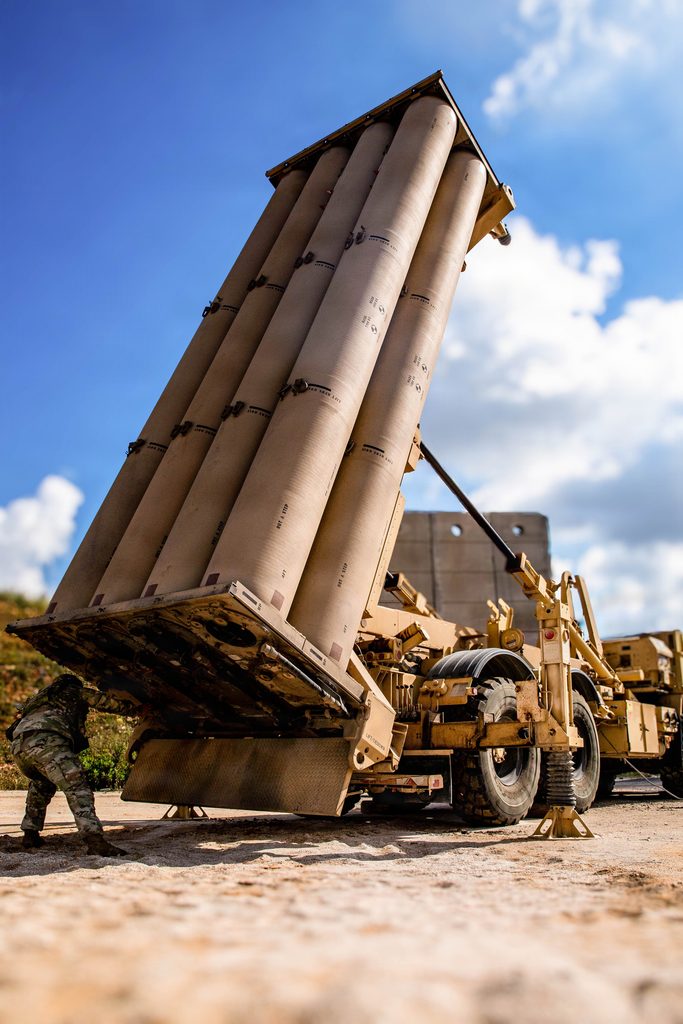
In recent weeks, however, Washington has become increasingly concerned about both the immediate and long-term implications of the conflict for U.S. munitions stockpiles. According to recent reporting, the United States expended virtually all its inventories of Army Tactical Missile Systems and Precision Strike Missiles available for the campaign by early August, while also running dangerously low on key defensive missile interceptors, including Patriot and Terminal High Altitude Area Defense (THAAD) interceptors.
Senior defense and acquisition officials reportedly held an emergency meeting on July 31 to address the worsening shortfall, and multiple news outlets have reported growing tensions between the White House and Pentagon over public reporting on the issue.
How significant is America’s munitions shortage? While the U.S. produces an average of 700-800 Patriot missiles annually, its armed forces fired around 800 Patriots during the first day of strikes against Iran. In total, the U.S. had intercepted over 1,700 Iranian missiles and drones and struck over 13,000 targets in Iran by the time the ceasefire went into effect in early April. This heavy usage has taken its toll on America’s arsenal. In July, the Center for Strategic International Studies reported America’s Patriot Missile stockpile had been reduced to 700-800 missiles — down from roughly 2,300 prior to the conflict. Similarly, CNN reported in early August roughly 80% of America’s 452 THAAD interceptors had been used during the war.
In response to this growing concern, President Trump invoked the Defense Production Act in June, calling on the Department of War to forge “voluntary agreements and plans of action to help provide for the national defense” and accelerate missile production. Similarly, Deputy Secretary of War Steve Feinberg wrote to defense industry leaders in August to urge “significantly faster, more aggressive delivery schedules and/or increased production for critical capabilities.”
However, Admiral Samuel Paparo of U.S. Pacific Command warned Congress in April it could take one to two years to scale up the output of high-end missiles like the Tomahawk, and until 2031 to restore the U.S. Tomahawk stockpile to its pre-war level. Similarly, it could reportedly take up to eight years to replenish the supply of THAAD missiles used by the U.S. through the first month of the conflict alone. Even before the Iran War began, Lockheed Martin and the Department of War had agreed to quadruple THAAD interceptor production capacity. Although the Pentagon subsequently accelerated implementation of that plan through a seven-year, $35 billion procurement award and additional agreements to expand production of critical THAAD components, the resulting increase in output will take time to materialize and is unlikely to replenish the missiles expended during the current conflict.
A Crisis Foretold
Washington should have seen this shortage coming. Such a crisis was predicted in part by the Pentagon’s 2024 National Defense Industrial Strategy, which presciently identified “gaps in national stockpiles and challenges in replenishing existing ones.” In 2023, the Biden administration actually delayed the shipment of long-range missiles to Ukraine precisely due to its desire to maintain enough munitions to preserve American military readiness.
Similarly, General Dan Cain, chairman of the Joint Chiefs of Staff, reportedly warned the White House prior to the conflict that a lengthy engagement against Iran could dangerously diminish America’s missile stockpiles. The fact that Caine has reportedly been privately lobbying senior White House advisors in hopes of ending the conflict underscores the concerns many military leaders and experts feel over America’s growing missile shortage and its potential national security implications.
Indeed, this munitions shortage imperils not only America’s sea services, but its broader defense priorities, as well. As America’s supply of missile interceptors dwindles, forward-deployed troops and naval vessels could become increasingly vulnerable to the Iranian missile and drone attacks, which could force the U.S. to either reduce its regional military footprint or rely on less sophisticated systems to defend against future Iranian attacks.
Similarly, such shortages could leave America’s Middle Eastern allies increasingly exposed to Iranian projectiles, and several successful attacks against these states could greatly weaken global perception of the American security umbrella and undermine America’s military relationships with important regional partners. Shortages might also risk weakening American deterrence in other theaters (the U.S. briefly moved THAAD missile interceptors from South Korea to the Middle East this spring), which could constrain American responses to naval conflicts that might break out in critically important regions throughout the globe, including the South China Sea.
If nothing else, America’s missile shortage has revealed important vulnerabilities Washington must address to prepare America to deter and win future wars. The war with Iran has demonstrated the significant cost asymmetry inherent with America’s reliance on exquisite defense systems, in which adversaries can mass-produce cheap drones that cost tens of thousands of dollars to build and can force the U.S. to expend multi-million dollar missiles to defend against this relatively cheap asset.
Given the lengthy production times associated with the munitions America uses to support its air defenses, the country’s potential adversaries will likely rely on the widely distributed production of cheap and easily built projectiles in hopes of winning a war of attrition against the US. America’s adversaries are certainly taking note of this lesson, and the Iran war has raised important questions about America’s ability to win protracted wars against countries like China with the industrial capacity to produce and maintain a larger arsenal than Iran has deployed in this conflict.
A report released by the Heritage Foundation in August warned a war with China could expend America’s supply of missile interceptors within a matter of days, stressing the urgency with which this vulnerability must be addressed.
Boosting Procurement
Fortunately, the Pentagon is being increasingly proactive in hopes of reducing the risk of weapons shortages in the future. The Pentagon’s FY 2027 budget request includes a nearly 200% increase in missile procurement funding, and the Navy’s latest budget request calls for the procurement of enough torpedoes to support the service’s simultaneous engagement in two major regional conflicts, a sign of the service’s growing recognition of the need to shore up critical munition supplies.
Efforts by the Pentagon and White House to spur greater munition production may also result in improved production processes or instill a faster drumbeat of production that could help prevent future missile shortages.
However, broader reforms may ultimately be needed to address this vulnerability. Going forward, the military must strike a better balance between its more exquisite weapon systems and cheaper munitions which can be produced faster than much of America’s current arsenal and can be deployed against some of the less sophisticated projectiles it may be forced to defend itself against in future conflicts.
Similarly, the U.S. may need to move on from its “just-in-time” defense industrial model toward one capable of sustaining production that can support prolonged, large-scale conflicts. Such proposals will likely trigger intense debate in Congress and within the Pentagon, and policymakers will find few easy answers in their quest to shore up American munitions.
Continuing to neglect this vulnerability is no longer an option if America’s sea services are to prevail in a future great power conflict.
Matt Reisener is the Senior National Security Advisor for the Center for Maritime Strategy. This article appears in the October issue of Seapower magazine.