
Raise Robotics Developing Robots for Shipyard Coating Work


Richard R. Burgess, is senior editor for Seapower magazine. He is a retired naval flight officer and author of several books on naval aviation.
ARLINGTON, Va. — A California-based company is developing its robotics technology to go from building construction to hazardous coating applications and more for shipbuilding and ship repair.
Raise Robotics, a four-year-old corporation headquartered in San Francisco, specializes in robotics that take on dangerous work in building high-rise structures and other heavy construction tasks, work that is similar with regard to ship construction and repair.
“The idea over at Raise Robotics is we want robots to do jobs which humans should not, said Rishabh Aggarwal, chief technology officer and co-founder of Raise Robotics, in an interview with Seapower. “How do we save humans’ lives and how do we save humans’ health by substituting dangerous tasks? And the dangerous task would be working in environments like on high buildings of skyscrapers, working on the edge of buildings and such.
“Or, if we can work in a silica or dust environment or highly corrosive paint environment and put people behind the machinery rather in that environment, then we can have a positive impact on the society,” Aggarwal said. “So, we started with making these general-purpose autonomous robots for heavy industries and started with mostly the construction industry. And we were doing jobs on the edge of the buildings.”
Raise develops large robots on wheels with robotic arms for dangerous work. The company currently has multiple deployments of its robots, some 18 projects as of this writing, such as Apple headquarters in Austin or St. Jude Oncology Center, building full 14 story buildings.
“So, the robot keeps moving floor and floor above as the building gets built,” Aggarwal said, “doing multiple applications like very highly precise one-to-two-millimeter layout marking or drilling or bracket insulations.”
Raise deploys its robots initially through “project level bidding to get the confidence of the customer to be like, ‘This is your scope of work, so we will do this scope of work using the robot.’ And then subsequently, once we were able to execute, we were able to move into annual leasing.”
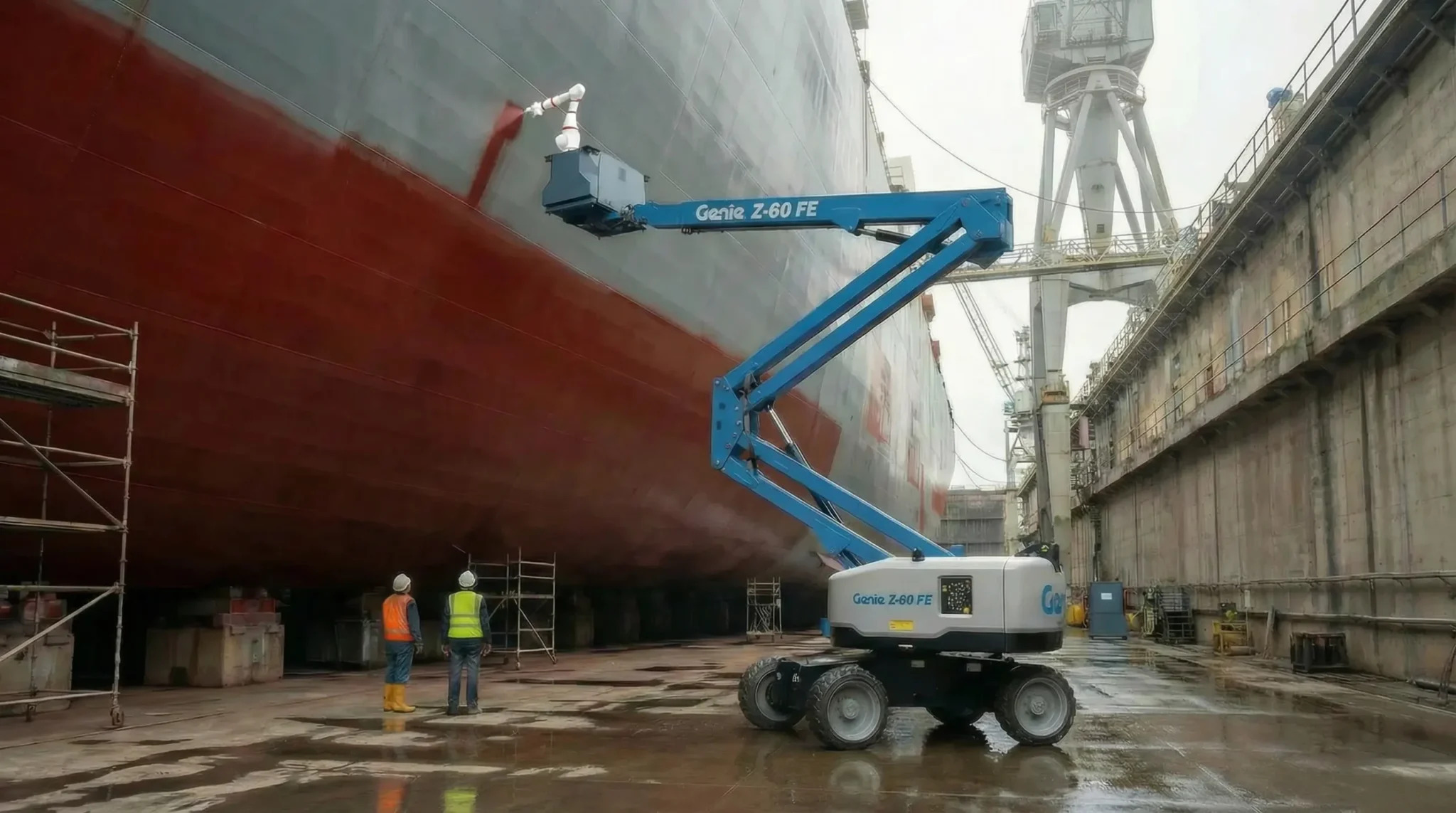
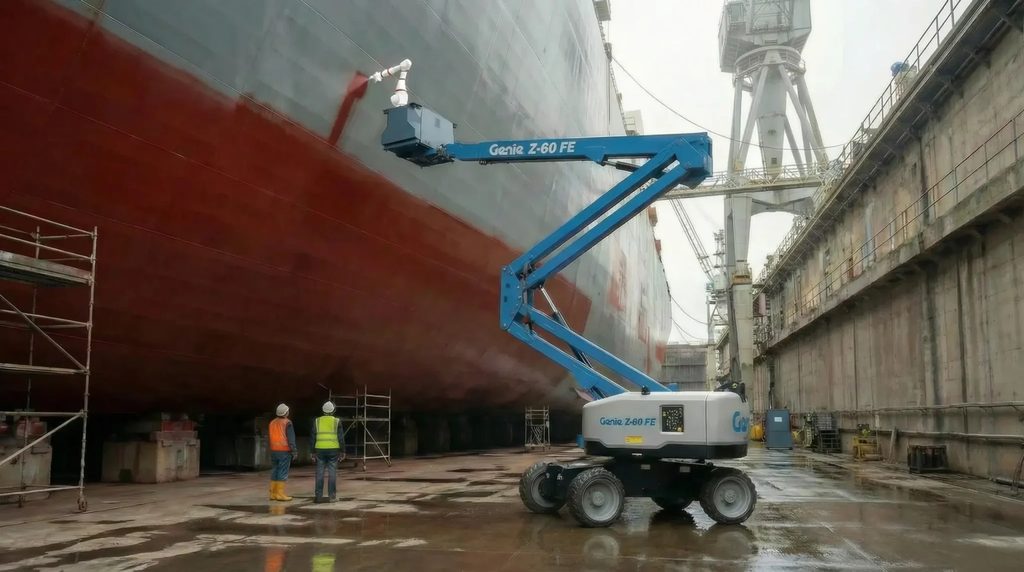
The company is expanding to shipyard work for its robots, with its next big product being “a fully autonomous robots for the coating applications for shipyards,” Aggarwal said. “So right now we are having large [8-figure] contracts with one of the largest shipbuilders in the world and we are in co-development partnerships with them. So, we cannot release any of this into the media right now. … So, we would be deploying robots across the entire next year into multiple of these shipyards.
“We are starting with the coating applications, but it’s the same robot doing multiple applications, he said. “So, down the line, we can do bead blasting, hydro-blasting, and multiple other applications throughout the entire chain. So. from a robotic standpoint, it’s very easy to do multiple jobs if you can do one job very well. And that is how the entire architecture is done. And that is our entire thesis as well that if somebody needs to automate their systems, it’s not possible for them to have three or four companies doing parts of scope of work. They will probably have one machine that they will deploy that needs to do multiple scope of work for both of them to be profitable and to really make robotics and automation work.”
Raise’s approach is “let’s do one thing right where we have a machinery and a system that works reliably 24/7., [so] anybody can turn it on like the way you turn on your car, and you know how it’s going to function. [When you] get to that level of reliability, then it becomes so much more easier to add other layers of application.”
Operating robots in an outdoor environment — such as a shipyard — poses some challenges.
“Working in these extreme environments with the precision and reliability needed is a frontier which robotics has really not crossed yet,” Aggarwal said.
“The paints that we work with shipyard are extremely corrosive,” he said. “70% of the paint is solid metal, basically like a metallic slurry that you are putting on the hull of the ships to protect them from corrosion. And that paint is extremely flammable. So, we have to go through special certifications to deploy this robot in those environments. And there is no robot of this size that has gone through that certification process yet.”
That certification, ATEX — from the French phrase “ATmosphères EXplosibles”—requires that “electrical and mechanical devices cannot cause sparks, static, or high temperatures that might ignite flammable gases, vapors, mists, or combustible dust.”
Raise is designing a fully autonomous robot to achieve the ATEX certification. Aggarwal pointed out that even scissor lifts ae not used to paint because they are not spark-proof. Ladders and scaffolds are still used. Tires on the robots must ensure there is no friction between tire and ground that would create a spark.
“We are building one of the biggest autonomous robots that can reach 100 foot high, two- story-, three-story-building high,” Aggarwal said. “Building autonomy at this scale is something that has not been done. And now you can leverage it across multiple sectors.”
By Richard R. Burgess, Senior Editor