
Shield AI and Kraken Technology Group demonstrate Hivemind-enabled autonomous maritime teaming
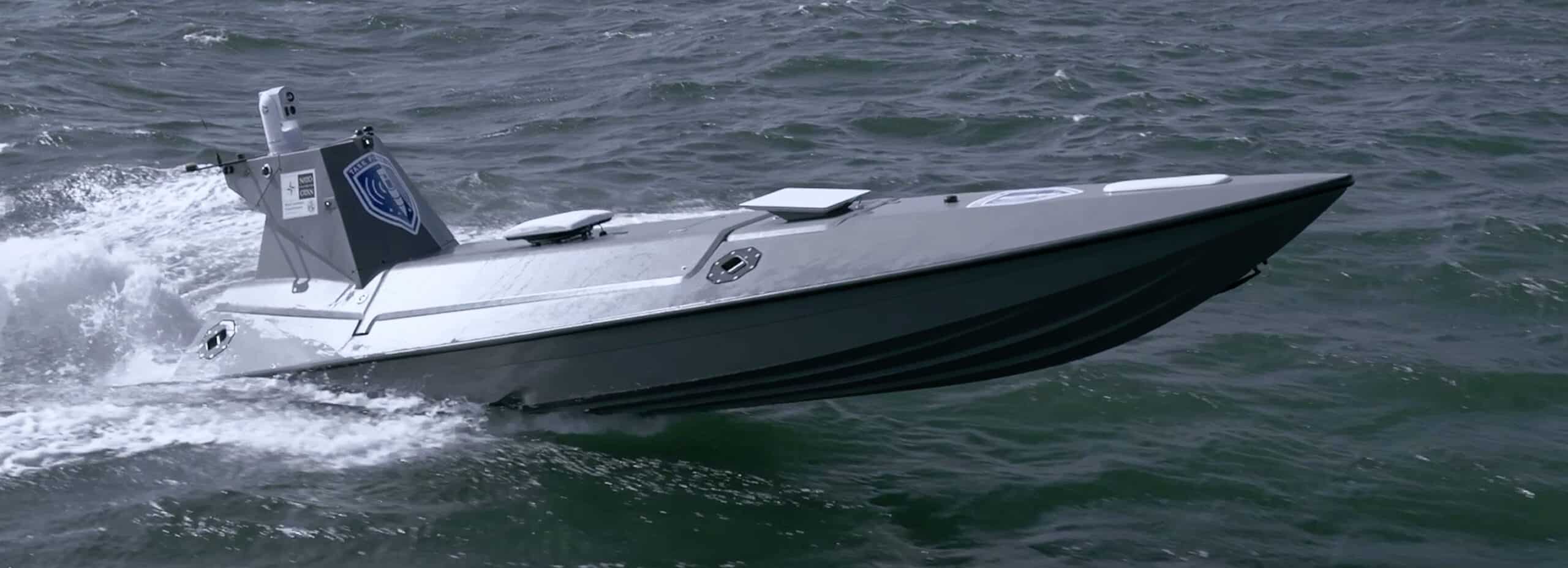


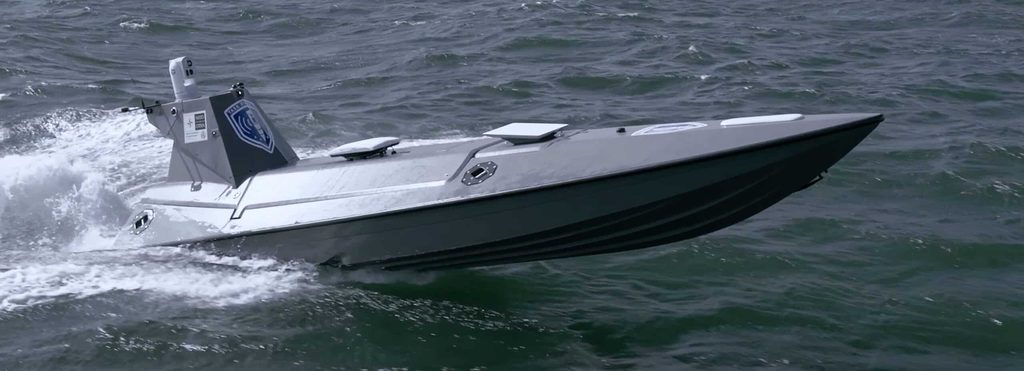
PORTSMOUTH, U.K. — Shield AI, the defense-tech company building the world’s best AI pilots and next-generation aircraft, and Kraken Technology Group Ltd., a world-leading autonomous maritime company, announced today the successful demonstration of autonomous maritime teaming of Kraken’s high-performance, modular K3 SCOUT uncrewed surface vessel (USV) with the Hivemind AI pilot, Shield AI’s mission autonomy software. The joint demonstration in Portsmouth, U.K. showcased two Hivemind-enabled K3 SCOUTs operating as an autonomous team, coordinating an intelligence, surveillance, and reconnaissance (ISR) mission.
During the demonstration, Hivemind autonomously coordinated the search of a designated area by two vessels using onboard radar, cameras, and Automatic Identification System (AIS) data. After detecting and classifying a vessel of interest located in the search area, Hivemind directed the USVs to collaboratively track and escort the contact from the operating area before dynamically replanning the mission and resuming search operations. The demonstration showed how multiple autonomous vessels can operate as a coordinated team to perform complex missions rather than as independent assets.
“This collaboration with Kraken demonstrates how Hivemind enables autonomous maritime teams to operate as part of a larger, distributed force,” said Christian Gutierrez, senior vice president of Hivemind at Shield AI. “Maritime operators today face vast blind spots at sea and more data than any watch stander can sift through in real time. Hivemind pushes operator intent directly into an autonomous USV team, helping systems prioritise contacts of interest, adapt to changing conditions, and execute missions alongside the crew instead of adding to their cognitive load. Partnering with a scaling manufacturer like Kraken allows allied navies to field this capability on a platform today.”
The demonstration highlights how autonomous systems can collaborate across vehicles to create a common operational picture and execute missions with greater speed, scale, and effectiveness than individual assets operating independently. Instead of requiring one operator for each vessel and additional personnel to manage onboard sensors, Hivemind enables multiple autonomous platforms to share sensor data, adapt to changing conditions, and execute complex missions together while maintaining human decision authority.
“K3 SCOUT was designed to be a fully modular and interoperable capability; the successful integration of Hivemind onto K3 SCOUT further validates our technology. Integrating Kraken’s platforms with proven autonomy creates a powerful force multiplier in the transition to a hybrid fleet,” said Mal Crease, CEO and Founder of Kraken.
The Hivemind AI pilot enables platforms to sense, decide, and act independently, within operator-defined parameters under established command authority. Unlike traditional autopilots that cannot deviate from preplanned routes, Hivemind dynamically reroutes mission plans, responds to unexpected conditions, avoids obstacles, and executes complex tasks safely and effectively. This event represents Shield AI’s first maritime autonomy demonstration in the U.K., marking a major milestone in the expansion of Hivemind beyond aviation and into maritime operations.
Kraken’s K3 SCOUT is a high-performance, high-speed and scalable USV. K3 SCOUT’s modular architecture means the vessel can be purposed or rerolled for a variety of missions including logistics, search and rescue, survey, ISR, strike or kinetic capabilities. The USV measures 8.4 m in length, can reach speeds of up to 55 kt, and can carry a 600 kg payload. K3 SCOUT is fully interoperable and can integrate a range of capabilities due to its modular design. Kraken recently delivered 20 K3 SCOUTs in a matter of months to the Royal Navy under Project BEEHIVE.
Shield AI and Kraken Technology Group plan to expand their collaboration with future joint trials in contested environments with U.K. and NATO partners over the coming year.
From Shield AI, Sept. 28, 2026