By Richard R. Burgess, Senior Editor
ARLINGTON, Va. — The delay in the program to build the Constellation-class guided-missile frigate (FFG) has been caused by a labor shortage brought on by poor shipyard worker retention, the secretary of the Navy (SECNAV) told a Senate committee, noting that the Navy is trying to rectify the problem by funding retention bonuses for shipyard workers.
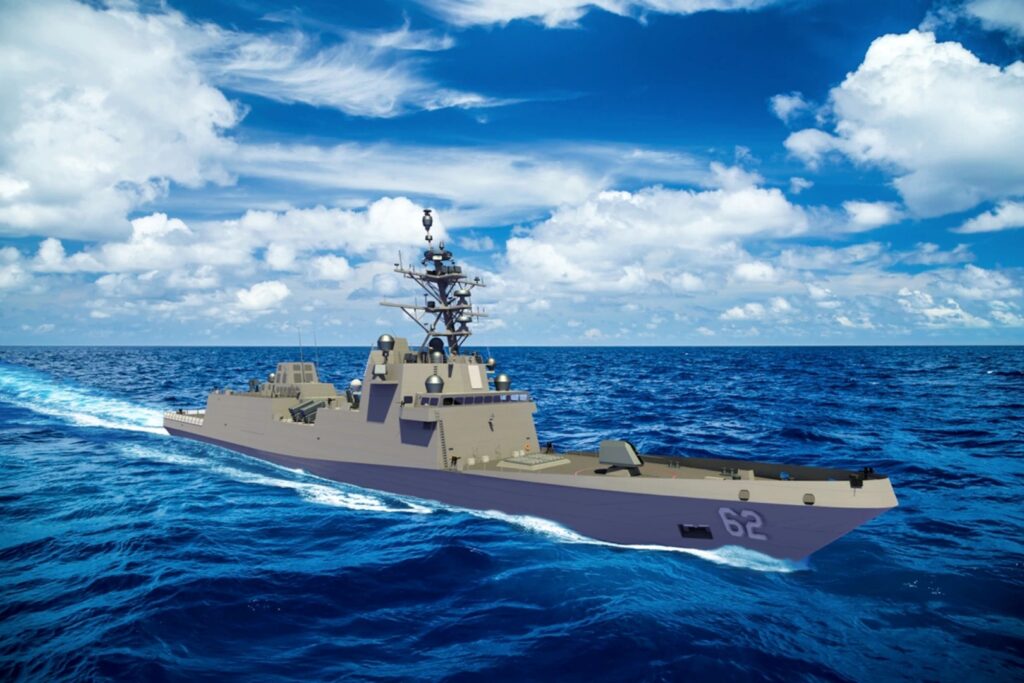
Fincantieri’s Marinette Marine shipyard in Marinette, Wisconsin, has a contract to build up to 10 FFGs for the U.S. Navy. Delivery of the first FFG, Constellation, originally was scheduled for 2026, with operational availability in 2029.
With Secretary of the Navy Carlos Del Toro and Chief of Naval Operations Admiral Lisa M. Franchetti testifying May 16 before the Senate Armed Services Committee, the ranking member, Roger Wicker, R-Mississippi, delivered in his opening statement a criticism of the Navy’s shipbuilding delays noted in the service’s 45-day shipbuilding review.
“For example, the Constellation-class frigate will be three years late and will take nearly 10 years to deliver the lead ship,” Wicker said. “This is largely because the Navy cannot keep requirements steady. Almost 70 percent of the requirements have changed since the Navy signed a contract, so the outcome we see today is no surprise. This is not an example of the industry underperforming. This is senior officials unable to manage a program. This is acquisition malpractice, and a terrible waste of time and resources.”
Del Toro countered that in the case of the frigate program, the delay was the result of a “recruiting and retention problem in Wisconsin.”
The SECNAV said that Fincantieri’s “retention rate actually last year was atrocious. That is part of the reason why we have actually established up to a three-year delay in the delivery of the Constellation-class frigate. What we’re actually trying to do is put positive efforts in place to help Fincantieri get to a better place.”
Del Toro said that the Navy was investing $750 million in the surface industrial base over the Future Years Defense Plan, including funds for Fincantieri.
“In Fincantieri alone we’ve provided $100 million in resources to the shipyard so they could provide $5,000 bonuses to the shipyard workers for the first year if they stayed in place throughout construction of the ship itself,” he said.
Franchetti as well said the Navy is committed to helping Fincantieri deliver on the frigate program.
“I just had the opportunity with the secretary [Del Toro] to go up to Marinette and talk with the folks there and [we’re] really committed to supporting them and addressing the workforce challenges that they have,” she said. “The frigate is an absolutely critical ship for our Navy.”