
Andreman Fills Gap in Persistent Passive Acoustic Undersea Coverage


Richard R. Burgess, is senior editor for Seapower magazine. He is a retired naval flight officer and author of several books on naval aviation.
A young company in California has developed networks of passive acoustic sonobuoys and a software platform to monitor them to fill a gap in undersea detection capability.
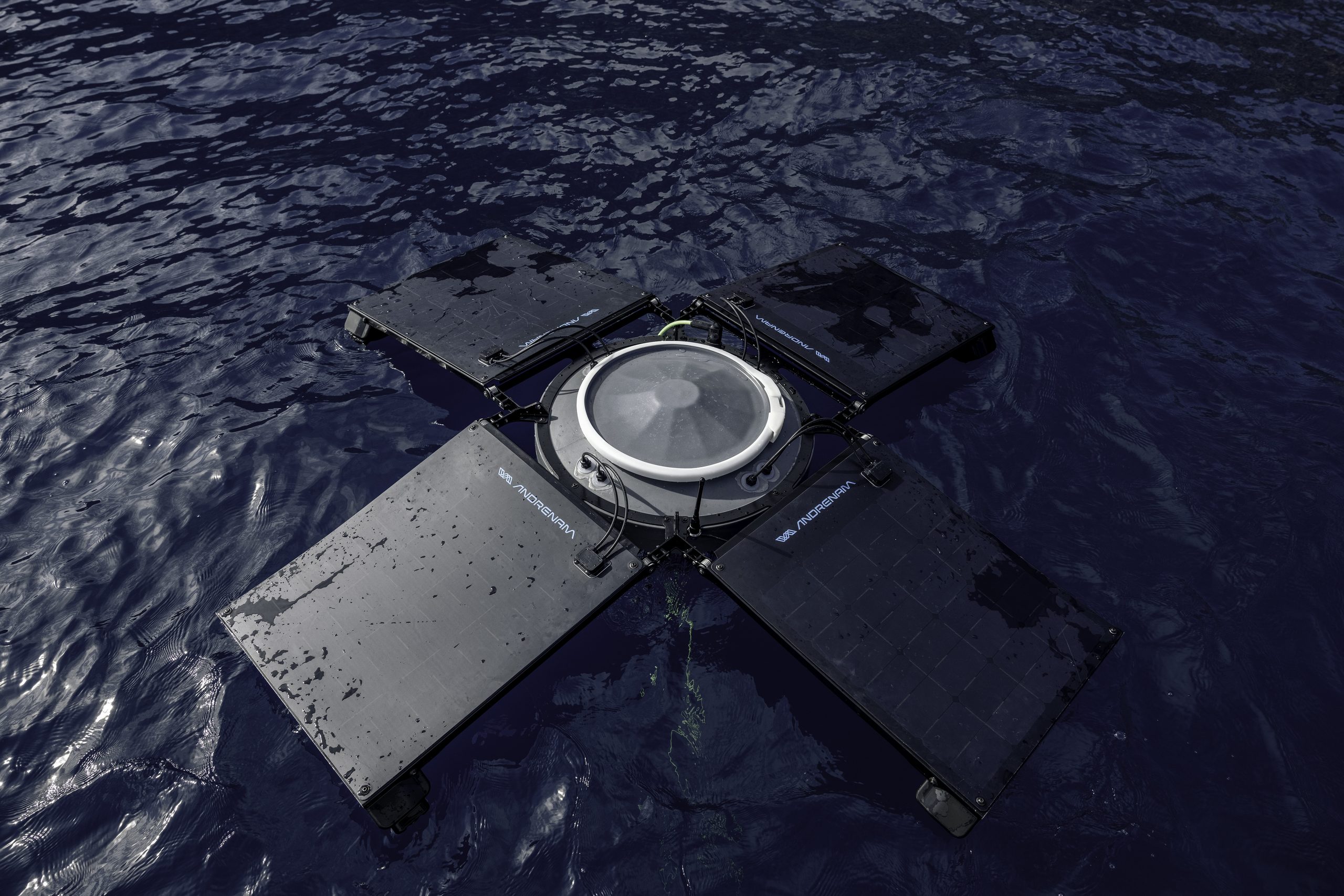
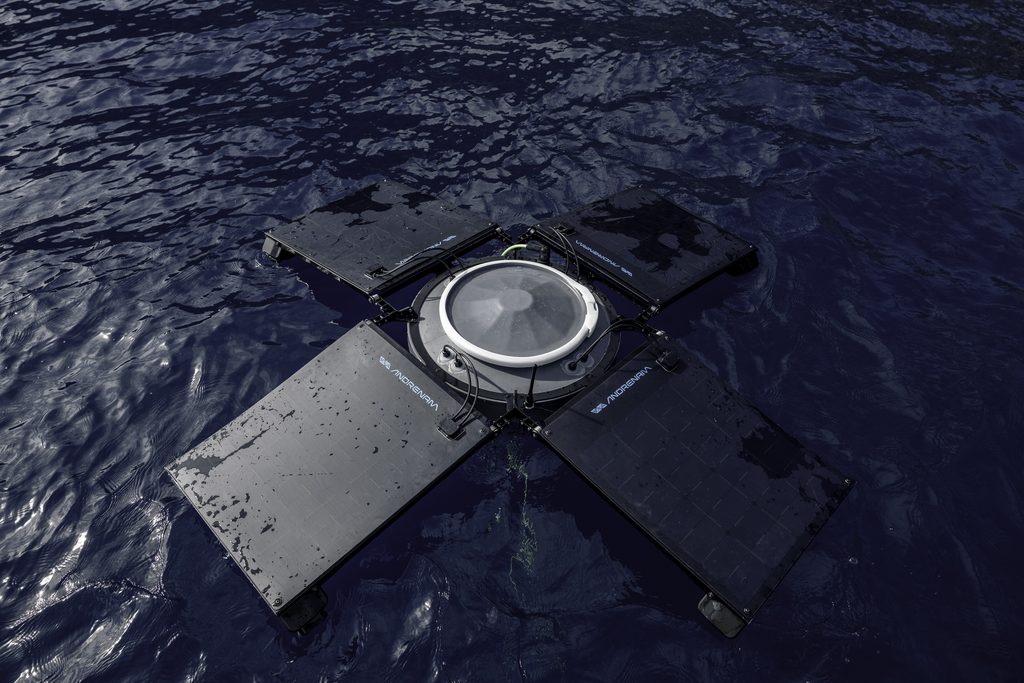
Andreman, based in Los Angeles, builds and deploys its PEARL floating sonobuoy to provide persistent acoustic monitoring. Unlike the short-duration A-size sonobuoys deployed from aircraft and the fixed-position large harbor-defense buoys, the PEARL is sized in between and deployed from boats or ships. It floats on the ocean surface and deploys hydrophones to monitor ocean depths for off-board alerting, detection, tracking, and classification of underwater targets. Its batteries are charged by solar panels that deploy when the buoy is set on the water. An uplink provides data via satellite to Andreman’s OBSIDIAN software for analysis by the customer. Software updates to the system also can be transmitted via satellite.
“Essentially this [PEARL] streams real-time acoustics to satellite communications anywhere in the world and has a longevity of about six months or more,” said Andreman’s co-founder and CEO, Matej Cernosek, in an interview with Seapower. The OBSIDIAN software “ingests all of this acoustic information in real time and processes it so that [it] transforms your spectrograms, but also and more importantly, beam forming and then multi-buoy sensor fusion.”
He described the PEARL as being three feet by three feet and weighing about 70 pounds. “They are designed to be semi-attritable,” he said. “And so that’s why we built a system that is much smaller, right, but also a lot more cost-effective per area of coverage and something that can last more than six months, but the design life is six.”
The low-profile PEARL can be free-floating or anchored. Cernosek said the PEARLs could function as choke-point monitors for anti-submarine warfare (ASW) missions.
ASW is just one of three current mission sets that Andreman addresses for its customers. The others are counter-UUV and counter-narcotics trafficking, against low-radar-signature narco-subs, for example.
Cernosek was not at liberty to discuss his customers in detail, but he did acknowledge that his company does have contracts with the U.S. Navy.
Cernosek recalled a conversation with Vice Admiral Richard E. “Rick” Seif, commander, Submarine Forces, in which the admiral said one of his top priorities was wide-area search and surveillance.
“That is exactly the mission set that we’re trying to solve towards and work towards, so attritable, mass, at scale, intelligent, so on,” Cernosek said.
“The company delivers the capability through a Contractor Owned, Contractor Operated managed sensing model, meaning customers can buy persistent coverage and actionable intelligence rather than another complex system to own, deploy and maintain,” Andreman said in a release. “As a Contractor Owned, Contractor Operated managed sensing service, Andreman deploys and operates distributed sensor networks so customers can buy persistent coverage rather than another complex system to own.”
Cernosek was a former engineer with SpaceX and Sierra Space who was looking to start a company but saw the UAV and UUV markets saturated with ventures.
“That’s why we [with a college colleague] wanted to focus on scalable undersea intelligence that software-defined hardware architectures, real-time machine learning and artificial intelligence, and so on,” Cernosek said in an interview with Seapower. “And so that’s how we gravitated towards passive sonar.”
By Richard R. Burgess, Senior Editor