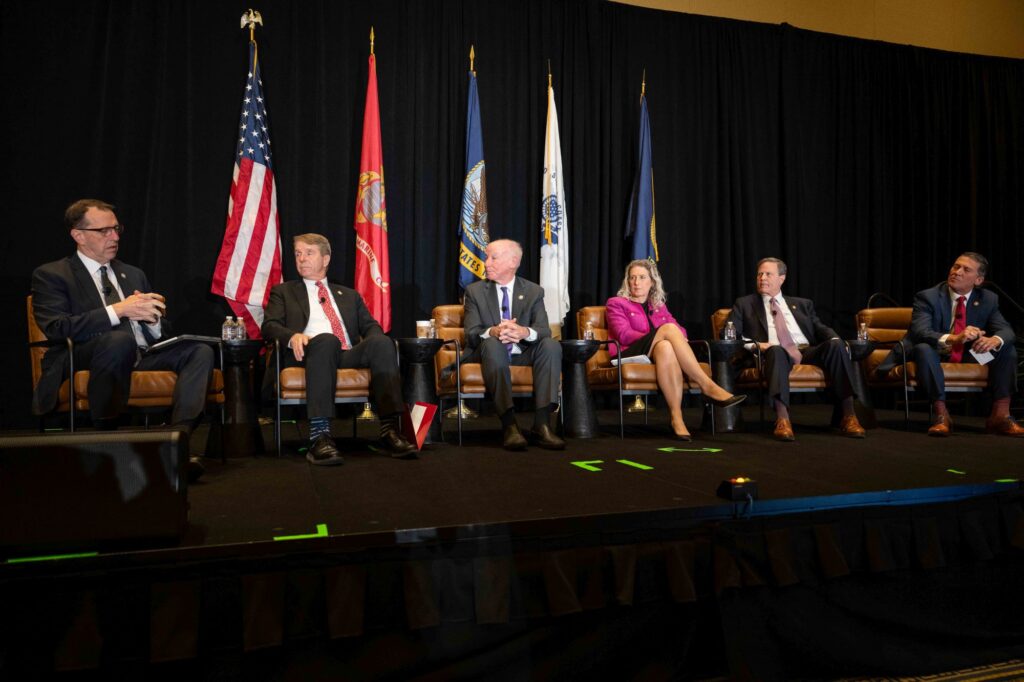
Speaking at the annual congressional breakfast at Sea-Air-Space, members of Congress with defense oversight agreed that sustained funding to meet increased demand signal is the best way forward.
In recent years, Congress has resorted to continuing resolutions for government-wide funding instead of passing separate funding bills, which freezes spending at current levels and amounts to a cut in real dollars.
This occasionally results in supplemental spending bills, such as the “Big Beautiful Bill” that passed last year and added money for shipbuilding and other defense needs.
However, “reconciliation is not the way to do it,” said Rep. Donald Norcross (D-New Jersey). Defense spending is currently “going the right way,” he said, but “top line yes, reconciliation no.”
Rep. Ronny Jackson (R-Texas), agreed that reconciliation funding leads to difficult math, as subsequent budgets are based on previous spending, so a budget cut often follows a reconciliation boom.
“We have to take reconciliation numbers and budget numbers and add them together, or we will be going in the wrong direction,” Jackson said.
And while government speakers have Sea-Air-Space have made some requests of industry to build systems they need and have plans to maintain them, Rep. Joe Courtney (D-Connecticut) said government owes industry something as well: contracts to indicate demand signal.
“Four years ago we authorized the block VI contract for Virginia [the Virginia-class submarine],” he said. “We still do not have a contract as we’re sitting here this morning.”
Nothing sends a more powerful signal to the shipyards and the supply chain than a contract, he said. “I know it’s being worked on right now, but I can’t say it enough, we’ve got to get this thing wrapped up … if we’re serious about doing this, let’s get it signed, and for Columbia [class subs] too.”