From U.S. Coast Guard Southeast District, May 14, 2026
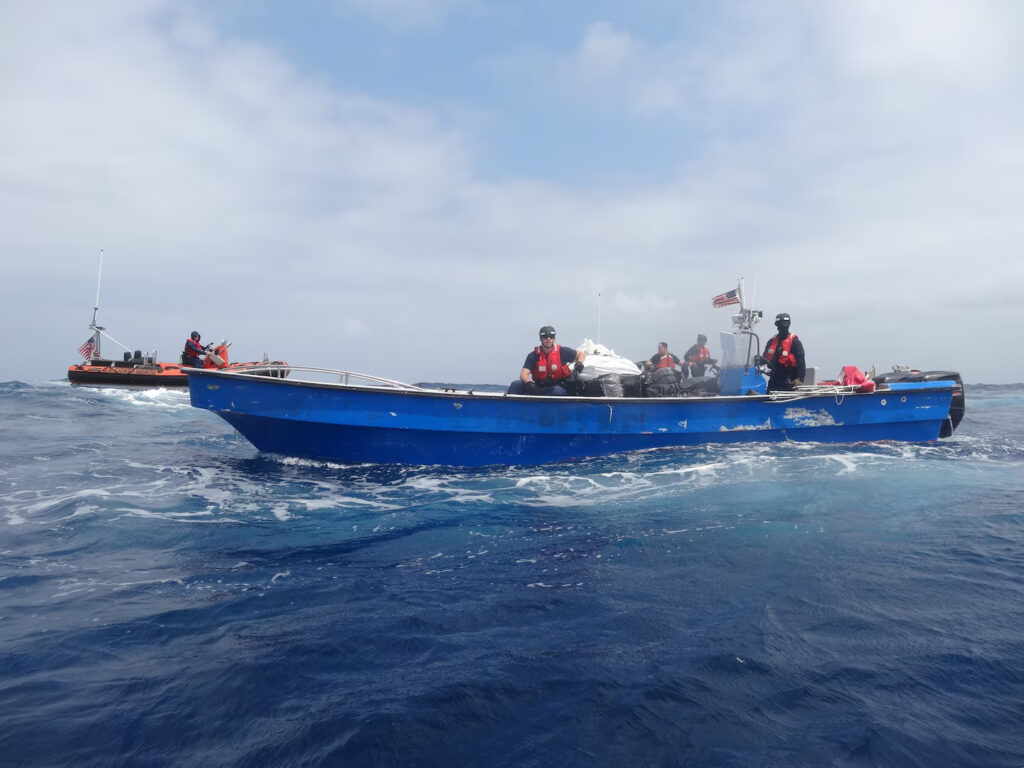
MIAMI – Coast Guard Cutter Tahoma’s crew simultaneously interdicted three suspected smuggling vessels carrying approximately 6,085 pounds of cocaine worth nearly $45.8 million, May 8, approximately 90 miles off Cartagena, Colombia. This seizure represents 2.3 million potentially lethal doses of cocaine that will not reach American streets.
Tahoma’s crew launched their two small boats and their deployed Coast Guard Helicopter Interdiction Tactical Squadron aircrew stopping all three vessels.
One vessel was non-compliant and required aerial use of force tactics, including precision sniper fire directed at the engines, to compel the vessel to stop resulting in the suspected smugglers on the vessel jumping overboard. The aircrew released multiple personal flotation devices, and the people were rescued with no reported injuries. The other two vessels stopped when directed by Coast Guard crews.
“Interdicting three vessels simultaneously is a testament to the unwavering professionalism, precision, and dedication of our crews,” said Cmdr. Nolan Cuevas, Tahoma’s commanding officer. “This interdiction prevented a significant number of illegal narcotics from reaching America’s shores, and their teamwork underscores the Coast Guard’s mission to protect our nation and saving lives.”
Tahoma’s crew will offload approximately 8,185 pounds of narcotics, worth nearly $61.6 million Thursday at Port Everglades.
“Executing such a complex mission demands the highest proficiency from our crew,” Cuevas said. “Our success required the integration of thoughtful training, carefully planned logistics, and joint coordination. We are very proud of our efforts to prevent illicit networks from threatening our security.”
The following assets and crews were involved in the interdiction operations:
- Coast Guard Cutter Tahoma
- Coast Guard Helicopter Interdiction Tactical Squadron
Coast Guard Cutter Tahoma’s offload continues record-setting Coast Guard operations to interdict, seize, and disrupt transshipment of cocaine and other bulk illicit drugs by sea. This includes the Coast Guard’s seizure of over 511,000 pounds of cocaine in 2025 – over three times the Service’s annual average – as well as accelerated counter-narcotics operations in the Eastern Pacific through Operation Pacific Viper. The Coast Guard’s persistent operations and rapid response have denied criminal organizations billions in illicit revenue and prevented the flow of dangerous drugs into American communities.
Eighty percent of interdictions of U.S.-bound drugs occur at sea. This underscores the importance of maritime interdiction in combatting the flow of illegal narcotics and protecting American communities from this deadly threat. Detecting and interdicting illicit drug traffickers on the high seas involves significant interagency and international coordination. Joint Interagency Task Force South, in Key West, conducts the detection and monitoring of aerial and maritime transit of illegal drugs. Once an interdiction becomes imminent, the law enforcement phase of the operation begins, and control of the operation shifts to the U.S. Coast Guard for the interdiction and apprehension phases. Interdictions in the Caribbean Sea are performed by members of the U.S. Coast Guard under the authority and control of the Coast Guard Southeast District, headquartered in Miami.
Coast Guard Cutter Tahoma is a 270-foot medium endurance cutter homeported in Naval Station Newport, Rhode Island under U.S. Coast Guard Atlantic Area Command.