The U.S. Navy’s Commander, Navy Installations Command (CNIC) has launched two related pilot programs aimed at expanding the quality and variety of food to which Sailors have access and improving their holistic wellness.
Those pilots are the Human Performance Optimization, or HPO program, and the Shore Food Service Transformation initiative.
The HPO launched Feb. 2 at Naval Base San Diego and provides Sailors with expert-led training across all aspects of physical, nutritional and mental wellness. Instead of the gym being just a place to work out, the HPO provides a “higher-end experience,” Vice Admiral Scott Gray, commander of Navy Installations Command, told reporters in an interview at the Washington Navy Yard.
Sailors at the Harborside Sports & Fitness Complex in San Diego now have access to a team of experts, including a dietician, cognitive specialist and human performance specialists to coach Sailors on proper nutrition, optimum sleep strategies, injury prevention and recovery, stress management and more.
“Everyone in that gym is going to be a fitness expert,” Gray said.
So far, 13,000 people have participated in the program and the Navy is monitoring the results.
“The whole point of the initiative is to learn from it,” Gray said.
Food Service Transformation
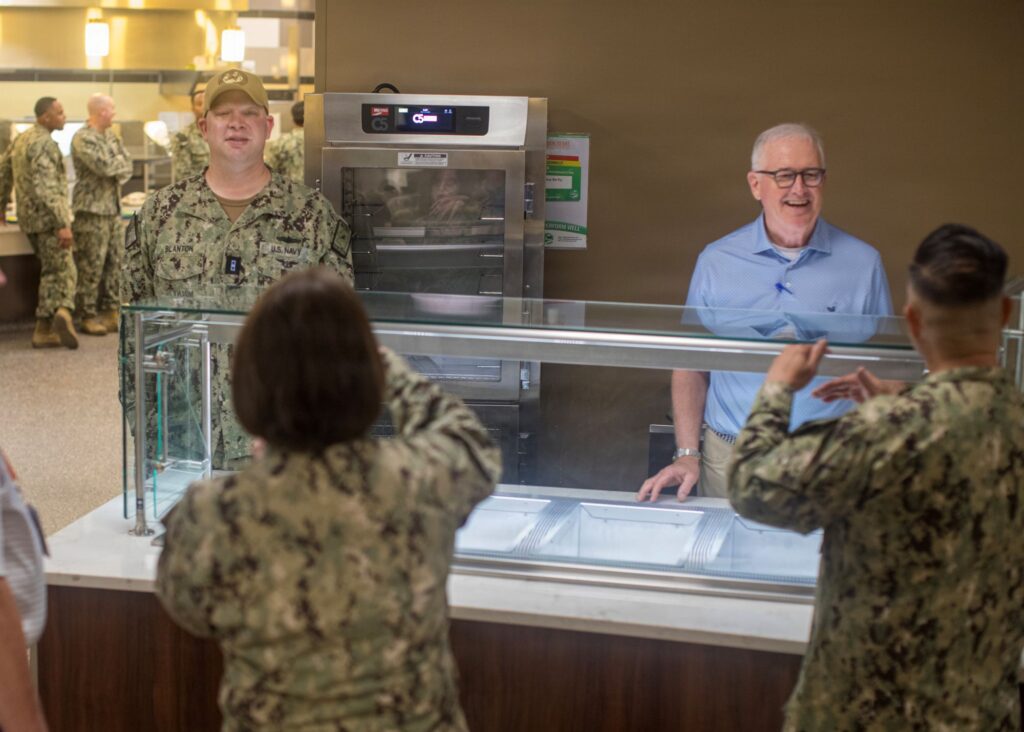
The food service transformation initiative has two pilot programs of its own, one that launched May 29 at Naval Construction Battalion Center Gulfport, Mississippi, and one launched June 3 at Naval Base Kitsap-Bangor in Washington state.
They have slightly different aims. The Gulfport pilot focuses on expanding and rotating ethnic food stations and refreshing and modernizing the interior of the galley. The Kitsap-Bangor pilot will allow Sailors to use their meal entitlements at Navy Morale, Welfare and Recreation (MWR) branded restaurants.
The galleys will continue to use “go for green” signage to help Sailors make healthy choices. Green is good, yellow means be cautious and red means food that should be an occasional treat.
“Everybody wants a burger now and then, but that shouldn’t be your only food source,” Gray said.
Galleys are also now providing healthy “grab and go” options for Sailors who might have missed galley mealtimes but still need to eat; that option should be rolled out to all installations by the end of this month, Gray said.
The Kitsap-Bangor pilot gives Sailors greater dining flexibility while still allowing them to use their meal allotments instead of paying out of pocket for meals outside of the galleys.
After spending nine months at sea eating in a ship’s galley, “the last thing they want to do is eat in another galley,” Gray said.
Galley gooks are also being trained by the Culinary Institute of America, which not only means better meals for Sailors but more skills training for the cooks.
As with the HPO, the Navy will be watching the results of the pilots. Will more Sailors eat in the galleys if they provide better options? Will they use their allotments at MWR-branded restaurants?
“We want to make our options and our expanded options attractive to our Sailors so that they use it, and that’s one of the things that we’re looking for is, as this plays out and as we roll it out, we’re looking to ensure that our utilization rate goes up and that the Sailors are taking better advantage of their entitlement, because it’s a significant portion of their compensation and when they’re not using it, they’re not helping themselves financially,” Gray said.
Eventually, CNIC plans to roll these two pilots together and offer them at all installations, although some will have more MWR-branded dining options than others and some installations may just have improved galleys.
“Ultimately, you will have expanded food options inside the galley and expanded food options outside the galley where we can provide it,” Gray said.
CNIC is assessing the first phase of rollout after the pilots, and anticipates rolling the transformation out to nine additional facilities between March and July of next year, with additional phases to follow after that.
The cost of all this is not insignificant, but needs to be done after years of budgetary neglect of Navy shore services, Gray said.
“We set that money aside before we started and come hell or high water we’re going to continue it and follow it through, and we will transform our food service, we will continue the expansion of Human Performance Optimization, even if I have to reshuffle things to make it happen,” Gray said. “I’m committed.”
CNIC oversees 10 Navy regions, 70 installations, and nearly 50,000 employees focused on warfighting and manning, training and equipping shore installations.