


Brett Davis is a lifelong journalist and writer with extensive experience writing about defense issues and technology. He studied journalism and photography at the University of North Alabama in his hometown of Florence and then earned a master’s degree in journalism from the University of Missouri. He worked for a dozen years as Washington Correspondent for the Huntsville Times newspaper, then became editor of Aerospace Daily & Defense Report, published at the time by McGraw-Hill. He served as content manager for Backfence.com, a pioneering local journalism website, was editor of Unmanned Systems magazine at the Association for Uncrewed Vehicle Systems International and editor in chief of Inside Unmanned Systems magazine for Autonomous Media. He previously served as Deputy Editor of Seapower magazine. He’s also a fiction writer: His latest, The Moon Above, is the story of a Tuskegee Airman published by Scarsdale Publishing.
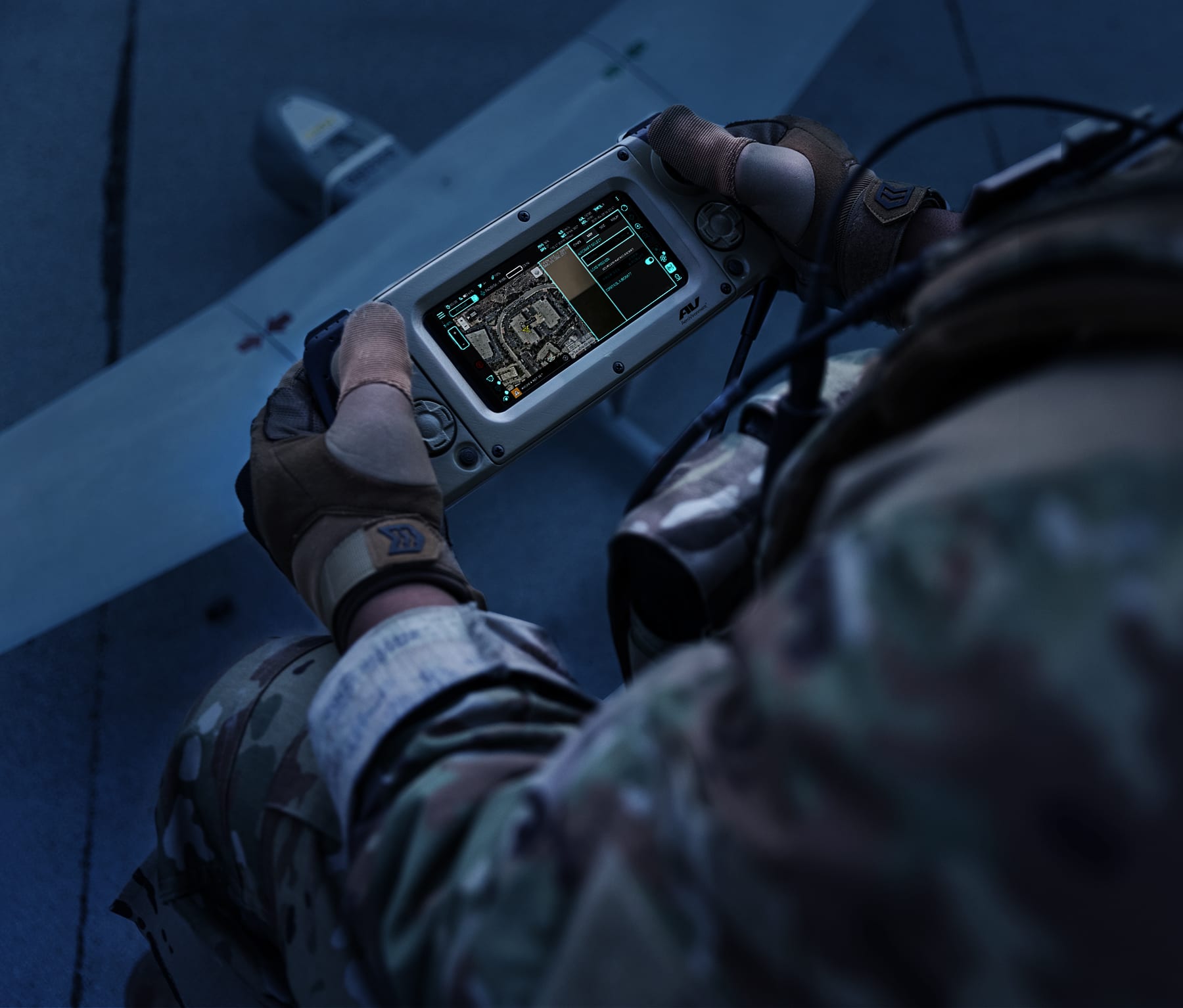
Unmanned aircraft maker AeroVironment announced Crysalis, a new flexible, cross-platform ground control system the company says will form the command-and-control basis for all its products going forward.
Company President and CEO Wahid Nawabi and other company officials announced the product in a live video press conference on July 6, saying the goal is to make command and control much simpler for the warfighter and provide a “window” to all the systems they control, eventually including air, ground and maritime equipment.
“With the introduction of Crysalis, we are streamlining command and control of our small UAS and empowering warfighters with actionable intelligence at the speed of war to increase their tactical decision making,” Nawabi said. “Crysalis can be integrated into our portfolio of intelligent, multi-domain robotic systems and deliver easy-to-use, yet powerful new capabilities that enable our customers to succeed in full spectrum operations.”
Crysalis, which the company calls “ground control, simplified,” is built around hardware, software and antennas and comes in four sizes: RVT, or remote video terminal, the smallest, wearable, phone-based system; Ultralight, also wearable, but which adds joysticks and physical controls and is the smallest size that allows full command and control; Tactical, which adds a battery splitter for hot-swapping batteries for longer power life; and Command, a laptop-based variant intended for a fixed or semi-fixed command post location.
It’s cross platform with Windows, Android and Linux, and is flexible in that an Android-powered Crysalis system on a phone could interact with a Windows system on a laptop.
Ease of use is key to reduce “cognitive load” on warfighters, Nawabi said, and the system is designed to put critical information front and center. Size was also a key driver for the system because, as Chief Software Engineer Mark Graybill said, “Weight is about how much ammo you can’t pack.”