
Bedrock Monitors the Ocean’s Seabed Infrastructure


Richard R. Burgess, is senior editor for Seapower magazine. He is a retired naval flight officer and author of several books on naval aviation.
A young California-based company is increasing its capabilities to monitor the world’s undersea and seabed infrastructure and provide ocean intelligence to customers to enhance the security of vital energy, communications, and security systems.
Bedrock Ocean Exploration, based in Richmond, California, is a small company — just over 50 employees — that is setting up overseas sites to be rapidly responsive to customer requirements, particularly in Europe, where nations are concerned about sabotage and other hostile actions by state and non-state entities against vital seabed infrastructure.
“We build the autonomous intelligence infrastructure to map, monitor, and make sense of the undersea world,” said Matt Tirman, chief executive officer of Bedrock, in an interview with Seapower. “Our founding is rooted in the fact that less than a third of the sea floor is mapped to modern day standards and at a fraction of that resolution that you need to find critical infrastructure, a mine, or shifted cable on the seabed. Most of our energy, commerce, and trade is running on an ocean that it can’t see. And we’re different than others out there. We built from the autonomy first. We built the software stack first because there is no GPS, there is no radio down in the subsea.”
Tirman, who previously helped grow the satellite imagery company, Satellogic, emphasized that the autonomous underwater vehicles (AUVs) used for subsea exploration “have to think for themselves. We went to look to run this autonomy stack on AUVs out there. We tried a number of them. None of them were fit for the needs that we had. … So, we built our own. We operate a fleet of AUVs that do sensing and mapping and bring that transparency from the seabed to space. We’re a true dual-use company, so we work with allied navies, the U.S. Navy, offshore energy in the Gulf, as well as overseas in the North Sea and elsewhere around Europe. So that same vehicle, that same data, and we’re truly the only full stack provider doing both today.”
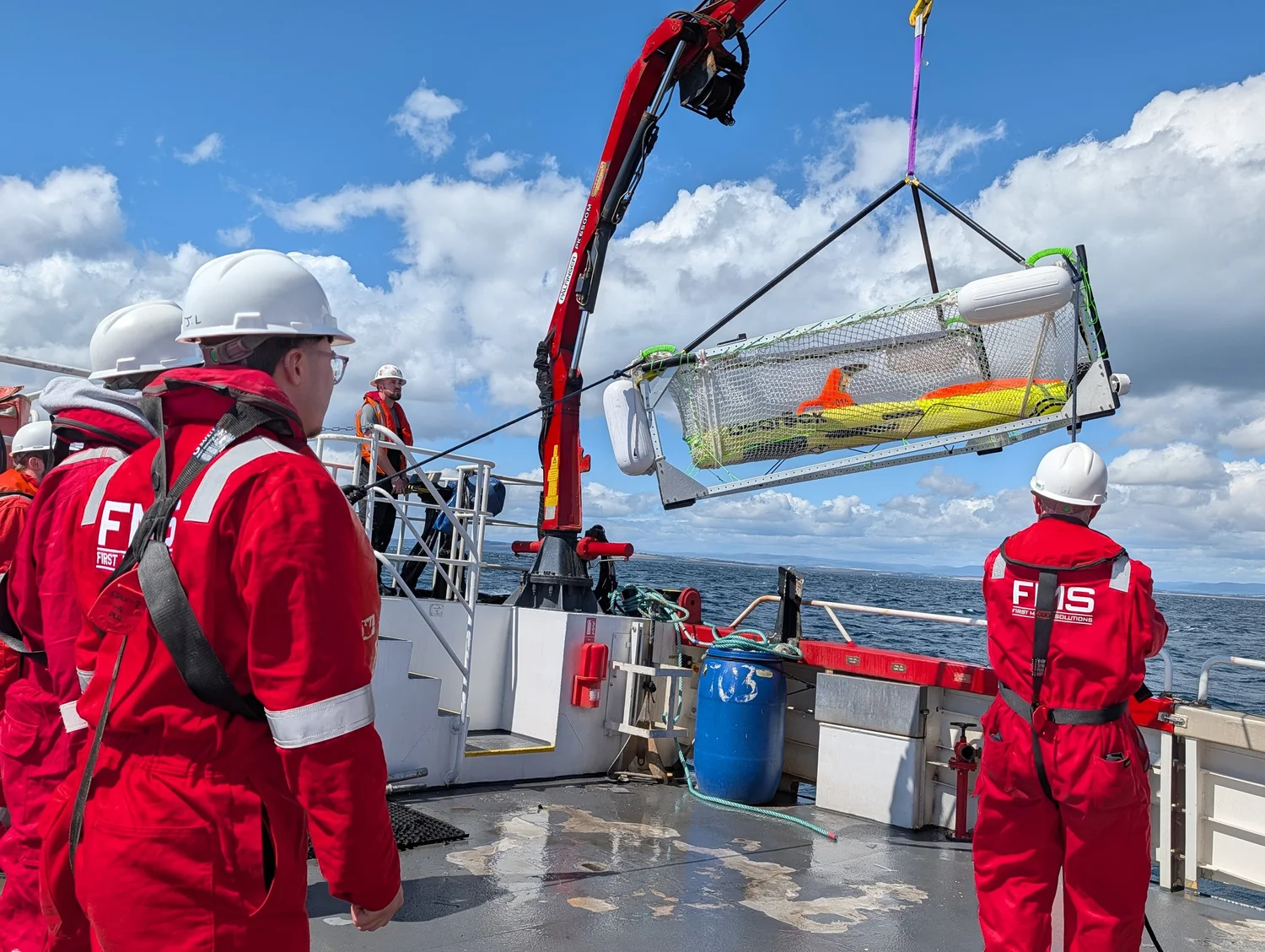
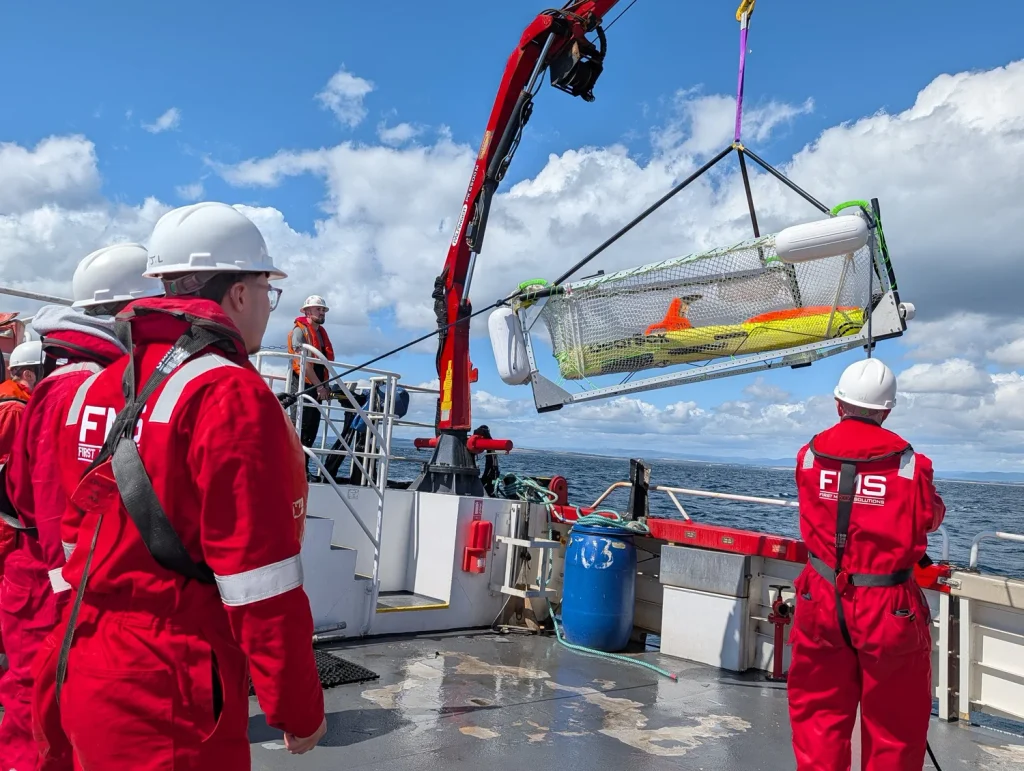
Bedrock builds its own AUVs — the Siren — for its operations, with Tirman noting that even with all of the AUVs in production, none met the company’s needs and qualifications.
“What we wanted, aside from having the ability to be vertically integrated, was a modular adaptable platform that we could plug and play different sensors,” he said. “We do all of our design, a lot of our in-house manufacturing, everything from the battery to the propulsor. You need a platform that’s extensible. You need a platform that you can build off of and build around your autonomy.”
Bedrock normally operates on a fee-for-services basis for AUV operating time and for the resulting data. Its customers often need service rapidly, so the company has set up a site in Aberdeen, Scotland, from which the company cadre of operators can mobilize respond rapidly for European customers. Bedrock has a team that can operate on a project basis. The company also has been discussing with the U.S. government about training government operators to participate in a company-owned/government-operated basis.
Regarding operations in Europe, Tirman said he thought “we’re transitioning from gray war to an acknowledgement that we’re in open war at this point. You have GuGi, which is Russia’s essentially their top secret subsea special operators are all around the Baltics and the UK, and there is a need for persistent awareness. There is a need for effectors and kinetic response, but there is a need for observability to see something on a persistent basis that you cannot observe. And that’s where we come in.”
Task Force 59 Experience
Colin A. Corridan, head of Government & Defense for Bedrock, is a retired U.S. Navy surface warfare captain who commanded Task Force 59, the U.S. 5th Fleet’s force that experimented with and pushed development of operations of unmanned systems, and later as acting director of the Disruptive Capabilities Office.
“Those last couple of jobs in the Navy shaped the way I look at problem solving and getting solutions to the war fighter quickly and particularly in the subsea environment and critical underwater infrastructure,” Corridan told Seapower. “And what I learned really quickly when I was out there [in Task Force 59] that the robotics and autonomous systems are great, but it really is about the data and how quickly you can get the data, manage the data, and get it to the decision makers quickly from a lot of disparate sources. [When] things were really starting to bubble up with the Houthis and the Red Sea, I really started to understand the importance of the seabed and critical underwater infrastructure and how important it is, how vulnerable it is, and the limited assets that we have to monitor and protect those assets.
“And the things that Matt was talking about that really resonated with me is when we talk about being able to deploy quickly, in my military mind, that’s expeditionary,” Corridan said. “We can be anywhere in the world in record time, and we’ve proven that with some of our European partners where we’ve mobilized from Northern California on a Friday and are operating on the water in Europe on Monday. … And so that ability to launch and recover from vessels of opportunity, be very expeditionary, go out and gather the data that’s needed and help be part of that larger solution for the war fighter is really what Bedrock’s value proposition is.”
Tirman said that Bedrock has done work for the Defense Innovation Unit in a mine-countermeasures challenge and in Exercise Lanternfish 2026.
“The idea was for [U.S. Naval Submarine Forces], how to pass sub-sea information fast, integrate with other industry partners and push the data that you’re collecting at speed into the common operating picture,” Corridan said. “We were able to do that and demonstrate that, so that was a really great step for us.”
Tirman said that Bedrock manufactures its equipment at Richmond, 17 miles from the former Navy submarine shipyard at Mare Island, by San Francisco Bay. He noted the rich subsea history and the talented machinists and composite manufacturers in the region and said that was the reason the company was located there.
By Richard R. Burgess, Senior Editor, Seapower Magazine