
Bell Awarded Contract for SPINE Upgrades to H-1 Fleet
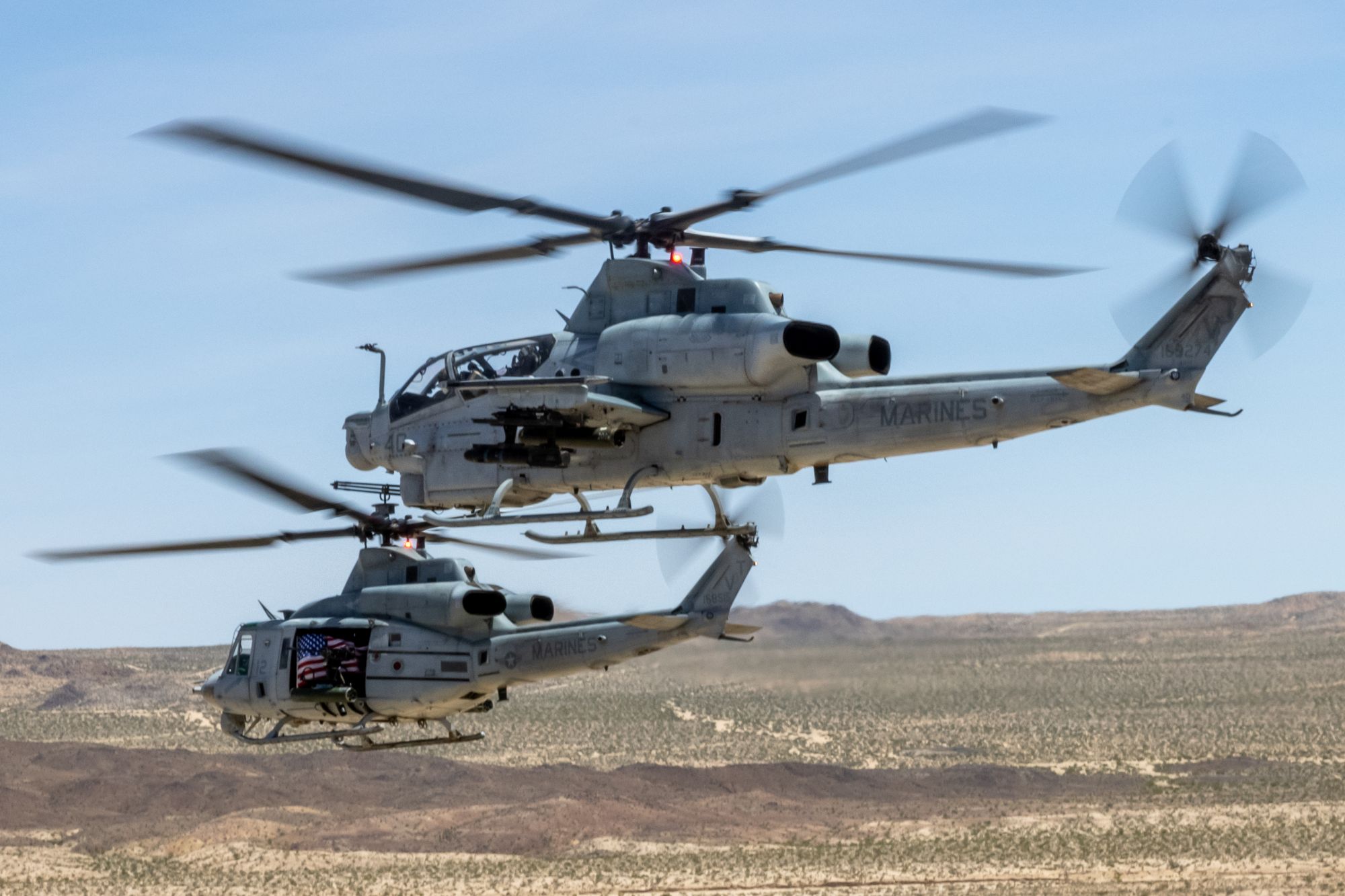


AMARILLO, Texas — Bell Textron Inc. has announced an estimated $300 million, firm-fixed-price, fixed-price incentive, and cost-plus-fixed-fee contract from the Department of Navy. This base plus three option years contract provides the Structural and Power Improvements for NextGen Effects (SPINE) upgrades on up to 49 U.S. Marine Corp AH-1Z Viper and UH-1Y Venom aircraft.
Known as “Phase 3.0,” the contract covers SPINE upgrades to 49 aircraft (21 UH-1Y, 28 AH-1Z) with work to be performed at the Bell Amarillo Assembly Center starting mid-2027 with first deliveries of the upgraded H-1 units in 2028.
“Beginning SPINE Phase 3.0 emphasizes the importance of this essential modernization effort and enables the USMC H-1 fleet to remain competitive with current and future capabilities,” said Danielle Markham, program manager, Bell. “SPINE will enable H-1 operators and maintainers to implement the equipment and technology needed to keep the aircraft as a fully interoperable member of the modern joint force throughout the lifetime of the H-1 fleet.”
The SPINE program, formerly known as SIEPU, provides greater electrical power capacity for modern warfighting capabilities and improved ability to integrate next-gen technology for enhanced lethality and survivability. SPINE-equipped H-1s will address improvements toward:
- Advanced and scalable architecture supporting rapid integration of current and future technologies
- In addition to aircrew safety enhancements, UH-1Y mission kit improvements to the fast rope, hoist, and litter kit provide the ability to rapidly conduct personnel recovery while operating in austere environments
- A vital Series A capability that provides integration of net-enabled weapon systems and data links. (Series A: Improved defensive systems, digital interoperability, increased aircraft electrical power.)
Equipped with more robust defensive systems, an advanced data bus, Link 16, and long-range net-enabled weapons, Series A Bell AH-1Zs and UH-1Ys will more effectively operate at altitudes and in environments exclusive to rotary wing platforms. Flying below radar resolution cells, the Viper and Venom will be undetectable to enemy radar while receiving target locations from Joint Force fixed wing assets that remain outside of the enemy’s missile range
his combined arms approach will leverage the strengths of both U.S. rotary wing and fixed wing platforms allowing USMC H-1s to contribute to the maritime fight and Joint Force in ways previously unavailable to Combatant Commanders.
“H-1s are essential to maintaining attack, strike, and utility capabilities within the Marine Corps and they do this while providing a large volume of fires. We are very pleased to see this modernization effort take another leap forward,” said Col Jason Duke, Program Manager, PMA-276. “The SPINE program will provide a significant increase to overall H-1 electrical capability to optimize advanced battlefield technology and ensure the H-1 fleet will continue to be relevant into the 2040s.”
In the fall of 2025, Bell completed the first SPINE upgrade on one UH-1Y and one AH-1Z, and those aircraft were then sent to Naval Air Station Patuxent River for flight testing. The Phase 3.0 contract signals the start of fleet modification into this new configuration at Bell’s Amarillo facility, with aircraft to be fielded by the USMC in future efforts.
Bell’s effort to modify the H-1 aircraft began at the company’s Drives System Center and Repair and Overhaul Center and culminated in the first aircraft electrical and structural modifications that took place in Amarillo. Successful execution of this program is a result of years of work and collaboration between U.S. government, Bell and industry partners.