Navy Requests 9 Battle Force Ships, 88 Aircraft for Fiscal 2024 
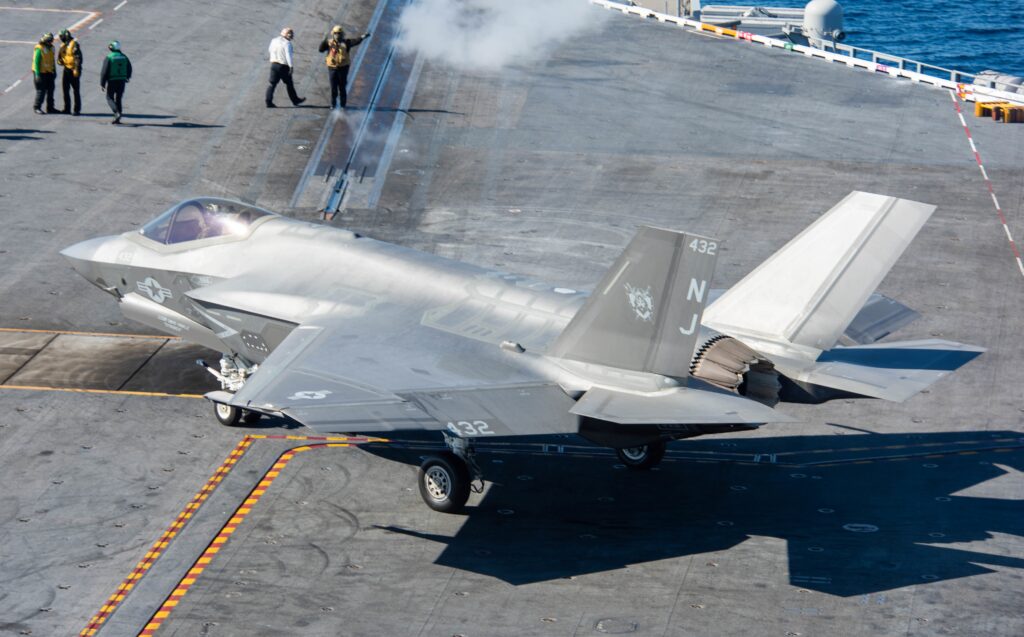
PACIFIC OCEAN (March 8, 2022) An F-35C Lightning II from the “Rough Raiders” of Strike Fighter Squadron (VFA) 125, taxis on the flight deck of the aircraft carrier USS Nimitz (CVN68). Nimitz is underway conducting routine operations. (U.S. Navy photo by Mass Communication Specialist 3rd Class Jared Mancuso)

************** 

ARLINGTON, Va. — The Navy Department is requesting funds for nine battle force ships and 88 aircraft in its fiscal 2024 budget proposal. The service also plans to decommission 11 battle force ships, some before the expiration of their service life. 

The 2024 request at $255.8 billion represents an $11.1 billion or 4.5% increase over the 2023 budget enacted by Congress, according to Undersecretary of the Navy Eric Raven and Rear Adm. John Gumbleton, deputy secretary of the Navy for Budget, briefing reporters March 13 at the Pentagon.

Ships

The nine ships in the $32.8 billion ship construction request include one Columbia-class ballistic-missile submarine (SSBN), two Block V Virginia-class attack submarines (and advance funding for four more), two Flight III Arleigh Burke-class guided-missile destroyers, two Constellation-class guided-missile frigates, one John Lewis-class fleet replenishment oiler, and one new-design submarine tender.  

Ship construction funding includes $5.8 billion for the first and second increments of the second Columbia-class, Wisconsin (SSBN 827). Funding also is requested for the Ford-class aircraft carrier program: the seventh increment for the third, Enterprise (CVN 80), and the sixth increment for the Dorie Miller (CVN 81). 

The budget allocates $1.8 billion for the final increment of the Fallujah (LHA 9), the fourth America-class amphibious assault ship.  

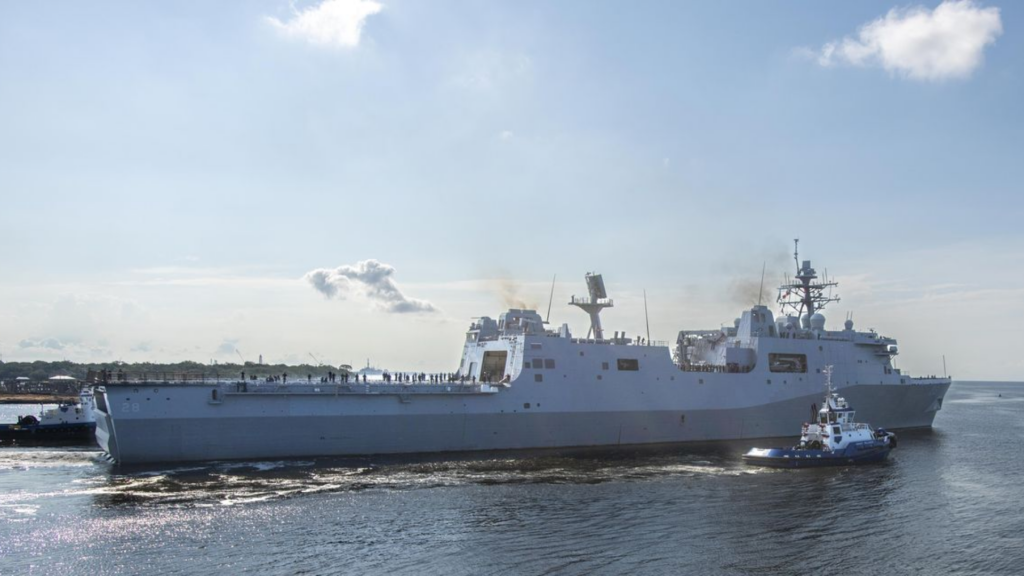
Of note, no funding is provided for any more Flight II San Antonio-class landing platform dock ships throughout the Future Years Defense Plan. Procurement of the new medium landing ship is planned for fiscal 2025 and the next-generation logistic ship is planned for 2027.  

The proposed budget also funds the procurement of two LCU 1700-class utility landing craft; two used ships for conversion to sealift ships; and the service-life extension of one air-cushion landing craft (LCAC). Procurement of the LCAC 100-class ship-to-shore connector is gapped for 2024, with resumption planned for 2025. 

Procurement of the Large Unmanned Surface Vessel and the Orca Extra-Large Unmanned Undersea Vehicle are funded for 2025 and 2026, respectively. 

The Navy plans to retire 11 ships, including eight which would be retired before the normal end-of service life. The ships to be retired include: one Los Angeles-class attack submarine, five Ticonderoga-class guided-missile cruisers, two Independence-class littoral combat ships, and three dock landing ships.  

Under the 2024 plan, the Navy’s battle force would decline by one ship to 293 ships. 

Aircraft

The budget proposal included $17.3 billion for the procurement of 88 aircraft for the Navy and Marine Corps. This includes 16 F-35B and 19 F-35C Lightning IIs; 26 T-54A multi-engine training aircraft; two KC-130J Super Hercules tanker/transports; 15 CH-53K King Stallion heavy-lift helicopters; five MQ-9A Reaper unmanned aerial vehicles (UAVs); two MQ-4C Triton UAVs; and three MQ-25A Stingray UAVs. 

Gumbleton said this budget request completes the procurement of the KC-130J (at 88 aircraft); the MQ-4C (at 22 aircraft), and MQ-9A (at 18 aircraft). The Navy’s stated requirement was for 68 MQ-4Cs, so this truncation represents a change in direction. The Navy Air Reserve has an unfunded requirement for 32 C-130J transports. 

As expected, the Navy has not requested any F/A-18E/F Super Hornet strike fighters. It remains to be seen if Congress will again fund more Super Hornets out of concern for the Navy’s strike fighter shortfall. 

The 2024 plan would leave the Navy and Marine Corps aircraft fleet at 3,998 aircraft, slightly under the 2023 total of 4,012. 

Marine Corps Vehicles

The Marine Corps plans to procure 80 personnel variants of the Amphibious Combat Vehicle and 396 Joint Light Tactical Vehicles in 2024. The Navy/Marine Corps Expeditionary Ship Interdiction System (NMESIS) and Long Range Fires (LRF) programs would continue development and testing of the Remotely Operated Ground Unit Expeditionary (ROGUE) Fires vehicle, an “unmanned ground vehicle based on a Joint Light Tactical Vehicle (JLTV) chassis mounting a missile launcher system,” the Navy’s budget briefing book said. The 2024 budget souls continue procurement of NMESIS systems as well as funding for 90 Naval Strike Missiles and, for the LRF, 34 Tactical Tomahawk missiles. 


Statement by Secretary of Defense Lloyd J. Austin III on AUKUS Optimal Pathway Announcement 

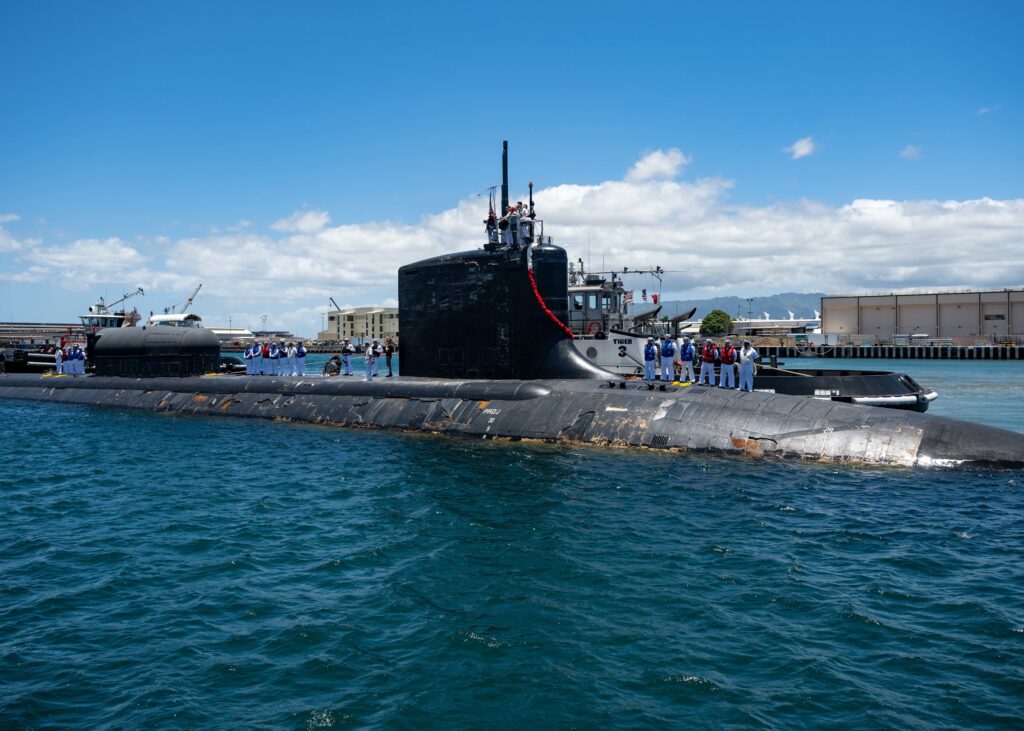
JOINT BASE PEARL HARBOR-HICKAM (May 25, 2022) The Virginia-class fast-attack submarine USS North Carolina (SSN 777) returns to Joint Base Pearl Harbor-Hickam from deployment in the 7th Fleet area of responsibility. North Carolina performed a full spectrum of operations, including anti-submarine and anti-surface warfare, during the extended seven-month, Indo-Pacific deployment. (U.S. Navy photo by Electronics Technician (Nuclear) 2nd Class Leland T. Hasty II)

Release from the Secretary of Defense 

***** 

MARCH 13, 2023 

Today, I was honored to join President Biden, Australian Prime Minister Albanese, and U.K. Prime Minister Sunak as they announced the AUKUS Optimal Pathway, a commitments-based, phased plan for Australia to acquire conventionally-armed, nuclear-powered submarines. This is the next step forward in the transformational partnership among our three great democracies.  

In September 2021, the United States, Australia, and the United Kingdom laid out an ambitious vision for our countries that will strengthen our combined military capabilities, boost our defense industrial capacity, enhance our ability to deter aggression, and promote our shared goal of a free and open Indo-Pacific. AUKUS is a shared, long-term investment that will allow us to build defense advantages that endure for decades to come.   

One of the most important parts of this partnership is increasing each of our countries’ submarine capabilities. Under the first phase of the Optimal Pathway, the United States and the United Kingdom will immediately increase port visits of conventionally-armed, nuclear-powered submarines in Australia and then, as early as 2027, will begin rotating through Australia under Submarine Rotational Force-West.  In the next phase, the United States intends to sell three Virginia-class submarines to Australia in the 2030s, with the potential to sell up to two more if needed. Finally, Australia and the United Kingdom will develop and deploy SSN-AUKUS, a new conventionally-armed, nuclear-powered submarine that incorporates critical U.S. technologies. Each phase of the Optimal Pathway will set the highest nuclear nonproliferation standards. 

We’re also working to strengthen our countries’ industrial bases; to eliminate barriers to information-sharing and technological cooperation; and to develop and deliver advanced capabilities in such areas as artificial intelligence, hypersonics, and maritime domain awareness. All these investments will allow us to work more closely with our valued and highly capable allies to deter aggression in the Indo-Pacific—a region whose future is crucial for U.S. national security and the rules-based international order that makes us all safer.   

I would like to thank the many public servants in all three proud democracies whose hard work has made this historic announcement possible. I look forward to working with my team and with our Australian and British counterparts to continue to move toward our shared vision of a stable, secure Indo-Pacific and an open world of rules and rights.


Navy Accepts Delivery of Ship to Shore Connector, Landing Craft, Air Cushion 105 

Release from Naval Sea Systems Command 

************** 

By Team Ships Public Affairs 

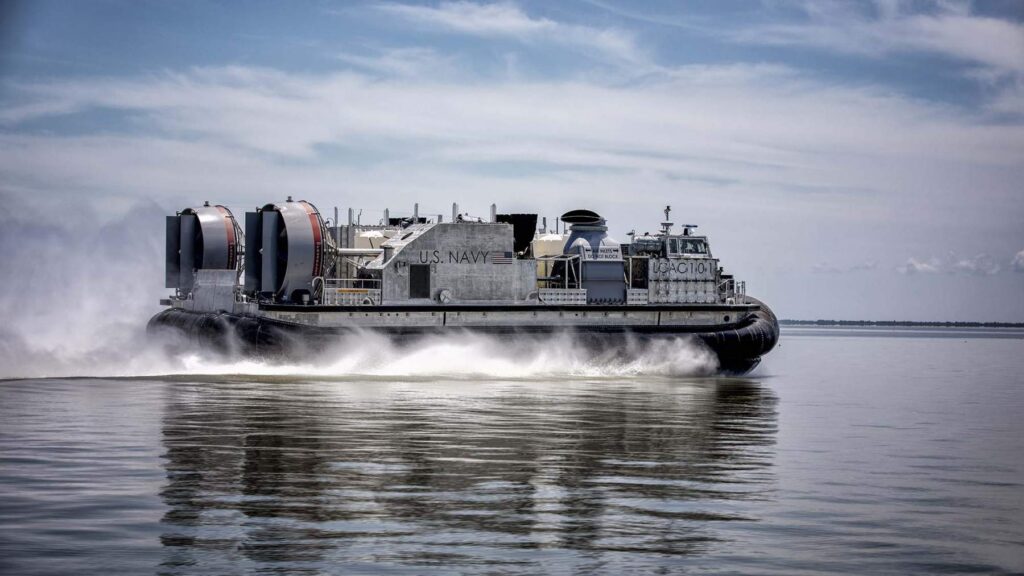
SLIDELL, LA – The Navy accepted delivery of the next-generation landing craft, Ship to Shore Connector (SSC), Landing Craft, Air Cushion (LCAC) 105, March 8. 

LCACs are built with configurations, dimensions, and clearances similar to the legacy LCACs they replace – ensuring that this latest air cushion vehicle is fully compatible with existing well deck-equipped amphibious ships, the Expeditionary Sea Base and the Expeditionary Transfer Dock. LCACs are capable of carrying a 60-75 ton payload. They primarily transport weapon systems, equipment, cargo, and assault element personnel through a wide range of conditions, including over-the-beach. 

“LCACs are a critical tool for the Navy, the Marine Corps, and all of our warfighters,” said Amphibious Assault and Connectors Program Manager, Program Executive Office (PEO) Ships, Capt. Jason Grabelle. “This delivery comes at an important time for the fleet, and their inclusion will only strengthen our posture.” 

The delivery of LCAC 105 comes after completion of acceptance trials conducted by the Navy’s Board of Inspection and Survey, which tested the readiness and capability of the craft to effectively meet its requirements. 

Textron Systems of Slidell, Louisiana is currently in serial production on LCACs 107-115. 

As one of the Defense Department’s largest acquisition organizations, PEO Ships is responsible for executing the development and procurement of all destroyers, amphibious ships, special mission and support ships, boats and craft. 


NAVFAC Pacific awards $2.8-billion contract task order for Pearl Harbor dry dock replacement 

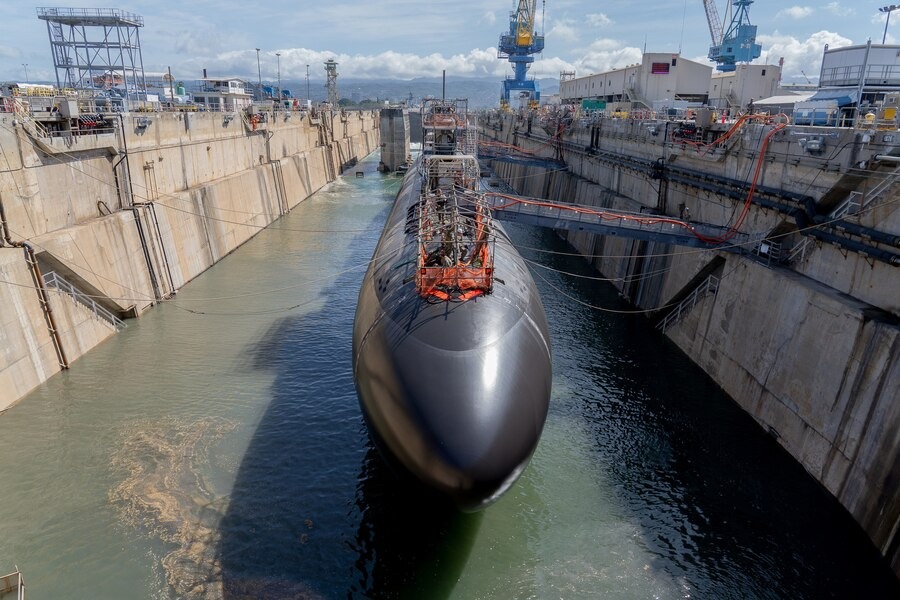
JOINT BASE PEARL HARBOR HICKAM, Hawaii (July 27, 2021) Pearl Harbor Naval Shipyard & Intermediate Maintenance Facility successfully undocked the Los Angeles-class fast-attack submarine USS Topeka (SSN 754) on time commencing a two-day evolution on July 27, 2021. This undocking is a major milestone in the submarine’s docking selected restricted availability (DSRA). Each undocking is a complex evolution that requires teamwork across the entire shipyard to ensure a safe and on-time event. (U.S. Navy photo by Amanda Urena)

Release from Naval Facilities Engineering Systems Command 

***** 

JOINT BASE PEARL HARBOR-HICKAM – Naval Facilities Engineering Systems Command (NAVFAC) Pacific awarded a $2.8-billion task order under a previously-awarded indefinite-delivery/indefinite-quantity multiple-award construction contract to Dragados/Hawaiian Dredging/Orion JV, based in Honolulu, Hawaii, to replace Dry Dock 3 at Pearl Harbor Naval Shipyard and Intermediate Maintenance Facility (PHNSY & IMF) March 10. 

The planned five-year project will construct a graving dock, to be designated Dry Dock 5, in order to support PHNSY’s ability to continue serving the Navy decades into the future by maintaining and modernizing the U.S. Pacific Fleet’s nuclear-powered submarines. 

“As part of the Navy’s Shipyard Infrastructure Optimization Program (SIOP), replacing Dry Dock 3 at Pearl Harbor Naval Shipyard is a critical enabler of increased naval capability,” said Pete Lynch, program executive officer for Industrial Infrastructure, who oversees SIOP. “This project is a key investment in increasing capacity and modernizing our nation’s public shipyards through upgraded dry docks and facilities, new equipment, and improved workflow.” 

Dry Dock 3 at PHNSY & IMF will become functionally obsolete once the Navy’s Los Angeles-class submarines are no longer in service. The dry dock, built in 1942, cannot service Virginia-class submarines or larger surface ships. 

“We look forward to working with Dragados/Hawaiian Dredging/Orion JV, Pearl Harbor Naval Shipyard, and all our stakeholders on this project over the next several years in order to deliver this critical capability to the Fleet,” said Capt. Steve Padhi, commanding officer of Officer in Charge of Construction (OICC) Pearl Harbor Naval Shipyard. “The project team and cooperating agencies have gone above and beyond to set the conditions for success. We have incorporated lessons learned and best practices from other dry dock projects and field offices across the Navy, and we have consulted with our construction contractors early in order to confidently meet the requirements we’ve been given. My OICC team and I are ready to get started on this historic effort.” 

The Navy is investing heavily in shipyard infrastructure for nuclear-powered warships. The Navy established SIOP to increase throughput at the four public shipyards by updating their physical layout, upgrading and modernizing their dry docks, and replacing antiquated capital equipment with modern tools and technologies. 

SIOP is a holistic investment plan that when fully executed will deliver required dry dock repairs and upgrades to support current and planned future classes of nuclear-powered aircraft carriers and submarines, optimize workflow within the shipyards through significant changes to their physical layout, and recapitalize industrial plant equipment with modern technology that will substantially increase productivity and safety. 

The full contract announcement is available at:  

https://www.defense.gov/News/Contracts/Contract/Article/3326241/


U. S. – Indo Joint Working Group on Aircraft Carrier Technology Cooperation Meets in India 

Release from Program Executive Office Aircraft Carriers Public Affairs 

***** 

March 9, 2023 

By Program Executive Office Aircraft Carriers Public Affairs 

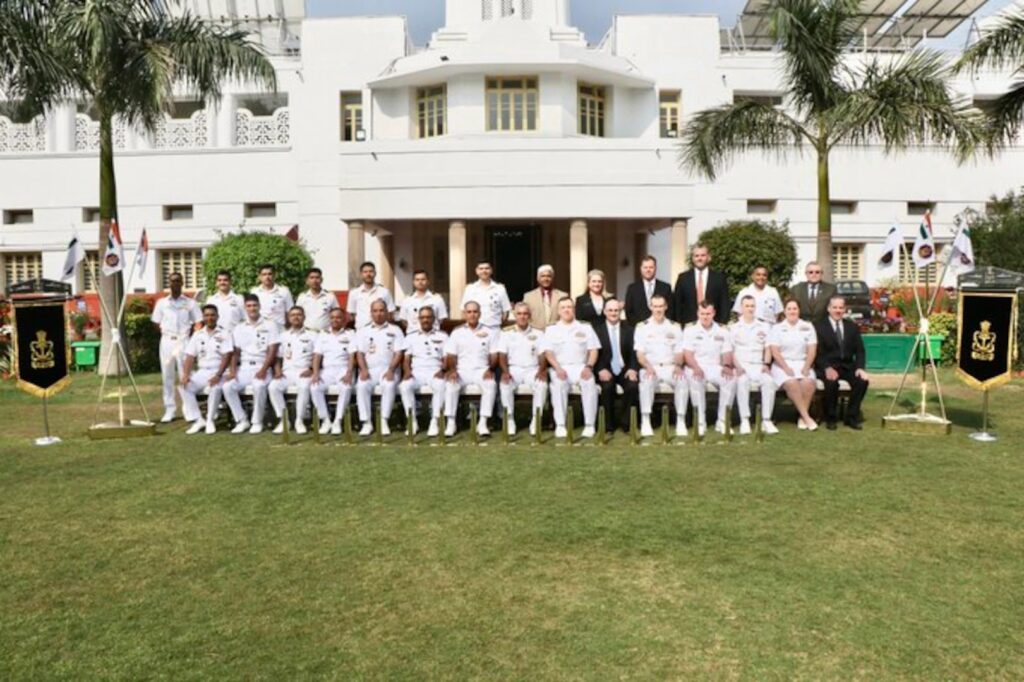
WASHINGTON NAVY YARD, DC – The sixth meeting of the U.S. – Indo Joint Working Group on Aircraft Carrier Technology Cooperation (JWGACTC) concluded on Mar. 3 in India, marking a successful, bilateral exchange of information and best practices in the areas of ship construction and maintenance. 

The five-day meeting, co-chaired by Rear Adm. James P. Downey, program executive officer for aircraft carriers, representing the U.S. delegation; and Rear Adm. Sandeep Mehta, Assistant Controller Carrier Projects for the Indian Navy, deepened a successful legacy of cooperation between the two Pacific nations—sessions launched in August 2015 as part of a U.S. – India Defense Technology and Trade Initiative (DTTI). 

“India is a vital strategic partner for the United States,” said Downey, “and our program office takes pride in the collaborative spirit we’ve built with our Indian Navy counterparts.  Our technology is diverse, while our goal is linked foundationally—to accelerate our respective missions of building and maintaining these extremely capable ships and systems that deliver readiness to our fleets.” 

In mid-February, India logged an important milestone when it completed initial flight deck trials on its first indigenous aircraft carrier, INS Vikrant. 

“Back in 2015, the first Indian Navy delegation visited Norfolk and toured the Gerald R. Ford [CVN 78] when she was still in construction at Newport News Shipbuilding,” Downey recalled.  “And this week, our U.S. team stood on board India’s new INS Vikrant, the largest naval ship ever built in India—that was an inspiring moment.”  INS Vikrant is expected to begin operations later this year, a step reflective of the government’s vision of Atmanirbhar Bharat, or greater self-reliance. 

JWGACTC Tour Highlights

In a robust slate of events conducted from 27 February to 3 March, JWGACTC representatives gathered in New Delhi at the Kota House and visited India’s Directorate of Naval Design, discussing areas of mutual interest in several technology areas, including topside aircraft carrier systems and aircraft / ship integration.  Meeting participants delivered updates and discussed opportunities for the two navies to expand cooperation under the initiative.  Rear Adm Downey also met with Vice Chief of Naval Staff Vice Adm. SN Ghormade, DTTI Interagency Task Force (DIATF) Co-Chair Lt. Gen. Manjinder Singh, and Vice Adm. Kiran Deshmukh, Controller of Warship Production and Acquisition. 

The combined delegation then flew to Kochi, Kerala, on India’s southwest coast, for a tour of Cochin Shipyard Limited, where INS Vikrant was built. Vikrant is the third ship to bear the name, and the first aircraft carrier built entirely by the Indian government and industrial base.  

Capt. Brian Metcalf, who leads the Gerald R. Ford-Class New Construction Program Office (PMS 378), appreciated the first-hand look at India’s indigenous ship building capability and Cochin’s modern facilities, tasked with designing and manufacturing the country’s next generation aircraft carrier. 

“Looking at our ships, the designs are clearly different: from propulsion to how we launch aircraft—Ford, for instance, using EMALS [Electromagnetic Aircraft Launch System] and AAG [Advanced Arresting Gear]; while India employs a STOBAR [short takeoff barrier-assisted recovery] system to launch aircraft off a ski-jump ramp,” said Metcalf. 

“In terms of the art and science of shipbuilding and sustainment and the need for building efficiencies into everything we do, whether that’s leveraging resources or building smarter, we share similar challenges and goals.  So we can benefit from hearing new operating philosophies and ideas for streamlining business practices.  All of that goes a long way toward enhancing interoperability at sea.” 

While in Kochi, Downey also visited India’s Southern Naval Command, meeting with Vice Adm. M.A. Hampiholi and visiting the Naval Institute of Aeronautical Technology and the School for Naval Airmen. 

Hampiholi afforded Downey the opportunity to meet with trainees at the Advanced Aero Engine Training Centre and to see the school’s Basic and Specialist Vehicle Simulator, mockup helo decks, and Virtual Reality-Aircraft Rescue and Fire Fighting Training Facility, as well as the Indian Navy’s P-8I long-range, multi-mission, maritime patrol aircraft simulator. 

After several years of interruptions due to COVID-19, JWGACTC participants were pleased to return to this annual in-person meeting format, with the face-to-face interaction fostering closer relationships, particularly among newer team members. 

“One-on-one as well as face-to-face team engagement is so important,” said Downey.  ”These forums and exchanges build trust and teamwork.  That’s when you learn across the joint team and when you establish solid foundations and protocols that enhance operations and interoperability for our futures.” 

Building on this highly successful meeting, the seventh JWGACTC meeting is scheduled to be held in the United States in 2024. 


Amphibious Warfare Industrial Base Coalition Advocates for 31 Amphibs

WASHINGTON — Amidst a backdrop of uncertainty regarding the final fleet size of the U.S. Navy’s amphibious warfare ships that carry Marine Corps expeditionary units, the Amphibious Warfare Industrial Base Coalition (AWIBC) during a March 9 Congressional Breakfast event made their case for providing a bare minimum of 31 amphibious warfare ships for future Marine Corps operations 

This goal was echoed by the keynote speaker, Commandant of the Marine Corps, Gen. David H. Berger, who has argued in favor of this amphibious fleet size despite pushback from notable Department of Defense detractors, both active and retired. 

The event also featured several members of Congress eager to support the commandant’s vision for 31 such amphibious vessels. Sen. Roger Wicker, R-Mississippi, made clear that he would fight for this objective, with fellow Mississippian Rep. Trent Kelly, also voicing his support. As ranking member of the Senate Armed Services Committee and chair of the House Subcommittee on Seapower and Projection Forces, respectively, these two members have a lot of leverage to make this goal a reality. 

Additional speakers included Sen. Tammy Baldwin, D-Wisconsin; Rep. Rob Wittman, R-Virginia, and Rep. Gallagher, R-Wisconsin, with AWIBC Chairman and retired Navy Capt. David Forster moderating. 


Navy Integrates Information Warfare Teams on Submarines 

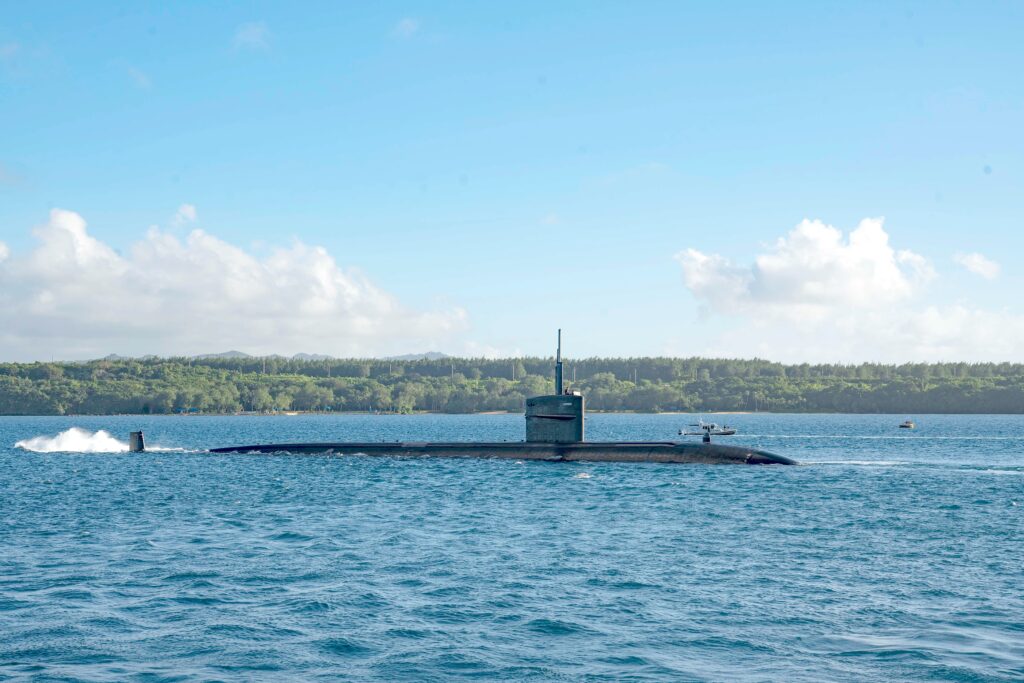
NAVAL BASE GUAM (Jan. 17, 2023) The Los Angeles-class fast-attack submarine USS Key West (SSN 722) departs Apra Harbor, Guam, Jan. 17, 2023. Key West is one of five submarines assigned to Commander, Submarine Squadron 15. Commander, Submarine Squadron 15 is responsible for providing training, material and personnel readiness support to multiple Los Angeles-class fast attack submarines and is located at Polaris Point, Naval Base Guam. (U.S. Navy photo by Lt. Eric Uhden)

*********** 

ARLINGTON, Va. — The Navy has begun integrating information warfare teams in submarines to increase the boats’ tactical information warfare combat capabilities, a senior admiral said.   

“We partnered with [Vice Adm. William J. Houston, commander, Naval Submarine Forces] and the submarine force last year to put Information Warfare officers and Sailors as permanent party, as part of submarine crews,” said Vice Adm. Kelly Aeschbach, commander, Navy Information Forces, speaking March at the online Defense One State of the Navy seminar. 

“We piloted the effort on two submarines, where we have an officer and three Sailors who have integrated with the crew and are allowing the crew to focus on the execution of their submarine duties,” Aeschbach said. 

The Information Warfare teams on board use their expertise to help the submarine crew with “electronic warfare, intelligence preparation of the environment, and the other requirements they have in terms of cyber security and assured communications,” she said. 

“The feedback so far has been really positive and I’m optimistic that we’re probably going to move out with permanent integration of information warfare personnel on submarines, which I think is really powerful addition to the great work that our submarine force already does for us.” the admiral said. 

Aeschbach said that in the past information warfare personnel teams were deployed on board submarines for certain missions or operations but were not integrated full-time. 

“The submarine force recognized how challenging and competitive the undersea environment is now, that it would really be force multiplier … permanently embedded to bring that expertise to bear in support of their operations,” she said.  

The admiral did not specify the class(es) of the two submarines with the integrated teams. 

Aeschbach also said the Navy has established the Fleet Information Warfare Command Pacific, led by Rear Adm. Michael J. Vernazza, “focused at the flag level on the delivery and integration of our information capabilities [in the Pacific Fleet] and I think it is really helping us move at the operational level of war in the completed integration of what we can deliver in space, cyber, intelligence, weather, etc., all of the capabilities that are in the information portfolio. 


Layer by Layer: 3D Printing is Navy’s Flexible Supply Source

Featured in Seapower Magazine Feb/March Issue (p. 21)


SECNAV Renames Pathfinder-class Oceanographic Survey Ship USNS Maury after Marie Tharp 

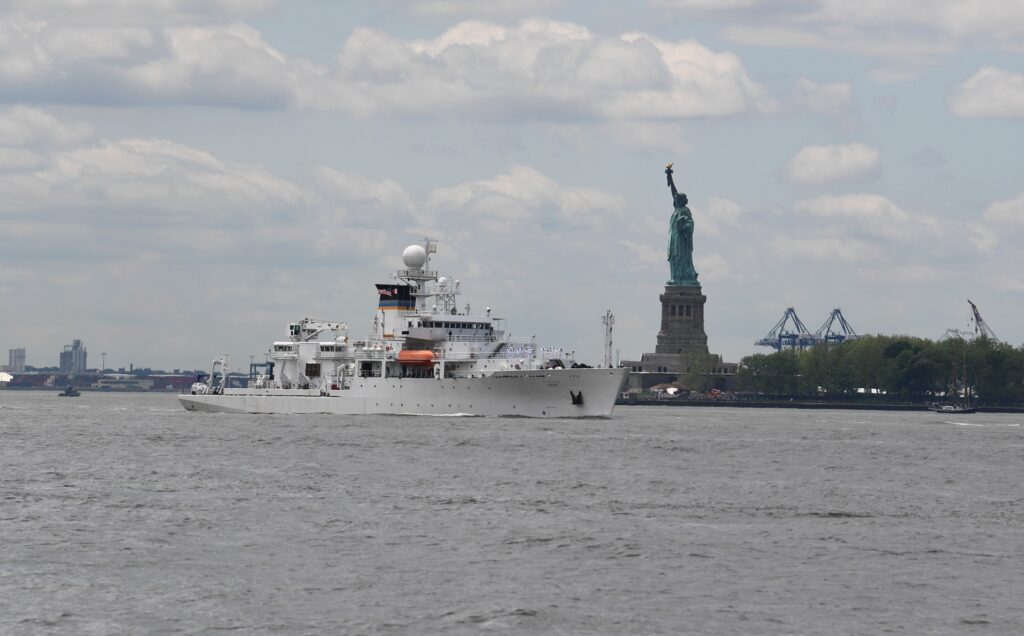
During the parade of ships, USNS Maury (T-AGS 66) passes Lady Liberty on the way into port as part of Fleet Week New York, May 23, 2018. Marines, Sailors, and Coast Guardsmen are in New York to interact with the public, demonstrate capabilities and teach the people of New York about America’s sea services. (U.S Marine Corps photo by Sgt. Annika Moody)

Release from the Navy Chief of Information 

***** 

SECNAV Renames Pathfinder-class Oceanographic Survey Ship USNS Maury after Marie Tharp 

08 March 2023 

Today, on International Women’s Day, Secretary of the Navy (SECNAV) Carlos Del Toro announced that the Pathfinder-class oceanographic survey ship formerly named USNS Maury (T-AGS 66) has been renamed USNS Marie Tharp (T-AGS 66). 

This renaming honors Marie Tharp, a pioneering geologist and oceanographic cartographer who created the first scientific maps of the Atlantic Ocean floor and shaped our understanding of plate tectonics and continental drift.   

The decision arrived after a congressionally mandated Naming Commission outlined several military assets across all branches of service that required renaming due to confederate ties. In September 2022, Secretary of Defense Lloyd Austin accepted all recommendations from the naming commission and gave each service until the end of 2023 to rename their assets.  

“I’m pleased to announce the former USNS Maury will be renamed in honor of pioneering geologist and oceanographic cartographer, Marie Tharp. Her dedication to research brought life to the unknown ocean world and proved important information about the earth, all while being a woman in a male-dominated industry,” said Del Toro. “As the history of our great Nation evolves, we must put forth the effort to recognize figures who positively influenced our society. This renaming honors just one of the many historic women who have made a significant impact on not only our Navy, but our Nation.” 

Tharp was born in 1920 and graduated from the Ohio University in 1943. Due to WWII, more women were recruited into a variety of professions, prompting the University of Michigan to open their geology program to women, resulting in Tharp completing her master’s degree in 1944. After working in her field for a few years, Tharp became one of the first women to work at the Lamont Geological Observatory. During this time she met Bruce C. Heezen (namesake of T-AGS 64) and worked together using photographic data to locate downed military aircraft from WWII. Between 1946 and 1952, Woods Hole Oceanographic Institute’s research vessel, Atlantis, used sonar to obtain depth measurements of the North Atlantic Ocean, which Tharp, in collaboration with her colleague, Heezen, used to create highly detailed seafloor profiles and maps.  While examining these profiles, Tharp noticed a cleft in the ocean floor that she deduced to be a rift valley that ran along the ridge crest and continued along the length of its axis, evidence of continental drift.  At the time, the consensus of the U.S. scientific community held continental drift to be impossible, but later examination bore out Tharp’s hypothesis.  Her work thus proved instrumental to the development of Plate Tectonic Theory, a revolutionary idea in the field of geology at the time.  Owing to this and other innovative mapping efforts (some which the Navy funded), the National Geographic Society awarded Tharp its highest honor, the Hubbard Medal, placing her among the ranks of other pioneering researchers and explorers such as Sir Ernest Shackleton, Charles Lindbergh, and Rear Admiral Richard E. Byrd.  

The logistical aspects associated with renaming the ship will begin henceforth and will continue until completion with minimal impact on operations and the crew. 

T-AGS 66 was accepted in 2016 and named USNS Maury (T-AGS 66) after Commander Matthew Fontaine Maury, the “Father of Modern Oceanography” who resigned from his Navy career to accept a command in the Confederate States Navy. The former USNS Maury was the only US Navy Vessel named after a Confederate military officer. T-AGS 66 is currently assigned to Military Sealift Command and is in the Persian Gulf.  


ONE TEAM, NSWC PCD brings flexibility to the future of diving 

Release from Naval surface Warfare Center Panama City Division 

***** 

ONE TEAM, NSWC PCD brings flexibility to the future of diving 

By Jeremy Roman, NSWC PCD Public Affairs 

PANAMA CITY, Fla.  –   

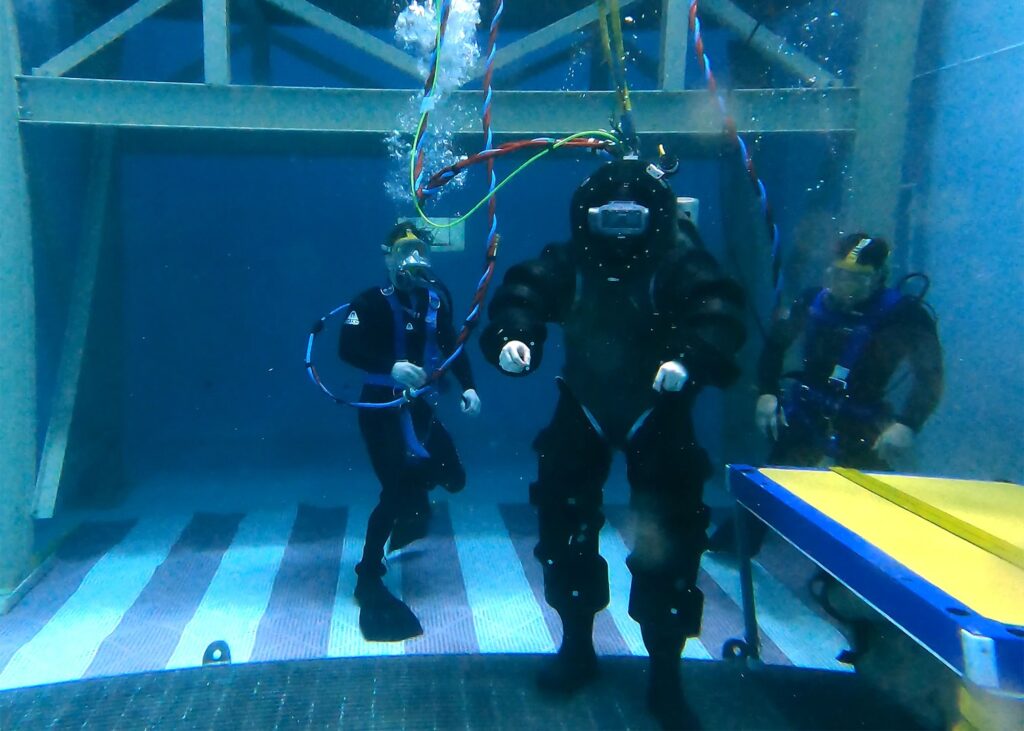
After months of planning, the mission to rapidly deliver solutions to ensure warfighting dominance moved one step closer during the Deep Sea Expeditionary with No Decompression (DSEND) Suit In-Water Concept Demonstration held at the U.S. Navy Experimental Diving Unit (NEDU), Feb. 7 – 8. 

The DSEND demo tested the capabilities of a new concept suit aimed to help divers navigate their environment more efficiently. Allie Williams, Naval Surface Warfare Center Panama City Division (NSW PCD) Fleet Diving In-Service Engineering Agent, explained some of the highlights from this successful demonstration.  

“This test was conducted as a proof of concept demonstrating the DSEND suit’s flexibility and maneuverability under the diver’s own power,” said Williams. “The operator was [also] wearing a Divers Augmented Vision Display (DAVD) system inside the suit to demonstrate the future permanent integration of DAVD, as well.” 

While performance-capable, the current Atmospheric Diving Suit (ADS) is also heavy, lacks maneuverability and requires relatively large sea craft for deployment. This project aims to innovate the previous ADS on several fronts including improvements to its current rotary joint design. For example, the current ADS does not allow movement in the same direction as natural human joints, which can contribute to diver fatigue. This new suit concept would enhance a diver’s range of motion, without considerable strain or force, while providing the added benefit of allowing the user to swim independent of propulsion systems. 

An additional program objective is to develop a swimmable dive suit that maintains atmospheric pressure internal to the suit and can withstand pressures up to 300 feet of seawater (fsw). Further development could enable it to greater depths. 

“The demo went well and served as a good proof of concept for the project. We received good feedback and it was valuable to have the chance for follow-on testing,” said Williams. “This program will provide new capabilities to the warfighter by creating a more flexible and lightweight ADS, compared to the previous more costly and burdensome capabilities.” 

Not only does this demonstration move the project closer to interoperability capability, it also strengthens partnerships through the organizational collaboration of Naval Sea Systems Command 00C3, Office of Naval Research 342, NSWC PCD, Naval Undersea Warfare Center Keyport, Nuytco Research, Mide Technology, Coda Octopus and NEDU. They will continue their respective work to complete their primary objective, which is to develop a suit that will replace the 300 fsw Mixed Gas Diving Systems and eventually go to greater depths.