
Fy 2027 Shipbuilding Plan Provides Stark Assessment, but Questions Remain
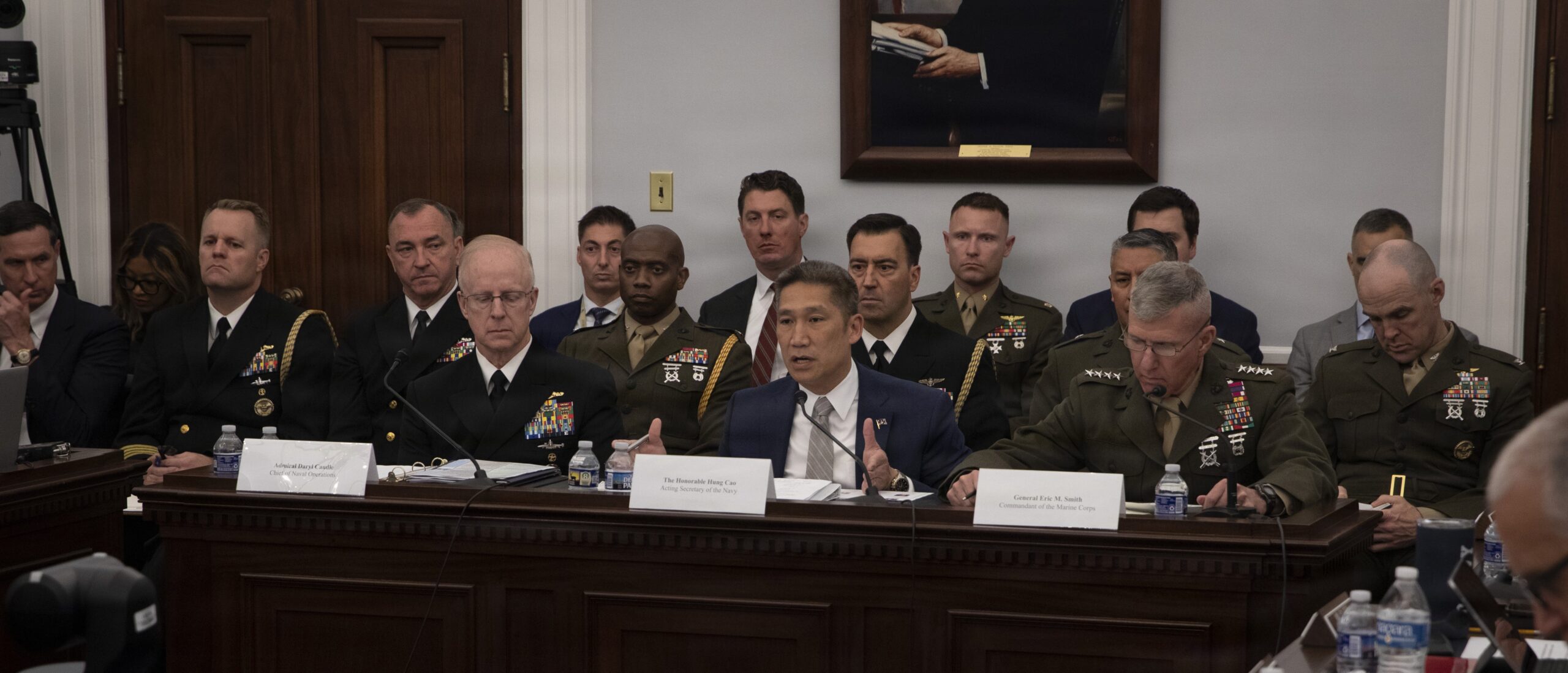


In May 2026, the U.S. Navy released its 30-year shipbuilding plan for fiscal year 2027. This document came at a critical juncture for the Navy. While the naval operations against Iran and suspected narco-traffickers have highlighted the importance of achieving maritime dominance, the shipbuilding plan was released shortly after the ousting of former Secretary of the Navy John Phelan, a move largely driven by the White House’s frustration with the service’s slow shipbuilding progress.
With the White House requesting $65.8 billion to support naval shipbuilding in the FY 2027 budget, the pressure was on the Navy to provide a clear vision for how those funds could be used to meaningfully increase its fleet size, which is only one ship larger in 2026 than it was in 2003, despite America’s shipbuilding budget having nearly doubled over the past two decades.
The Navy’s newest shipbuilding plan provides a stark and honest assessment of America’s current maritime industrial capacity. The report’s foreword, written by Acting Secretary of the Navy Hung Cao, notes America’s maritime industrial base has been “weakened by inconsistent demand and misaligned priorities,” which “left our Fleet smaller, our shipyards reduced in numbers and atrophied in capability, and our people facing unacceptable risk.”
To offset this industrial decline, the Navy seeks to create a new “Golden Fleet,” an endeavor Cao describes as “a generational undertaking to restore America’s position as a seapower state.” Accordingly, the plan calls for the construction of 122 ships (including 63 uncrewed platforms), with the goal of increasing the size of the Navy’s crewed battle force to 355 ships by FY 2040. Previous 30-year shipbuilding plans have underdelivered on similar promises to increase fleet size and revitalize American shipbuilding. To meet the Navy’s needs, this plan must succeed where its predecessors have failed.
Core Principles
The shipbuilding plan is based on three core principles: the need to reform the acquisition and shipbuilding processes; the need to build a larger, stronger, and more balanced fleet; and the need to revitalize America’s industrial base.
To achieve the first of these principles, the plan calls for the adoption of a new acquisition strategy focused on supplier accountability. To achieve this, the plan prescribes an increased reliance on Portfolio Acquisition Executives and Vessel Construction Managers to help oversee the end-to-end procurement and building of ships in hopes of reducing the frequency and severity of cost and time overruns in shipbuilding projects.
The plan also envisions creating a more balanced fleet composed of both high-end warfighting assets such as aircraft carriers and ballistic missile submarines, as well as uncrewed ships and lower-end vessels that can be produced quickly and inexpensively.
Finally, the plan seeks to reinvigorate America’s maritime industrial base by supporting the modernization of existing yards and cultivating foreign investment in American shipbuilding. The document embraces “distributed shipbuilding,” increasing work at smaller sites from 10% to 50% in hopes of reducing shipbuilding backlogs and “leveraging industrial capability across the country, not just at a handful of legacy shipyards.”
In many ways, the shipbuilding plan represents the Navy’s attempt to merge several distinct strategic visions and priorities held by key leaders within the White House and Pentagon. The plan’s efforts to create a fleet composed of both high-and-low-end combatants reflects the logic of the “hedge strategy” that has been embraced by Chief of Naval Operations Admiral Daryl Caudle, which prescribes a “a balanced, adaptable force designed to maintain decision advantage, preserve escalation dominance, and prevail across the full spectrum of operations.” Like the hedge strategy, the shipbuilding plan envisions uncrewed systems playing an essential role in the Navy’s future fleet, “providing tailored offsets that increase mission success rates while transferring risk away from high-value units.”
The plan similarly reflects many of President Trump’s key policy priorities, namely the broad and geographically diverse reinvestment in American manufacturing and industrial capacity, the push for increased allied investment in America’s defense industrial base and the creation of a Golden Fleet with the Trump-class BBGN battleship at the core of this endeavor. The plan calls for 15 BBGN ships to be purchased over the next 30 years and argues the battleship “addresses a fundamental requirement in modern naval warfare: the need to generate sufficient combat mass to culminate battle,” and that it provides “decisive, high-volume fires and survivable command and control.”
Contradictions
However, the Shipbuilding Plan’s efforts to consolidate these competing visions for the Navy’s future also highlight the contradictions in these approaches. For instance, how does the plan’s call to build the BBGN battleship, which concentrates significant mass and capabilities into a single vessel, mesh with the Navy’s larger move towards distributed lethality embodied by the hedge strategy?
Similarly, it is unclear how the BBGN aligns with the Navy’s push to expedite shipbuilding projects. The BBGN is a large and incredibly complex ship not only designed to perform multiple warfighting functions (the shipbuilding plan calls the BBGN a “tactical command-and-control platform” whose “primary role is to deliver high-volume, long-range offensive fires”) but will reportedly feature armaments which are themselves still in development (such as laser-directed energy weapons).
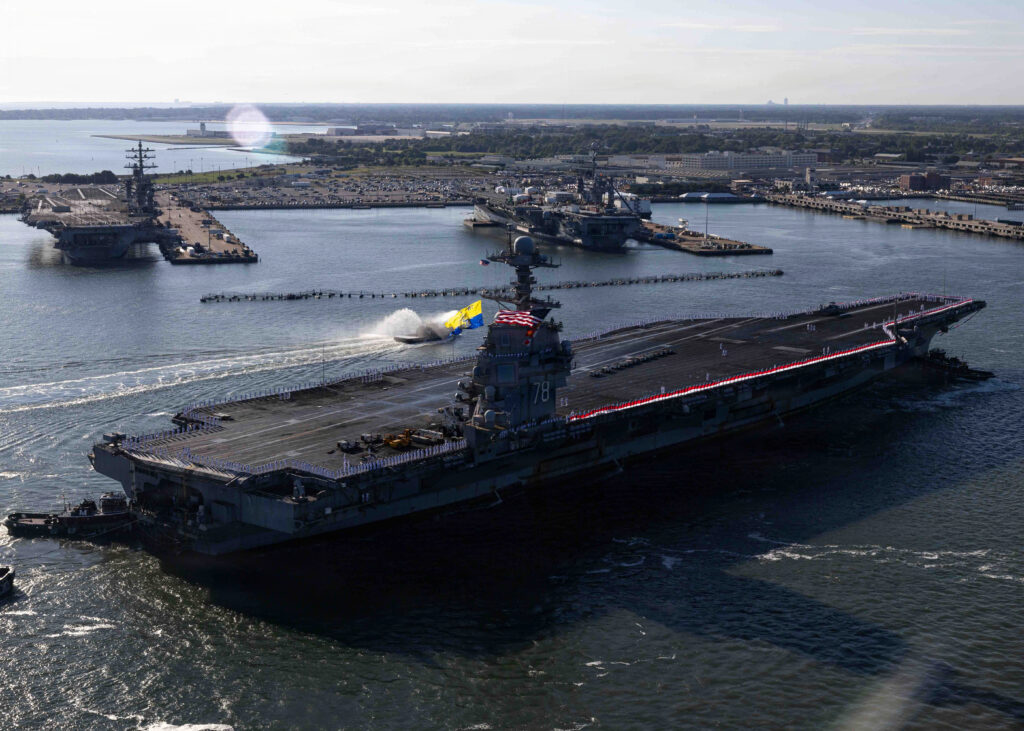
Ships designed around multiple advanced capabilities, some of which are not sufficiently mature when construction begins, have historically been fraught with delays and construction challenges, including the Zumwalt-class destroyers and Ford-class aircraft carriers. Even the Fords, which were ultimately able to overcome their immature equipment, did so only by significantly exceeding their projected costs, with the first ship of this class going over budget by $2.4 billion with an additional $4.7 billion in research and development costs. The Navy’s ability to resolve the apparent tensions between the White House’s and CNO’s strategic visions for the fleet could ultimately determine this plan’s success.
It also remains unclear to what extent the shipbuilding plan will be fully implemented. The plan’s ambitious shipbuilding program will require a robust industrial workforce to support it, which will necessitate driving more workers to an industry currently beset by labor shortfalls and an aging workforce.
Additionally, while the plan declares the Navy “will no longer tolerate the delays and overruns that erode readiness, constrain capacity and drive an unsustainable cost curve for the American taxpayer,” it remains to be seen whether the Navy can enforce this level of accountability in practice, and whether the service will genuinely examine its own tendency to contribute to delays by making late-stage ship design changes.
Finally, the plan will require sustained support and funding from Congress. Given the skepticism many members have regarding the BBGN project and Congress’ recent push to revoke the president’s Title 10 authority to grant waivers for the U.S. to buy foreign-built warships as part of the 2027 National Defense Authorization Act, it is unclear to what extent Congress is fully behind the strategy outlined in this document.
While the Navy’s shipbuilding plan offers a refreshingly honest assessment of America’s maritime industrial base and an ambitious plan to address its shortcomings, the success or failure of this strategy will ultimately hinge on the Navy’s ability to align its competing visions of America’s future fleet and secure sustained buy-in from key government and industry stakeholders. Failure to achieve this could render this document the latest in a long series of failed efforts to revitalize American shipbuilding.
Matt Reisener is the Senior National Security Advisor for the Center for Maritime Strategy. He holds a Master of Arts in International Relations from the University of Chicago’s Committee on International Relations, as well as a Bachelor of Arts in Political Science and Rhetoric & Political Communication from William Jewell College. This article appears in the July/August 2026 issue of Seapower magazine.