
Singularity, NAWC Weapons Division Successfully Static Fire Advanced Solid Rocket Motor
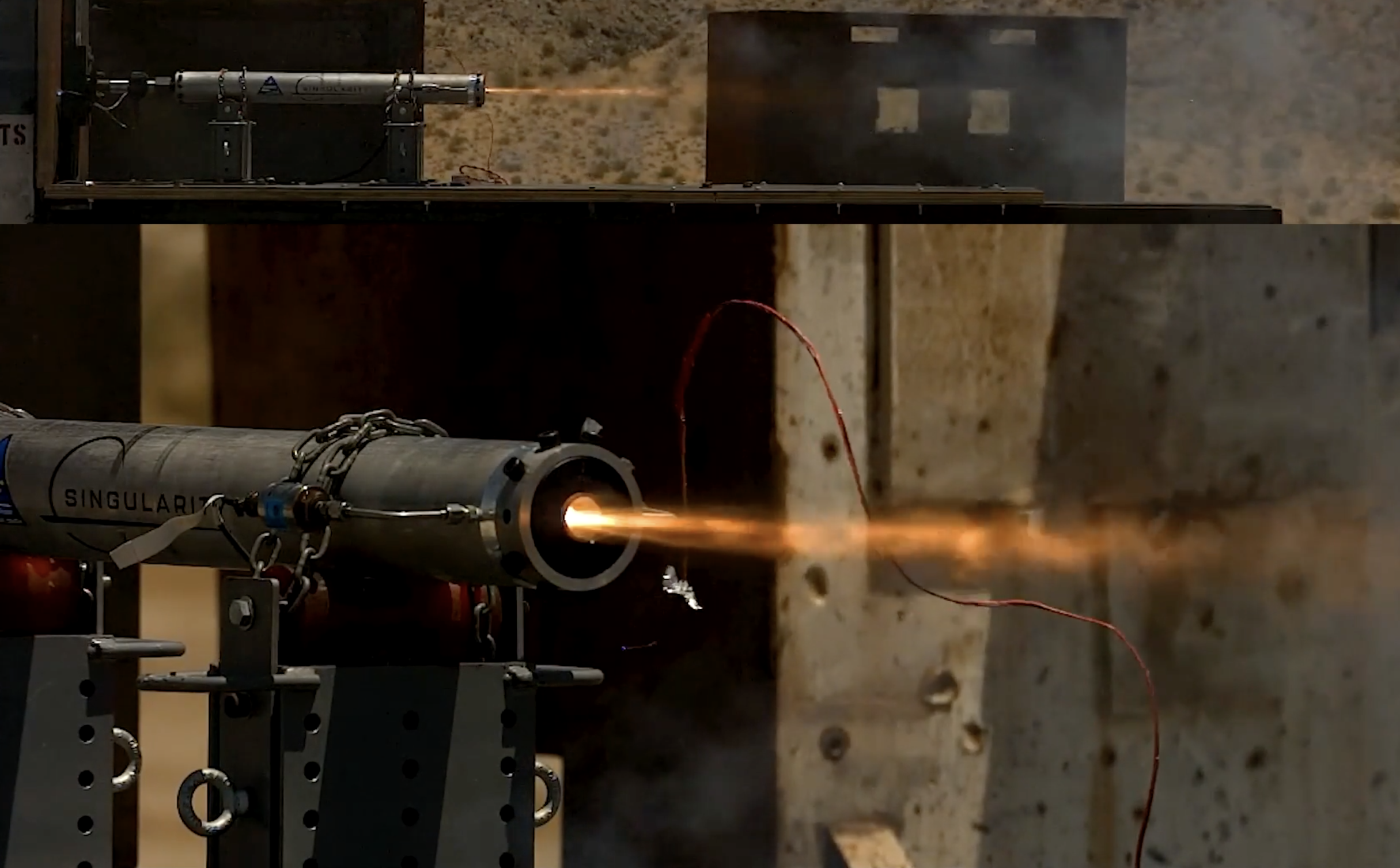


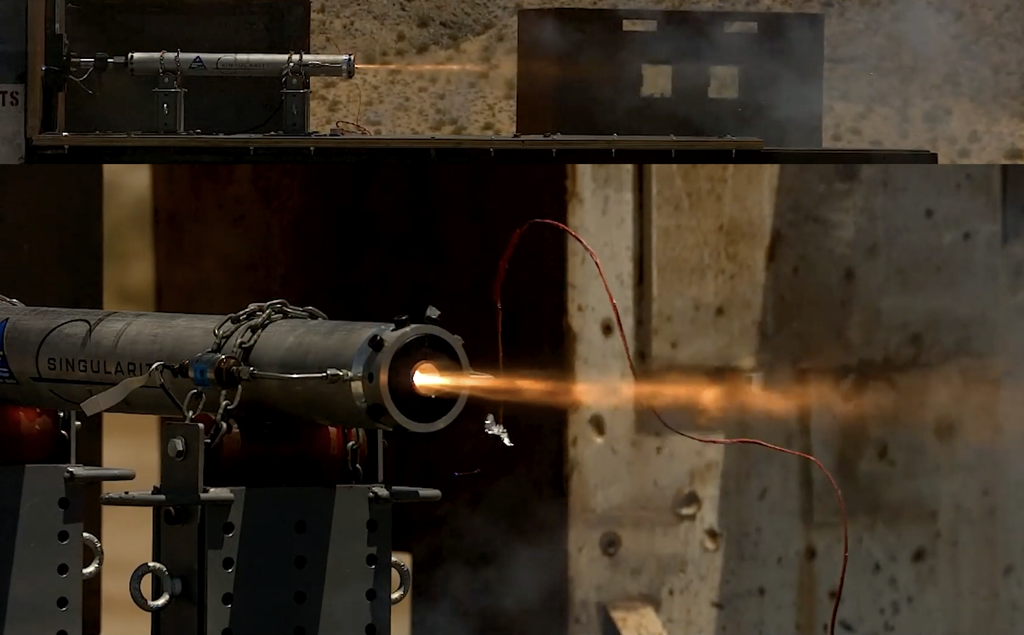
LOS ANGELES — Singularity today announced the successful static fire of an advanced solid rocket motor (SRM) developed under a Cooperative Research and Development Agreement (CRADA) with the Naval Air Warfare Center Weapons Division (NAWCWD), one of the Navy’s oldest and most storied weapons research facilities.
Our cooperative agreement with NAWCWD embodies bold action by the Department of War (DoW) to enable more aggressive deployment timelines for new air defense systems.
This solid rocket motor will provide breakthrough performance for the tactical air defense mission set compared to systems deployed today. The teams are working together to bring this rocket motor into high volume production. Video footage of the SRM static fire here.
Singularity and NAWCWD compressed the conventional year-long timeline for taking a rocket motor from clean sheet to static fire down to approximately three months, demonstrating how government and industry can work together to much more rapidly prove capability that will protect warfighters and civilians. The static fire test validates a motor design that will underpin Singularity’s forthcoming interceptor systems, which the company has yet to unveil in full, and marks a technical milestone made possible by the flexible nature of the agreement and the dedicated cooperation between the teams.
“Our cooperative agreement with NAWCWD embodies bold action by the Department of War (DoW) to enable more aggressive deployment timelines for new air defense systems by prioritizing speed to test, commercialization of government innovation, and partnership with new entrants,” said Jack Oswald, Co-Founder and CEO of Singularity. “Thanks to the commitment of our combined team, the warfighter will have a low-cost tactical air defense solution with breakthrough performance.”
Propulsion and energetics work originating from NAWCWD’s China Lake facilities have long migrated into industry, and a new generation of companies is now developing rocket motors directly with the Navy’s labs. Singularity’s effort is distinct in form, focus, and speed: a cooperative R&D agreement with the warfare center itself, aimed squarely at the counter-drone and tactical air defense mission, where the interceptor shortfall is most acute.
NAWCWD Director of Strategic Partnerships Tamara Schiller adds, “Pairing NAWCWD’s deep technical expertise and weapons systems design heritage with Singularity’s advanced manufacturing capabilities brings together complementary strengths to address the growing demand for air defense capacity at scale. This agreement creates a pathway to leverage commercial innovation and manufacturing speed alongside the command’s technical expertise to accelerate capability delivery to the warfighter.”
Singularity emerged from stealth in July 2026, aimed at one of the most consequential engineering problems the U.S. and its allies face: deploying low-cost air defense systems at scale. Singularity’s manufacturing team is building an assembly line based on automotive principles to rapidly ramp production volumes beyond any comparable U.S. system. By building major subsystems in-house and designing for manufacturability, Singularity is prepared to scale in support of U.S. and allied need for air defense at unprecedented capacity.
From Singularity, Oct 22, 2026