
Why Forward Presence Still Matters in the Indo-Pacific
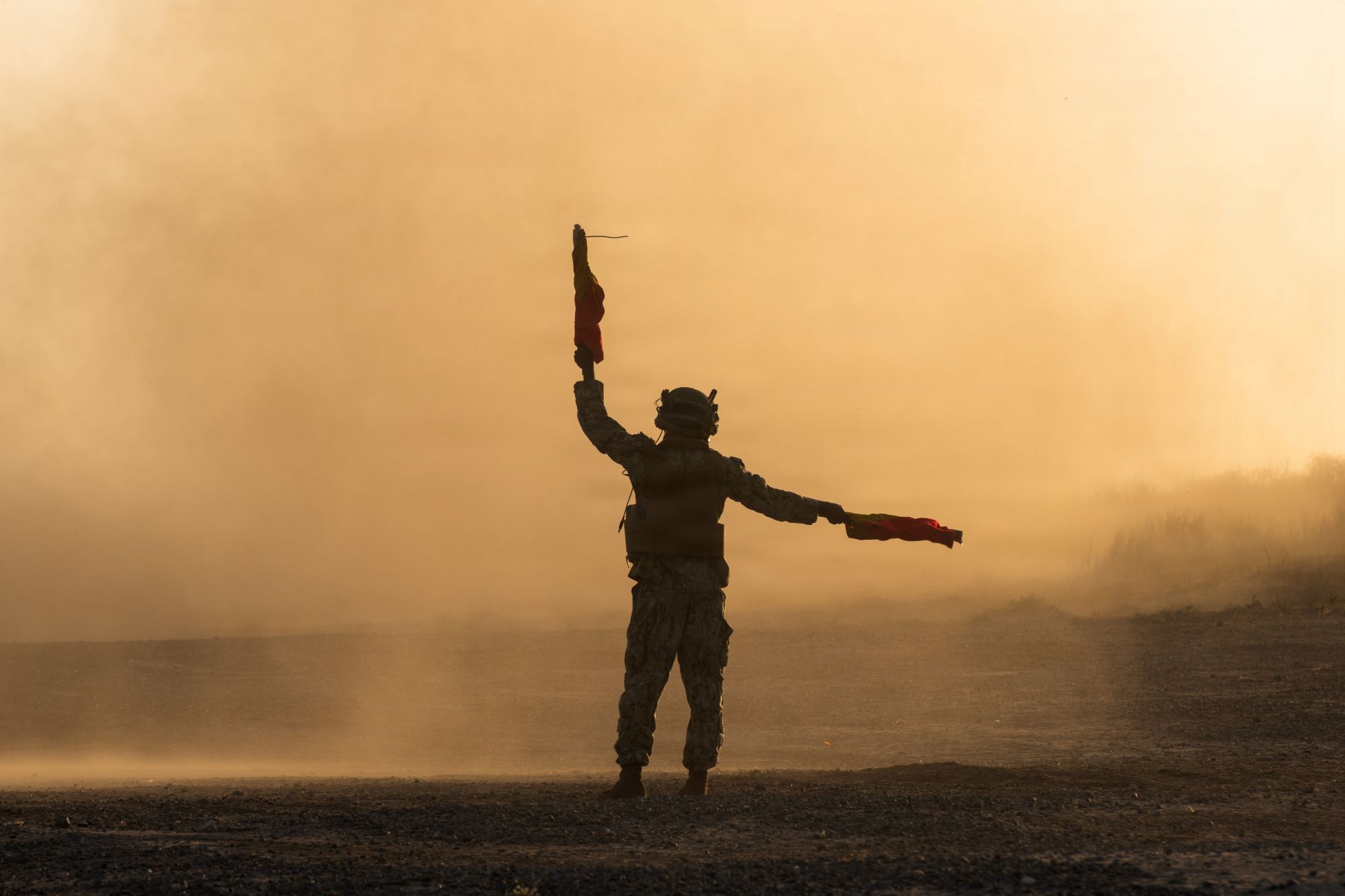


Seapower’s focus on marine expeditionary warfare is extremely timely, with the Marine Corps’ participation in the 2026 Rim of the Pacific (RIMPAC) Exercise concluding just days before this issue’s publication.
Yet while RIMPAC draws considerable attention as the world’s largest maritime exercise, the Marine Corps also participated in two other bilateral military exercises in June which were similarly consequential, if not comparatively overlooked. The Marines’ KAMANDAG 10 (held in the Philippines from June 15-July 1) and Resolute Dragon (held in Japan from June 19-June 30) exercises saw Marines operating in tandem with Japanese, Filipino and South Korean troops to simulate controlling and defending maritime terrain. These distinct military exercises, which also overlapped with the first several days of RIMPAC, involved two Marine Expeditionary Forces (MEFs) conducting separate operations in the same theater with different Pacific allies, but with a unified potential adversary in mind — China.
The overlapping nature of the KAMANDAG 10 and Resolute Dragon marks an important step toward realizing the operational concept of “Two MEFs Abreast,” first outlined in the Pacific Marines Strategy 2025 document. This concept envisions the pairing of two MEFs, including one American-based force (I MEF, stationed out of Camp Pendleton but regularly deployed throughout the region) and one forward-deployed force in Japan (III MEF, headquartered in Camp Courtney on Okinawa) which can operate simultaneously in the Pacific.
The III MEF provides the U.S. with a steady, forward-deployed presence to deter and rapidly respond to military aggression in the region. Meanwhile, the I MEF serves as a rapidly deployable force capable of acting in concert with both the III MEF and America’s regional allies. All Pacific marines, according to the 2025 strategy document, “must be prepared to operate in the First Island Chain (a string of strategically important islands which includes Japan, Taiwan, and the Philippines), from positions as far forward as practicable for both deterrence and crisis response.” As these recent exercises demonstrate, America’s MEFs are increasingly capable of operating as a coordinated, mutually supporting force alongside regional allies, which will enable America to provide a more robust military response to potential conflicts in the Western Pacific.
Additionally, the Marines’ recent exercises illustrate their progress toward achieving the goals of Force Design 2030, an ongoing force restructuring plan intended to transition the Corps to a greater focus on naval expeditionary warfare against great power adversaries, particularly China. After spending two decades fighting the prolonged land wars during the War on Terror, Force Design 2030 envisions a Marine Corps capable of conducting distributed operations across Pacific island chains, including amphibious warfare and countering enemy gray zone tactics. Between KAMANDAG 10’s featuring of the 3rd Marine Littoral Regiment (established as part of Force Design 2030’s push for the Marines to “contribute to sea control and sea denial in a contested littoral environment”) to Resolute Dragon’s focus on controlling and defending maritime terrain across multiple islands, these exercises show the Corp’s commitment to becoming an adaptable, Pacific-focused amphibious fighting force is well underway.
Shifting Priorities
Yet for all these military exercises illuminate about the Marine Corps’ doctrinal shifts, they arguably shed even more light on the ongoing debates being had in Washington surrounding the Trump administration’s shifting Indo-Pacific priorities and the role America’s allies will play in the country’s military strategies.
On day two of KAMANDAG 10, the Department of Defense separately announced it was rebranding the U.S. Indo-Pacific Command as “U.S. Pacific Command.” While the first Trump administration added “Indo” to this name to signify the growing connectivity between the Indian and Pacific oceans, its removal similarly signals the White House’s belief the Western Pacific is the most likely theater in which a conflict with China is likely to be fought. Through this lens, the Two MEFs Abreast concept, the continued implementation of Force Design 2030 and the deployment of Marine littoral regiments throughout the First Island Chain could be read as an indication of the White House’s prioritization of China as America’s principal security threat.
However, while the first Trump administration described China as a “revisionist power” seeking to “challenge American power, influence, and interests” and “erode American security and prosperity,” the White House’s 2025 National Security Strategy largely frames America’s competition with China through an economic rather than a security lens. The strategy’s shift of focus from winning a great power competition with China to pursuing a “mutually advantageous economic relationship with Beijing” seems to contrast the steps taken by the White House to reorient its Indo-Pacific security architecture around deterring Chinese aggression toward the First Island Chain.
The Marine Corps’ recent exercises are helpful in demonstrating how America intends to use its military assets in the Western Pacific amid this strategic tension. As these exercises show, a trade-centric approach to America’s relationship with China does not diminish the importance of America’s military strength in the Pacific, nor does it portend a contraction of America’s military presence in the region. Regardless of whether the White House is more concerned with the economic or security threats posed by China, the Marine Corps and its expeditionary units can play a significant role in maintaining stability in East Asia — and appear more than capable of doing so.
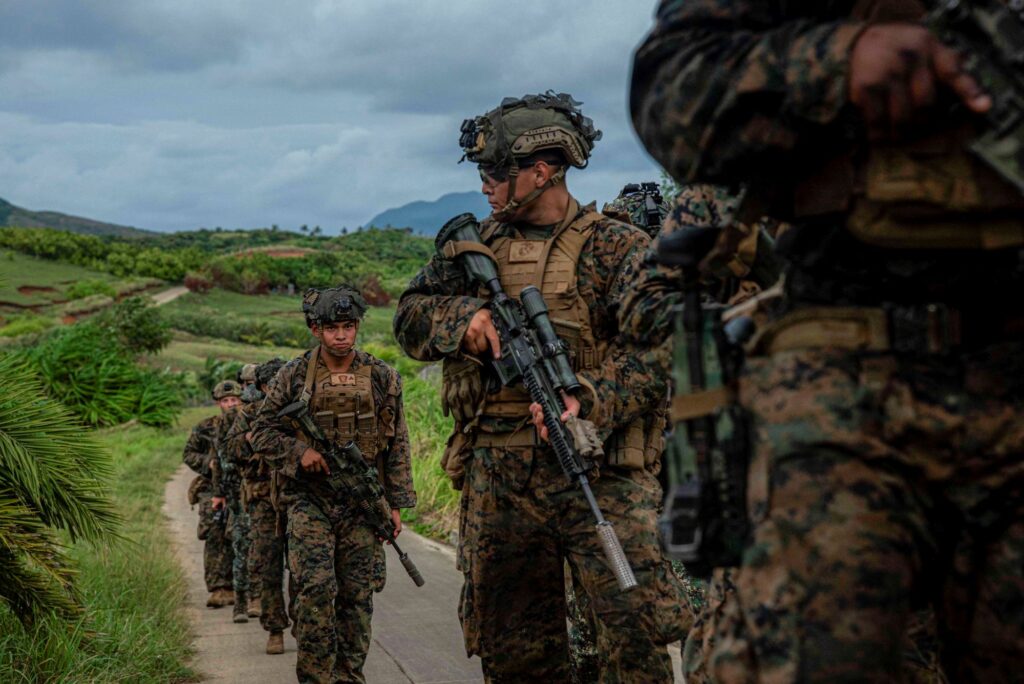
Division, and Philippine marines assigned to 4th Marine Brigade, patrol through terrain while
participating in military operations in urban terrain training during maritime key terrain security
operations in support of KAMANDAG 10 at Itbayat, Batanes islands, Philippines, June 24,
Photo credit: U.S. Marine Corps | Sgt. Iyer Ramakrishna.
The Role of Allies
Finally, the heavy focus on allied interoperability emphasized by the KAMANDAG 10 and Resolute Dragon exercises serves as an important reminder about the essential role of U.S. allies in deterring conflict and promoting America’s regional security interests. Both exercises saw U.S. Marines operating hand-in-hand with partner nations, demonstrating their capacity to jointly respond to security crises and protect one another’s critical interests. These exercises demonstrated the additive value provided by America’s allies, particularly when they have extensively trained in conducting joint operations.
This reminder comes at a time when America’s alliances are being increasingly questioned in Washington. From growing calls to reduce American support for NATO to America’s increasingly volatile trade relations with its allies to the marginalization of the Quad and G7 (punctuated by the White House’s characterization of a recent U.S.-China summit as a meeting of the “G2”), many analysts and policymakers have warned America risks alienating the allies that have long supported its global security architecture.
Calls for more equitable burden sharing among America and its partners, while valid and often necessary, must not risk poisoning the relationships that underwrite America’s most fundamental security alliances. As formidable a fighting force as America’s Marine Corps is, recent multilateral exercises such as KAMANDAG 10, Resolute Dragon and RIMPAC illustrate how allied interoperability rooted in stable security partnerships can amplify its martial prowess and bolster the defense of America’s key geopolitical interests.
As its recent exercises demonstrate, the Marine Corps and America’s MEFs are set to play an increasingly important role in defending America’s security interests in the Pacific. In its summary of these exercises, the Marines’ Pacific Command noted the drills show “what forward presence combined with readiness look like — two Marine Expeditionary Forces, mutually supporting and interoperable, training with allies and ready to respond together … we remain present, ready, and united with our allies to keep this region free, open and secure.”
As long as America remains committed to deterring China and supporting its regional allies, the Marine Corps appears poised to accomplish this goal.
Matt Reisener is the Senior National Security Advisor for the Center for Maritime Strategy. He holds a Master of Arts in International Relations from the University of Chicago’s Committee on International Relations, as well as a Bachelor of Arts in Political Science and Rhetoric & Political Communication from William Jewell College. This article originally appeared in the September issue of Seapower magazine.