
Coast Guard Offloads Over $133.5 Million in Illicit Drugs Interdicted in Eastern Pacific Ocean


From Coast Guard Southeast District
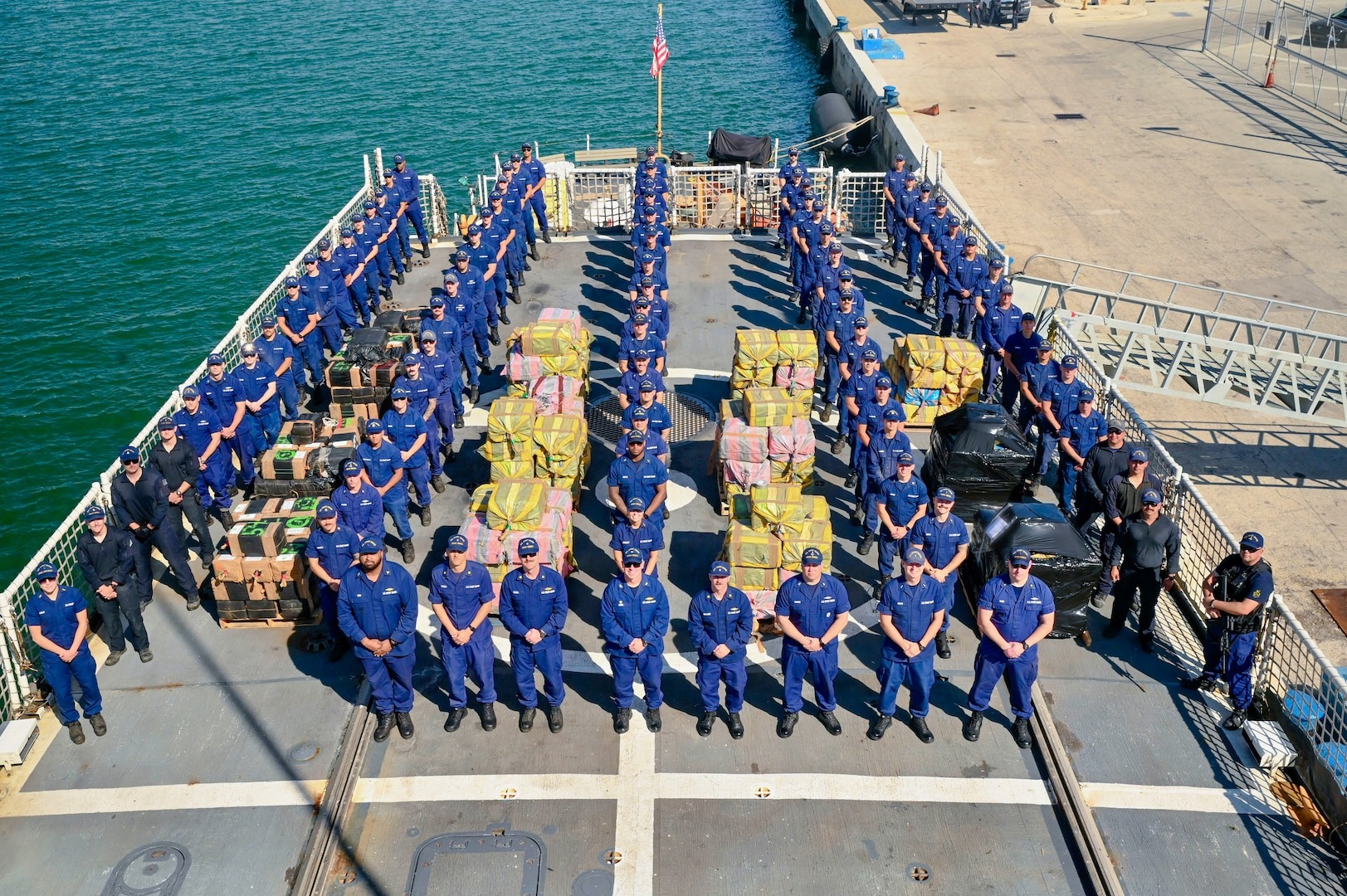
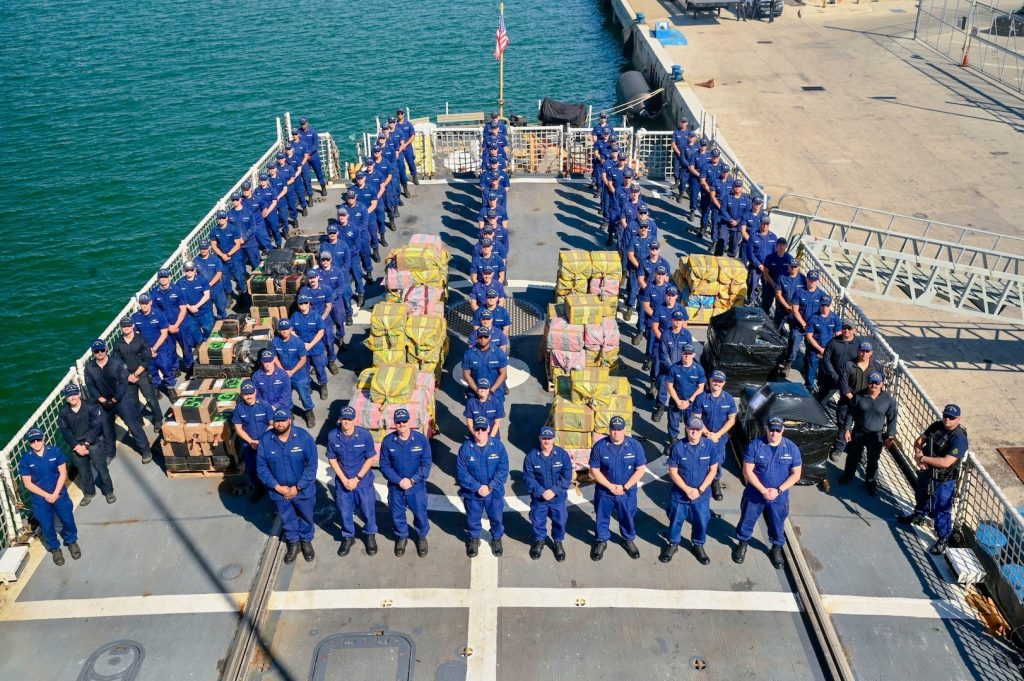
MIAMI – U.S. Coast Guard Cutter Seneca’s crew offloaded approximately 17,750 pounds of cocaine worth more than $133.5 million in Port Everglades, Feb 13.
The seized contraband was the result of four interdictions in international waters of the Eastern Pacific Ocean.
On Jan. 25, Seneca’s crew detected a go-fast vessel, and the embarked Helicopter Interdiction Tactical Squadron air crew employed airborne use of force tactics. Seneca’s boarding team interdicted and boarded the vessel, seizing 4,410 pounds of cocaine.
On Jan. 31, Seneca’s crew detected three go-fast vessels, and the embarked HITRON air crew employed airborne use of force tactics. Senaca’s boarding team interdicted and boarded all three vessels, seizing 13,340 pounds of cocaine.
“I am extremely proud of the crew’s incredible performance and adaptability during this deployment,” said Capt. Lee Jones, commanding officer, Coast Guard Cutter Seneca. “This deployment demonstrates our enhanced posture and continued success in the fight against narco-terrorism and transnational criminal organizations. The Coast Guard, in conjunction with our inter-agency and international partners, continues to patrol areas commonly associated with drug trafficking in the Eastern Pacific, denying smugglers access to maritime routes by which they move illicit drugs to our U.S. land and sea borders.”
The following assets and crews were involved in the interdiction operations:
- Coast Guard Helicopter Interdiction Tactical Squadron
80% of interdictions of U.S.-bound drugs occur at sea. This underscores the importance of maritime interdiction in combatting the flow of illegal narcotics and protecting American communities from this deadly threat. U.S. Southern Command’s Joint Interagency Task Force-South based in Key West conducts the detection and monitoring of aerial and maritime transit of illegal drugs. Once interdiction becomes imminent, the law enforcement phase of the operation begins, and control of the operation shifts to the U.S. Coast Guard throughout the interdiction and apprehension. Interdictions in the Eastern Pacific Ocean are performed by members of the U.S. Coast Guard under the authority and control of the Coast Guard’s Southwest District, headquartered in Alameda, California.
To protect the Homeland from ongoing trafficking of illicit narcotics from South America to the United States, the Coast Guard is accelerating our counter-drug operations in the Eastern Pacific Ocean in support of Operation Pacific Viper.
The Coast Guard continues increased operations to interdict, seize and disrupt transshipments of cocaine and other bulk illicit drugs by sea. These drugs fuel and enable cartels and transnational criminal organizations to produce and traffic illegal fentanyl, threatening the United States.
These interdictions deny criminal organizations illicit revenue. They provide critical testimonial and drug evidence as well as key intelligence for their total elimination. These interdictions relate to Homeland Security Taskforce Tampa, investigations in support of Operation Take Back America, which identifies, disrupts, and dismantles the highest-level criminal organizations that threaten the United States using a prosecutor-led, intelligence-driven, multi-agency approach.
Coast Guard Cutter Seneca is a 270-foot medium-endurance cutter homeported in Portsmouth, Virginia, under U.S. Coast Guard Atlantic Area Command.