
NAVCENT Commander: Difficult to Find Houthi Center of Gravity to Hold at Risk


Richard R. Burgess, is senior editor for Seapower magazine. He is a retired naval flight officer and author of several books on naval aviation.
By Richard R. Burgess, Senior Editor
ARLINGTON, Va. — The Houthi forces who have been attacking shipping in the Red Sea and Gulf of Aden lack a center of gravity, making for deterrence by U.S and partner forces difficult, the commander of U.S. naval forces in the Middle East said in a webinar.
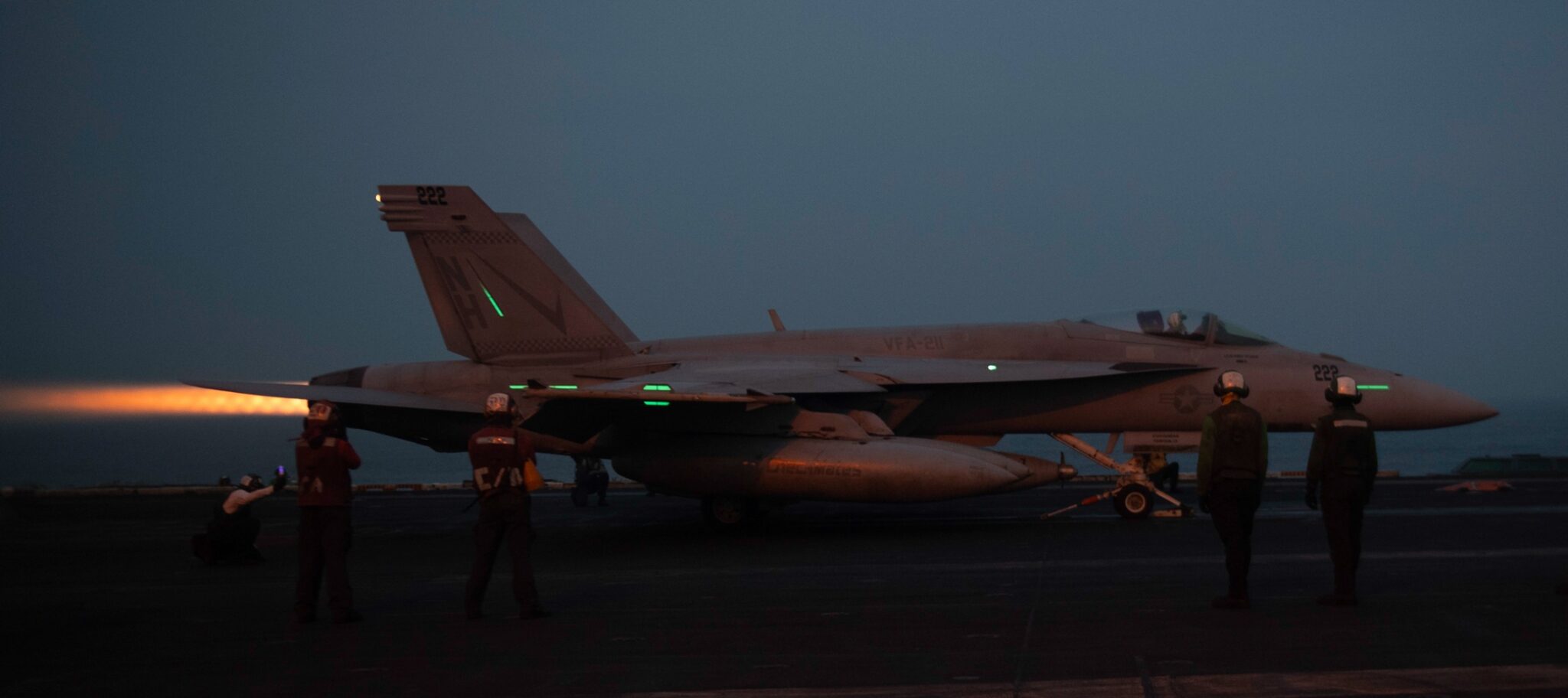
Since November, a few weeks after the October 7 attack on Israel by Hamas terrorists, the U.S. Navy’s 5th Fleet, with cooperation from the navies of several allies and partners, has been engaged in protecting commercial shipping through the Red Sea and Gulf of Aden from attacks by ballistic missiles, anti-ship cruise missiles, unmanned aerial vehicles, unmanned surface craft, and unmanned underwater vehicles launched by the Houthi rebels in Yemen.
“We have certainly degraded their capability,” said Vice Admiral George Wikoff, commander, U.S. Naval Forces Central Command, commander, U.S. 5th Fleet, and commander, Maritime Forces, speaking in an August 7 webinar sponsored by the Center for Strategic and International Studies and the U.S. Naval Institute and funded by HII.
“However, have we stopped them? No,” Wickoff said, noting Houthi recent attacks on shipping, one of which damaged a commercial ship. “But our mission remains to disrupt their ability and try to preserve some semblance of maritime order while we give an opportunity for policy to be developed against the Houthis.
“The challenge of the deterrence is, obviously, you have to have a center of gravity to hold at risk, and one thing we don’t really know that much about—and we find this through history—is it is very difficult to find a centralized center of gravity that we can hold at risk over time and use that as a potential point of deterrence,” he said. “So, to apply a classic deterrence policy in this particular scenario is a bit challenging.”
Wickoff said the continuing naval operations in the BAM (Bab-el-Mandeb) Strait region will act as a “shock absorber.”
He noted an almost 50% drop in commercial shipping through the BAM region in the September through December time frame, with a large drop until the beginning of February.
“The reflected the maritime industry’s ability to re-calibrate and re-initiate their routes,” he said. “It’s a couple-months process to take transit patterns that go through the Red Sea and re-route them around the Cape of Good Hope, etc.”
Since the beginning of February there has been a stabilization, with approximately 1,000 ships going through the BAM per month, compared with approximately 2,000 ships per month prior to the Israel-Hamas war, Wickoff noted.
“Right now, the idea is to continue to maintain that decision space, try to preserve where we are right now … to allow other levers of government, other levers of the international community to pressurize the Houthis to stop what they’re doing in the maritime,” the admiral said.