
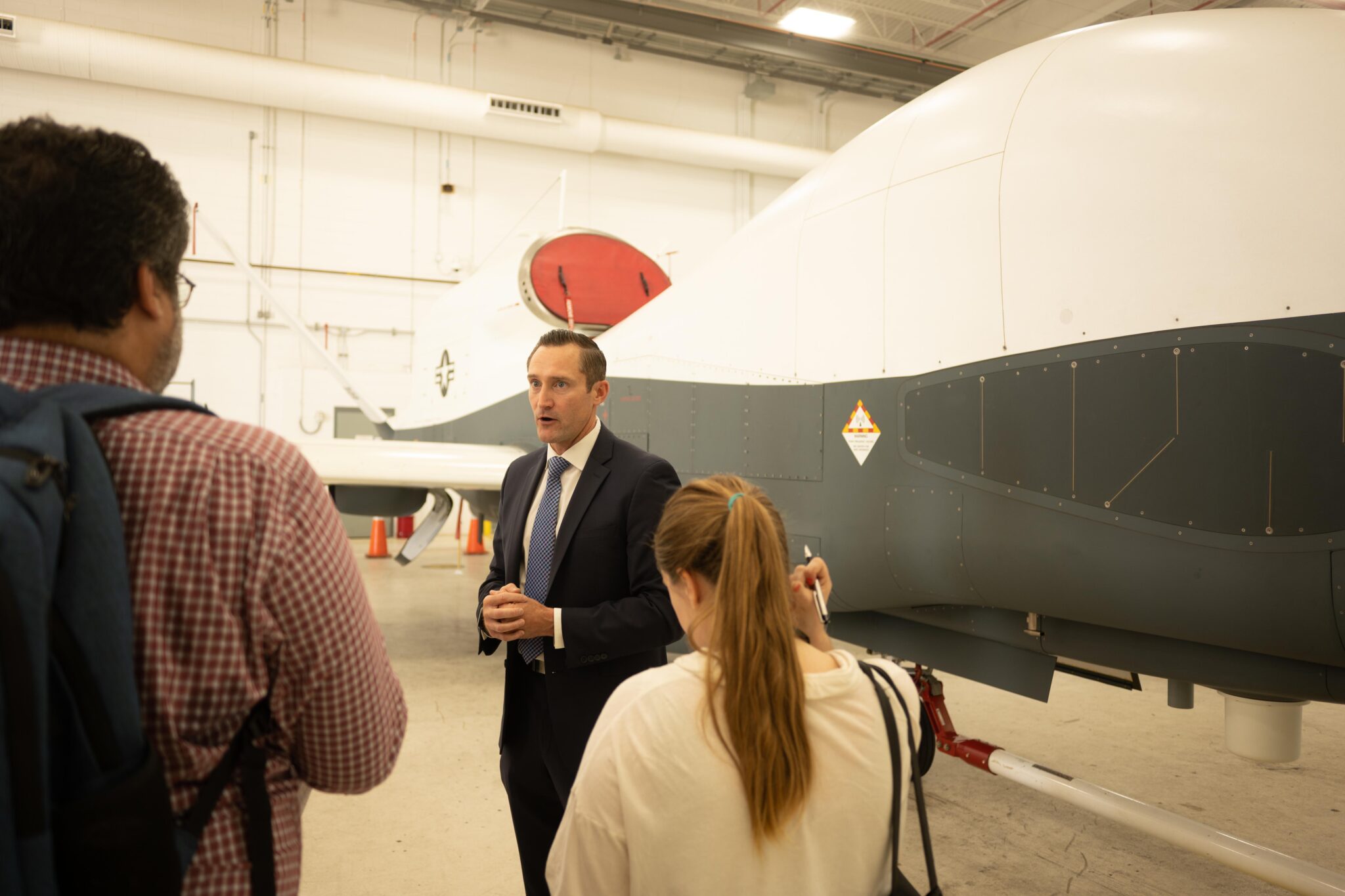


Brett Davis is a lifelong journalist and writer with extensive experience writing about defense issues and technology. He studied journalism and photography at the University of North Alabama in his hometown of Florence and then earned a master’s degree in journalism from the University of Missouri. He worked for a dozen years as Washington Correspondent for the Huntsville Times newspaper, then became editor of Aerospace Daily & Defense Report, published at the time by McGraw-Hill. He served as content manager for Backfence.com, a pioneering local journalism website, was editor of Unmanned Systems magazine at the Association for Uncrewed Vehicle Systems International and editor in chief of Inside Unmanned Systems magazine for Autonomous Media. He previously served as Deputy Editor of Seapower magazine. He’s also a fiction writer: His latest, The Moon Above, is the story of a Tuskegee Airman published by Scarsdale Publishing.
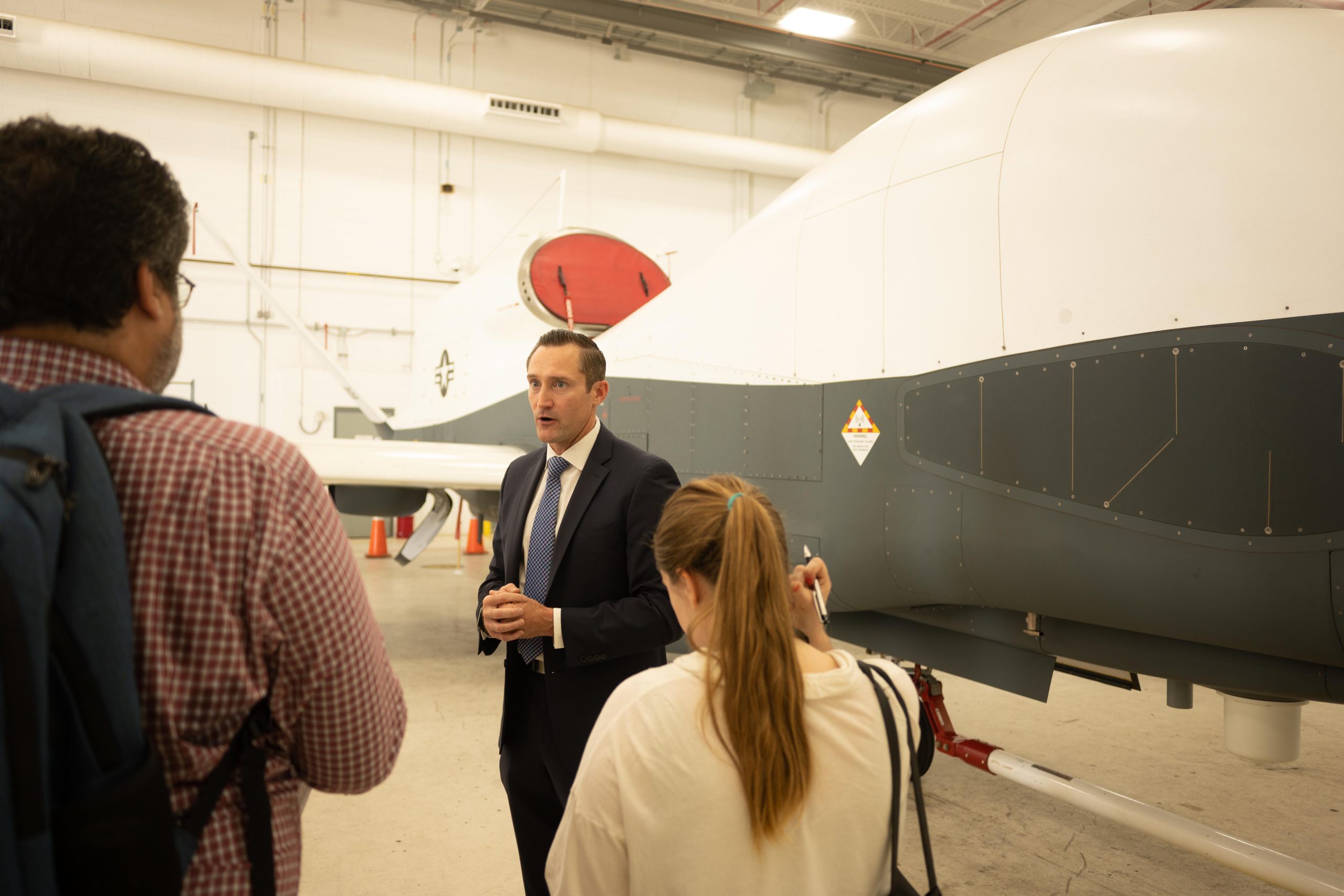
NAVAL AIR STATION PATUXENT RIVER, Maryland — The MQ-4C Triton maritime uncrewed aircraft, built for the Navy by Northrop Grumman, has been picking up its operational tempo in recent months, even as international customers consider adding the high-flying drones to their fleets.
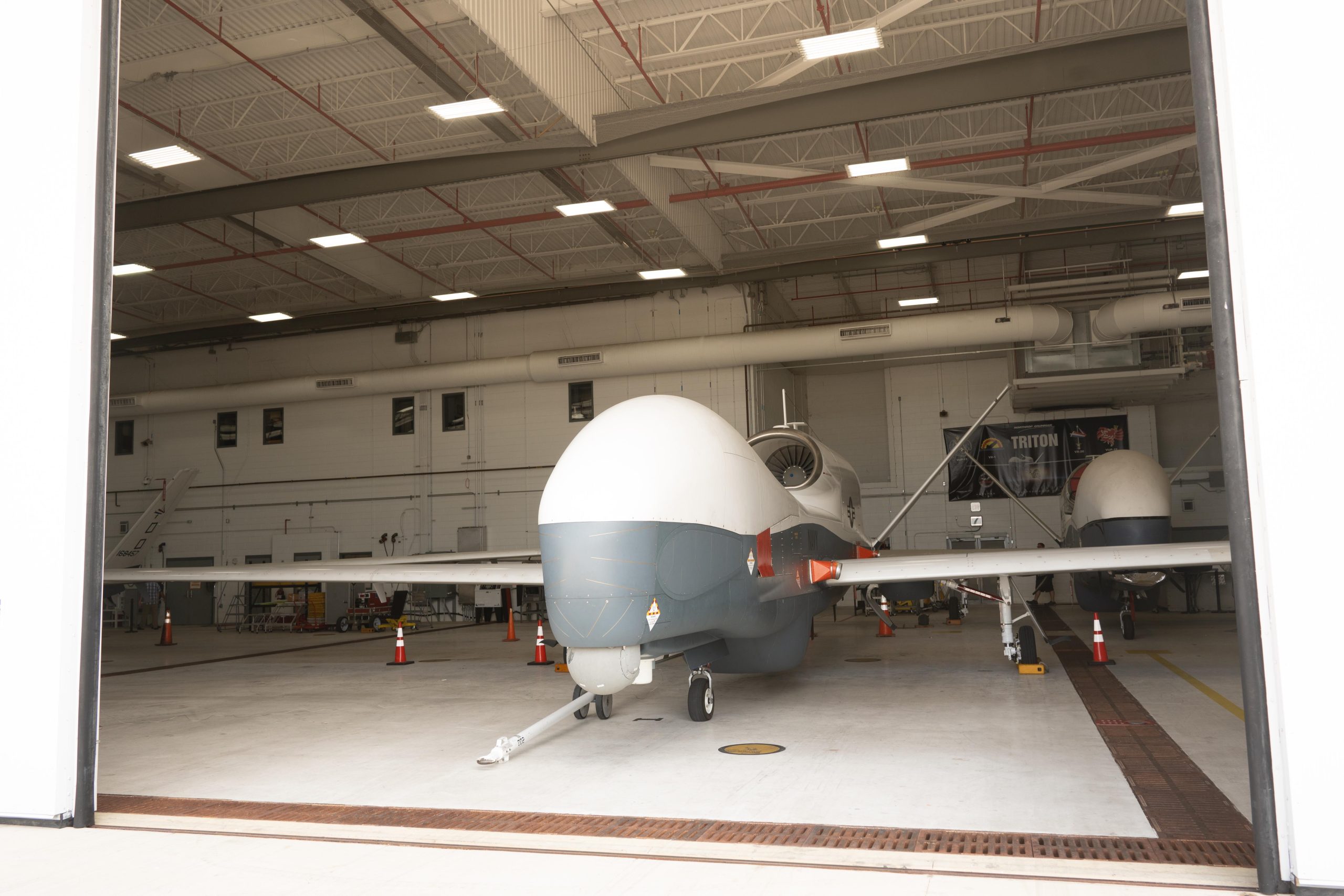
The U.S. Navy has ordered 24 of the high-altitude, long-endurance aircraft and Northrop Grumman recently delivered the 20th of the batch, tail No. B-21. That vehicle was in a hangar at Naval Air Station Patuxent River on June 13, when the company invited reporters to see it and get an update on the aircraft program.
Australia, a partner on the program, has ordered four and has received three of them so far.
Captain Josh Guerre, program manager for the Persistent Maritime Unmanned Aircraft Systems Office, said the Triton system has been racking up milestones since August of 2023 when its capability stood up in 7th fleet and it achieved initial operating capability. Since then, the Triton was stood up in 6th Fleet in April 2024 and 5th Fleet in October 2024, which Guerre called a “stair-step” progress.
“For us, getting to IOC was like the start of the base climb to Mount Everest, because then we had to stand up capability in two other theaters and then maintain that pace of operation in all three of those theaters in continuity,” Guerre said. “The good news is, we’ve done that.”
Over the last six months, “we’ve been able to execute 45 flights per month across all three operational orbits, 15 per orbit for six straight months,” Guerre said. The aircraft are operated remotely by crews in Jacksonville, Florida, well beyond the line of sight.
Triton is, as Guerre said, “a truck” that carries GEOINT (geographic intelligence) and SIGINT (signals intelligence) payloads, which the program is continually refining to meet the needs of combatant commanders.
Brad Champion, Northrop Grumman’s MQ-4C enterprise director, said although the Triton is a variant of the Global Hawk airframe, it’s very different and its sensor packages are hardened to meet the rigors of maritime environments and to transit through icy weather.
It is, he said, “the most advanced UAV that has ever been deployed by the U.S. Navy.”
As the company nears the end of the current U.S. Navy buy, other countries are considering adding Triton to their fleets, including Norway, which is expected to down-select between the Triton and a competitor platform later this year.
NATO, which is already flying the Global Hawk as part of its Alliance Ground Surveillance program, wants to beef up its program as well with a maritime variant.
The Triton is expected to interface closely with the Navy’s Boeing-built P-8 Poseidon crewed aircraft, as together they help pick up the workload of the aging P-3 Orion maritime surveillance aircraft.
The multi-intelligence version of the Triton “was selected as one of a family of systems to replace the EP-3,” Champion said. “The EP-3 has sunset and Triton is picking up a portion of that mission from a SIGINT perspective.”
Any country that flies P-8s should consider the Triton, Champion said, as they operate in a similar fashion and can share similar information. And, because the Triton can pick up the SIGINT portion of the work and leave the P-8s to conduct anti-submarine warfare, “we actually preserve the life of your P-8.”