


Brett Davis is a lifelong journalist and writer with extensive experience writing about defense issues and technology. He studied journalism and photography at the University of North Alabama in his hometown of Florence and then earned a master’s degree in journalism from the University of Missouri. He worked for a dozen years as Washington Correspondent for the Huntsville Times newspaper, then became editor of Aerospace Daily & Defense Report, published at the time by McGraw-Hill. He served as content manager for Backfence.com, a pioneering local journalism website, was editor of Unmanned Systems magazine at the Association for Uncrewed Vehicle Systems International and editor in chief of Inside Unmanned Systems magazine for Autonomous Media. He previously served as Deputy Editor of Seapower magazine. He’s also a fiction writer: His latest, The Moon Above, is the story of a Tuskegee Airman published by Scarsdale Publishing.
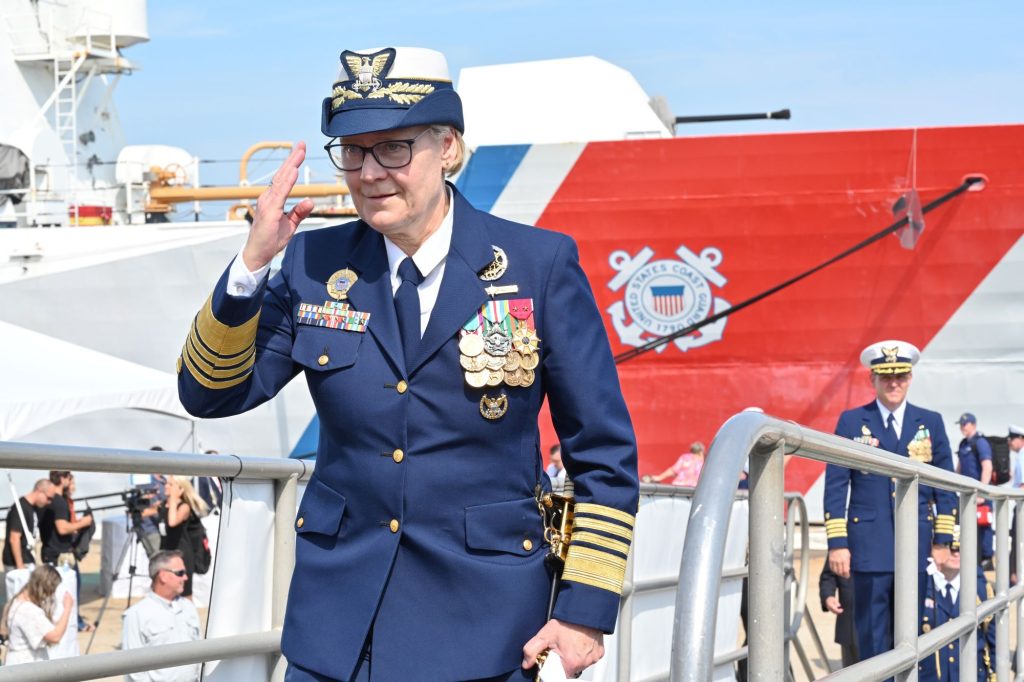
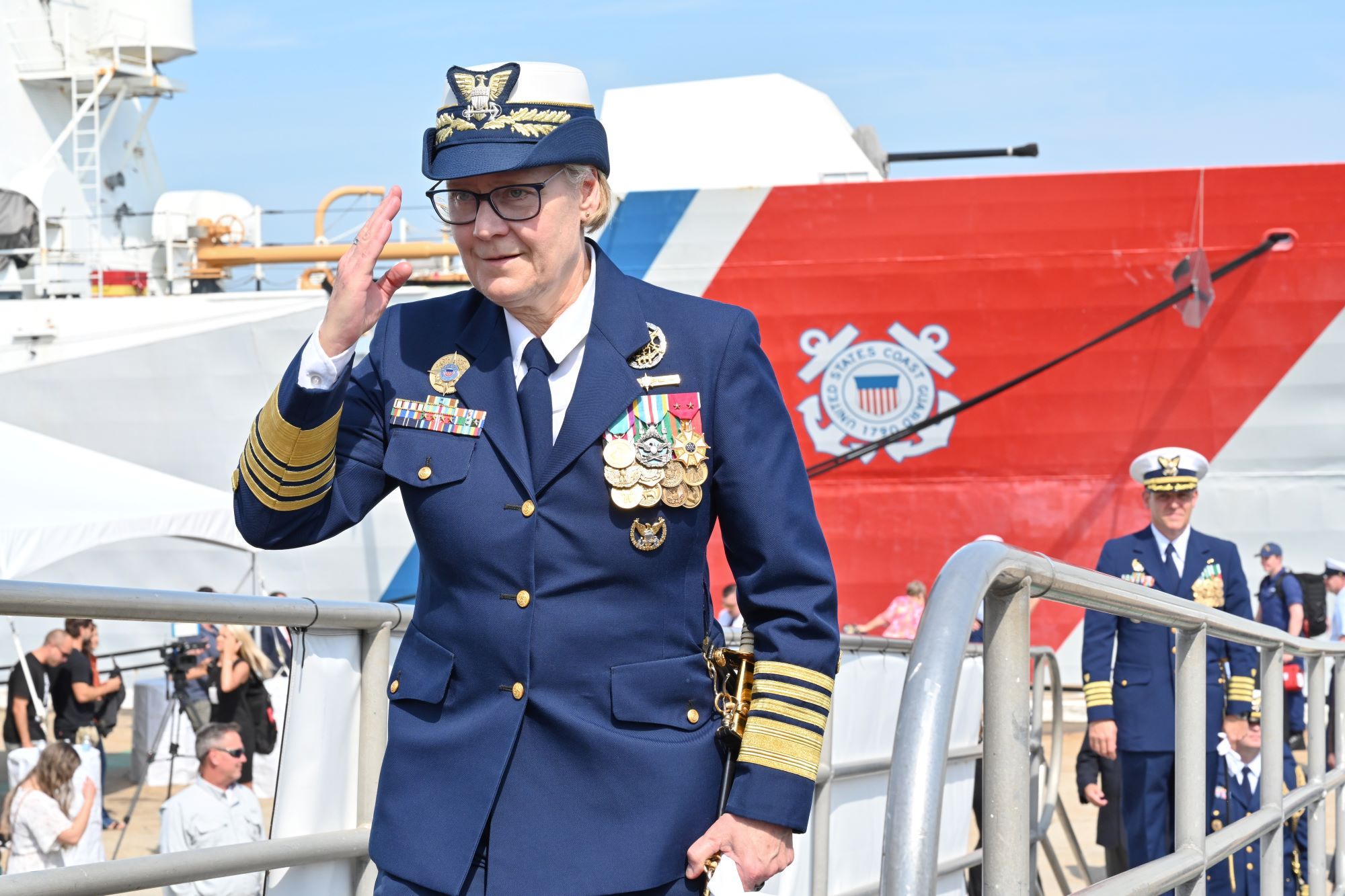
President Trump’s new administration has removed Admiral Linda L. Fagan as commandant of the Coast Guard, an early end to the tenure of the first female to head a U.S. military branch.
The removal, on Trump’s first full day back in office, was first reported by Fox News, which said Acting Homeland Security Secretary Benjamine Huffman removed Fagan. Admiral Kevin Lunday, the vice commandant, is now the acting commandant.
“She was terminated because of her leadership deficiencies, operational failures, and inability to advance the strategic objectives of the U.S. Coast Guard,” a senior Department of Homeland Security official told Seapower in a statement.
The list of reasons includes failure to address threats at the southern border, “especially in interdicting fentanyl and other illicit substances” and “insufficient coordination with the Department of Homeland Security to prioritize operations along maritime borders.”
It also includes “inadequate leadership” in recruitment and retention; persistent cost overruns in icebreakers and helicopter programs; “inadequate accountability for acquisition failures highlighted during the Trump 45 Administration;” the “mishandling and coverup of Operation Fouled Anchor,” an investigation into sexual harassment at the Coast Guard Academy and in the service; and “excessive focus on Diversity, Equity, and Inclusion (DEI) policies including at the U.S. Coast Guard Academy, diverting resources and attention from operational imperatives.”
Fagan was the Coast Guard’s first four-star admiral and was confirmed as commandant in 2022.
Rep. Joe Courtney (D-Connecticut), ranking member of the House Armed Services Committee’s Seapower and Projection Forces subcommittee, posted on X that Fagan’s dismissal “is an abuse of power that slanders her good name and outstanding record. Under Admiral Fagan, Coast Guard recruitment is up, not down, and drug interdictions too. Trump’s fecklessness harms morale and confidence in the chain of command.”
On Jan. 21, the Coast Guard released a statement attributed to Lunday, which said, “Per the president’s executive orders, I have directed my operational commanders to immediately surge assets — cutters, aircraft, boats and deployable specialized forces — to increase Coast Guard presence and focus starting with the following key areas:
- The southeast U.S. border approaching Florida to deter and prevent a maritime mass migration from Haiti and/or Cuba;
- The maritime border around Alaska, Hawai’i, the U.S. territories of Guam, the Commonwealth of the Northern Mariana Islands, American Samoa, Puerto Rico and the U.S. Virgin Islands;
- The maritime border between the Bahamas and south Florida;
- The southwest maritime border between the U.S. and Mexico in the Pacific;
- The maritime border between Texas and Mexico in the Gulf of America; and
- Support to Customs and Border Protection on maritime portions of the southwest U.S. border.
Together, in coordination with our Department of Homeland Security and Department of Defense teammates, we will detect, deter and interdict illegal migration, drug smuggling and other terrorist or hostile activity before it reaches our border.”