
Projecting Power in Contested Regions: Marine Corps’ EABO Moves from Paper to Reality
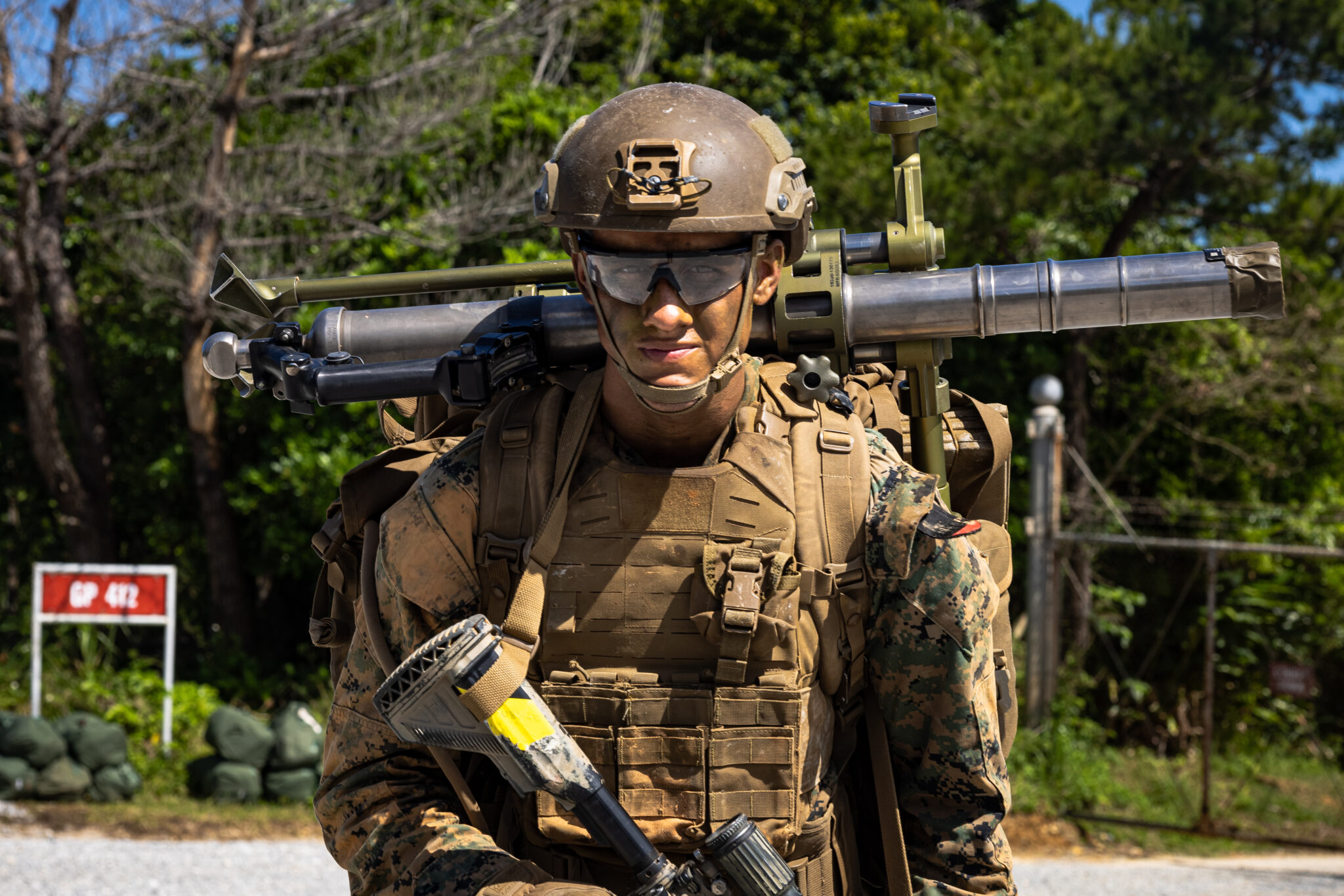


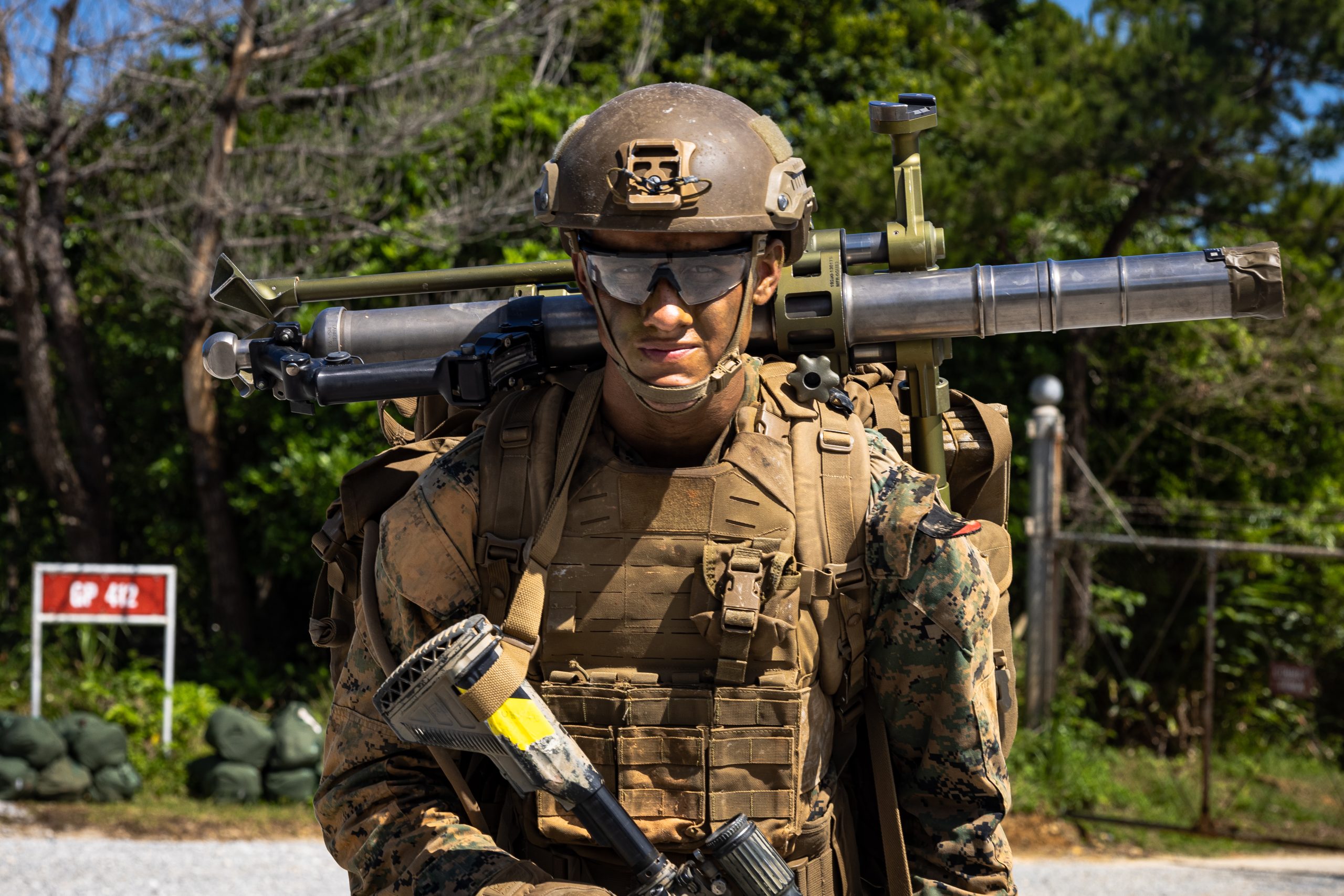
The Expeditionary Advanced Base Operations (EABO) concept debuted in 2019 as a new strategy for the U.S. Marine Corps to fight not only with the support of naval forces but also to defend and support those forces in turn, coordinated operations that project and hold power from sea to shore in contested littoral regions.
In a sense, the time honored-quip that Marines “aren’t retreating, just attacking in a different direction” reflects a new capability to attack in any direction from any island chain or coastline.
In March 2019, Marine Corps Commandant General Robert Neller and Chief of Naval Operations Admiral John Richardson jointly announced the development of the EABO strategy as a way to hold a contested region and dissuade a potential adversary from detecting, much less engaging, in an area where flexible mobile bases would be an elusive target with high-tech capabilities.
Neller and Richardson approved and signed the previously classified Concept for Expeditionary Advanced Base Operations, beginning a development that in the past seven years has rapidly progressed from words on paper to hands-on exercises and innovations in the maritime environment.
The initial blueprint for the evolving concept was the Marine Corps’ Tentative Manual for Expeditionary Advanced Operations, followed by a second edition in March 2023. The vision of the two service chiefs is described in the 134-page manual, which includes “a foundational naval concept to address challenges created by potential adversary advantages in geographic location, weapons system range, precision and capability,” while also “integrating Fleet Marine Force (FMF) and Navy capabilities to enable sea denial and sea control, and support sustainment of the fleet.”
EABO on the Move
The U.S. Navy has had the Marine Corps’ back for more than 80 years of expeditionary warfare in the Pacific, but with EABO the Corps holds much more than the high ground. Instead, the vision is to cover an extensive, spread-out littoral region of coastline, island and choke points with advanced technology that can strike not only surface and aviation targets but also can direct surface forces on incoming threats. The concept also calls for quickly packing up and redeploying to a different austere location with equal firepower and air assets defending against aggressors who might not know where the Navy-Marine Corps team is.
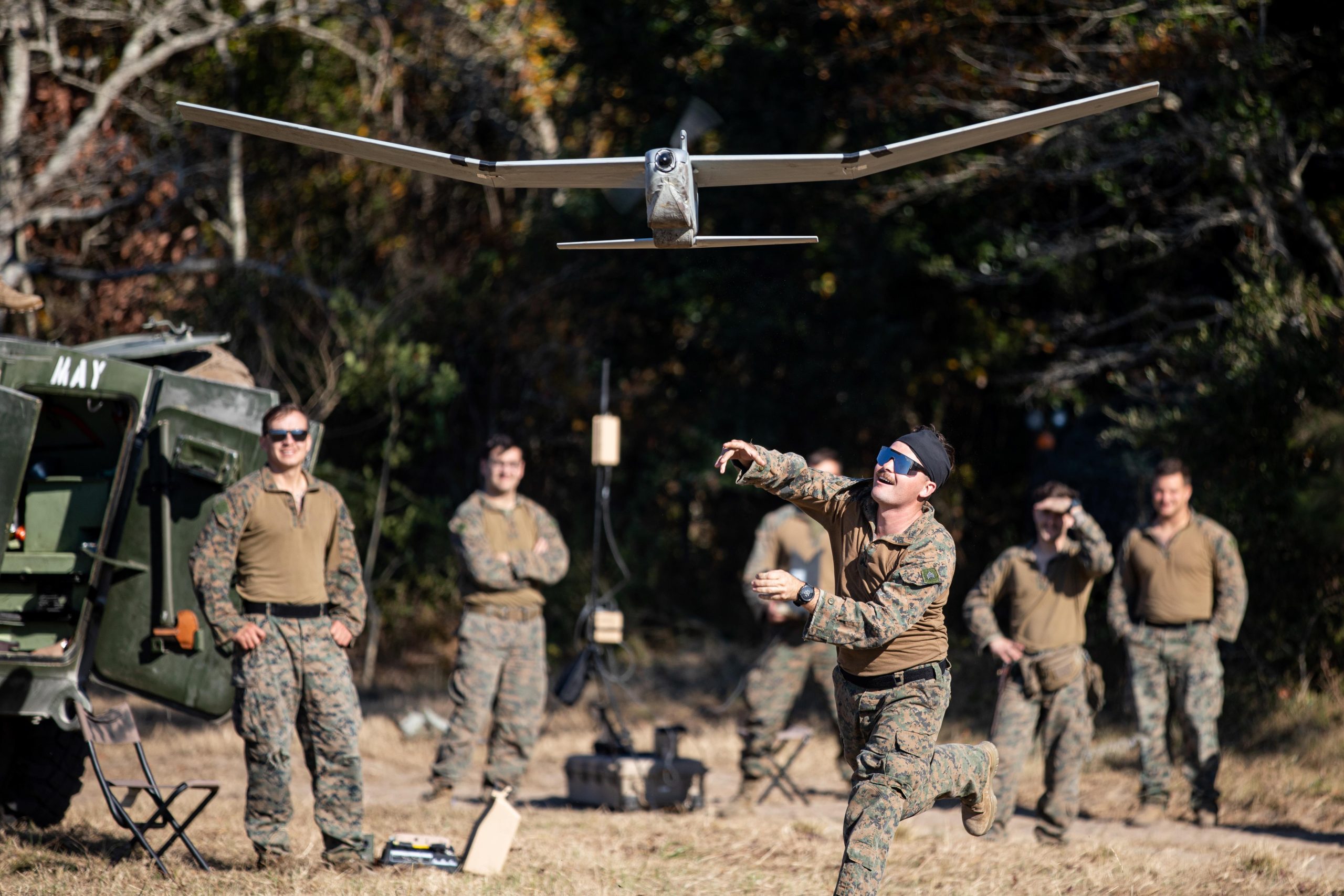
Recent exercises halfway around the globe in the High Countries like Denmark demonstrated how NATO countries can work in concert with Marines to quickly set up bases with advanced equipment airlifted onto remote fields with short runways and minimal facilities.
High Countries were an apt description for Marine Corps Europe taking part in a Norwegian-led Arctic operation that took place from Sept. 1-3, 2025, the latest test of Expeditionary Advance Based Operations. It demonstrated that NATO Allied forces from the United Kingdom Royal Air Force and Norwegian armed forces could work alongside Marines in a first-of-its kind mission to quickly insert military assets to a remote and austere location.
The prime focus of the operation was to practice real-world NATO sea denial and maritime domain awareness capabilities. In turn. the operation helped contribute the ability to quickly respond and defeat any crisis or threat to NATO allies.
The deadliest threat to adversary surface combatants was also tested with rapidly deployed Light Tactical Vehicles (LTVs) airlifted as a stand-in for launch bases of the U.S. Marine Corps special weapon for littoral regions and choke points, the Navy-Marine Expeditionary Ship Interdiction System (NMESIS), pronounced “Nemesis.”
The Marines also tested NMESIS anti-ship missile deployments earlier in the year in arguably the most highly contested area of future conflict, the Luzon Strait, a choke point for China to wage war against Taiwan and threaten merchant shipping.
The lethal component of the unmanned mobile launcher gives Marines the ability to sink warships and other maritime targets from land, one more aspect of the EABO doctrine.
Back to the Future
“Hit ‘em where they ain’t” was the Korean War motto of General of the Army Douglas MacArthur as he pulled an end run against Chinese and North Korean forces nearly encircling the South Korean capital of Seoul. EABO does something similar but more to the tune of, “Where we ain’t you’ll never know until it’s too late.”
The different between the classical island-hopping expeditionary operations and Expeditionary Advanced Base Operations is summed up on the Marine Corps website: “EABO support the projection of naval power by integrating with and supporting the larger naval campaign. Expeditionary operations imply austere conditions, forward deployment and projection of power. EABO are distinct from other expeditionary operations in that forces conducting them combine various forms of operations to persist within the reach of adversary lethal and nonlethal effects.”
All three Marine Expeditionary Forces have conducted exercises using the Stand-In Force concept and EABO in multiple regions globally.
“Our two Marine Littoral Regiments are reinforcing the Marine Corps’ Force Design vision for distributed, lethal, maneuverable and purpose-built formations in the Indo-Pacific,” said Marine Corps Combat Development Command’s Lieutenant Colonel Eric Flanagan.
“Sustaining Marines in contested environments is just as critical as sensing the enemy or maintaining command and control. The Marine Corps is shifting from traditional supply chains to a more agile, resilient sustainment network — one designed to maneuver under threat, reinforce dispersed forces, and sustain operations across the vast distances of the Indo-Pacific,” Flanagan said.
The U.S. Navy and Marine Corps are addressing a key gap in the Indo-Pacific by developing the Medium Landing Ship (LSM), designed for enhanced mobility, beach access and sustainment in contested littoral environments.
As part of this effort, the Navy has selected the Damen Naval Landing Ship Transport 100 (LST 100) design as the basis for the LSM program. The non-developmental design will reduce cost, schedule and technical risk. Feeling the need for speed, both the Navy and Marine Corps are eager for the urgently needed capability to reach the fleet thanks to accelerated timelines made possible with the proven design.
Critical Enablers
The rapid move from 2019 theory to present-day reality includes the just-completed 2025 Aviation Plan, which provides a renewed focus on distributed operations and emphasizes sustained operational effectiveness in contested environments through enhanced logistics, sustainment strategies and expeditionary advanced base concepts.
Flanagan, from his perspective as director of communications strategy and operations, sees the future as present with the airborne forces of the Marine Corps.
“Our modern technologies like the ACV, MV-22, CH-53K and F-35B are all critical enablers of Expeditionary Advanced Base Operations, enabling forward-deployed, distributed operations. Years of wargaming, experimentation and study have matured our concepts for EABO,” Flanagan said, “so that our concepts align with the way the broader force will fight.” .
Jim McClure’s first exposure to the Marines was as a four-year scholarship Marine Option Midshipman at the University of Notre Dame. He is a Life Member of the Navy League of the United States and a frequent contributor to Seapower. This story first appeared in the February-March, 2026, issue of Seapower.