
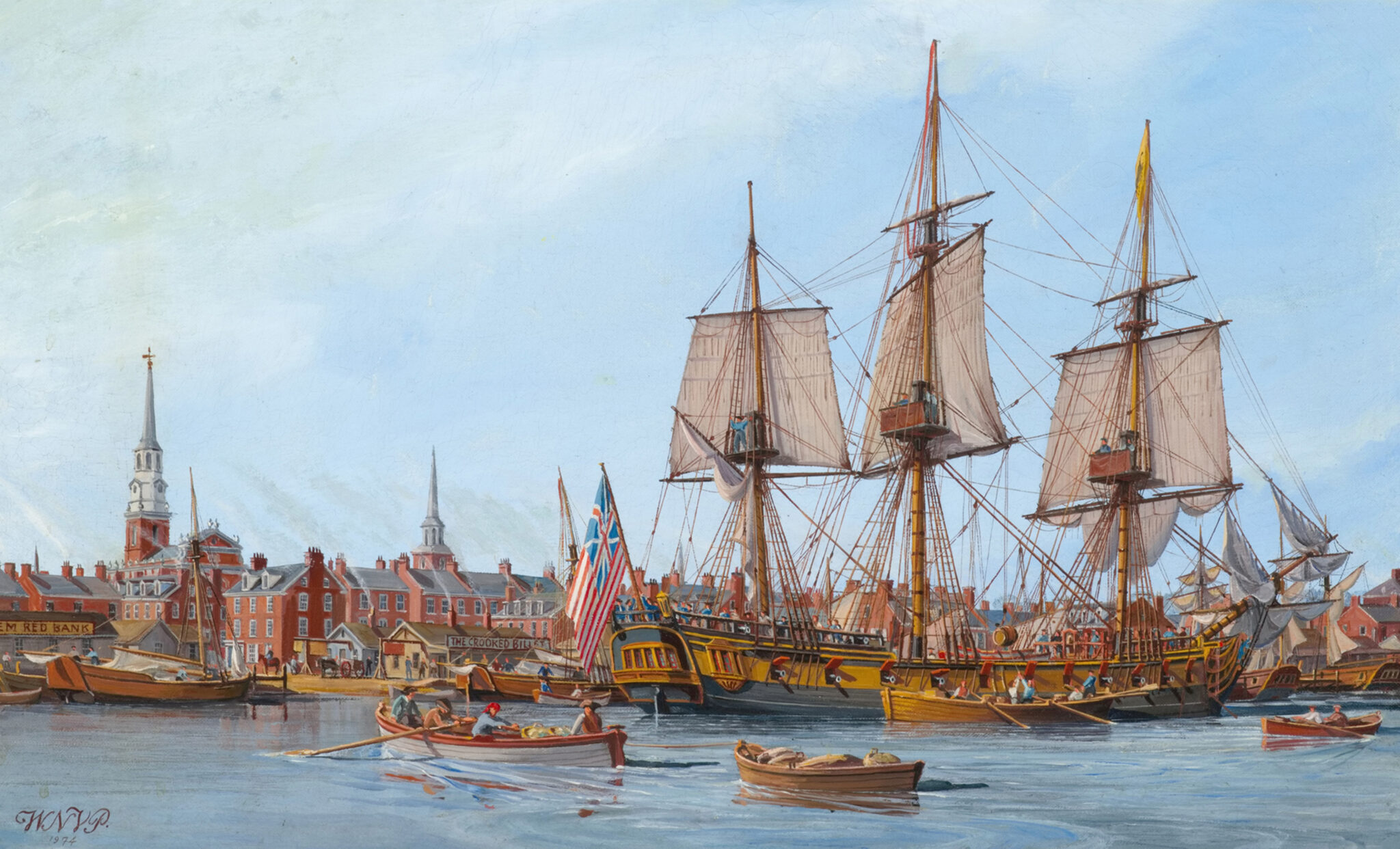


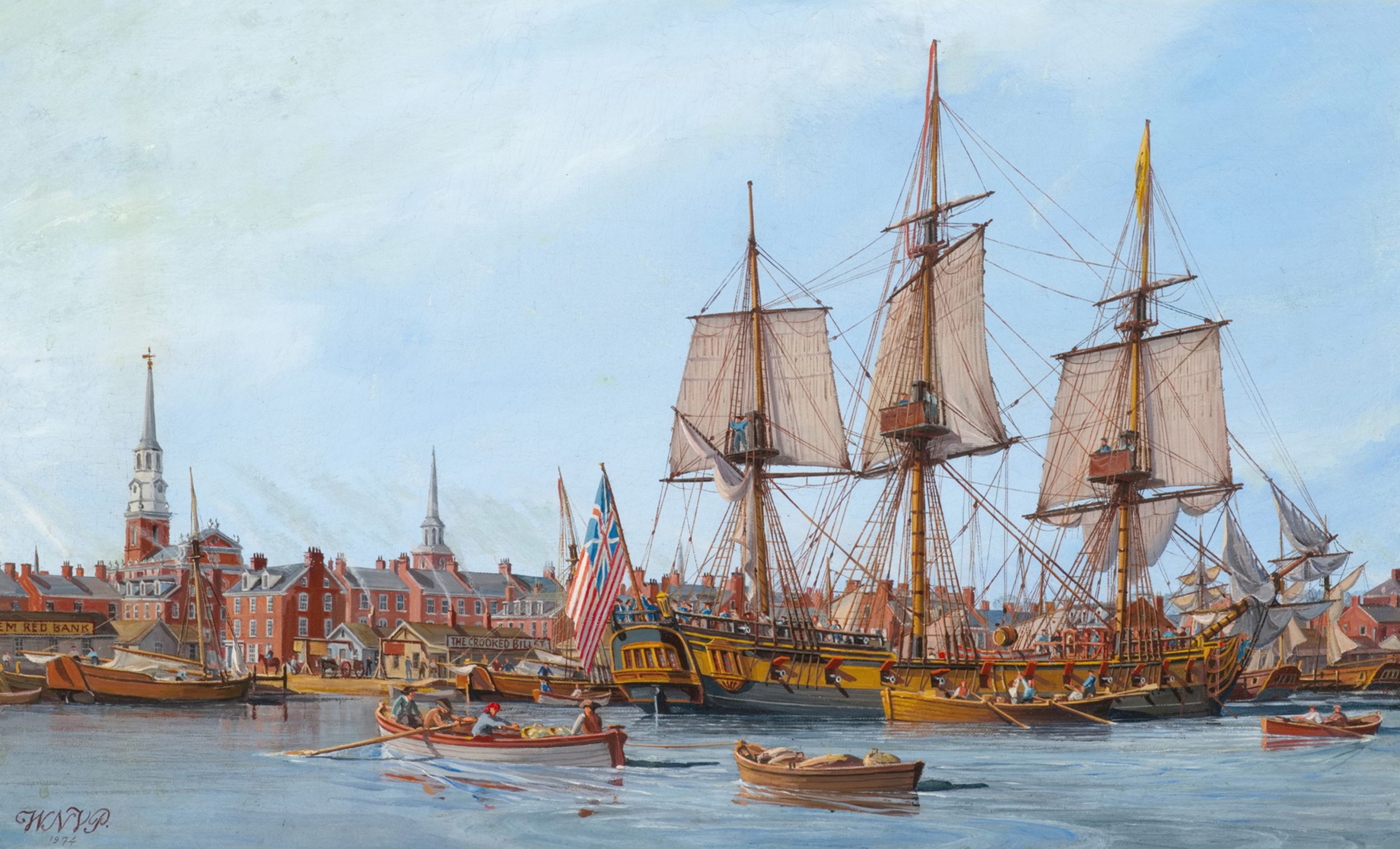
“The Continental Navy, with few exceptions, was a wasteful and humiliating fiasco.” So wrote Ian Toll in his introductory chapter in “Six Frigates” in his effort to set the stage for the construction of the ships that would lay the foundation for our present navy. In contrast, Tim McGrath, author of “Give Me a Fast Ship,” argues that beginning with five converted merchantmen, “America’s Sailors became formidable warriors, matching their wits, skills, and courage against the best of the British fleet.”
Whatever your assessment of the “Navy of the United States,” as John Paul Jones referred to it in his proposed regulations for officer uniforms, an aspect of the American Revolution that cannot be emphasized enough is the role sea power played as a determiner for the American colonies being unshackled from British rule. What started as a rebellion of the colonies against the Crown for a variety of factors, to include tariffs imposed on imported goods, grew into a global war that overtaxed the capabilities of the Royal Navy.
Ironically, sea power was one of the key factors leading to revolution. The decisive Royal Navy triumph over the French at Quiberon Bay near Saint-Nazaire on Nov. 20, 1759, during the Seven Years’ War, and British success with American colonial help in the French and Indian War (the North American component of the Seven Years’ War), which brought Canada under British rule, meant France and its allied Native American tribes no longer posed a threat that fostered colonial dependence on British armed forces. Of course, establishing Pax Britannica came at a cost, and the British sought colonial help in footing the bill.
“Taxation without representation” drove a wedge between the British Crown’s overseas subjects and the motherland, especially in New England as illustrated by the Boston Tea Party. The attempt to quell revolt by garrisoning troops in Boston would backfire in the spring of 1775 at Lexington and Concord, and soon the British found themselves in an uncomfortable situation as colonial militias formed to become an army under George Washington, who took command on July 3, 1775. Surveying the situation, Washington recognized he could change the British situation from uncomfortable to untenable by interdicting British supply ships.
In his assessment, he likely was inspired by a failed early-June trading mission to Machias, located northeast of present-day Bar Harbor, Maine. Hoping to exchange food for lumber, the British commander, Midshipman James Moore, would have his two cargo ships Polly and Unity seized as local Sailors, led by Jeremiah O’Brien and inspired by events at Lexington and Concord, then captured Moore’s schooner Margaretta and in doing so dispatched Moore and nine of his crew. O’Brien armed Unity with Margaretta’s guns; renamed Machias Liberty, this first American warship would immediately capture two British vessels on a surveying mission without firing a shot.
To clear the British from Boston, Washington turned to John Glover, who commanded the 21st Massachusetts Regiment from Marblehead, which was composed mostly of Sailors. In his 2021 bestseller of the same name, Patrick K. O’Donnell would dub the Marblehead men “The Indispensables,” members of whom would crew Glover’s schooner Hannah. On Sept. 7 the schooner, under the command of Nicholson Broughton, seized back an American merchantman that had been pressed into British service to deliver supplies to the British Army. Seeking to replicate Hannah’s success, additional schooners quickly claimed some 55 prizes.
Birth of the U.S. Navy and Marine Corps
The success bolstered efforts by John Adams in Philadelphia to authorize a national navy. An initial step had been taken over the summer to allow each colony to form their own fleet as they saw fit. Resistance had come from the South, which had yet to experience hostile actions from the Royal Navy. Attitudes changed as September turned to October as John Barry returned from a trip to England with newspaper accounts of the Royal Navy fitting out additional ships for duty in North America. Adams was joined in calling for the creation of a navy by Rhode Island delegate Stephen Hopkins, who learned of a bombardment conducted against Bristol. However, Samuel Chase of Maryland exclaimed, “It is the maddest idea in the world to think of building an American fleet.” Reports of additional British reinforcements en route and fear of the potential of Royal Navy men-of-war roving along the Eastern seaboard, leveling towns and villages, led Congress to act on Oct. 13, 1775, to fit out two vessels to serve in a national navy.
The fears were justified. Five days after the birth of the navy, a British squadron bombarded and then landed a raiding party to torch Falmouth in present-day Maine. That action spurred Congress to approve the acquisition of additional ships. Of course, to crew the ships, officers and enlisted Sailors, stores and supporting infrastructure were needed. Esek Hopkins, the younger brother of the Rhode Island delegate, was appointed to command America’s first naval squadron. With the Navy established, Stephen Hopkins saw the need for two battalions of Marines. Formed on Nov. 10, 1775, the Marines’ first commissioned officer would be a Quaker, Samuel Nicholas. The ship Alfred would be the first converted merchantman to be commissioned on Dec. 3, 1775. Four days later John Paul Jones received his officer commission. On Dec. 13, Congress would authorize the construction of 13 frigates to build on the number of converted merchantmen coming into service.
“It is the maddest idea in the world to think of building an American fleet.” – Samuel Chase, delegate, Continental Congress
In March 1776 the warring parties displayed aspects of sea power that factored into the course of the war. For the British, the arrival of transports meant General William Howe could extract his troops to fight another day. Meanwhile, the American squadron under Esek Hopkins headed south to the Bahamas to pull off a raid to extract arms and gunpowder. Returning from the Bahamas, the squadron experienced its first engagement with the Royal Navy in coming upon HMS Glasgow off Block Island. After Hopkins failed to exploit his numerical superiority, the British 20-gun warship was able to escape to Newport.
In the coming months, sea power would prove nearly decisive for the British. As Congress met in Philadelphia to draft the Declaration of Independence, a massive armada arrived off New York in what David Hackett Fischer declared “was the largest projection of seaborne power ever attempted by a European State.” Some 70 warships, half the order of battle for the Royal Navy, oversaw the offloading of 23,000 Redcoats and 10,000 Hessians onto Staten Island. The Royal Navy and ground forces worked in tandem to defeat Washington’s forces on Long Island.
Small craft proved to be Washington’s salvation as the Marblehead Sailors were able to extract him and some 9,000 troops from Brooklyn under cover of fog. In an attempt at asymmetric warfare, Washington approved the use of David Bushnell’s submersible Turtle, which failed early on Sept. 8, 1776, to attach an explosive to the hull of the British flagship Eagle. Dodging that bullet, a week later, the Royal Navy supported the army’s landings on Manhattan. Washington’s troops would repeatedly fail in battle, and by December they were hunkered down at Valley Forge in Pennsylvania. As documented by Fischer in “Washington’s Crossing,” it was those “Indispensable” Marblehead Sailors who crewed the boats that delivered Washington’s force across the Delaware for a successful raid on Trenton.
Sea power proved consequential during the pivotal year of 1777. Though Benedict Arnold’s gunboats were soundly defeated at the Battle of Valcour Island on Lake Champlain in October 1776, the action delayed British efforts to drive south from Canada to reach the Hudson River Valley until the following year. Eventually, British General John Burgoyne’s army would be defeated at Saratoga in October 1777. This blow came in part due to General Howe’s decision not to head north to link up with Burgoyne but rather to use sea power to transport a portion of his army up the Chesapeake Bay to offload regiments near present-day Elkton, Maryland.
Following the American defeat at Brandywine, British troops seized Philadelphia. Perhaps a motivating factor for Howe in seizing the revolutionary seat of government was not to cause the Congress to flee to York but rather to shut down a part of the infrastructure needed to sustain an American Navy. As British forces worked their way up the Delaware to open the waterway to support the new garrison in Philadelphia, they met resistance from vessels of the Continental and Pennsylvania state navies. One of the 13 authorized frigates, Delaware, would run aground and be captured. To prevent their capture, Washington ordered the scuttling of two of the other frigates trapped further upriver, Effingham and Washington. In a bombardment that would be replicated at Fort McHenry during the War of 1812, Royal Navy warships fired broadsides at Fort Mifflin. The fort would be pummeled but at a cost: The British lost HMS Augusta, a 64-gun ship-of-the-line. Credit the Army, not the Navy, for the greatest loss ever inflicted against His Majesty’s navy.
Privateers and Irregular Warfare
There is a reason Ian Toll wrote about six frigates instead of 13, as the fate of the other congressionally authorized frigates mirrored that of the three mentioned above. But elements of sea power began to work to support the newly declared United States’ effort to free itself from British rule. Privateers became the ultimate force multiplier. Congress and the individual states provided some 2,000 letters of marque to enterprising merchantmen to interdict British commerce. Motivated by prize money obtained through the sale of captured vessels and their cargoes, the privateers prowled the Atlantic in search of British merchants. Rising insurance premiums would influence British attitudes about the cost of sustaining the effort to quell the rebellion. In addition to having to divert assets to protect its merchant fleet, the Royal Navy had an even bigger challenge with the French decision to support the rebellion.
With France and eventually Spain joining the American cause, the British saw not only their other overseas possessions at risk — especially in the Caribbean, but also the homeland itself. French entry in the war and the threat of French sea power caused the British government to direct the abandonment of Philadelphia to redistribute troops to New York, Canada and the Caribbean. The veiled maritime threat had accomplished what Washington’s troops could not: the liberation of the new nation’s capital. Unfortunately, French naval deployments would not contribute toward an immediate change in the direction of the war. A potential game-changing showdown off Rhode Island on Aug. 11, 1778, between a superior French force commanded by Vice Admiral Charles-Henri d’Estaing and a British force led by Admiral William Howe was thwarted by a storm causing the two fleets to scurry to the safety of American-held Boston and British-occupied New York. However, the British would not be able to prevent the landing of French troops or block the steady stream of arms arriving from Europe.
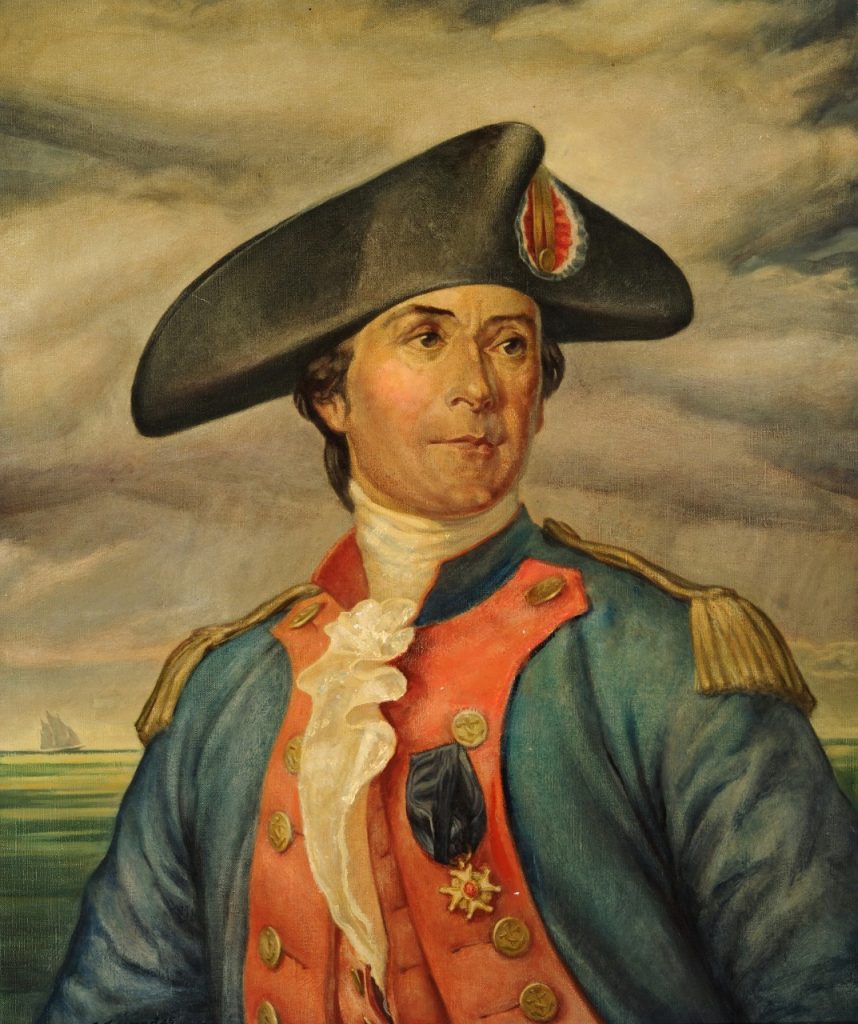
Before the Franco-American alliance, French authorities tended to look the other way when American naval vessels fit out and operated from French ports, an arrangement that led to Lambert Wickes in Reprisal and Gustavus Conyngham in Revenge having very successful commerce-raiding deployments off the British Isles early in the conflict. With the alliance, France became an operating base for several American skippers, with the best-known being John Paul Jones — a master of what historian B.J. Armstrong has dubbed “irregular warfare” — a component of sea power that can be seen today with Navy SEALs. Having commanded Ranger in operations against his native land that included a raid on Whitehaven, Jones turned Ranger over to his First Lieutenant to take command of Duc de Duras, a merchantman of considerable size that Jones armed and transformed into the Bonhomme Richard.
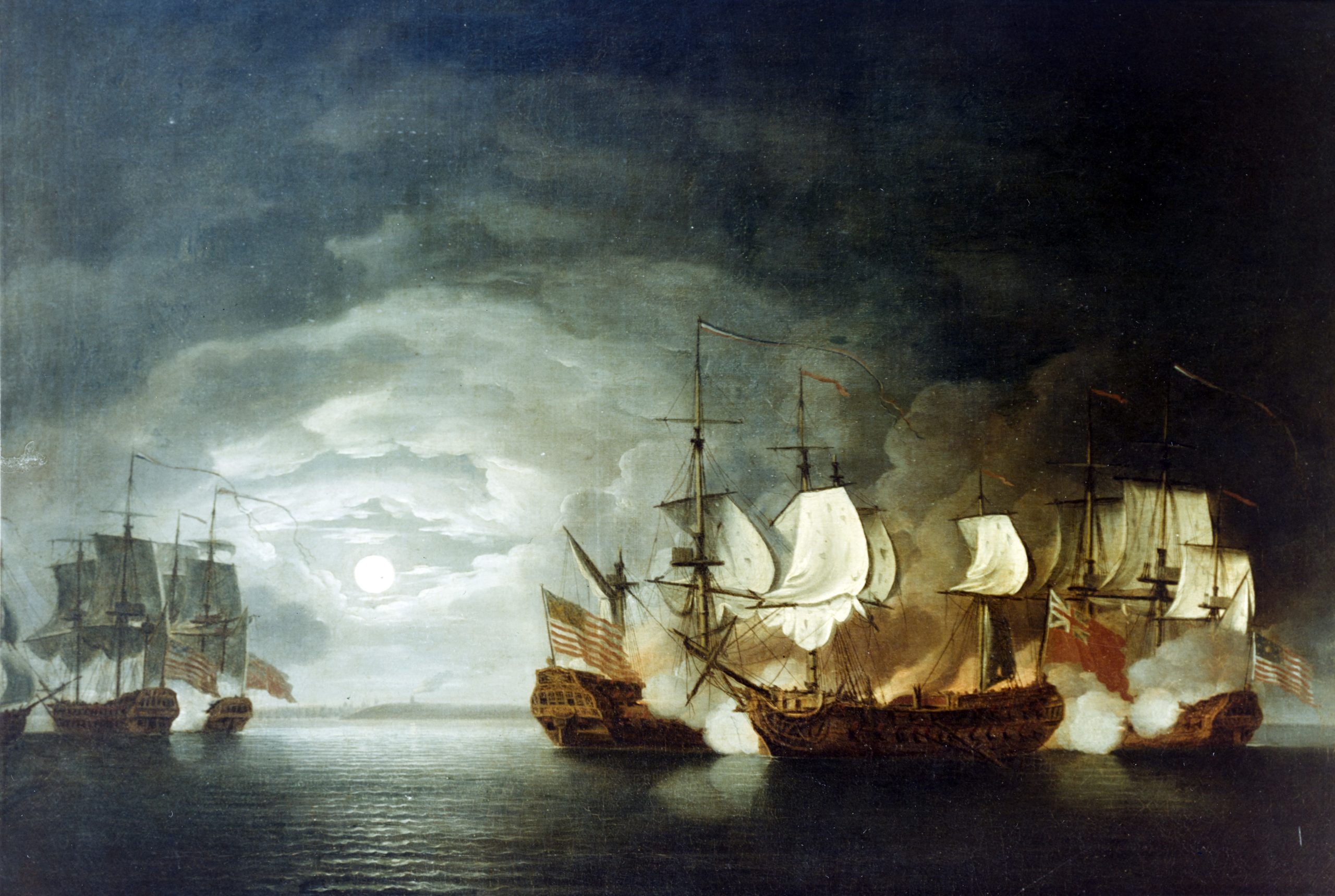
Sailing out as part of a Franco-American raiding squadron, Bonhomme Richard engaged HMS Serapis off the Yorkshire coast of England on Sept. 23, 1779. With the rigging of the two ships becoming entangled and Jones losing the use of several of his guns, the American commander refused to surrender. Having “not yet begun to fight,” Bonhomme Richard’s crew boarded and seized Serapis, an outcome that would be tops on the Continental Navy’s rather limited highlight reel for the American Revolution. In contrast, a month earlier, a good portion of that navy chose to scuttle itself in the Penobscot River to avoid capture from a superior British naval force, a tragic conclusion of what may have been the young nation’s mightiest attempt to flex its sea power muscle in assembling an armada of 19 warships including the frigate Warren and 25 support ships to sail north from Boston to eliminate British footholds along the coast of present-day Maine. The disastrous Penobscot Expedition illustrated how sea power could prove decisive — unfortunately, in this case, on behalf of the British.
A few months later the British used their superior naval forces to good advantage by loading 90 transports, crewed by 5,000 Sailors, at the end of December in New York with some 8,700 troops and 396 horses to sail south past Cape Hatteras to seize Charleston. Although few horses survived the stormy journey, the troops did and were skillfully deployed by General Henry Clinton to entrap the defending American garrison. In addition to surrendering some 6,700 men, the Americans lost two more of its 13 frigates authorized by Congress.
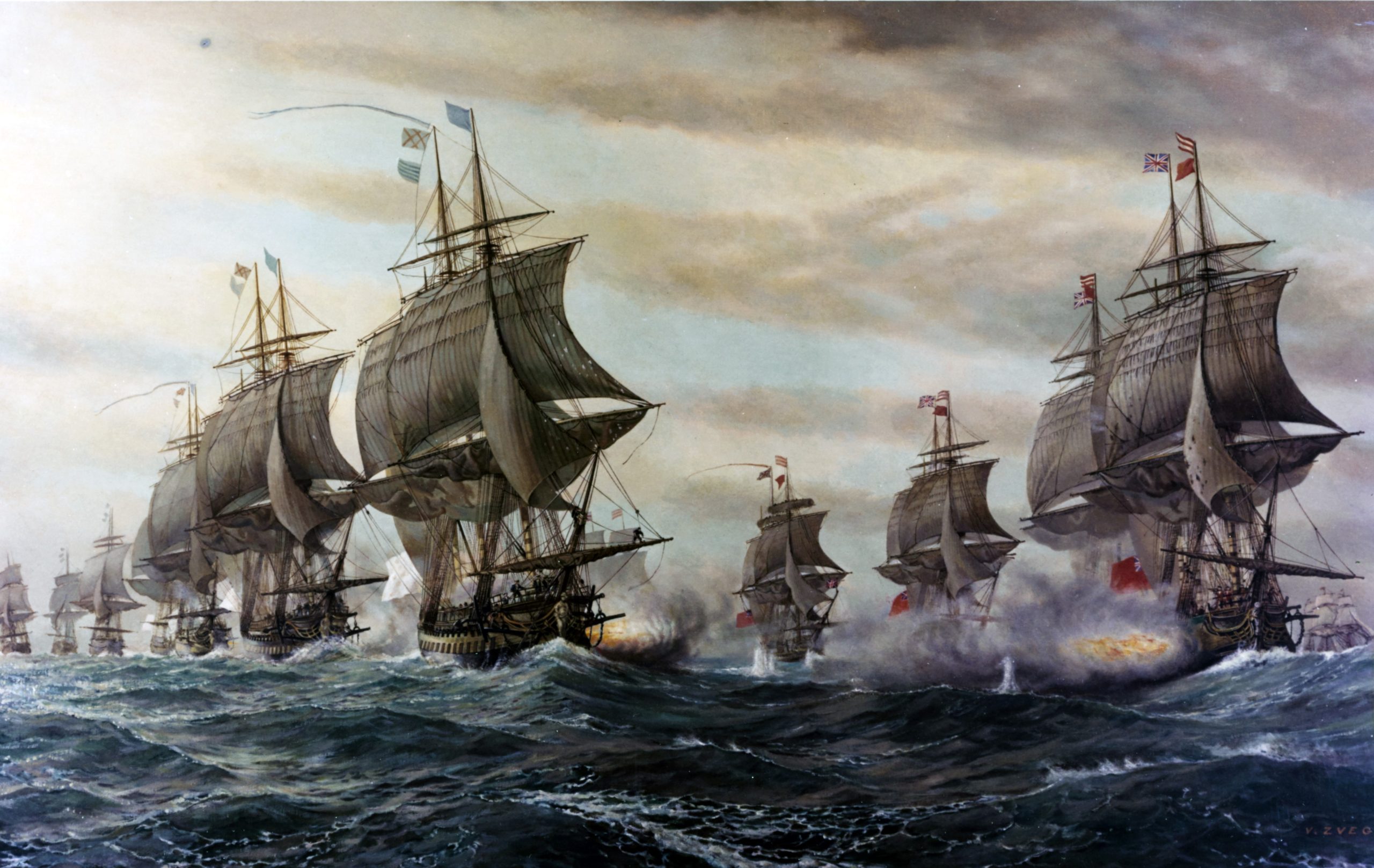
Though the British were exploiting sea power to good effect in 1779–1780, in the end it would work to their disadvantage. Through attrition, the British did succeed in whittling the Continental Navy to just a handful of ships, with the 36-gun frigate Alliance being the most powerful warship to survive the war. A 74-gun ship-of-the-line America, completed after the battle at Yorktown, would be offered to the French as a gift for their support of American effort to achieve independence. That effort culminated with the arrival of a French fleet under the command of Vice Admiral Comte de Grasse off the mouth of Chesapeake Bay. In the Battle of the Capes, fought Sept. 5, 1781, de Grasse defeated an inferior British squadron commanded by Rear Admiral Thomas Graves, sealing the fate of General Charles Cornwallis’s troops at Yorktown.
Faced with debt, Congress would not continue to fund a navy, and with the auctioning of Alliance in August 1785, the navy that Congress created a decade earlier was no more. However, the new nation’s political leaders would quickly appreciate the consequences of their folly. In a new constitution that replaced the Articles of Confederation, in Article 1, Section 8, Congress was authorized “To raise and support armies, but no appropriation of money to that use shall be for a longer term than two years.” In contrast, the founders enshrined the need “To provide and maintain a navy.”
Dr. Winkler has been nominated to be the next Historian General of the Naval Order of the United States. This article originally appeared in the October issue of Seapower magazine.