
The (Other) Manhattan Project: Forgotten Island Had Front-Row Seat to Military History
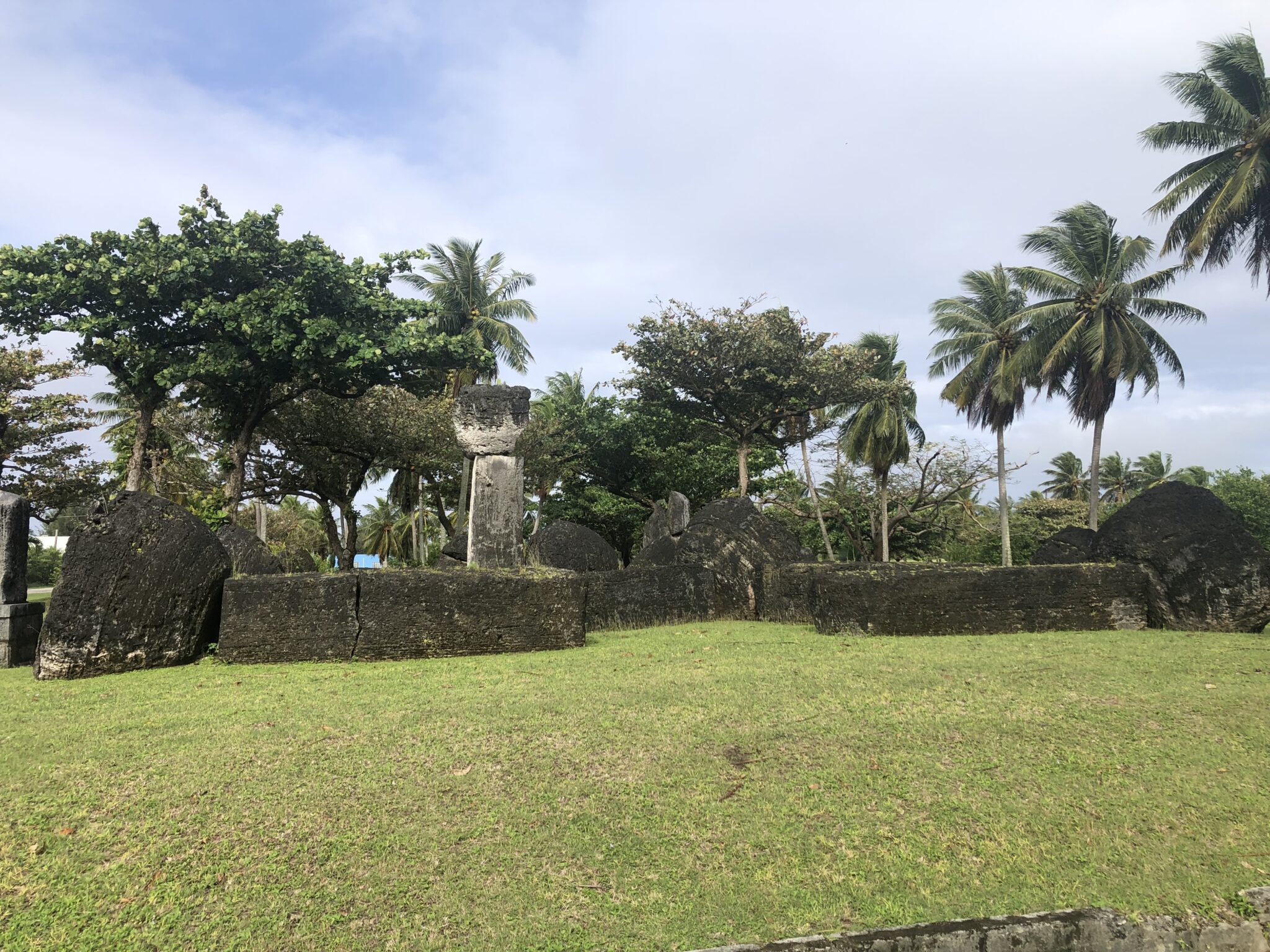


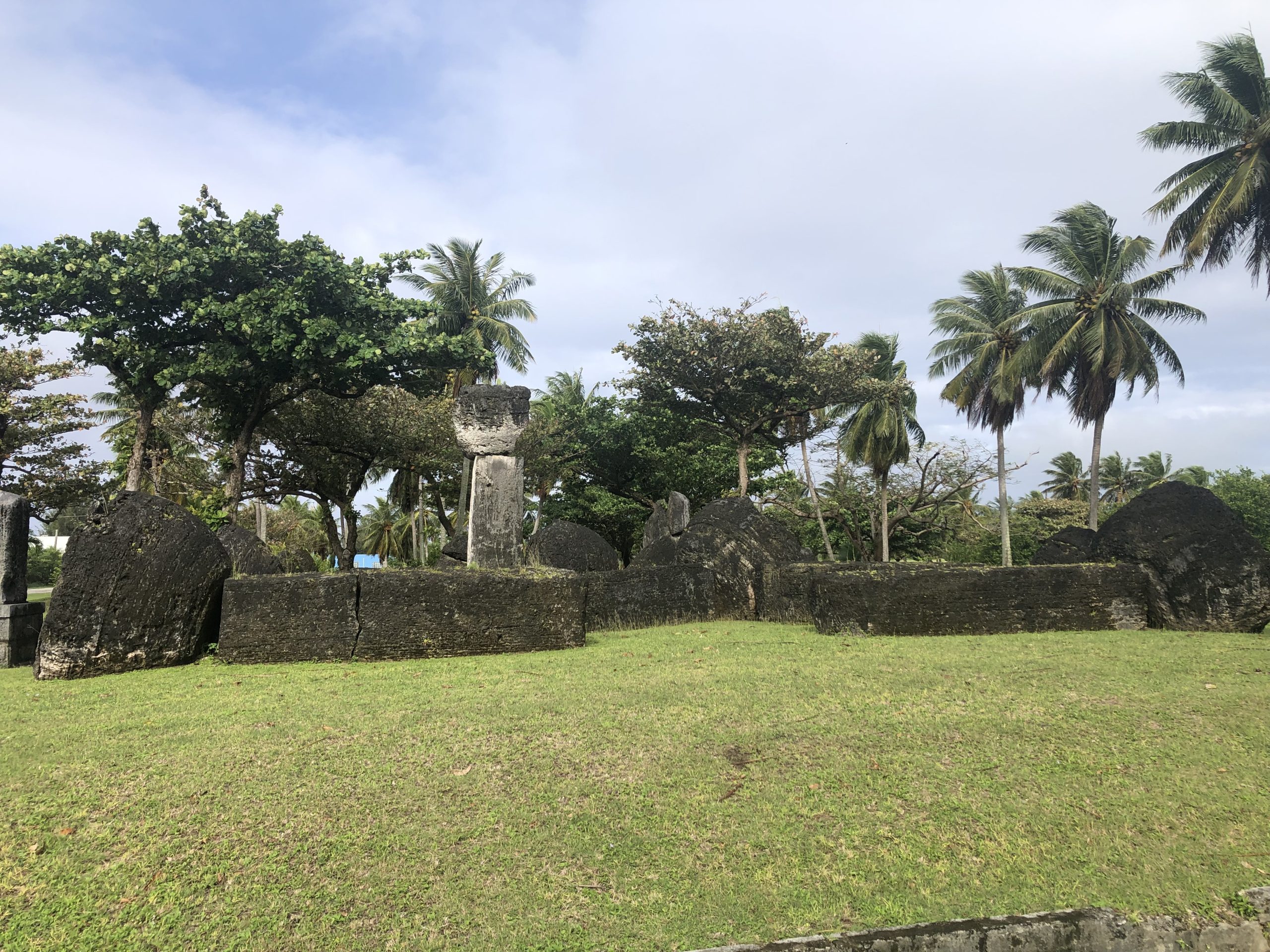
On a historical impact per square mile basis, few places on earth rival the island of Tinian. Almost completely forgotten today, this small, isolated speck of land in the Northern Mariana Islands — located about 125 miles north of Guam — has been the site of some of the most consequential events in human discovery, construction and annihilation.
Since first being inhabited 5,000 years ago, Tinian has served as a stopping point for explorers and a launch pad for invaders. Though now often relegated to a footnote in history, Tinian’s story offers vital lessons to the U.S. Navy as it reorients for an era of great power competition and works to counter an increasingly aggressive China in the Indo-Pacific.
One of the earliest oceanic landmasses to be inhabited, seafaring people, likely originally from Southeast Asia, traveled thousands of miles across the open ocean in outrigger canoes and arrived in the Mariana Islands around 3000 BC. Their settlements on Tinian are some of the oldest prehistoric sites in the United States and its territories. The Portuguese explorer Ferdinand Magellan is believed to have spotted Tinian during his 1521 circumnavigation of the globe. Magellan elected to bypass Tinian and instead landed on Guam after spending nearly 100 days at sea. Because of a misunderstanding of the size of the globe, he had expected the passage from South America to Asia to take three or four days and his crew was dehydrated and starving when they finally reached the Mariana Islands. The crossing was so treacherous that Antonio Pigafetta, the expedition’s official chronicler, wrote “I believe that nevermore will any man undertake to make such a voyage.”
Despite the hardships of the initial voyage, Spanish explorers returned within five years and the 1529 Treaty of Zaragoza eventually placed the islands within Spain’s sphere of control. Permanent Spanish settlement, however, did not begin until 1664, led by Jesuit priests and soldiers who arrived in Guam in 1668. Two priests traveled onward to Tinian, likely becoming the first Europeans to step foot there, but their presence inflamed tribal conflicts that forced a retreat five years later. Spain eventually secured the Mariana Islands in 1698 and forcibly removed the native population of the northern islands to Guam. Consequently, Tinian remained largely uninhabited for over a century, save for brief occupations by the crews of passing English warships in 1742 and 1765.
In April of 1898, following the sinking of the USS Maine in Havana Harbor, the U.S. declared war on Spain. The cruiser USS Charleston, under the command of Captain Henry Glass, was dispatched from California to Manila to support Commodore George Dewey’s Asiatic Squadron in its attack on the Spanish-held Philippines. While resupplying in Honolulu, Glass received orders to detour to Guam and “use such force as may be necessary to capture the port of Guam, making prisoners of the governor and other officials and any armed force that may be there. … These operations at the Island of Guam should be very brief and should not occupy more than one or two days.”
When Glass reached Guam on June 20, 1898, he found the island only lightly defended. The Spanish, unaware war had been declared, mistook his cannon fire on the fort at Santa Cruz as a military salute. Hopelessly outmatched, the Spanish governor surrendered without bloodshed the next day to two junior officers and four soldiers from the Charleston who had been sent ashore by Glass. The island was left under the authority of Francisco “Frank” Portusach, the only American citizen then residing in Guam, and the Charleston sailed onward to Manila.
While Spain ceded Guam to the U.S. in the Treaty of Paris, Tinian and the northern islands were left under Spanish rule in an apparent American oversight. Having lost the principal island, Spain saw little reason to keep the rump of its Micronesian possessions and quickly sold the lossmaking islands to Germany for 25 million pesetas (equivalent to $160 million in 2026). Nonetheless, they continued under the local control of Spanish landowners and the number of German nationals throughout the entire Mariana territory never reached double digits.
Japan Takes Over
At the start of World War I, Japan captured the German-held Marianas pursuant to a secret agreement with Britain. Following the war, the League of Nations formally appointed Japan to manage the islands as part of the South Seas Mandate. Under Japanese administration, Tinian was transformed into “Sugar Island,” featuring a massive sugar-plantation economy, 40 miles of railroad track and a mill capable of producing 1,200 tons of processed sugar daily.
In the opening days of World War II, Tinian remained relatively peaceful and was not garrisoned by the Japanese military. By 1943, American military leaders recognized the strategic importance of capturing Tinian to establish heavy bomber bases for the strategic bombing of the Japanese home islands. This objective was incorporated into Operation Forager, a massive undertaking involving 535 ships and 125,000 combat troops. Before the invasion could begin, the U.S. Navy neutralized the Japanese fleet in the decisive Battle of the Philippine Sea, famously known as the “Great Marianas Turkey Shoot,” where American pilots, submariners and gunners destroyed approximately 476 Japanese aircraft in two days.
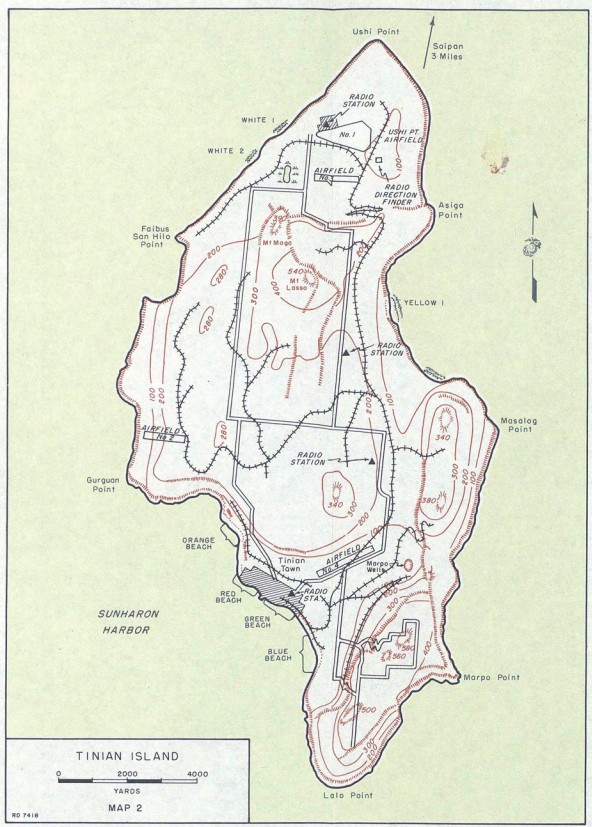
Even with the Japanese fleet in shambles, Tinian still possessed formidable natural obstacles to a successful amphibious assault. The island was almost completely surrounded by cliffs ranging from six to 100 feet in height. Only one beach, near the main town in the southwestern part of the island, was large enough to support a full-scale landing. Two much smaller beaches in the north were judged too narrow to support a major invasion. The Japanese, once they belatedly realized the strategic vulnerability an American-held Tinian presented to their home islands, concentrated their defenses on the larger southern beach, fortifying it with mines and entrenched gun positions with interlocking fields of fire.
Following the Battle of the Philippine Sea, the Japanese on Tinian did not have to wait long for the expected invasion. The U.S. 4th Marine Division landed on Chulu Beach in Tinian’s northwest corner on July 24, 1944. Before the landing, the decision to use the northern beaches was the subject of fraught controversy between the Marines and Navy. Vice Admiral Richmond Turner, in charge of the Forager invasion fleet, believed them too small to support the invasion force and flatly refused to land troops on them. Marine Lieutenant General Holland Smith, who led the ground element, characteristically retorted, “You’ll land any goddamned place I tell you to.” The Marines won and Smith ultimately was vindicated. By Aug. 1, the island had been declared secure. Admiral Raymond Spruance, 5th Fleet commander, described the invasion as “probably the most brilliantly conceived and executed amphibious operation of World War II.”
Even in the midst of the seven-day battle, Navy Seabees began developing Tinian for offensive operations. The island was roughly the shape and size of the island of Manhattan, so geographical place names were borrowed and streets were laid out similar to New York City’s grid. The former Japanese townsite near the southwestern end of the island became “the Village” after Greenwich. The two major roads which ran the length of the island were named Broadway and 8th Avenue. A large undeveloped area in the center was called Central Park.
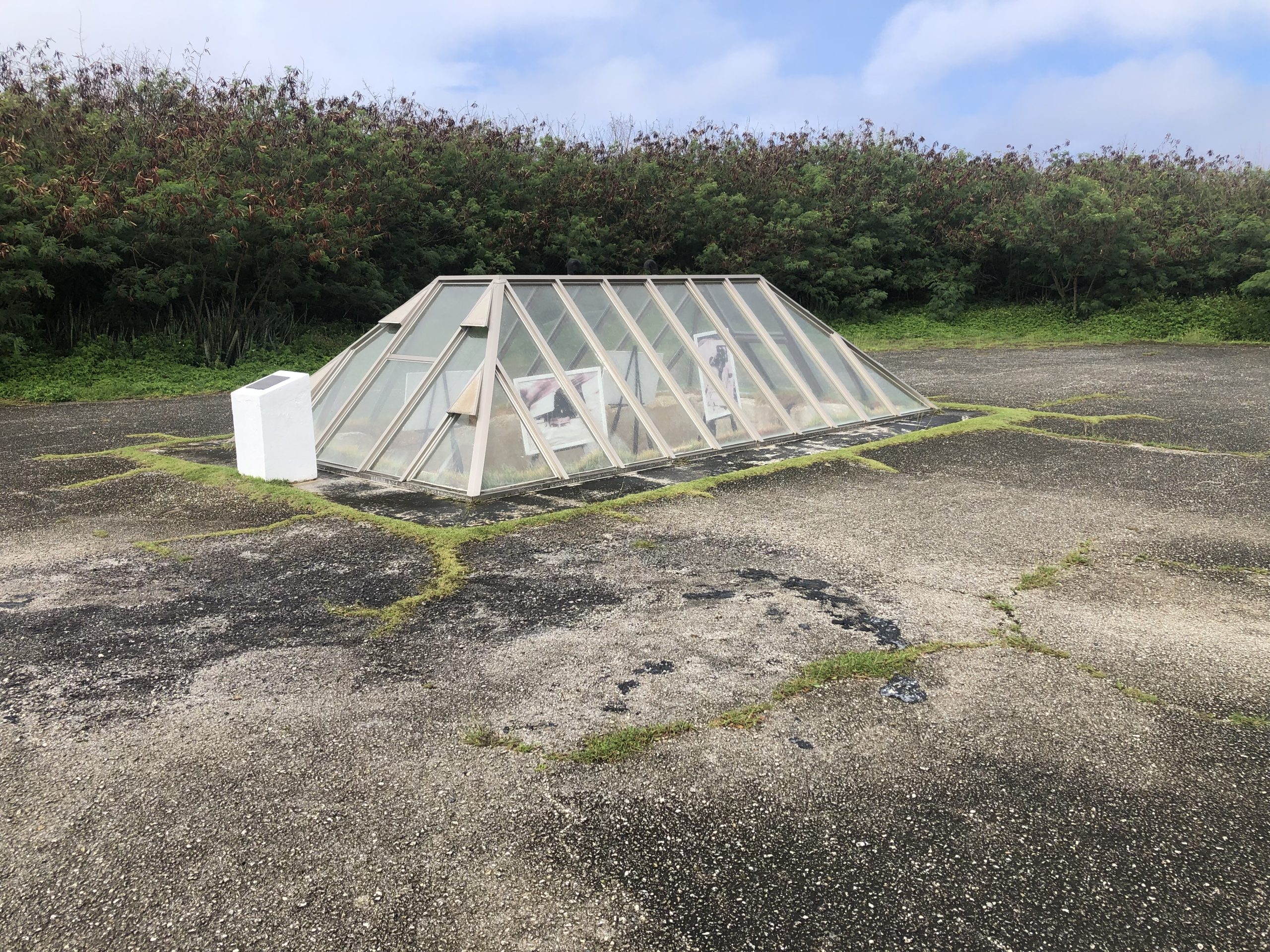
The Seabees constructed two massive runway complexes with six 8,500-foot runways, creating the world’s busiest airfield by 1945. Between March and August 1945, daily bombing raids of more than 100 planes would be launched from the island. Tokyo, Osaka, Kobe, Nagoya and Yokohama would all be decimated by Tinian-based planes of the XXI Bomber Command. The greatest destruction, though, occurred on Aug. 6, 1945, when the B-29 Superfortress Enola Gay took off from Runway Able and dropped the first nuclear weapon used in combat on Hiroshima. Three days later, Bockscar, another B-29 bomber, would do the same to Nagasaki, killing a combined 200,000 people and bringing an end to the most devastating war ever waged.
Following Japan’s surrender, the military rapidly withdrew from Tinian, turning the island into a ghost town virtually overnight. In 1977, the Northern Mariana Islands approved a constitution and established itself as a commonwealth in “political union” with the U.S. The federal government maintained control of the majority of Tinian’s acreage via a lease agreement that made the land available for the military’s use. These days, the single gas station on the island closes early on Sunday afternoons and only a handful of passengers pass through the cavernous, partially abandoned, airport terminal each day.
Lessons for Today
Even as it continues to be reclaimed by nature, Tinian still offers pertinent lessons to today’s military leaders. A confrontation with the People’s Republic of China, much like Japan 80 years ago, will require a complex system of forward bases to stage equipment and personnel. American military planners have noted “the Chinese concept of defending along a first island chain and a second island chain is eerily reminiscent of Japan’s defensive strategy in World War II.”
The difficulty of defending remote forward bases across the Pacific remains as true today as 1941. Just as the Japanese Combined Fleet was able to launch a surprise attack against Pearl Harbor and capture Guam, the Philippines and Wake Island in World War II’s opening days, China’s DF-26 intermediate-range “Guam Killer” ballistic missile and DF-ZF hypersonic missile threaten United States bases in Guam, Japan and South Korea. With thousands of missiles and aircraft capable of targeting Guam, completely blocking a surprise attack has been described as “infeasible.” In the days, hours or minutes before an attack, high-value assets will need to be dispersed to survive the initial barrage of missiles. Once again, Tinian may prove essential to control of the battlespace in the Western Pacific.
In his April 2023 remarks to the House Armed Services Committee, Admiral John Aquilino, then-commander of U.S. Indo-Pacific Command, listed “distributed force posture” as his number one priority because it “supports all elements of the joint force, enables our ability to seamlessly operate with our allies and partners, and demonstrates U.S. commitment to a stable and peaceful security environment … a widespread and distributed force posture west of the IDL [International Date Line] gives us the ability to more easily exercise and operate with our partners, increases survivability, reduces risk and sustains the force with a network of stores, munitions, and fuel to support operations in a contested environment.” Expanding the Department of Defense’s footprint on Tinian is a core component of fulfilling that theater mission.
The successful landing on Tinian also demonstrated the importance of integrated Navy and Marine Corps operations that included land, air and even long-range ground artillery components. Eight decades ago, strong inter- as well as intra-service operational capabilities were necessary to defeat the Japanese. These cooperative capabilities remain essential to the Department of Defense’s ability to project power across the Pacific. A small Marine unit equipped with long-range anti-ship missiles placed on Tinian or another Mariana Island could control thousands of square miles of waterspace, denying the Chinese Peoples Liberation Army Navy the ability to conduct blue water operations in the Western Pacific.
Much like WWII began with Japan’s attempt to decapitate the U.S. Pacific Fleet, the next battle for control of the Indo-Pacific may start with attacks on critical naval installations in Guam, Okinawa and Japan. Building dispersed, survivable infrastructure in places like Tinian will be decisive in preventing a first strike from eliminating the U.S. Navy’s ability to effectively operate in the South China Sea, the Sea of Japan or the Philippine Sea. In Europe, Russia’s invasion of Ukraine has brought a return to trench warfare not seen for over a century. In the Pacific, an island-hopping campaign, much like Admiral Chester Nimitz’s, Admiral William Halsey’s, and General Douglas MacArthur’s during World War II, may be required to secure supply lines to regional partners and maintain forward bases during the next conflict. Once again, Tinian could be the linchpin to American control of the Western Pacific.
Today, Tinian is virtually abandoned and difficult to get to. A skeleton of its former self, trees sprout through the roof of the old Japanese Communication Building, visitors can drive on the weed-strewn Runway Able, and only the foundations remain of the Army hospital’s vast wards. The island has become a living legacy to the millennia of people who have gone before us and a haunting reminder of the human and environmental impact of war. The lessons Tinian offers — of exploration, human endurance, and sacrifice — aren’t just for history books, but continue to offer value to today’s, and tomorrow’s, Navy.
Lieutenant Nicholas Monck is an Assistant Professor of Military Law at the United States Naval Academy. He has previously been stationed in Hawaii and Guam. The views expressed in this article are those of the author and do not reflect the official policy or position of the U.S. Naval Academy, the Department of the Navy, the Department of Defense or the U.S. government. This article previously appeared in the February-March issue of Seapower magazine.