
PHNSY & IMF Welcomes a New Heavy-Lift Crane to Bolster Submarine Readiness
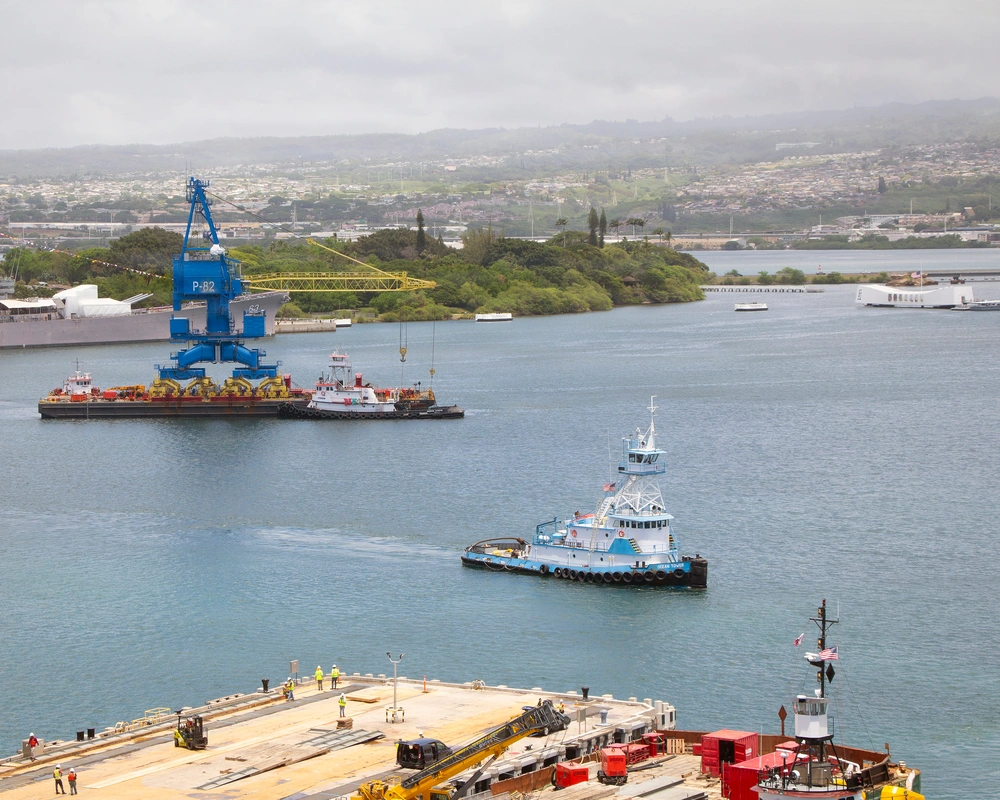


Pearl Harbor Naval Shipyard and Intermediate Maintenance Facility (PHNSY & IMF) marked a major infrastructure milestone with the arrival of a new 175-ton heavy-lift portal crane, P-82, on Sept. 2, 2026
A new powerhouse has arrived at the waterfront. Marking the shipyard’s first crane delivery since April 18, 2002, the arrival of the 1.9-million-pound portal crane expands the facility’s operational flexibility and heavy-lift capacity. The added capability, a direct result of the Navy’s multibillion-dollar Shipyard Infrastructure Optimization Program to update legacy dry docks, facilities and industrial plant equipment, enables the shipyard to conduct concurrent complex overhauls, accelerate ship-to-fleet turnaround times and maintain an uninterrupted submarine presence throughout the Indo-Pacific.
“Part of a $349 million NAVFAC Atlantic contract, this crane is a major component of SIOP’s line of effort to modernize industrial plant equipment at the Navy’s four government-owned and -operated shipyards,” said Bill Couch, director of public and congressional affairs for SIOP. “It will lift parts and materials that are critical for returning ships and submarines to the fleet, including lifts at extreme elevations and at the lowest levels of the dry dock.”
The arrival of P-82 was the culmination of a complex, 9,000-mile logistical journey that began on May 29, when it left the manufacturer’s facility in Manitowoc, Wisconsin, on a barge towed by a tugboat. Fabricated and preassembled hundreds of miles from the nearest ocean, the crane traversed the Great Lakes waterways to the Atlantic Ocean, went through the Panama Canal, and crossed the Pacific Ocean to Hawaii, arriving at a commercial harbor on Oahu Aug. 27 just ahead of Hurricane Lala.
Once here, moving the massive, 1.9-million-pound crane from the transport barge onto the pier was a highly delicate operation. To get the job done, crews parked the crane on top of four heavy-duty, multi-wheeled robotic trailers. Because the crane needed to clear a steep ramp as it rolled off the barge, technicians installed custom 18-inch-high metal “booster blocks” on the trailers to lift the crane higher off the ground. Once the crane was safely on the pier and rolled onto its temporary tracks, crews removed the booster blocks to gently lower the crane onto its permanent pier rails.
“Standing on the pier watching thousands of tons of steel roll off a floating barge on an array of computer-controlled wheels was just incredible,” said Kirk Gosnell, PHNSY & IMF crane maintenance division head. “The contractor’s crew had to actively ballast the barge with every foot of movement against the tide. Seeing that monster safely touch down on our pier was an unbelievable sight.”
P-82 joins a diverse fleet of eight portal cranes that traverse specialized rail tracks lining the shipyard’s waterfront, bridge cranes that are used inside the shipyards machine shops and floating cranes that are mounted on specialized barges. These cranes serve as the logistical backbone for ship and submarine maintenance.
The arrival of this heavy-lift asset is timed with the Navy’s historic construction of Dry Dock 5 — the yard’s first new graving dock built since World War II. P-82’s unique, adjustable rail-base allows it to transit different track layouts, positioning it to play a vital role in servicing all future submarines slated for PHNSY & IMF.
“This crane is more than just a massive piece of heavy equipment; it is a vital enabler for our national defense strategy,” said Capt. McCrillis, commanding officer of PHNSY & IMF. “As the operational tempo for our Virginia-class submarines increases, P-82 guarantees we have the modernized infrastructure required to return combat-ready ships to the fleet on time, every time. This investment directly translates to sustained deterrence in the Indo-Pacific.”
Over the coming months, P-82 will undergo rigorous inspections and testing ahead of its scheduled shipyard acceptance in December. Among the first to master the new asset will be Crane Operator Supervisor Richard Nishida and Jacob Eusebio, the Code 724 training leader responsible for licensing shipyard crane operators. This rigorous licensing process—which mandates written exams, physical evaluations, and hands-on testing under Navy weight-handling regulations—ensures operators can flawlessly execute the micro-precise movements required to lift massive submarine components without a single millimeter of error.
PHNSY & IMF’s mission is to keep the Navy’s fleet “Fit to Fight” by repairing, maintaining, and modernizing the Navy’s fast-attack submarines and surface ships. Strategically located in the heart of the Pacific, it is the most comprehensive fleet repair and maintenance facility between the U.S. West Coast and the Far East.
By Mike Wilson, Pearl Harbor Naval Shipyard and Intermediate Maintenance Facility, Sept. 28, 2026.