
Can the U.S. Navy’s E-2D Hawkeye Substitute for the Canceled Air Force E-7A Wedgetail?
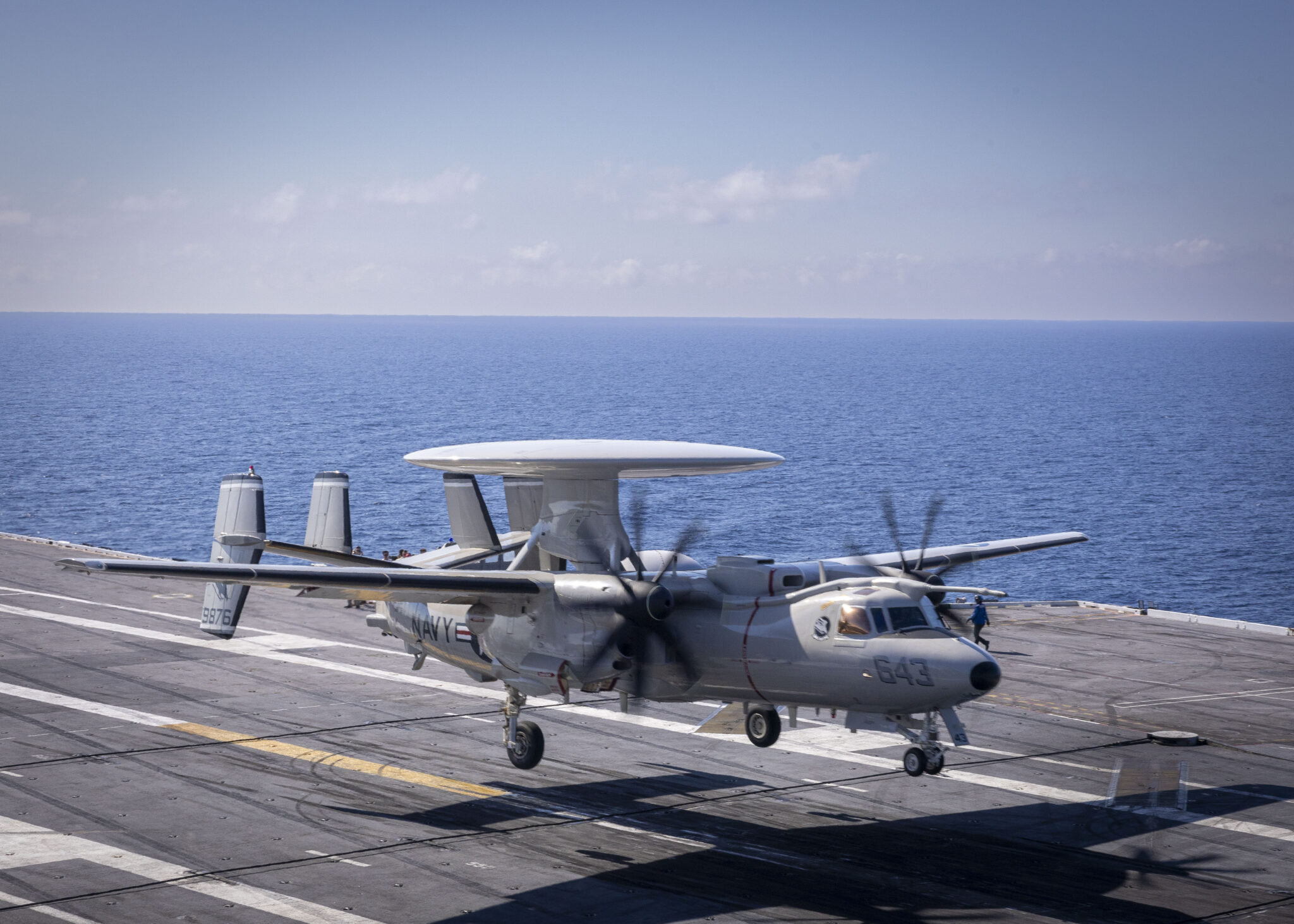


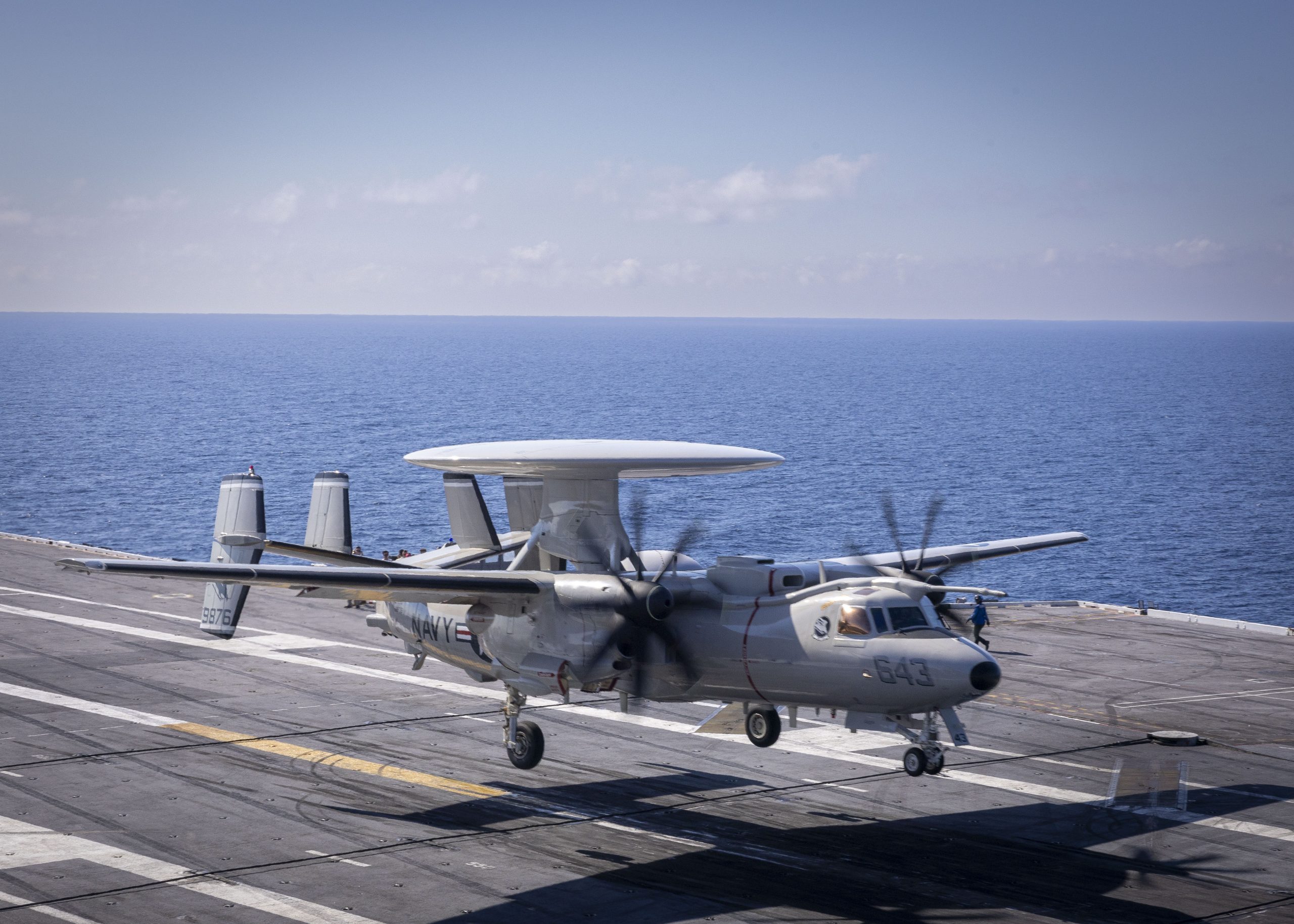
The U.S. Air Force’s E-7A Wedgetail Airborne and Early Warning and Control (AEW&C) aircraft was canceled by the Trump Administration in the summer of 2025, although Congress is moving to block such a decision and enacting legislation to prevent the movement of funds out of the E-7A program.
Can its duties be undertaken by the U.S. Navy’s smaller, cheaper E-2D Hawkeye?
“I’ll leave that to the decision makers in the United States Air Force as to what the right thing is,” Vice Admiral Daniel L. Cheever, commander of Naval Air Forces and Naval Air Force, U.S. Pacific Fleet, said during a Center for Strategic and International Studies’ “Future of Naval Aviation” live webinar event on Aug. 26, in response to a question from Seapower.
“Is the E-2D one of the most capable command and control platforms out there? Yes, it is,” he said. “It has air refueling, so we can stay on station and go serious long ranges. And that team, very small team in the E-2D, is incredibly capable … the three folks in the back are incredible warfighters. Talk about folks that can think strategic, operational, and tactical all at the same time. I think of them as a large umbrella over the whole force, and command and control, and give you the right call at the right time.
“And I think about the trust … the implicit trust I have in the E-2D crew. If they say something and direct me, I do it,” said Cheever, an F/A-18 Hornet pilot. “I don’t pause. I don’t go `Is that the right decision?’ I do whatever they say whenever they say it because they’re always right. And they have that global essay situational awareness that the E-2D brings. And so, it’s kind of inherent [in] that trust piece.”
The E-7A program has been behind schedule and over budget. A single E-7A airborne battle management aircraft’s cost increased by $136 million, or 23%, from $588 million to $724 million. The E-7A is needed to replace the decades old and outdated E-3 Sentry Airborne Warning and Control System (AWACS). Both aircraft are manufactured by Boeing and both have aerial refueling capabilities.
The E-7A is already in foreign air forces’ service, flying for the Royal Australian Air Force, the Republic of Korea air force, and the Turkish air force. The E-7A production numbers are low, with 13 flying or in order with air forces around the world in 2025.
The U.S. Air Force has none, although it wanted 26 before the Pentagon canceled the program and concluded the E-2D Hawkeye can fulfill the AEW&C task, even though the turboprop-powered E-2D is much smaller and thus less capable in speed, range, and endurance. E-2Ds use a 360-degree rotating dorsal antenna that can switch from mechanical to electronic scanning for detecting threats over land, water, and in the littorals.
The jet-powered E-7A is based on a larger Boeing 737 Next Generation (737-700) commercial jetliner and has more range and endurance because it doesn’t have to take off from an aircraft carrier. E-7As use a Multi-role Electronically Scanned Array (MESA) fixed to the top of the aircraft, which provides 360-degree long-distance detection and tracking of airborne and sea targets.
“As an interim solution, the U.S. military wants to grow the Navy’s E-2D Hawkeye fleet to perform that mission while it builds a network of space-based sensors that can warn troops of enemy aircraft and missiles and help direct the movement of forces,” according to an article in Air & Space Forces magazine. “Hawkeyes would supplement a diminished [E-3] AWACS fleet, about half of which have already retired with no alternative in place.”
The Pentagon’s fiscal 2026 budget request calls for $1.4 billion to buy more E-2s, Bryn Woollacott MacDonnell, the department’s acting budget chief, told the magazine. It would also spend $150 million to create a joint expeditionary Hawkeye unit with five planes.
“The E-2D is in production and, as Admiral Cheever indicates, it’s a very capable platform that can operate with both persistence and at range from areas of interest,” Bradley Martin, a retired U.S. Navy captain and RAND Corporation’s senior policy researcher, told Seapower.
“It could carry out missions for the joint force in an effective manner. The main advantage is that it’s an aircraft in production with a capability for upgrades as new technology becomes available. This observation does not imply that RAND necessarily recommends the E-2D over the E-7A, just that E-2Ds could perform most of the missions the joint force requires.”