
Coast Guard Academy Think Tank Puts Polar Issues Front and Center
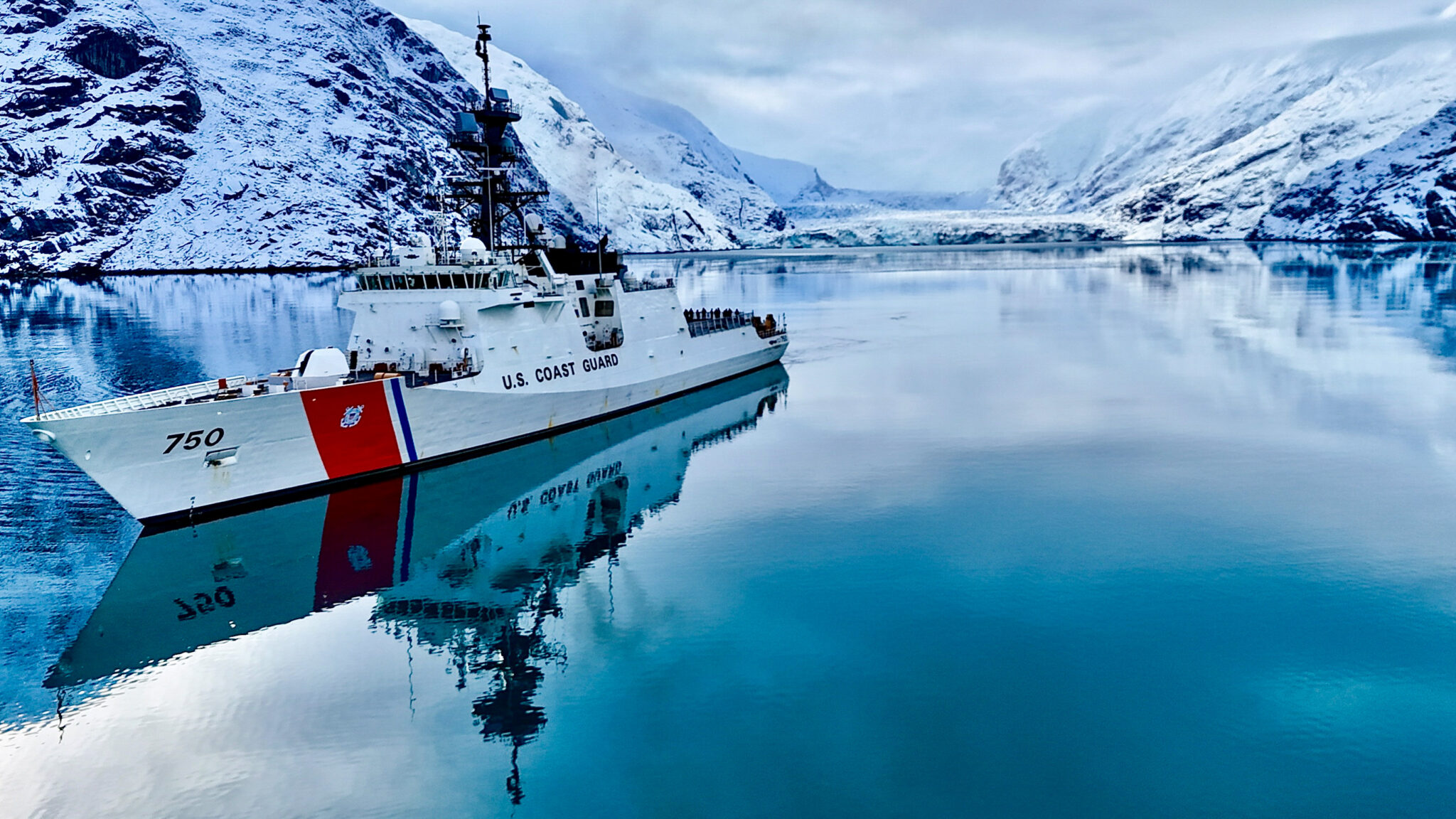


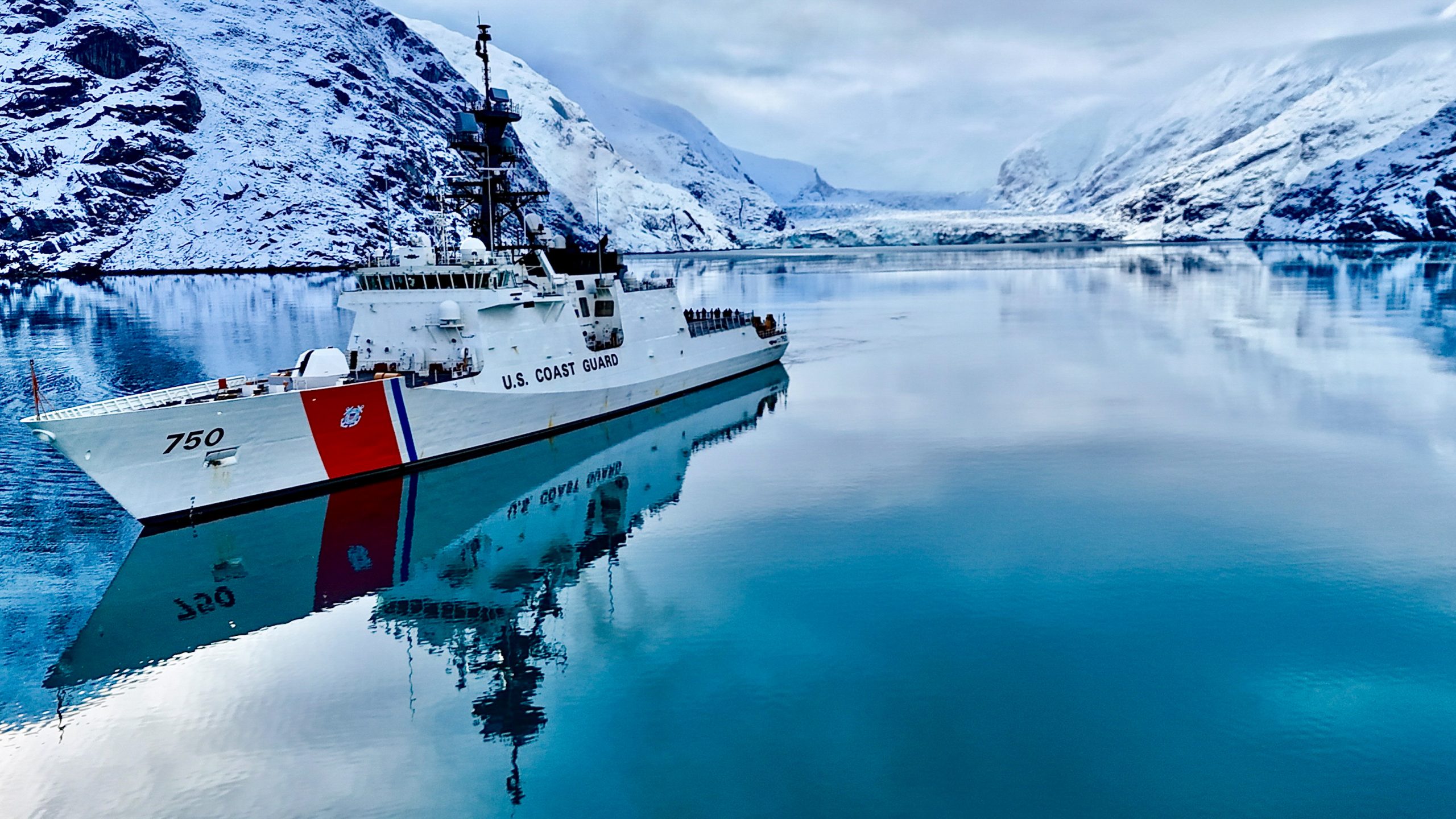
The Arctic is a hot topic these days. As sea ice melts, many questions surface: How should Arctic nations manage more shipping traffic while preserving the delicate environment? Can countries maintain a history of regional cooperation in this increasingly contested space?
As these and other concerns come to the fore, there’s one entity keeping all things polar on the front burner: the Center for Arctic Study and Policy, or CASP.
This tiny U.S. Coast Guard Academy office — with an annual operating budget of just $150,000 and two salaried positions — plays an outsized role in promoting knowledge of the north and south polar regions, a growing area of human interest as the environment rapidly changes.
The Arctic polar region is primarily ocean, surrounded on its edges by the eight member states of the Arctic Council: Canada; the Kingdom of Denmark, which includes Greenland and the Faroe Islands; Finland; Iceland; Norway; the Russian Federation; Sweden; and the United States, where Alaska includes a 1.5-million-square-mile exclusive economic zone in its surrounding waters.
Council decisions are achieved in agreement with six “permanent participants” that represent Aleut, Arctic Athabaskan, Gwich’in, Inuit, Saami and Russian Indigenous people, who have inhabited the Artic for millennia. About 10% of the 4 million Arctic residents are native peoples, according to the “Arctic Review,” an online publication covering polar issues.
There is a long history of international cooperation regarding Arctic scientific research and discovery and access to the region’s abundant fisheries, oil and gas assets, minerals, tourist sites and other resources. But rapid changes to the area’s physical, economic, geopolitical and technological characteristics have altered the future of polar affairs. As a result, many nations, including the United States, have intensified their focus on the region.
The U.S. Coast Guard, part of the Department of Homeland Security, underscored the region’s strategic importance in its 2023 Arctic Strategic Outlook Implementation Plan: “Global geopolitical trends combined with changes to the Arctic’s physical environment are increasing the region’s economic opportunities and strategic importance while hastening the impacts and risks to U.S. Arctic residents, commercial activity, and U.S. national security.”
In the middle of the action is CASP, the U.S. Coast Guard’s only scholarly center and internal think tank. It focuses only on the polar regions — mostly the Arctic but also Antarctica.
Widening Interest, Changing Arctic
Tony Russell, CASP’s executive director since 2022, said his personal interest in the Arctic started in 2007. He was serving as an active-duty officer in the Coast Guard and completing a master’s degree at the Marine Corps University. The Arctic, Russell thought, would be a unique thesis topic.
“That was when folks were just beginning to understand how access — physical access — was increasing via the sea ice reducing [and asking] what does that mean?” said Russell, who retired from the Coast Guard as a captain in 2020. Global attention to the region also coalesced around a 2008 U.S. Geological Survey report predicting the Arctic Circle had massive stores of undiscovered oil and gas reserves.
Then, as now, the drastic environmental changes were hard to ignore: According to the National Snow and Ice Data Center, scientists have observed a consistent decline in Arctic sea ice cover in nearly 50 years of continuous satellite monitoring — a rate of decline of more than 2% per decade. In 2025, sea ice cover is at its lowest level since recording began in 1979.
The Arctic in the past four decades has warmed three times faster than the worldwide average, according to “Arctic Climate Change Update 2024: Key Trends and Impacts — Summary for Policymakers,” a report by the Arctic Council’s Arctic Monitoring and Assessment Programme.
The evolving situation sparked new areas of concern, collaboration and potential conflict among nation-states, residents, the scientific community and industry players.
The area’s residents, land, waterways and wildlife face new threats from erosion, flooding, wildfires and greater human activity. The Arctic is at risk from more air crashes, vessel collisions and groundings. It’s also exposed to threats to subsea cables, unsafe shipping through the Russian maritime Arctic and friction from regional military exercises (involving the U.S. and its allies but also Russia and China).
“That all speaks to rising interest for U.S. national security,” Russell said.
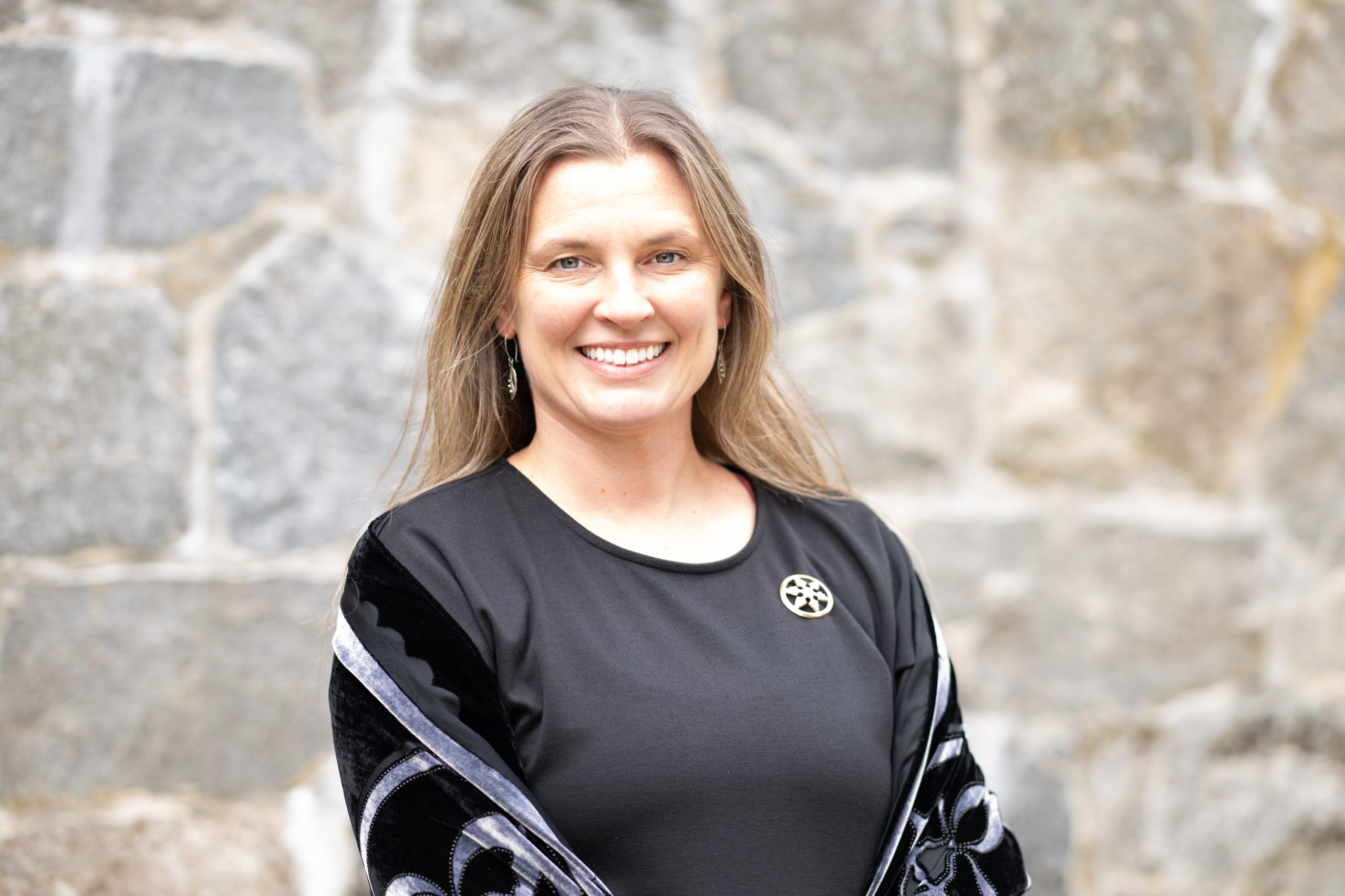
Renewing the Center’s Mission
Although CASP was founded in 2014, Russell’s tenure began as the Coast Guard Academy was relaunching and revitalizing the center, complete with new offices at the academy’s New London, Connecticut, headquarters. The center is now housed within the academy’s Office of Scholarship, Research and Innovation. Its renewed mission is focused on educating cadets, conducting research and analysis, and broadening partnerships.
At the reborn CASP, a federally funded rotating research professor position was first filled in 2023 by Arctic analyst Abbie H. Tingstad, who holds a Ph.D. and the title of visiting arctic research professor. Tingstad’s predecessors, Drs. Rebecca Pincus and Barry Zellen, were funded by Coast Guard Academy alumni donations.
In addition to overseeing a two-year research agenda, Tingstad is a sought-after expert on Arctic affairs and widely published author of Arctic peer-reviewed research, policy papers and presentations, and media commentaries. Her work has touched on topics such as the role of icebreakers in diplomacy and the effects of a poleward shift in fish stocks in the Northern Bering Sea.
Tingstad also directs CASP’s participation in international policy development for the Arctic.
“For example,” Tingstad said, “we are part of a multinational network of research and educational institutions that are shaping the conversation about all the facets of Arctic security and what that means, and how it’s changing, and what it implies for governance and cooperation in the Arctic region.”
CASP is also educating the next generation of Coast Guard officers. It accepts some 18 to 20 cadets every other semester into its polar studies course, focused on U.S. and international strategies and policies in the region. In addition to studying Arctic history and policy, cadets attend expert lectures involving academia, the military, business, Indigenous communities and political spheres.
They also benefit from CASP’s reorganization, which “allowed us to increase our access to all of the academic disciplines at the academy,” Russell said. That’s important because “the challenges that the Arctic faces are definitely multidisciplinary,” he said, involving infrastructure, science, policy, business and more. “All of those things factor into what’s going on in the Arctic region.”
Each year, CASP encourages six to eight cadets to delve deeper into polar issues as Arctic scholars. Russell highlighted two cadets, among others, making important contributions to Arctic policy.
Elise Beauchemin, an Arctic scholar studying marine environmental science, completed CASP-sponsored internships last year with the University of Alaska Anchorage and at CASP. She worked with the Coast Guard Research and Development Center, the Massachusetts Institute of Technology’s Lincoln Labs, and the Navy’s Undersea Warfare Development Center. She also completed a course supporting Tingstad’s research. Beauchemin was accepted into the prestigious Fulbright U.S. Student Program and recognized by DHS Secretary Kristi Noem at the Coast Guard Academy commencement in May.
And, after completing the Arctic studies course, Emelia Campbell was one of three team members invited to partner with the Coast Guard’s Maritime Law Enforcement Fisheries Division to research implementation options for the Central Arctic Ocean Fisheries Agreement. This 10-party pact bans commercial fishing in the central Arctic Ocean for 16 years while scientists study the ecological impact. With CASP, Campbell participated in the Fridtjof Nansen Institute’s Arctic Security Conference in Oslo, Norway. In January 2025, she presented research findings at the Arctic Frontiers conference in Tromsø, Norway, and later briefed Coast Guard executives.
CASP has also sponsored cadets to attend and present at industry conferences, such as the Navy League’s Sea-Air-Space, American Society of Naval Engineers symposia and International Marine Design Conference.
The center supports summer internships for roughly eight cadets each year. “We have two cadets right now on an exchange with the Icelandic Coast Guard,” Russell said, where they’re “getting some great exposure” working with another Arctic nation partner.
Other cadets have interned at the Marine Exchange of Alaska, a nonprofit focused on preventing maritime disasters; the Arctic Domain Awareness Center, a DHS research center at the University of Alaska Anchorage; and the Defense Department’s Ted Stevens Center for Arctic Security Studies.
Promoting International Partnerships
In addition to maintaining a spirit of cooperation, CASP’s ongoing outreach and engagement with most Arctic nations and dozens of U.S. and international organizations — through cadet exchanges, tabletop exercises, policy and research development, and other areas — is yielding Arctic insights for potential action by U.S. and allied militaries, policymakers, industry groups and affected populations.
For the Coast Guard decision-makers, Russell said, CASP “helps flatten the learning curve and it helps maintain consistency and quality of information we’re using for those decisions.” And for external partners who need or want to share information with the Coast Guard, “we know who the subject matter experts are within the service that do that.”
Through its extensive partner network, CASP can foster international dialogue on issues such as illegal fishing, homeland defense, Arctic-capable shipping design, transportation safety, biodiversity preservation, ecosystem management and emergency preparedness.
For instance, CASP helps nations better prepare for Arctic emergencies, which now occur with relative frequency. That includes this year’s Bering Air Flight 445 that crashed on the sea ice on the way to Nome, Alaska, killing 10 people on board; and the 2023 grounding of a 206-person cruise ship stranded for days on Greenland’s remote East Coast.
A recent CASP-hosted tabletop exercise convened emergency response and aviation representatives from four nations and several U.S. military and federal organizations to wargame crises in remote areas of the Arctic. The exercise revealed potential gaps in training, infrastructure, communication and hardware. CASP also moderated a panel discussion on cruise ship search and rescue with the Association of Arctic Expedition Cruise Operators and maritime rescue organizations.
“At the end of the day,” Russell said, “the process is as important as the answer, and we strive to provide the kind of analytical research and defendable background knowledge that best informs polar policy choices and answers.”
Erika Fitzpatrick is an award-winning writer living in Washington, D.C. With more than 20 years of experience in public policy journalism and communications, she specializes in covering issues affecting service members, veterans and military families. This article originally appeared in the July-August issue of Seapower.