


Richard R. Burgess, is senior editor for Seapower magazine. He is a retired naval flight officer and author of several books on naval aviation.
By Richard R. Burgess, Senior Editor
ARLINGTON, Va. — Raytheon, a sector of RTX, is humming with production of its SPY-6 family of four naval radars as the first three variants are either operational or installed on ships and the fourth variant enters production.
Scott Spence, Raytheon’s vice president for Naval Integrated Solutions, told Seapower that the company is “now really cranking them out” — referring to production and delivery of shipsets of the radars from its Andover, Massachusetts, facility.
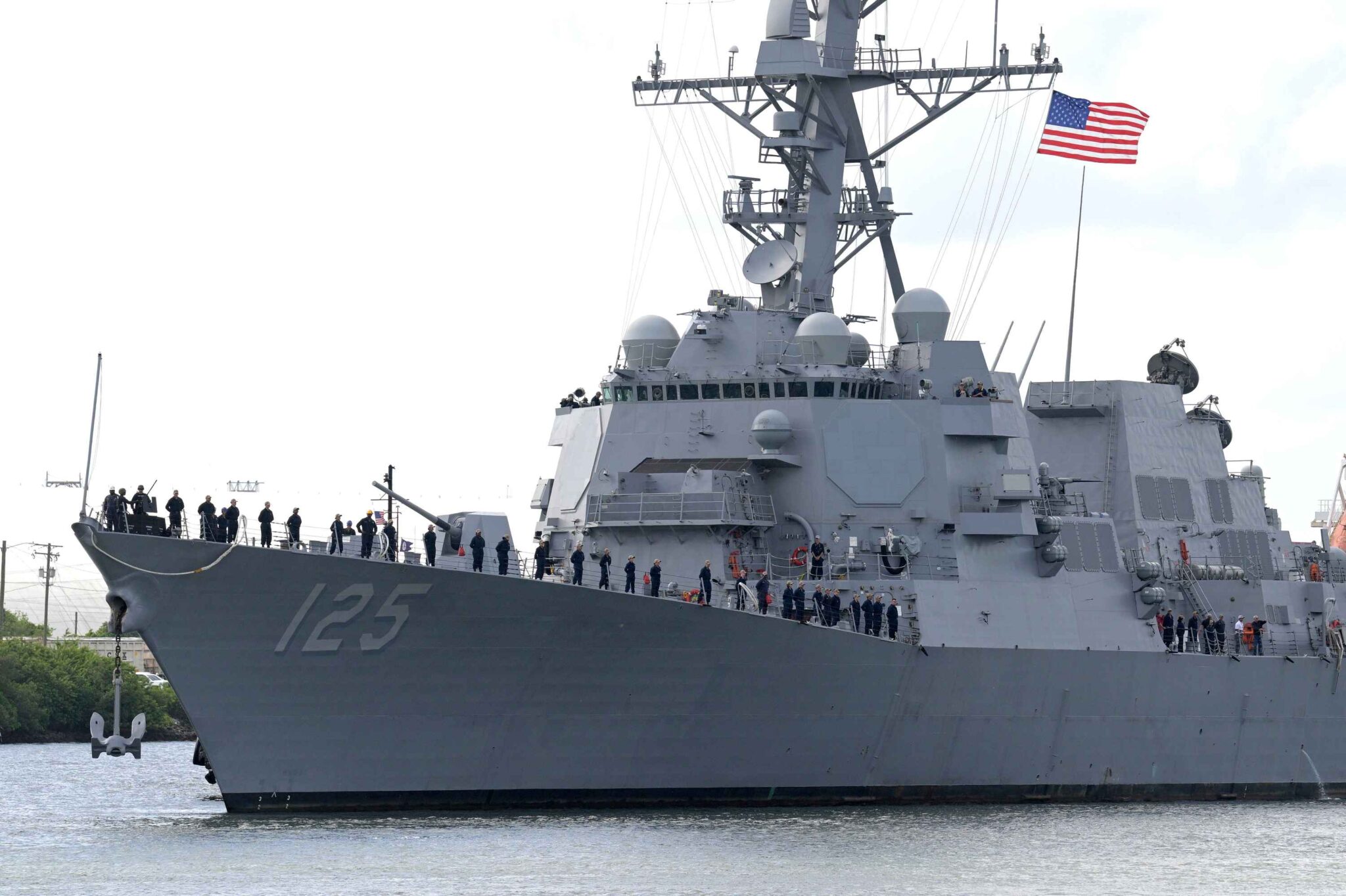
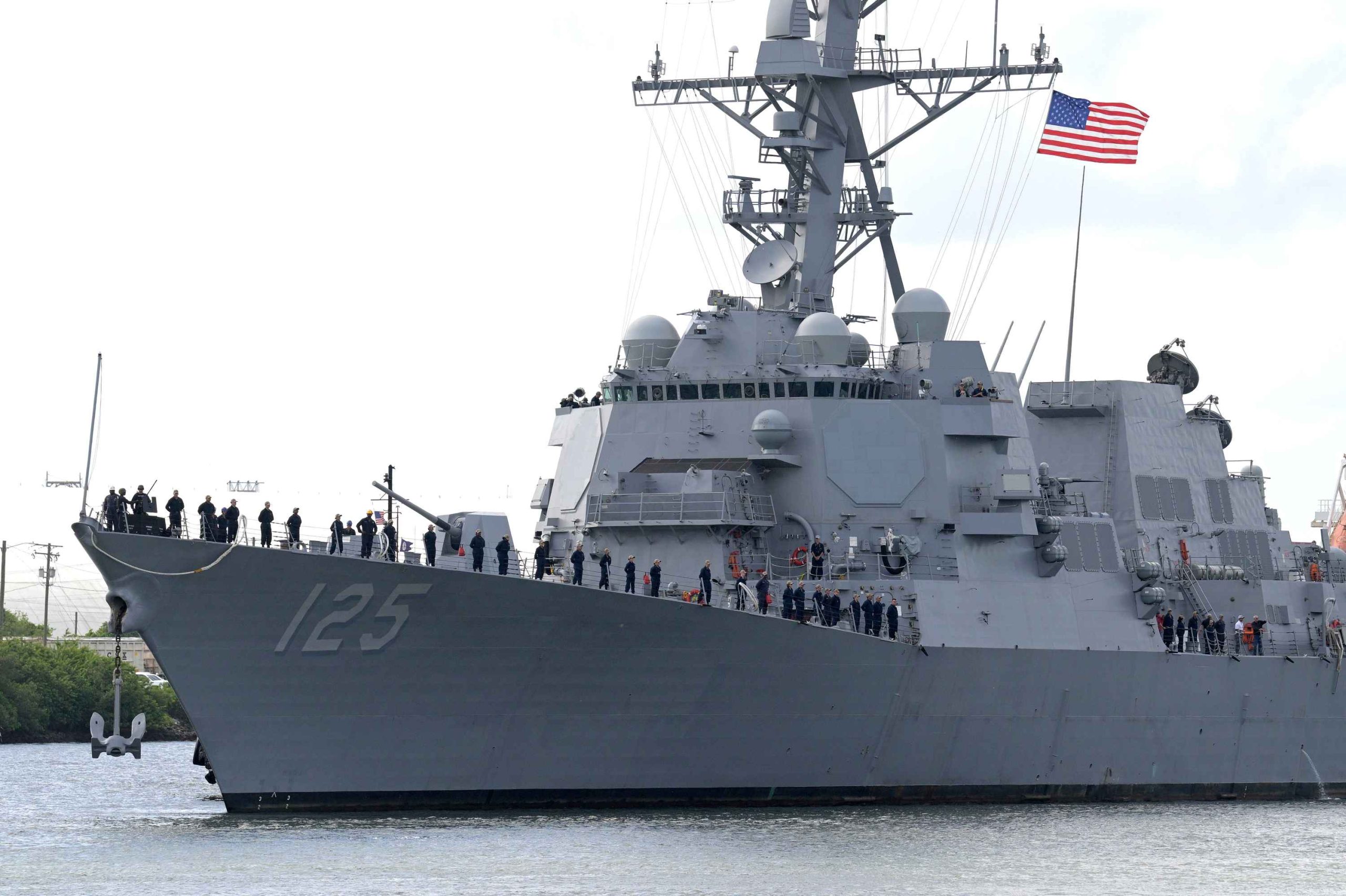
The SPY-6(V)1 Air and Missile Defense Radar, which became operational in 2024 on the Flight III Arleigh Burke-class guided-missile destroyer (DDG)USS Jack H. Lucas (DDG 125), is succeeding the SPY-1 as a sensor in new-production the Aegis Combat System and is the main sensor for the Flight III Arleigh Burke-class guided-missile destroyers (DDGs). Spence said that the flat-face fixed array(V)1 is in full-rate production and that Raytheon had delivered nine or ten shipsets so far for installation on the Flight III DDGs.
Spence said the Jack H. Lucas’s (V)6 has been going through integrated combat testing with the Aegis Baseline.
The SPY-6(V)2 Enterprise Air Search Radar (EASR) is the rotating version of the radar that will be installed on amphibious platform dock ships, amphibious assault ships, and Nimitz-class aircraft carriers, replacing the SPS-48 and SPS-49 radars. The radar has been installed on future San Antonio-class amphibious platform dock ship USS Richard M. McCool Jr. (LPD 29) and has been accepted by the Navy following the ship’s builder’s and acceptance trials.
The first SPY-6(V)3 EASR — which included three fixed-face arrays — has been installed on the future Gerald R. Ford-class aircraft carrier USS John F. Kennedy (CVN 79), which is scheduled for delivery to the fleet in 2025. The (V)3 was selected in lieu of the SPY-3 Dual Band Radar that is installed on the Gerald R. Ford (CVN 78).
The SPY-6(V)4 is on contract by the Navy for backfit onto Flight IIA Arleigh Burke-class DDGs. The (V)4 features four flat-face fixed arrays. The modularity of the system will ease the retrofit as the ships will have the same cooling and power systems of the (V)1. The Navy plans to equip 15 Flight IIA DDGs with the (V)4, the first being the USS Pinckney (DDG 91). Arrays are now being built for the (V)4.
Although unable to release details, Spence said that Raytheon continues to work “hand in glove” with the Navy to tweak the SPY-6 radars to be able to counter the latest threats. The lessons from the Navy’s combat with Houthi missiles and drones over the Red Sea over the last 14 months are being studied by Raytheon.
The SPY-6 “is clearly designed for that environment,” Spence said.
He also said that Raytheon has expand its supply chain to include companies in Japan to ensure reliable sources of some SPY-6 components.
Last summer year Raytheon entered contracts with MELCO (Mitsubishi Electric) and Sampa Kogyo to supply components of the SPY-6 for U.S. Navy ships and any potential future SPY-6(V) customers, said Briana Gabrys, a Raytheon spokeswoman.