On March 26, a container ship struck the Francis Scott Key Bridge, causing it to collapse. The catastrophe halted marine traffic to and from the Port of Baltimore, one of the busiest ports in the United States, for nearly two months.
However, the U.S. Coast Guard’s ongoing efforts to complete midlife maintenance on its fleet of seagoing buoy tenders at the Coast Guard Yard were undeterred.
The U.S. Coast Guard Yard: A Baltimore Harbor Fixture
The U.S. Coast Guard Yard has built, repaired and maintained vessels in Curtis Bay, just south of Baltimore Harbor, since 1899. Because it is the USCG’s primary facility for major repairs, vessels from around the globe journey to the yard when it’s time for service.
Strategic preventative maintenance helps improve the reliability of Coast Guard vessels, control maintenance costs and reduce downtime. The Coast Guard’s In-Service Vessel Sustainment (ISVS) evaluates and schedules the major maintenance and upgrades necessary for its vessels to reach or extend their service lives. According to ISVS, each Juniper-class cutter must head to the yard in Baltimore harbor about halfway through its expected lifetime for major maintenance.
Next Generation of Buoy Tenders
The Juniper-class cutters, which took to the seas in the late 1990s and early 2000s, are the second generation of purpose-built Coast Guard seagoing buoy tenders. The 16 225-foot cutters replaced a fleet of 180-foot class cutters, built from 1942 to 1944, which served for more than 50 years. The last of the 180s, the Acacia, was decommissioned in June 2006.
Juniper-class buoy tenders are multi-mission platforms that help protect American shipping interests worldwide. They have better speed, communications, navigation and maneuverability than their predecessors. Dynamic Positioning allows them to maintain position within a 33-foot circle in winds of up to 30 knots (35 mph) and waves of up to eight feet.
These nimble, adaptable craft handle law enforcement, oil spill recovery, search and rescue, homeland security, ice-breaking operations and other marine missions. They are also instrumental in the U.S. Coast Guard’s participation in the Western and Central Pacific Fisheries Commission, which oversees the conservation and management of migratory fish stocks.
The cutters also enable missions like Operation Blue Pacific, the latest wave of bilateral Shiprider agreements that partner the Coast Guard with myriad nations in Oceania to combat illegal fishing, human trafficking and other international problems.
Service to the Fleet
The standard midlife maintenance package includes upgrading technology, replacing worn decking, making safety upgrades and updating the sewage system to reduce environmental impact. Maintenance professionals at the yard remove obsolete, unsupportable or maintenance-intensive equipment, making updates to the buoy crane, controllable pitch propellers, boat davits and HVAC systems. They also perform comprehensive system-wide checks and fix any issues they uncover.
The first of the Juniper-class cutters began its midlife maintenance in 2017; the last, the Hollyhock, should finish this year. The yard professionals have streamlined the process, which usually takes about a year. Once a vessel is finished, it is relaunched and tested in the harbor. Upon passing inspections, it’s ready to return home, fully prepared for another two decades or more of service.
Around the World in 80 Days
Taking a vessel to the Coast Guard Yard isn’t like dropping your car off at the local dealership — most of the Juniper-class cutters are based many thousands of miles from Baltimore. The voyage itself can take weeks. However, because the mission is primarily to transport the vessel, there are usually some unexpected perks along the way.
As the old saying goes, Sailors go to sea to see the world. Voyages to the yard allow Coast Guardsmen to sail outside their base areas and experience the world beyond their shores. A maintenance trip can include crossing the equator, the tropic of Cancer or Capricorn or the international date line; many include a journey through the Panama Canal.
It can also allow the crew to enjoy some well-deserved liberty time ashore at desirable vacation destinations. For example, the voyage from Hawaii to the Coast Guard Yard takes at least six weeks. Port calls along the way can include stops in Puerto Vallarta, Cozumel and Key West.
Sometimes, these stops include Coast Guard business, such as picking up ammunition or dropping off cargo. Other port calls simply involve restocking supplies and refueling. Either way, they offer a respite from Coast Guardsmen’s usual day-to-day operations and a chance to see some of the world’s most beautiful coastal towns.
Overcoming Obstacles, Responding to Challenges
Trips to the yard are often delayed for a myriad of reasons, like all long sea voyages. Storms, fog and other weather issues can necessitate altering a vessel’s course or port call. Lack of pier space is a recurring theme because ports usually prioritize Coast Guard vessels below profitable cruise liners and other commercial ships.
A vessel may divert to a nearby port if it has enough food and fuel to change its course. Otherwise, it can wait at anchor for hours or even days to obtain pier space. Fortunately, the Coast Guard excels at changing tack and responding to unexpected delays. Sometimes, thinking outside the hull leads to clever solutions.
Finding himself lacking pier space outside of Puerto Vallarta, Mexico, one enterprising captain used the local tourist amenities to make the best of the delay. After dropping anchor, she called a water taxi to pick up the crew. They spent a day ashore enjoying the town’s historic beauty and culinary delights rather than impatiently waiting for the traffic to clear.
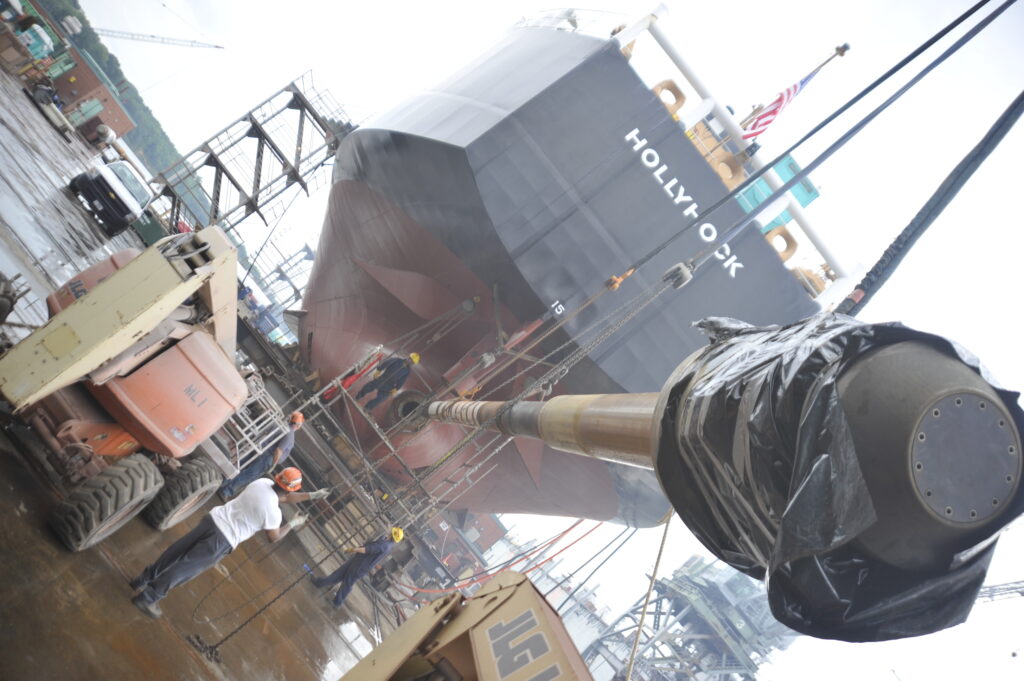
Reached the Yard, Now What?
Once the vessel arrives at the yard, its crew has a new mission: preparing it for dry dock maintenance. Everything onboard must be removed, inventoried and transferred to Conex shipping containers or sent to the dumpster. Some items remain in storage at the yard while the hull is serviced in dry dock, while others are sent back home with the crew.
Lieutenant Commander Jessica McCollum, who has shepherded several cutters to the yard for their midlife service, summarized the goal of this process: “Pretend like it’s a toy ship. Take it in your hands, turn it upside down and shake it. If nothing falls out, it’s ready for the yard.” When she took the USCGC Walnut up for service in 2020, it took about three weeks to finish this offloading process.
Once the commanding officer signs over the hull, the crew generally transfers to the vessel finishing its maintenance. If it’s not ready, or there are other delays, they may have to cool their heels in the harbor. Many things can delay the process of completing midlife maintenance, most of which are far more mundane than the bridge disaster.
The seasoned professionals at the Coast Guard Yard don’t release a vessel until they’re satisfied it is shipshape and Bristol fashion. Often, their scrupulous inspection uncovers other issues; a ship doesn’t sail until these are fixed, tested and cleared. Such was the case with the USCGC Hickory, which was scheduled to leave the harbor at the time of the Key Bridge collapse but wound up delayed due to additional maintenance needs.
Flexibility, Versatility and Readiness
During a delay, the crew may spend weeks or months in Baltimore performing other duties, take personal leave or return to their home post, depending on their job. After the bridge collapsed, some Coast Guardsmen were assigned temporary duty cleaning up the mess, ensuring safety and enforcing security in the harbor. Coasties are often tasked with search and rescue operations and responding to maritime disasters, as they are often the first responders on the scene.
Surprisingly, the extended closure of Baltimore Harbor didn’t hamstring the Coast Guard cutters like it did commercial shippers or larger military vessels. This is partly because these vessels and their crews are incredibly adaptable. The port opened an auxiliary channel quickly and the Coast Guard quickly pivoted, enabling their mission to continue.
As McCollum prepares to collect the Hollyhock, the last cutter to complete midlife service, she will set sail with an entirely new crew. Just like after a new vessel is commissioned, these Coast Guardsmen must quickly learn to work well together as a team and respond to adversity during the weeks-long voyage home. Fortunately, as advertised, the U.S. Coast Guard is Semper Paratus: Always Ready. .
From the July/August issue of Seapower magazine. Jamie L. Pfeiffer practiced in Illinois, Oregon and Washington states before retiring from active law practice. She is currently based in Chicago.


- Virtual Tools Help Real-World Suicide Prevention Efforts - May 1, 2025
- Building Bonds: 35 Years of United Through Reading - December 23, 2024
- Rebuilding a Skilled Workforce, Full Speed Ahead - October 4, 2024