


If you’ve transitioned out of the sea services, you may struggle to chart a course for your future. The Accelerated Training in Defense Manufacturing (ATDM) program allows veterans to retrain or uptrain for jobs with military suppliers. This accelerated training opportunity helps strengthen national defense capabilities while providing veterans with stable, lucrative career opportunities.
The best part? It’s free.
Submarines and unmanned underwater vehicles are a vital and rapidly expanding component of U.S. defense and marine security. The Department of Defense anticipates that nearly 10,000 additional skilled workers will be needed each year to design, build and test these vessels to support the submarine industrial base.
Unfortunately, the number of trained workers in manufacturing fields has shrunk to record lows. In addition to limiting growth, not having the resources to maintain and repair existing assets impacts the readiness of the current fleet and threatens national security. To address this deficiency, the Department of Defense has partnered with private institutions to develop the ATDM program.
ATDM is a rigorous, rapid and innovative prototype training platform operating on the campus of the Institute for Advanced Learning and Research (IALR) in Danville, Virginia. It is a cooperative effort supported by the Navy, the Office of the Secretary of Defense, state and local officials and defense industry partners.
The program has five strategic goals: Fill the gaps in submarine industrial base and defense industrial base trades; decrease the time-to-talent to place workers “on the line;” modernize the workforce; diversify the workforce; deliver trained workers to the industrial base in scale and velocity.
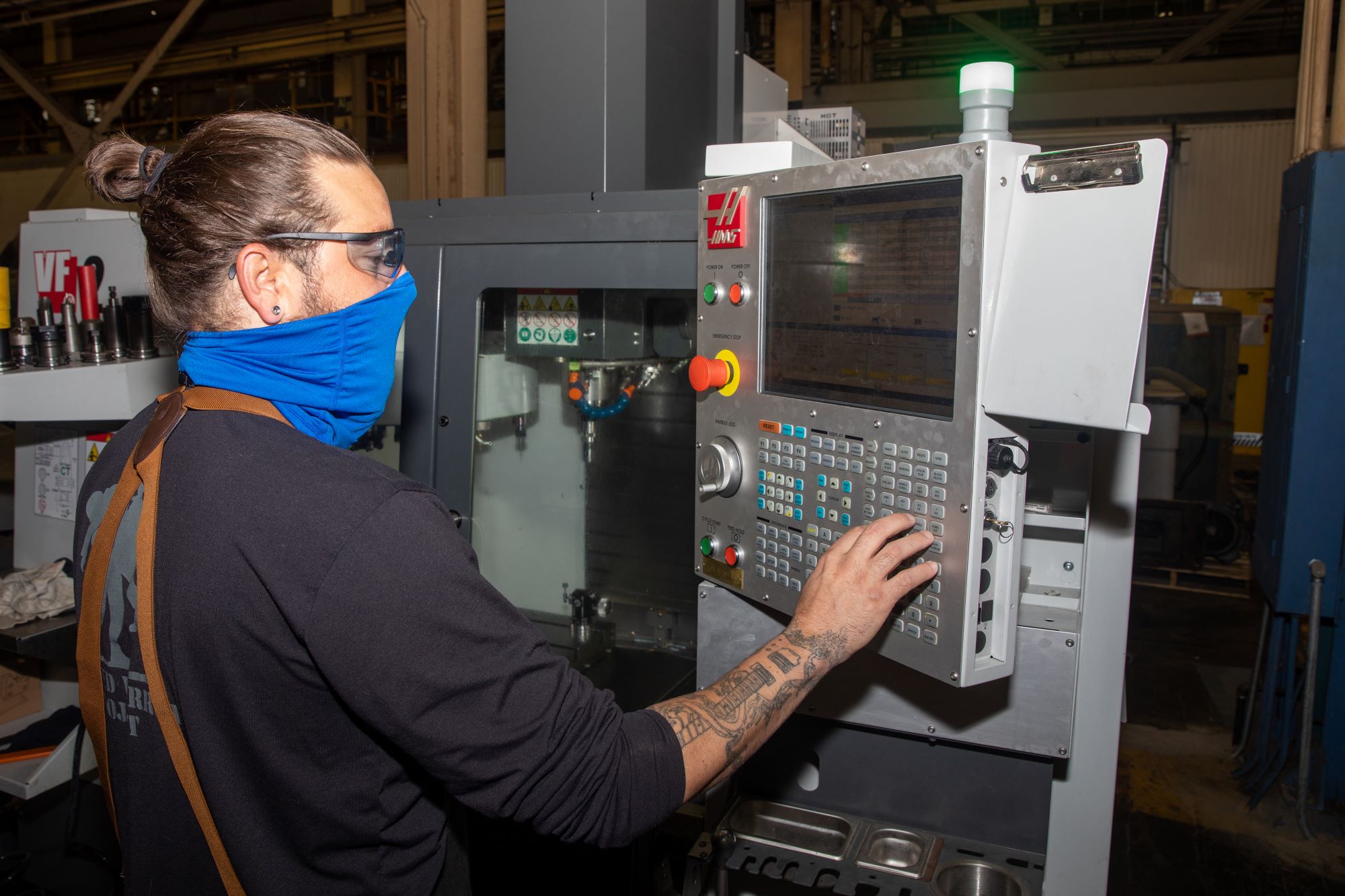
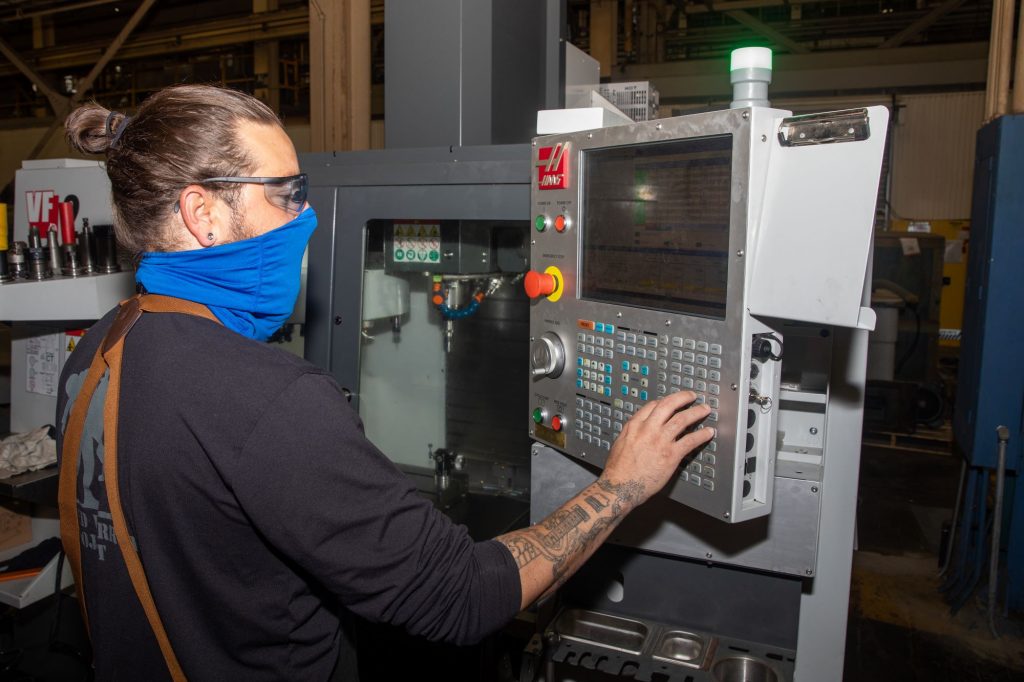
The four-month program provides each student with 600+ hours of instruction in one of five specialized trades: additive manufacturing, computer numerical control machining, non-destructive testing, quality control inspection (metrology) and welding.
This intensive, accelerated training allows students to gain proficiency quickly, obtain industry-recognized credentials and “hit the ground running” as soon as they begin work in the private sector. The program connects educators, government agencies and industry leaders to ensure the curriculum aligns with industry standards and requirements.
Classes progress on a rolling schedule, with new cohorts beginning approximately every two months. Students train on three shifts (7 a.m.-3 p.m., 3 p.m.-11 p.m., and 11 p.m.-7 p.m.), mirroring standard private-sector manufacturing schedules.
Each shift cohort has 12 students, one instructor and one experienced technician. The teachers and technicians work closely with students to help them master concepts and practice execution. Dr. Debra Holley, the program’s director, estimates 90% of the training is hands-on, adapting to each student’s ability and allowing them to learn more quickly and effectively.
Diverse and Dynamic Workforce
Any adult U.S. citizen or permanent resident with a high school diploma or GED can apply to ATDM. Candidates accepted into the program are scheduled for the next available cohort. If the soonest cohort is full, they may be waitlisted, or they may be able to choose a start date farther in the future to accommodate personal or professional needs.
Students’ backgrounds, experiences and education levels vary widely. Approximately 25% of current and past students are veterans. ATDM also works with the Department of Defense’s Skillbridge program to help current servicemembers pursue retraining as they transition out of service. It also partners with the U.S. Chamber of Commerce Foundation’s Hiring Our Heroes jobs connection program and the NextOp nonprofit organization to help veterans retrain for civilian careers.
ATDM also works with the Veterans Administration’s Computer/Electronic Accommodations Program to provide accommodation solutions for veterans with visual, hearing, cognitive, communication and dexterity disabilities. While each student has unique needs, and each specialization has different requirements, facilities like a welding booth designed for wheelchair users reflect the program’s commitment to helping overcome barriers that can limit veterans’ employment options.
About 209 students (five cohorts) have completed the ATDM program since it opened its doors in June 2021. Upon completion, graduates from this program can obtain critical defense industry jobs. ATDM also provides job placement assistance, partnering with nearly 100 companies and conducting employment fairs.
According to Holley, 92% of the cohort that finished in June 2024 had job offers upon completion. Many of the program’s corporate partners provide ringing endorsements of the quality and applicability of the ATDM graduates’ skills and training.
The ATDM program also anticipates its own continued success and growth in the next few years. In October 2023, it began constructing a new, state-of-the-art training facility that will allow it to graduate 800-1,000 skilled workers annually by 2025.
Currently, the ATDM program is entirely free. No service obligation or commitment is required. However, after completing their training, students are expected to pursue employment in the defense manufacturing industry.
The program provides each student with a complimentary, private apartment located about five minutes away and connected to the campus by shuttle. Spouses and children may accompany students. Although the program doesn’t cover the cost of food or other living expenses, it can help connect students with local charitable organizations and government resources.
In addition to furthering national defense objectives, ATDM is having a markedly positive impact on the local economy. The expansive new training center is a significant capital investment by the Navy in the Danville area. It is expected to increase economic stability and prosperity in the region and throughout the Commonwealth of Virginia.
Program director Holley recognizes the unique nature of the ATDM program’s public-private collaboration, noting it benefits everyone involved.
“It’s a way to make an impact and serve your country and community,” she said, “and also train for a really good job.”